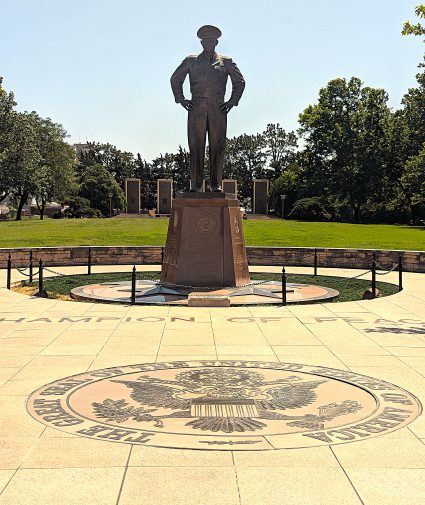
Dwight D. Eisenhower Presidential Library and Museum

Dwight David Eisenhower ~ October 14, 1890 – March 28, 1969

“I come from the heart of America”

Kansas and its prairies are located in the heart of America, with Abilene about one hundred miles from the geographic center of the forty-eight contiguous states. It’s fitting that it’s called “The Heartland of America.”

Driving cross country on I-70 during the summer, I stopped in Abilene, KS to visit the Eisenhower Presidential Library and Museum. I was curious but had no expectations, and so I was awed by the setting and what I learned.

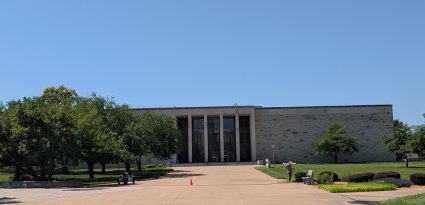
Situated on a twenty-two acre campus are the Visitor Center, Place of Meditation, Eisenhower’s boyhood home, the Presidential Library, and the Museum. I spent four hours there but could easily have spent an entire day.

The Place of Meditation is the Burial Site of President Eisenhower, his wife, Mamie, and their first born son, Doud, who died at three years old of Scarlet Fever.

It was Eisenhower’s hope that visitors would “reflect on the ideals of this great nation” in this solemn place.
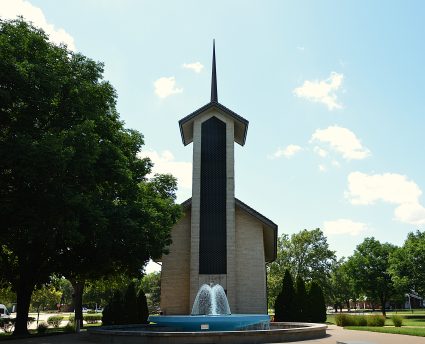
The Place of Meditation

“I’m just folks. I come from the people. Ordinary people.”

Eisenhower was born in Denison, TX, the third of seven sons of David Jacob Eisenhower and Ida Stover Eisenhower. The family moved to Abilene when Eisenhower, known familiarly as “Ike,” was two years old. His parents were deeply religious. His father explored Christian Mysticism and his mother was a member of International Bible Students which evolved into Jehovah’s Witnesses, but they encouraged their sons to find their own paths.

Eisenhower said that his mother was the greatest influence in the lives of his brothers and himself. She taught them self-discipline, and “to behave appropriately, not out of fear of punishment, but because it is the right thing to do.”

Ike entered West Point in 1911. His mother was a Pacifist who felt that warfare was “rather wicked” and was saddened by Ike’s choice of career but accepted his decision. He later wrote that when he entered West Point “…from here on it would be a nation I would be serving, not myself.”
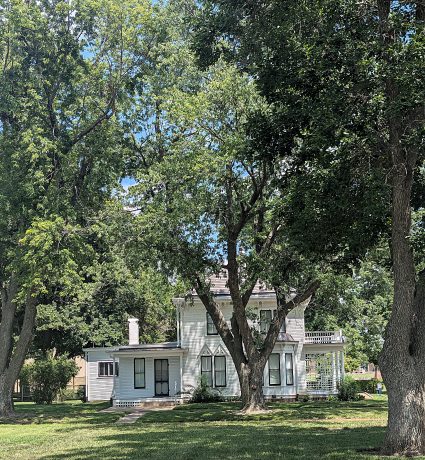
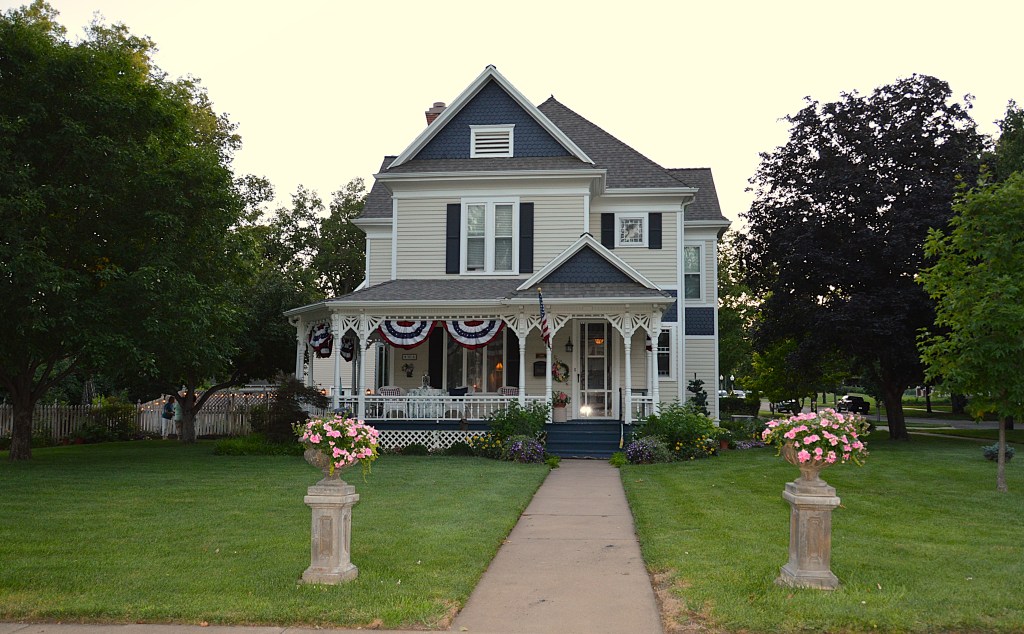
Eisenhower Boyhood Home

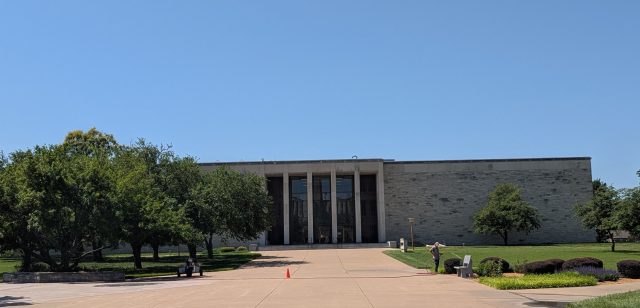
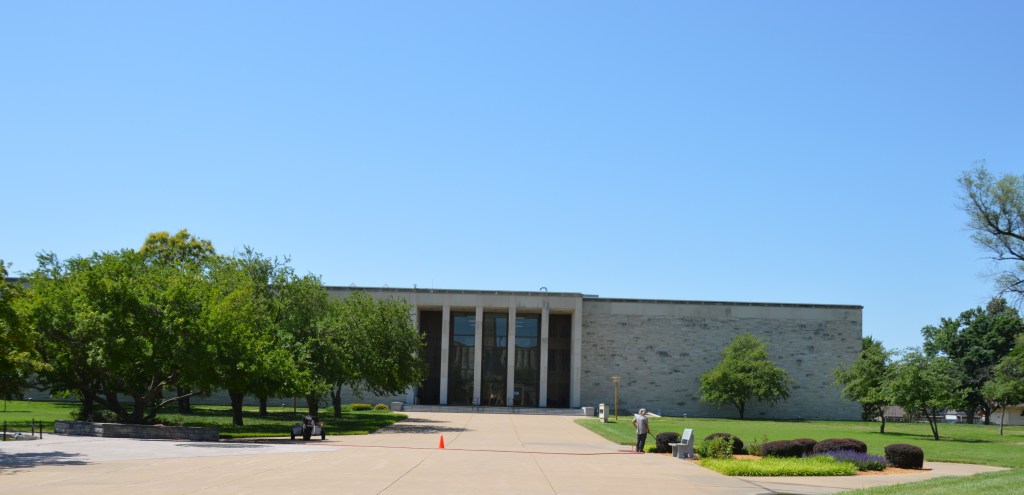
The Presidential Library

Except for the echoes of my footsteps, the marble and brass lobby is silent, as is appropriate for a library. It houses a theater that features films focused on various on parts of Eisenhower’s life that loop on fifteen minute intervals. The day I was there the film was about his boyhood home and life.

The library archives twenty six million pages on a broad spectrum of subjects that are available to the public. About eight hundred researchers a year visit the library, twenty-five percent of those visitors are from abroad. There is a collection of over five hundred transcripts of oral history, as well as transcripts from Columbia University’s oral history project. There is an extensive collection of photographic prints of Eisenhower’s life and times, as well as the still photograph collection documenting the Worl War II period. Personal diaries have been digitized.
The Presidential Library

MUSEUM

As you enter  the museum, there are murals on the lobby walls of Eisenhower in his role as Supreme Allied Commander during World War II. The first room you enter explores his early years growing up in Abilene.
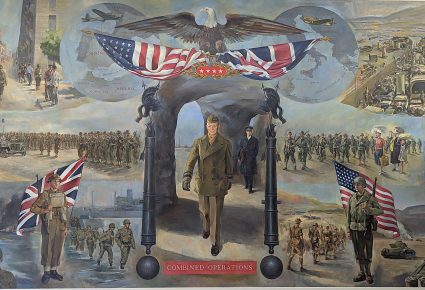
In June, 1915, Eisenhower graduated from West Point. He then served as a Second Lieutenant with the Infantry at Ft. Sam Houston, TX. It was there that he met Mamie Geneva Doud of Denver. They were married July, 1916. Their son, Doud Dwight was born September 24, 1917 and died of scarlet fever January 2, 1921. Their son John Sheldon Doud was born August 3, 1922.

During World War I, Eisenhower’s request to serve in Europe was denied. Instead, he was assigned to train tank crews. Sometimes disappointment has a purpose in the future. As is typical with military life, Eisenhower moved to various bases over the next four years and rose in rank to Lt. Colonel.

In 1919 he volunteered to be an observer for the War Department in a transcontinental Army convoy to assess vehicles and road conditions across the United States. The convoy averaged five miles per hour during the 3,251 mile journey from Washington D. C. to San Franciso. The convoy consisted of eighty military vehicles and two hundred eighty officers and enlisted personnel.

Mounted on Harley Davidsons, Army personnel ran ahead of the convoy to check out road conditions. It took sixty-two days for the convoy to reach San Francisco. There had been two hundred thirty accidents when vehicles broke down, got stuck in mud, sank in quicksand, and bridges collapsed under them. The official report concluded that existing roads in the U. S. were “absolutely incapable of meeting the present day traffic requirements.” This experience proved to be inestimable to Eisenhower in his military career and as President.

On July 20, 1920 Eisenhower was promoted to Major. He was assigned to Camp Meade to command a battalion of tanks in close collaboration with George S. Patton and other senior tank leaders.

From 1933 through 1939, he served with General Douglas MacArthur. Eisenhower attended the Army Industrial College in 1933. It is now known as the Dwight D. Eisenhower School for National Security and Resource Strategy.

The last four years with MacArthur were in the Philippines as military advisor to the Philippine Government. The relationship with MacArthur was not easy. Eisenhower differed philosophically with him regarding the qualities an officer should demonstrate and develop in his soldiers. Historians believe that working with MacArthur prepared Eisenhower to be able to manage the strong personalities of Churchill, Marshall, Montgomery, and Patton during WWII.

When Pearl Harbor was attacked and World War declared in 1941, Eisenhower was assigned to General Staff, Washinton, DC and named Deputy Chief in Charge of Pacific Defenses. In February 1942 he was designated Chief of War Plans Division. In April, 1942 he was appointed Chief of Staff in charge of Operations Division for General George Marshall.

In May 1942 Eisenhower organized an operation to increase cooperation among American Allies. He was designated Commanding General, European Theater, London, England in June 1942 and named Commander-in-Chief, Allied Forces, North Africa, November, 1942.

He was promoted to four Star General in February, 1943. On August 30, 1943 he was appointed both Brigadier General and Major General.

In December 1943, Eisenhower was appointed Supreme Commander, Allied Expeditionary Forces. Throughout the war, Eisenhower made a point of visiting the troops, to build trust and morale.

On June 6, 1944 Eisenhower Commanded the Normandy invasion.

“Plans are worthless, but planning is everything.”

This photo of General Eisenhower was taken the night before the Invasion of Normandy on      D-Day, June 6, 1944. You can see the pain on his face, aware of the gravity of his decision knowing that many people, civilians as well as military, would die.
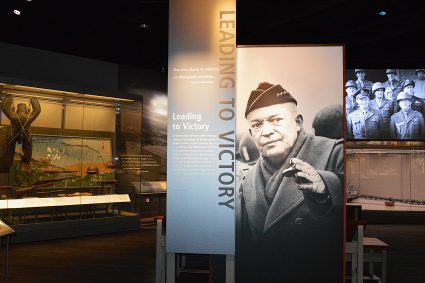
Eisenhower waspromoted to General of the Army (5 stars) on December 20, 1944. Shortly after Germany surrendered, he was appointed Military Governor, U.S. Occupied Zone, Frankfurt, Germany on May 8, 1945

He was designated Chief of Staff, U.S. Army on November 19, 1945 and his wartime rank of General of the Army was converted to permanent rank on April 11, 1946.

After WWII,  he dedicated the rest of his life to preventing war.

“I hate war as only a soldier who has lived it can.”

Eisenhower became President of Columbia University, New York City in 1948. When he accepted the presidency of the university his main purpose was “to promote the American form of democracy” through education. 

On April 4, 1949, the North Atlantic Treaty Organization (NATO) was created as a “shield against aggression” to counter Soviet expansion after World War II. Eisenhower took an extended leave from the university in 1950 to become the Supreme Commander of NATO and was given operational command of NATO forces in Europe. Eisenhower succeeded in attaining support for NATO in Congress. By the middle of 1951, with American and European support, NATO was a military power. He retired from active military service as an army general on June 3, 1952 and resumed his presidency of Columbia. In July, 1952 he resigned his military commission.
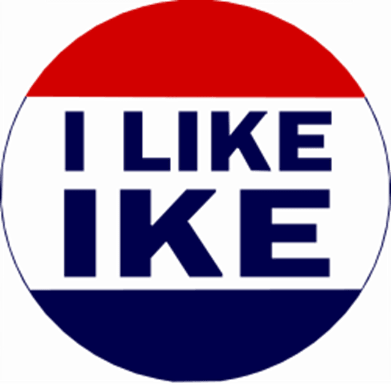
At the end of World War II, Eisenhower was approached to run for president but felt it was inappropriate for a military man to run for office. He considered himself apolitical and had never voted in his life. Both parties continued to prevail on him to run for president. He finally agreed to run on the Republican ticket in 1952 to oppose Republican Senator Robert Taft because he felt Taft’s endorsement of McCarthyism, opposition to NATO and the Marshall Plan would not further the interests of the United States.

“It is more than a nomination I accept today—it’s a dedication—a dedication to the shining promise of tomorrow.”

Eisenhower defeated Taft for the nomination, and to pacify the right-wing of the Republican Party, he needed to accept Richard Nixon as Vice President on the ticket. Eisenhower was appalled by a report that Nixon had received funds from a secret trust, even though Nixon spoke out against the charges. (The “Checkers” speech.) It created a rift between them, and Eisenhower reluctantly endorsed Nixon when he ran for president against John Kennedy.

Eisenhower won the presidential elections in 1952 and 1956 by landslides and was enormously popular during his presidency.

“Whatever America hopes to bring to pass in the world must first come to pass in the heart of America…For history does not long entrust the care of freedom to the weak or the timid…A people that values its privileges above its principles soon loses both.” Inaugural address 1953

During Eisenhower’s two terms as President of the United States he held more press conferences than any previous president. He valued them as a means of direct communication with the American people. He also:

  • Ended the Korean War.
  • Stabilized Soviet-American relations during the Cold War .
  • Strengthened European alliances and withdrew support of European colonialism.
  • Promoted Atoms for Peace, to convert the fear of nuclear energy into a shared resource for humanity, for development of nuclear energy and international atomic cooperation. 
  • Managed crises in Lebanon, Suez, Berlin, and Hungary.
  • Established the U.S. Information Agency to foster understanding of U.S. policies and culture abroad with programs such as the Voice of America, Fulbright Scholarships, and overseas libraries. 
  • Helped create and signed the Southeast Asia Treaty (SEATO)
  • Created the Small Business Administration.
  • Created the Federal Council on Aging, to address issues of aging and needs of the elderly.
  • Played a key role in making Alaska and Hawaii states.
  • Established The President’s Council on Youth Fitness.
  • Signed the 1957 Civil Rights Act, the first civil rights legislation since the end of the Civil War and implemented racial integration in the Armed Services. He sent federal troops to enforce court-ordered integration of Little Rock Central High School.
  • After Sputnik was launched in October 1957, he created NASA.
  • Signed a landmark science education law, and improved relations with American scientists.
  • An international cooperative scientific program called the “International Geophysical Year” was piloted from July 1957 to December 1958 to study the earth and its environment. More than seventy countries participated in the project. It led to the discovery of the Van Allen radiation belts, the theory of plate tectonics, exploration of outer space, construction of earth satellites, and increased research in the Arctic and Antarctic polar regions. IGY was sponsored by the International Council of Scientific Unions and involved 30,000 scientists. In a radio and television address on June 30, 1957, President Eisenhower said, “the most important result of the International Geophysical Year is that demonstration of the ability of peoples of all nations to work together harmoniously for the common good. I hope this can become common practice in other fields of human endeavor.”
  • Signs the National Defense Education Act that provides loans for college students and funds to encourage young people to enter teaching careers.
  • Continued all major New Deal programs, especially Social Security, and rolled them into a new agency, the Department of Health Education, and Welfare, extending benefits to an additional ten million workers, including farmers and farm workers, domestic workers, certain professionals, and state and local government workers.

“Should any party attempt to abolish social security and eliminate labor laws and farm programs, you would not hear of that party again in our political history. There is a tiny splinter group of course, that believes you can do these things…Their number is negligible and they are stupid.”

“All branches of this Government — and I venture to say both of our great parties — can support the general objective of the recommendations I make today, for that objective is the building of a stronger America. A nation whose every citizen has good reason for bold hope; where effort is rewarded and prosperity is shared; where freedom expands and peace is secure — that is what I mean by a stronger America.” State of the Union Address, 1954

During his presidency, Eisenhower described himself as a “progressive conservative.” He was determined to stop efforts by the right wing to take control of the Republican party. “I have just one purpose … and that is to build up a strong progressive Republican Party in this country. If the right wing wants a fight, they are going to get it … before I end up, either this Republican Party will reflect progressivism or I won’t be with them anymore.”

Eisenhower also warned against “fatal materialism,” a criticism of the consequences of capitalism by Jean  Baudrillard, as the extreme form of materialism where the goal is to ruin the socio-cultural relationship by overpowering it with the endless consumption of “things.”

In his farewell address to the nation in January, 1961, Eisenhower said, “”We face a hostile ideology global in scope, atheistic in character, ruthless in purpose and insidious in method … we must guard against the acquisition of unwarranted influence, whether sought or unsought, by the military–industrial complex … Only an alert and knowledgeable citizenry can compel the proper meshing of the huge industrial and military machinery of defense with our peaceful methods and goals, so that security and liberty may prosper together.”

During Eisenhower’s administration from 1953-1961 the marginal tax rate for income over $200,000 was ninety one percent. The federal corporate tax rate was tiered, with a top marginal rate of fifty-two percent.

Eisenhower invested that tax money in the country and its people. Social Security was expanded and the minimum wage was raised by one dollar/hour. He initiated the interstate highway system, a public works project funded by a gas tax that created employment and growth of communities. In response to the Soviet Union’s launch of Sputnik, Eisenhower promoted the study of science, foreign languages, humanities and social sciences in universities through the National Defense Education Act, as well as establishing the President’s Science Advisory Committee to fund research and infrastructure.

The middle class was growing by 1.1 million families a year. One third of the workforce was unionized. Economists referred to it as “the virtuous cycle of growth.” Well paid workers were able to buy houses, cars, etc., generating business expansion. As the middle class prospered, so did the economy.

I grew up during the Eisenhower administrations and benefitted from his policies that included receiving vaccines that protected me from debilitating diseases such as Polio, before college I received a liberal education that included physical education, instilling in me an interest in fitness for the rest of my life. I learned two foreign languages, as well as science courses, math, including algebra and geometry, and civics classes in which I learned American history, the Constitution and Bill of Rights, about the Separation of Power through the three branches of government, and the separation of Church and State. I learned to be interested in current events. And, oh, all the books I got to read and write book reports on, as well as write compositions on subjects such as “What I Did Last Summer,” and “What the Future Holds for Me,” subjects that not only made me examine my life and think about what I read, but also how to express my thoughts cogently. It’s called “critical thinking.”

My generation benefitted from these programs. Education was thought to be for the common good. College costs were low and public institutions were subsidized by state governments. Those who attended were not burdened with debt when they entered the workforce. Girls were encouraged to go to college, even if their choice of careers was limited to being a teacher, nurse, or secretary. My generation came of age in the 60s, well-educated and enabled to take the next step in humanity’s evolution. When the Vietnam War started, we stood up for peace, we stood up for civil rights and women’s rights, and for the environment, demanding clean air and water laws, and more. We also created great music and art.

He helped create the Southeast Asia Treaty Organization (SEATO) to prevent wars in Southeast Asia. In 1954 Vietnam split into N. Vietnam and S. Vietnam. As violence increased in Vietnam, Eisenhower sent nine hundred military “advisors” to aid S. Vietnam.

The Cuban Revolution began on January 1, 1959 when Fidel Castro overthrew the dictator, Fulgencio Batista. There was extended violence to overthrow Castro’s regime.

World events continue after a presidency ends and the situations in Cuba and Vietnam turned into the Bay of Pigs Invasion, the Cuban Missile Crisis, and the Vietnam War for President Kennedy to address.

A top aid to President Franklin Roosevelt called Eisenhower “the least partisan president since George Washigton.” He was an extraordinary human being and, in my opinion, the last great Republican president.

My visit to the Eisenhower Presidential Library and Musuem made a deep impression on me. As I did research to write this blog I learned new things about the times and the Eisenhower presidency, things such as “progressive conservatism” and “fatal materialism.” When I consider his many accomplishments and look at the current administration, I have a heavy heart.

In March, 2025, Columbia University caved to the demands of the current administration to suspend, expel, or revoke degrees for seventy students involved in pro-Palestinian protests, to stricter vetting for international students, to end DEI programs, and to appoint new faculty for the Institute for Isreal and Jewish studies in exchange for four hundred million dollars in federal funds. I can’t imagine Eisenhower agreeing to any of this.

The current administration tried to eliminate programs by Eisenhower that helped create understanding and cooperation between countries. They severely curtailed the operation of Voice of America. The Fulbright Scholarship Program was significantly cut. Grants were denied to an extensive number of already selected American professors and researchers, and a review of foreign recipients was initiated.

The current administration has threatened to withdraw from NATO. The Bipartisan NATO Support Act passed by the House in 2019 legally bars a president from withdrawing from NATO. However, the current president’s constant threats have negatively impacted relations with other NATO members.

While Eisenhower promoted science programs, the current administration has denigrated science and scientific research. They have cut funding and suppressed or misrepresented scientific information, particularly on climate change and health.

The current administration has cut billions of dollars in education programs and those that serve students with disabilities. Eisenhower believed that education was essential to the cause of freedom to prepare young people for “effective citizenship” by understanding the nations core values and emphasizing ethics and character. He believed that education is for the common good.

President Eisenhower was nominated for the Nobel Peace Prize in 1955 for his “Atoms for Peace” program, and in 1963 for “his many acts to prevent war and ensure World Peace.” Despite his striving for peace and understanding between the peoples of the world, he never won the Nobel Peace Prize. And he didn’t whine about it.

As I formatted this blog for publishing I learned that the current administration invaded Venezuela and kidnapped its president and his wife without the consent and approval of Congress. The president is now threatening other sovereign states with invasion. I believe a majority of Americans do not support this action and do not want war. I believe that the threatened countries do not want war. I believe we can have Peace on Earth and envision a modern day Eisenhower, not necessarily a military person but a well-educated person with a belief in the common good, coming forth to lead the United States of America back to living harmoniously with each other and the world.
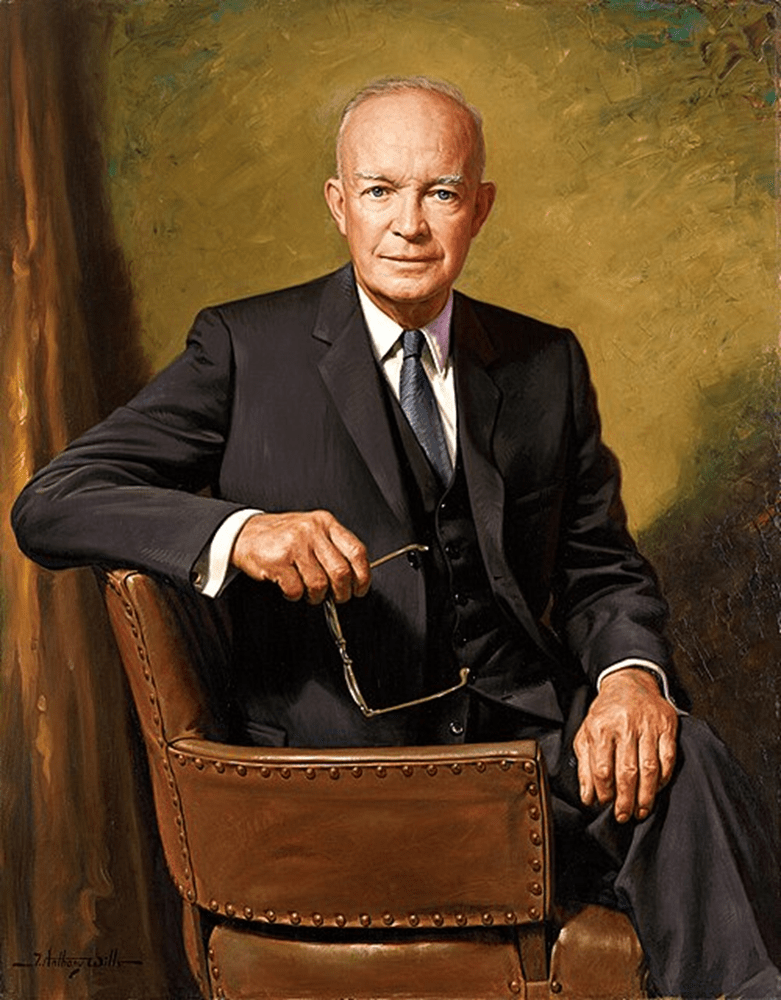
Dwight D. Eisenhower, Official Presidential Portrait – Public Domain
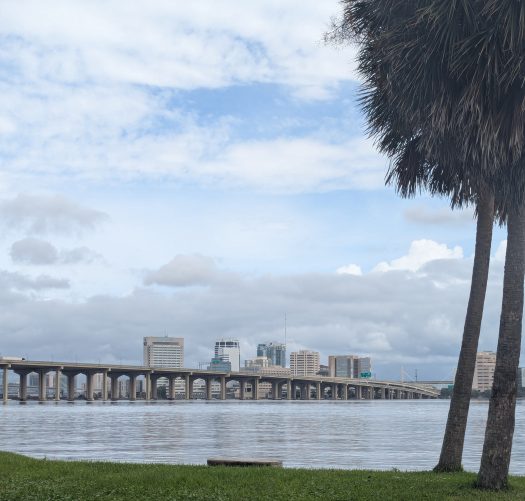
Jacksonville, Florida

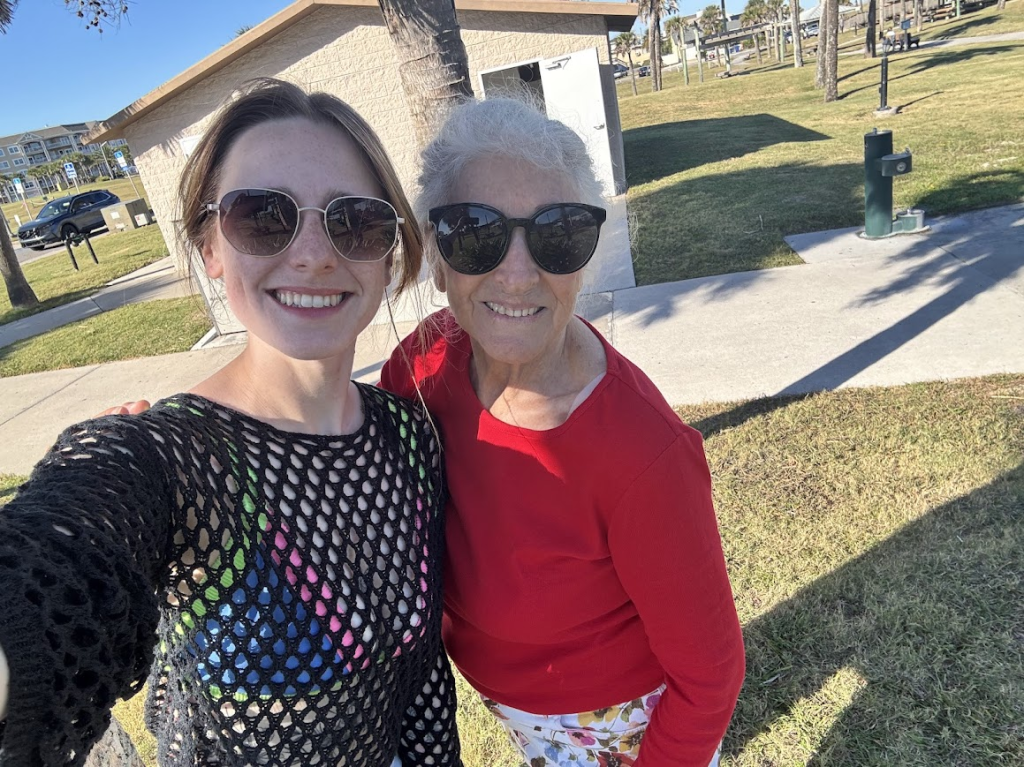
Recently I visited Jacksonville, Florida. It was wonderful to be under sunny skies and in warm weather for a few days, and even better to be with my beloved granddaughter, Lauren, who I haven’t seen in three and a half years. We visited a different corner of Jacksonville, FL every day. The day I arrived, we went to Jacksonville Beach to fulfill my longing to walk in the ocean, after which we ate sushi on a rooftop patio as twilight dimmed to darkness.

The next day we went to St. Augustine, the oldest city in the United States. It was established on August 28, 1565 in  an area inhabited by the native Timucua people. Like Ponce de Leon, who claimed the land for Spain in 1513, I did not find the Fountain of Youth, but over the years I’ve decided that I’d rather swim in the Ocean of Agelessness than dip in the Pool of Transient Youth.

A big attraction in St. Augustine is the fort, Castillo de San Marcos National Monument. It’s part of the National Park system and because of the government shutdown, entry was closed. However, we did get to walk the grounds. The fort was built to protect the city and Florida’s trade routes from invaders. Cannons still line the walls facing the sea.

A structure that looks like a pizza oven caught my attention. It seems it is a furnace in which cannonballs were heated to fifteen hundred degrees, loaded into the cannons, and shot at the ships of would be assailants. The red hot cannonballs, called hotshots, would set the ships afire on impact. In the explanation of how the furnace and heated cannonballs worked was a diagram of a worker carrying the cannonball with tongs from the furnace to the cannon. I wonder how many of those  cannonballs were dropped.

Certain people are sometimes referred to as “hotshots.” Because I have known a few in my life, that word has been forever metamorphosed in my imagination.

Hot shot furnace at Castillo de San Marcos National Monument. Photo public domain.

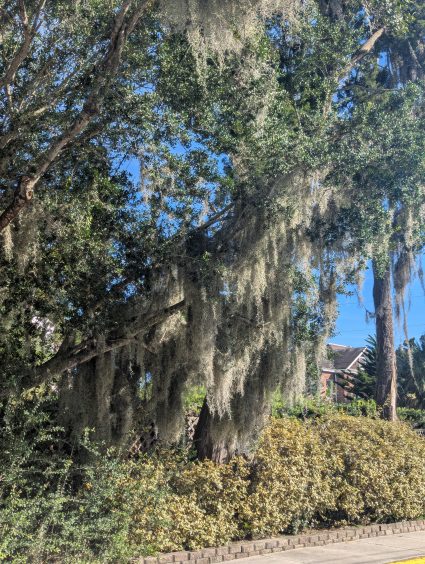
We ambled around the city, looking at the charming homes in the residential area. Gardens were in bloom and the fragrance of Angel Trumpet flowers permeated the air. I am fascinated with Spanish Moss.

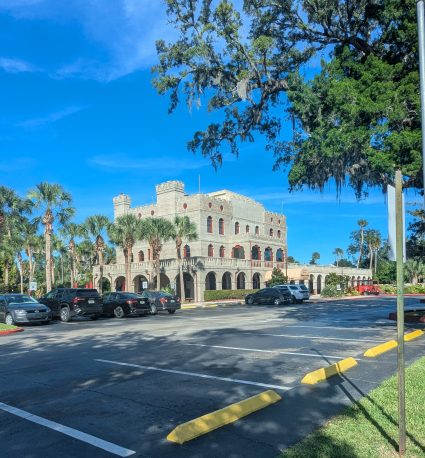
We came upon The Warden Winter Home. It is a Moorish Revival style castle built in 1887 by William Warden who was a partner in the Standard Oil Company with John D. Rockefeller and Henry Flagler. It was purchased in 1941 by Marjorie Kinnan Rawlings, author of The Yearling, and her husband, Norman Baskin. They remodeled it as the Castle Warden Hotel and it was frequented by notable writers of the time. In 1950 the hotel became the first House of Oddities when Robert S. Ripley bought it to house his collection of…oddities. It has come to be known as Ripley’s Believe It or Not Museum.

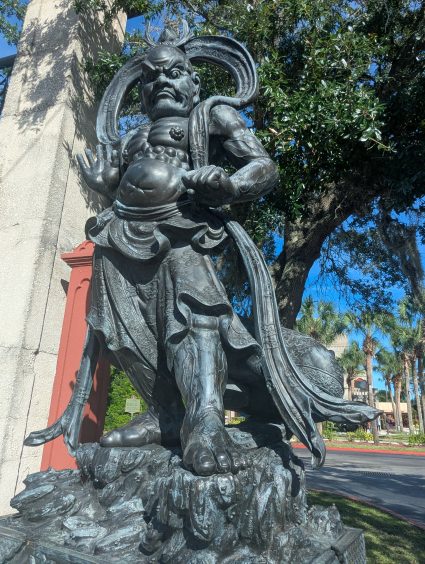
Angel’s Trumpet Spanish Moss draped tree Guardian at the Gate~Halt all Evil Ripley’s Believe it or Not

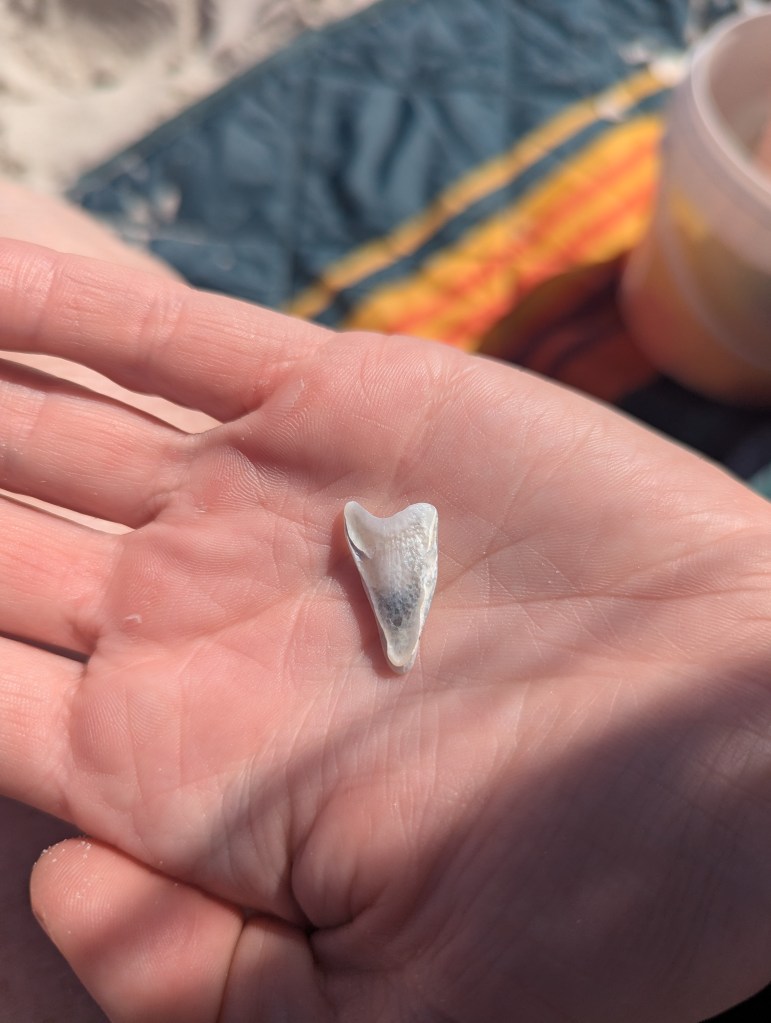
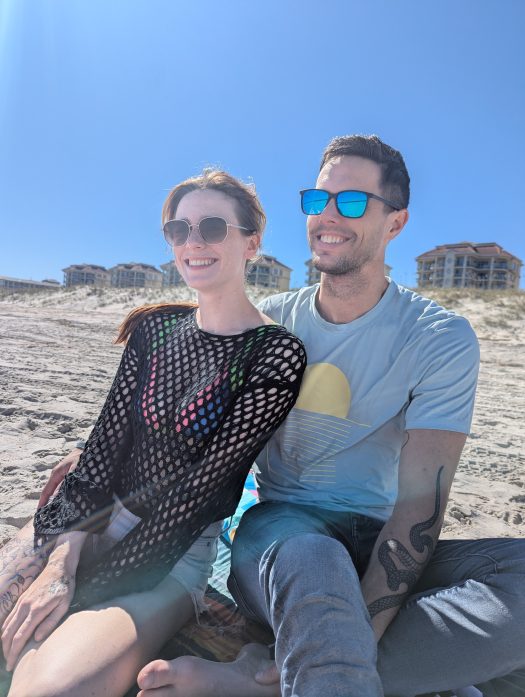
I’d been longing to spend time on a beach and feel the energy of the ocean. My wish came true the day we spent at Ameila Island. The sun was warm, the sand was white and powdery, and the ocean was the perfect temperature. Amelia Island is known as a place to find shark teeth. Lauren and I sifted through ocean residue along the surf line filled with shells of all shapes, sizes, and colors, looking for shark teeth. We found several specimens but weren’t sure if they were pieces of shell or shark teeth. What do you think?

Lauren’s boyfriend, Tim, joined us. He’s a Twenty-first Century Renaissance Man. He plays guitar, bass, drums and violin, and he’s an artist. He has a degree in biology and taught himself coding and creates software. They met when they were in a rock band. Tim played bass, Lauren was the singer. Tim recently published a record album Complex. The name of his band is The Model. Lauren does vocals. You can hear it on YouTube or Spotify.  

I’m happy they found each other.

On the way home we stopped at a roadside fruit stand that also featured an alligator farm. The display that faces the road exhibited the most beautiful pink grapefruit I’ve ever seen; big, golden globes tinged with rose, like a sunset. I love pink grapefruit and had to have some. In recent years I’ve been disappointed with the grapefruit available in grocery stores. They are small and expensive. Here, they are beautiful and, coming from an area where they are grown, they had to be reasonably priced. Right?

When we got out of the car, Lauren noticed that the grapefruit on display were fake, made of concrete or some other hard substance. The real ones were similar to the ones I find at home and just as expensive. I did buy a few to enjoy and share with Lauren and Tim.

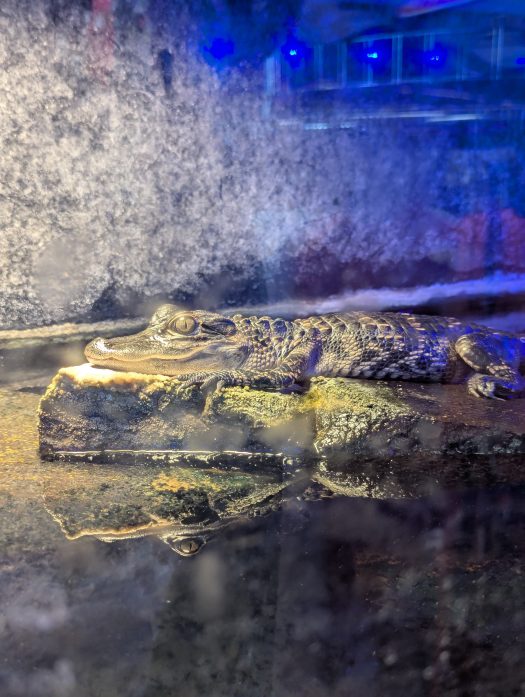
One of the young men who worked in the store asked Lauren if she wanted to see the Alligator Farm. The farm turns out to be a tank in a corner of the store containing two baby alligators. The large one, seen here ignored us, but his smaller roommate (not shown) was lively. He responded to taps on the aquarium by the young man by jumping to the top of the tank.

Jacksonville is the tenth most populous city in the U. S. with 1.1 million people, approximately the same population as the entire state of Montana. The largest employer is the Naval Air Station. It’s the birthplace of the Blue Angels and hosts their air shows. We spent time in the Riverside and Avondale areas along the St. John’s River and visited the Riverside Arts Market where they sell handcrafted jewelry, pottery, candles, art, and home baked goods. There are food trucks representing cuisines of the diverse populace.

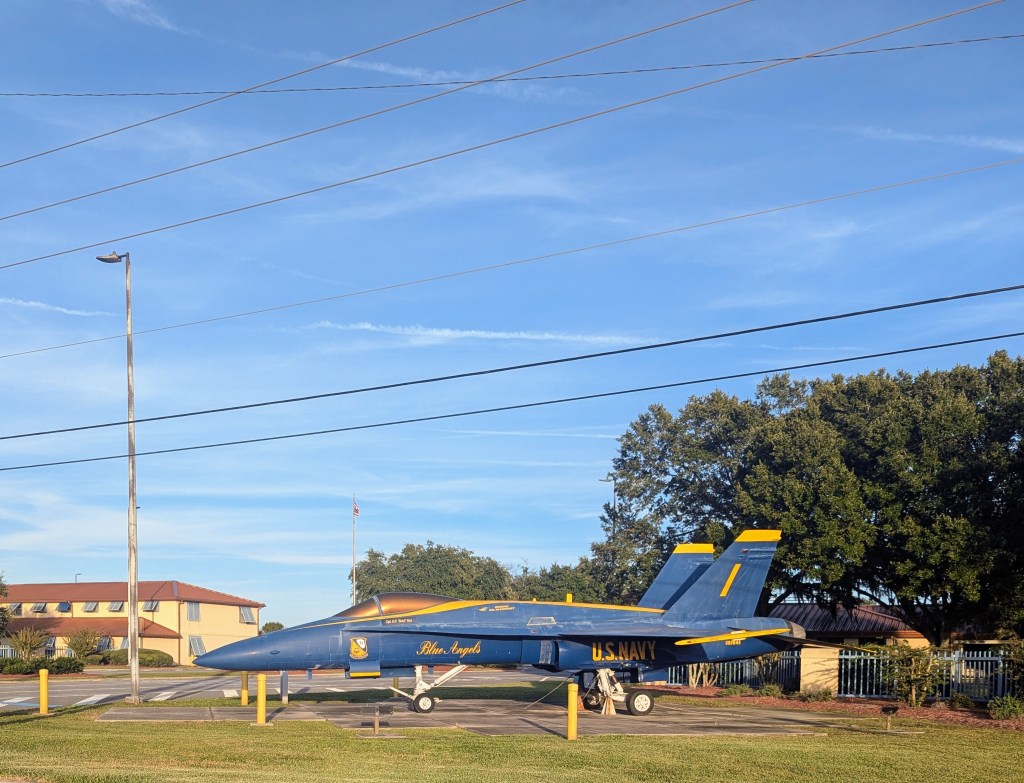
Lauren and I were enjoying lunch on a park bench beside the river when the sky split open with a shrieking roar. I nearly jumped onto Lauren’s lap. “Oh, it’s just the Blue Angels taking off,” Lauren said. I looked up and saw a blue blur disappear into the heavens. Then another Blue Angel came screaming out of nowhere. This time I was startled rather than terrified and watched it make its vertical ascent. Once I calmed down, I was sorry that I hadn’t captured a photo of one of them in flight. This photo of a Blue Angel Boeing F/A-18 Super Hornet on display outside the naval station will have to do.

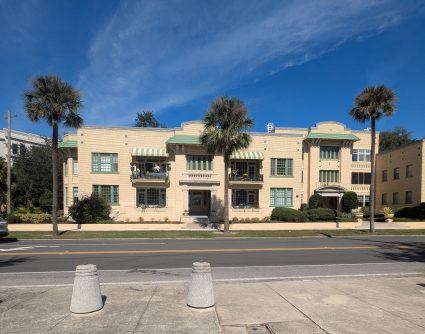
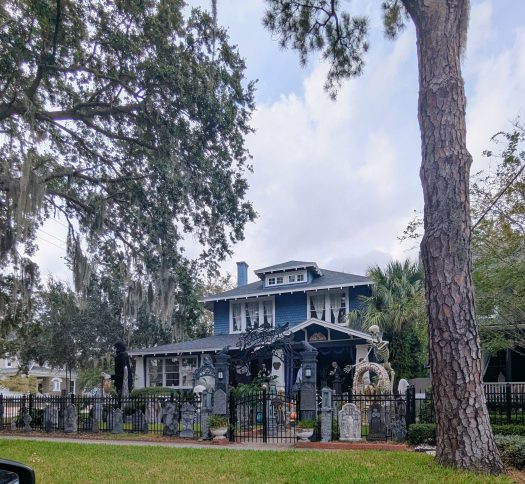
The Riverside-Avondale area is a lovely, walkable residential area with a mix of apartment buildings and older homes, all of interesting architecture from Art Deco to Victorian, Craftsman bungalows, Colonial Revival, Tudor, Italianate, and Spanish. Five Points is a cluster of unique shops, eateries and gastropubs, and an art house movie theater.

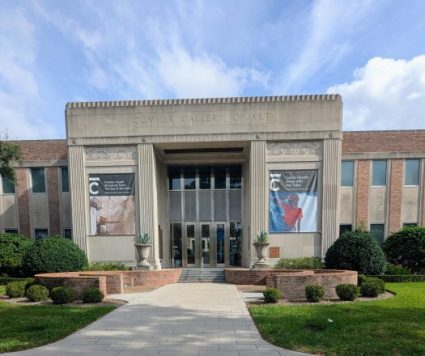
We spent an afternoon at the Cummer Museum which has an Italian and an English Garden. Works of Andrew Wyeth are currently exhibited.

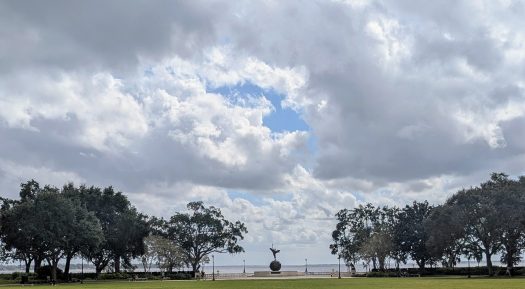
Riverside Park and WWI Memorial

“Spiritualized Life” Winged figure of youth rising triumphant from the swirl of war’s chaos which engulfs humanity and faces the future courageously.” May that future be war free.

The best part of the trip was spending time with Lauren. I have many precious memories of time spent with her as a baby and a little girl. She was bright and eager to learn. I taught her how to write the alphabet and I read many books to her. When I picked her up from pre-school and asked how her day was, she’d say, “I love everybody and everybody loves me.” I went to all the concerts and plays she was in throughout elementary and high school to hear her sing. Even in choir, I heard her sweet, clear voice above all the others. She’s carried her pre-school positive attitude with her throughout her young life and now she is a successful business woman with two Dutch Bros stands and a third coming next year.

We drove around in her Volkswagen convertible with the top down and had wonderful conversations about what we believe in and what we look forward to on our journeys through life. Although we are different in temperament, I delighted in the ways we are the same. My first car was a Volkswagen convertible as is hers. Mine was yellow, hers is black. We love to cook and spent one evening cooking an Italian dinner. It was a fun. We are both self-sufficient and independent. Our paths are different and our homes are twenty-five hundred miles apart, but we are deeply connected not only by the bond of family, but also by mutual respect of who we are as women.

The Further Adventures of Franny and Freedom

It took six days to drive nearly three thousand miles from Missoula, Montana to Yaphank, Long Island. I spent two weeks visiting my siblings and cousin Teresa who was recovering from surgery. I stayed at her condo and visited her every day at the assisted living facility where she is convalescing. Most evenings I had dinner with my sister Kathy and brother-in-law Bob who live nearby. One night we made a traditional Italian dish usually made with baccalà (dried salted cod.) It would have taken days to soak the cod to remove the salt. Instead, we bought fresh cod at a nearby fish market. I haven’t been to a market with such a variety of fresh seafood in many years. We baked the cod with potatoes, onions, peppers, capers, olives, and crushed tomatoes sprinkled with oregano and drizzled with olive oil. It was delicious.

Sometimes we’d sit on the patio overlooking the pond. As the sky faded to dusk, little flickers of light danced in the grass, and then guided me on my walk home. It was magical. It brought back memories from my childhood, of summer evenings at my grandparents’ home in Huntington where I tried to catch fireflies in a jar to watch their lights glimmer, wishing I could fly among them.

Fireflies thrive in leaf litter and tall grasses in forests and fields, in humid environments and moist conditions. They are a threatened species because of diminishing habitat, pesticide use, light pollution, and climate change. Fireflies are thriving this summer in the Northeast and Midwest thanks to a warm, wet spring. If we stopped using pesticides, turned off the lights at night, and conserved wildlands, fireflies would make a comeback and children of generations to come will delight in Mother Nature’s summer evening spectacle.

My sister Sandy and I spent a day wandering around Stony Brook, a charming Colonial hamlet, and brother-in-law Fred made sure I had sfogliatelle, my favorite Italian pastry.

My brother and sister-in-law, Nick and Cathè Ann, are equine vets. They brought me to an event hosted by Manda Kalimian. A lifelong Hippophile and Equestrienne, Manda was shocked when she learned of the fate of old or unwanted horses, as well as the wild horses that are rounded up by the Bureau of Land Management (BLM) penned and sold at auction. She created The Cana Foundation, a non-profit organization to promote initiatives for returning wild horses into the ecosystem. Manda is working with Native tribes to release these majestic animals onto Reservation land for environmental conservation, integrating traditional indigenous knowledge with modern scientific research.

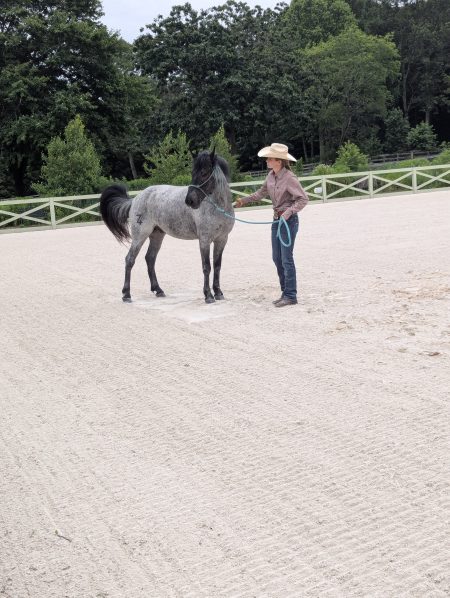
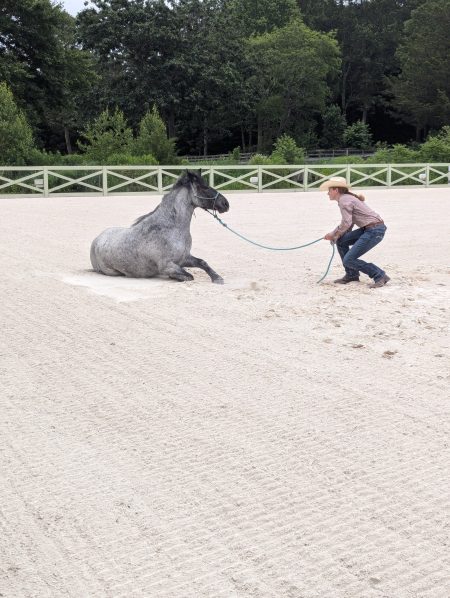
It was a beautiful summer evening at Manda’s stables where she showed two horses saved from auction. Because they’d lived in captivity before Manda rescued them, they’d lost their natural herd instinct, the ingrained social behavior of wild horses to live in groups. The younger horse, Luke, had many physical problems when Manda rescued him. She asked Nick and Cathé Ann to save him, and they did. Below are some photos of Luke and his trainer, Brooklyn.

You can read about Manda Kalimian’s path from horse lover to activist in her book Born to Rewild.

I left Long Island early on Sunday morning at the end of the July Fourth weekend. Traffic was steady on the Long Island Expressway to Queens where it grew heavier but was still moving. The approach to the George Washington Bridge was as stressful as the Holland Tunnel’s with multiple lanes merging from different directions. Once on the bridge, traffic moved at a steady pace.

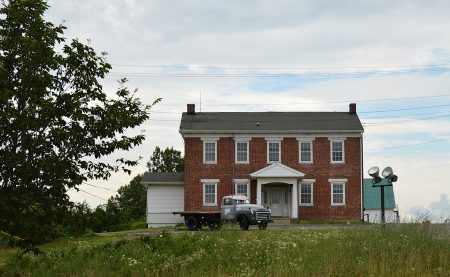
After several hours on I-70, I took the Lincoln Highway (U.S. Route 30.) Again, I was delighted by the beauty of Pennsylvania, on winding, hilly roads filled with farms and barns decorated with Hex signs, the folk art of stars and flowers. The area is steeped in history and it is reflected in the buildings such as the stately Toll House Number Two. The Pennsylvania Dutch architecture of brick or stone buildings are beautiful in their timelessness. Some towns have rows of abandoned homes and I wondered if they could be restored. With so many jobs being done remotely, wouldn’t it be lovely to live in small cities, close to nature with fresh food grown nearby, instead of making further incursions into nature for development.

It was late afternoon when I arrived at the Flt. 93 Memorial. The site is stark in its commemoration of the events of September 11, 2001. I was deeply moved by my visit there. You can read more about it in my blog: Flt 93 Memorial.

When I planned my route, I knew the Memorial was off path, but it didn’t seem far. I needed to retrace my course over hills and around curves as the sun was setting. My destination was Somerset, but when I arrived in Bedford, I’d had enough driving for the day. My reservation for the night was at a Hampton Inn and when I saw one on the side of the road, I detoured and pulled into the driveway. I told the woman at the desk that I didn’t think I could make it to the Hampton Inn in Somerset. She said, “Don’t worry, I’ll take care of you.” When she said her name is Laura, I knew everything would be all right. Laura was my mother’s name. She called her affiliate, cancelled my reservation, and gave me a nice room on the first floor. There was no hassle and no additional fee. I asked if there was a good place to eat nearby. When she recommended Hoss’s Steak and Sea House, it didn’t sound like my kind of fare, but I was hungry and it was nearby. Hoss’s had a soup and salad bar that was excellent. The soups were made in house, as well as the salad dressings, potato salad, and coleslaw, and the salad components were fresh. It was one of the best meals I had on the road.

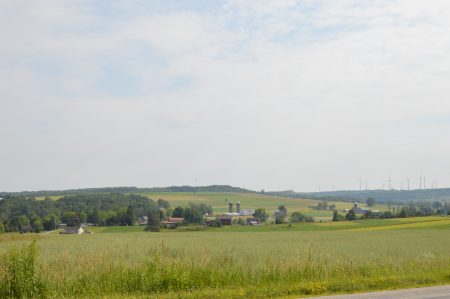
In the morning I continued on the Lincoln Highway to Huckleberry Highway and then to “Shortcut Road.” I passed four horses pulling a cart followed by a vintage grain drill. It was driven by a boy who looked about twelve or thirteen years old. The farms grew corn and the hillsides were lined with wind turbines generating electricity, a picture of the past and present coexisting.

When I stopped in Triadelphia, W. VA to charge Freedom, a man came to me and asked for help. He was elegant, dressed in yellow linen pants, a crisp white shirt, a vest, and a pale blue tie with tiny yellow daisies. He was transporting a Mustang EV and needed to use a charger but didn’t know which way to park so that the hose would reach the Mustang’s port. Another couple came over and together we helped resolve the problem. I wish I’d had the presence of mind to ask the man, whose name is Michael, if I could take his picture. He was splendid!

As I drove on towards Columbus, OH, the horizon was a dark wall rolling in the direction I was driving. Soon there were streaks of lightning, booms of thunder, and a burst of rain that came down in sheets. It was raining so hard that I couldn’t see past that deluge of water coming from the sky. Traffic slowed to five miles an hour. The road was now a river. Driving was sheer terror for what seemed forever and a day but may have been only ten minutes. The rain ended as abruptly as it began.

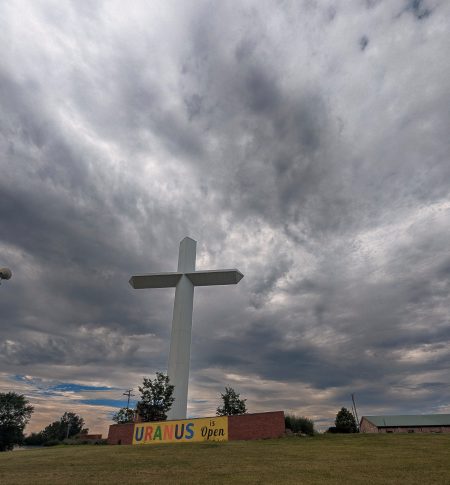
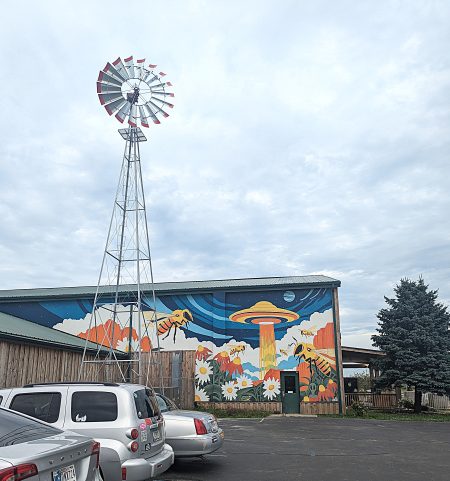
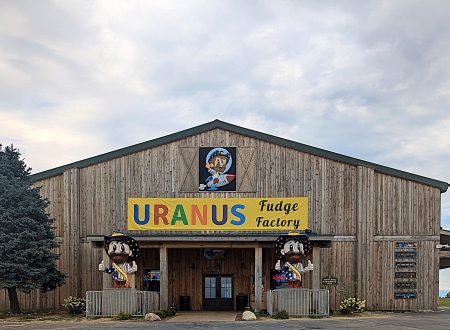
As I neared my destination, Richmond, Indiana, there were billboards advertising Uranus Fudge Factory. The ads were humorous and took the edge off the panic I felt driving through that tempest. When I exited I-70, there it was, Uranus Fudge Factory beside a one hundred foot tall cross. Of course, I had to stop to investigate it. The steel frame cross was erected by New Creations Ministries to “provide hope, direction, and light to travelers.” The site was a church, Bible college, and camp for troubled teens. Struggling with debt, the property was sold in 2016 to Uranus Fudge Factory. I bought some fudge and spoke with the young man who worked there. He said there are plans for developing the fifty acre property into some sort of amusement park.

Late afternoon the next day, I stopped to charge Freedom just outside of St. Louis when it started to rain. I returned to I-70 and after a few minutes on the road, it was as dark as midnight, flashes of lightning filled the sky, thunder rumbled in the distance. The rain came down as heavily as the storm the day before. I saw a sign indicating a hospital nearby and got off to wait out the storm in the hospital’s parking lot. The lightning and thunder passed and the rain subsided half an hour later, and I was on my way again. By the time I arrived in Columbia, Missouri, I was exhausted and ready to sleep.

I scheduled a short drive for my fourth day on the road so that I could spend time in Abilene, Kansas. It was a pleasant ride, the blue sky filled with cumulus clouds. One of those clouds broke up into little clouds that formed a school of hungry fishes swimming open mouthed in the sky ocean. It seemed appropriate. The air is so heavy with humidity in the East and Midwest that I felt as if I was underwater while I was there.

Farther along a white plane painted yellow under its wings was flying across the freeway performing roll maneuvers, turning and making touch and go landings on the farm on the other side of the freeway. It was like watching a butterfly at play.

I spent the afternoon at the Eisenhower Museum and Library in Abilene, Kansas. President Eisenhower was an extraordinary human being. I loved learning more about him and wanted to cry thinking about everything that President Eisenhower did for our country and the world, and what the current administration is doing to it. My next blog will be about my visit to the Museum.

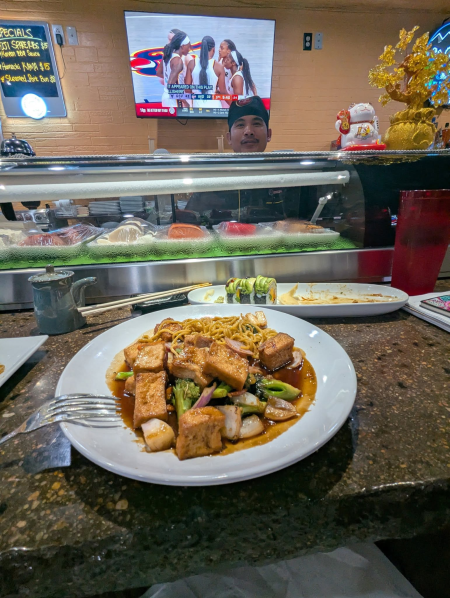
I was charmed by Abilene, its rich history, and Heritage Houses. I had dinner at Fuji Asian Kitchen. It was fabulous. I was famished and ordered more food than I could eat. Everything was delicious. I had veggie roll with mango, and tofu and vegetables with lo Mein noodles.

This is Mo, Sushi maker extraordinnaire.

As I drove the next day, classical music flowed in and out and among my thoughts: violins, cellos, pianos, clarinets, flutes, and the occasional emphasis of trumpets as I reflected on my experiences over the past few weeks. It seemed that everywhere I looked corn was growing, ninety million acres of it throughout the Heartland of America, the majority of it used for livestock feed and ethanol fuel production.

I stopped in Hays, Kansas to charge Freedom and went for a quick walk before returning to I-70, known as the Dwight D. Eisenhower Highway through Kansas, also called “The Ike” for the beloved President who created the interstate highway system. I sent a blessing to his memory and prayed for a new Ike to lead our country.

The wind picked up, blowing dust across the highway. In the distance a citylike mirage appeared on the horizon. Drawing closer, I saw that it wasn’t a city but a cluster of silos of seven to ten stories high. I wondered how many of these are needed to store ninety million acres of corn.

Just as I was beginning to think there would be no end to the wind, the dust, cornfields, and silos I saw the exit for Highway 86. The terrain changed as soon as I was on this country road. It was gently rolling and green, still agricultural, but now there were cattle ranches. Before long, I was in Castle Rock. I spent the weekend there and in Colorado Springs visiting family and friends.

Monday morning I headed north on I-25. I was surprised and delighted that there was little traffic going through Denver and I made good time up to Johnstown where I charged Freedom. Soon I was driving on I-287, a beautiful drive that made me appreciate Wyoming even more.

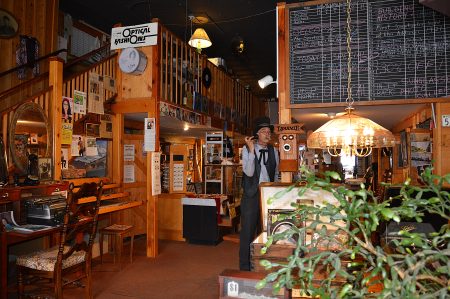
I arrived in Laramie, Wyoming too early to check into the hotel, so I spent the afternoon in the historic Old Town. I walked into The Spectacle Emporium because it looked like a museum. I felt as if I had entered a time warp; there were lenses for eyes and cameras spanning decades and centuries. Soon a tall, thin man in slacks, vest, western bowtie, and top hat emerged from the depths of the store. Steve Grabowski, the proprietor and optician, plays the part. He makes period glasses for individuals as well as for movies and TV shows. He also makes house calls. I spent a half hour in the store talking with Steve and listening to his stories. He is witty and I enjoyed a healthy dose of laughter.

Next door is the Wyoming Women’s History House. There are exhibits of how women lived and kept house and family when Wyoming was being settled, and they proudly show the role women played in politics. In 1869 when it was still a territory, Wyoming gave women the right to vote and hold public office. On September 6, 1870, Louisa Swain was the first woman to vote in Wyoming. In 1890 when Wyoming prepared for statehood, they chose to include women’s suffrage in the state constitution. When the U.S. Congress opposed this measure, Wyoming’s legislature replied, “We will remain out of the union one hundred years rather than come in without our women.”
In January, 1925, Nellie Tayloe Ross became the first woman Governor of Wyoming and in the United States.

Their motto is, “It ain’t braggin’ if ya done it!”

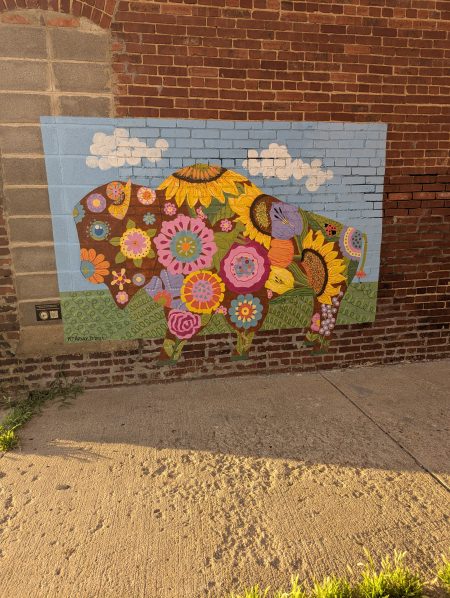
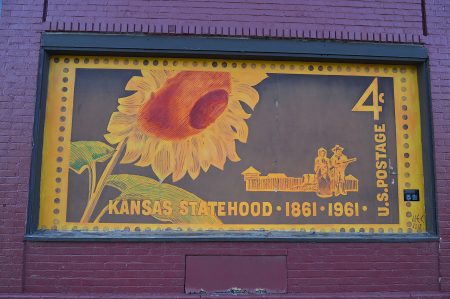
I spent the rest of the afternoon ambling around Old Town admiring the architecture and murals. I visited a bookstore that had once been a brothel. Up the street is The Chocolate Cellar where you can find fine chocolates and confections, as well as books and home decor. I had a pleasant conversation with Carrie Hansen, the owner. She recommended a stop at The Mercantile on my drive through Wyoming.

I spent a wonderful afternoon and evening in Laramie, Wyoming. Honestly, I think I fell in love with this city.

The next morning I passed the rolling foothills of Medicine Bow-Routt National Forest. Soon, the terrain changed to rocky flatlands with nothing to buffer the strong winds. Someone I spoke with in Laramie said that “they” were planning to line the hills with wind turbines and the views would be ruined. It seemed that everywhere I drove on this journey, I saw wind turbines, not only on hillsides, but also components being trucked to the sites where they’ll harness the energy of the wind.
There is concern about birds being killed as they fly into wind turbines. However, the largest cause of bird deaths is collision with buildings and windows. Pet and stray cats kill more birds than wind turbines, and far more birds are killed by habitat loss and pesticides than by cats and wind turbines.

As I was thinking this, I smelled it, the stench of hydrogen sulfide. Up ahead, in a depression in the flatlands sat a monstrous building wrapped in contorted pipes spewing vapors of stinky steam. A gas refinery. I wanted to cry. Not from the smell, but from the thought that there are people who still think pollution ridden energy is preferable to clean energy.

And now I learn that the current administration has opened thirteen million acres of federal land (your land and my land) for coal mining, as well as providing six hundred twenty-five million dollars to recommission or modernize coal-fired power plants that not only pollute the air, but also our waterways from tons of toxic waste dumped into them, all to meet the rising demand for power from growth in data centers (euphemistically called “the cloud”) and collection of information for artificial intelligence.

Photo by Leslie E Brady

I was ready for a stop at The Mercantile in Farson, Wyoming. In an area of arid high plains rangeland, it is one of only a few buildings on the crossroad of US 191 and WY 28. You will find gifts and local comestibles, but they pride themselves on being “The Home of the Big Cone.” And they’re not kidding. As much as I enjoy ice cream, I thought the double and triple scoops I saw other people eating would be a bit too much for me, so I ordered a baby scoop of Rocky Road. The beautiful young lady serving me filled the cone with a scoop as large as a regular scoop in other ice cream stores. I asked if that was a baby scoop. “Not yet, I have to put some more on.” I thanked her and said that what was already on the cone was sufficient for me.

I settled at a table and relished every lick of that delicious homemade ice cream. It was the best ice cream I’ve eaten in a long time. Also, the young ladies scooping the ice cream were cheerful. It adds to the enjoyment to be served by happy employees.

It was less than an hour drive to Pinedale where I spent the night. I went for a long walk and enjoyed the fresh, pine scented mountain air. In the morning I had breakfast at a garden café. As I sipped coffee and wrote in my journal, a little boy who looked about three years old stood next to me holding a toy truck in his hands. I smiled at him and said, “That’s a nice truck.” He nodded and ran off. He came back with a Matchbox car in his hands. I admired that as well. This time he smiled before running off. His parents apologized and hoped he wasn’t being a nuisance. I said that I was enjoying him and that I felt honored that he wanted to show me his cars. We chatted a while and Dad went to pack the camper. He likes to fish. Mom says, “Gather you cars, Jaden, it’s time to go.” He put two cars in the bag his Mom held open. “Where’s

the truck?” she asked. Jaden says he can’t find it. Mom gets up to look in the bushes for the truck. It’s time for me to get on the road. I say farewell to Mom. I bend down and ask Jaden if I could have a hug. He looks at the ground, considering, and then throws his arms around me for a quick hug. “Wow,” Mom says. He never does that.” I drove away with a full heart because a three year old shared his toys and a hug with me.

As I passed through Jackson, WY I had several glimpses of the Grand Tetons and regretted not planning a stop there. Another time.

I arrived in W. Yellowstone late in the afternoon. Ruby checked me in to the motel and gave me a map of Yellowstone Park. She suggested sites to see and that I get to the park by 7:00 AM to avoid long lines at the entrance.

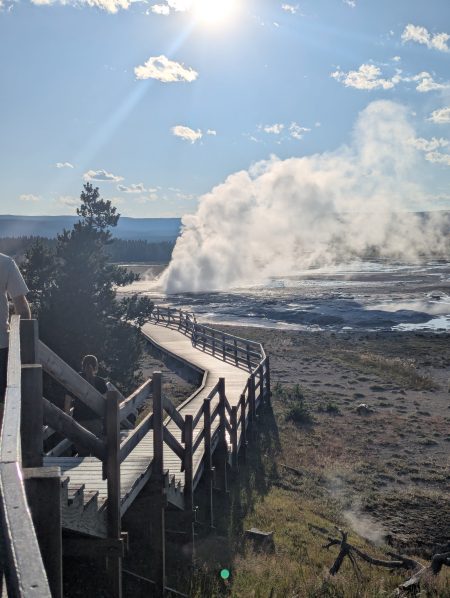
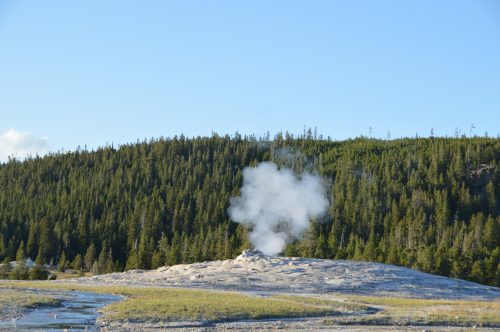
With three hours of daylight left, I decided to go the park. The crowds were gone when I entered the park. I stopped at the Fountain Paint Pots to view the otherworldly landscape. I read interesting information about cone and fountain geysers, mud pots, and fumaroles, which are vents in the surface of the earth through which volcanic gases and vapors are released. However, I failed to research Old Faithful. I thought its name meant that its faithful spout was continuous, but its faithfulness comes in its two hour cycle. Having just missed its most recent show, I left. I didn’t want to wait until 9:30 for the next one and then drive back to the motel in the dark.

Old Faithful

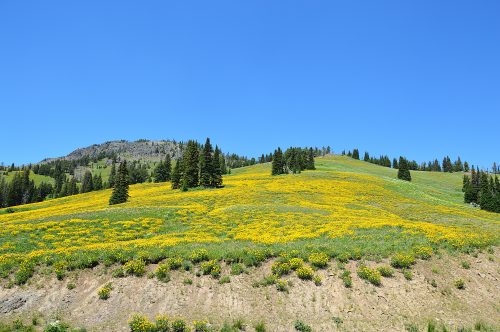
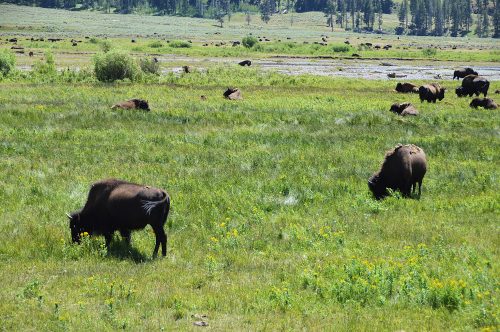
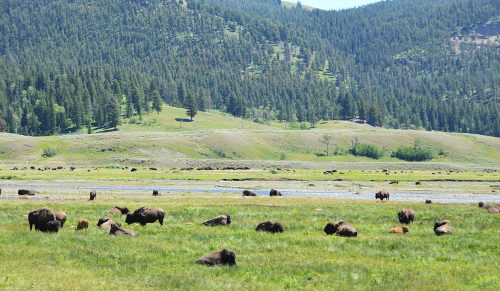
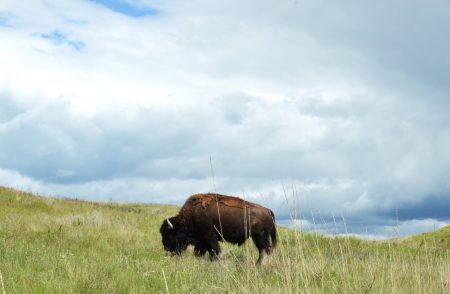
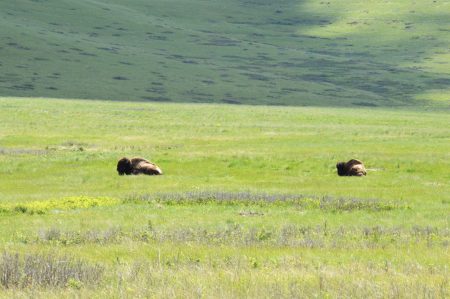
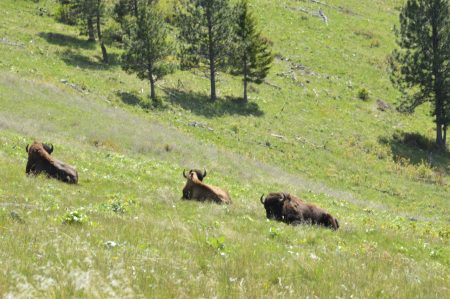
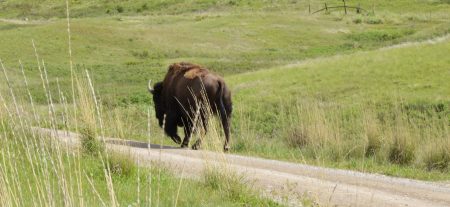
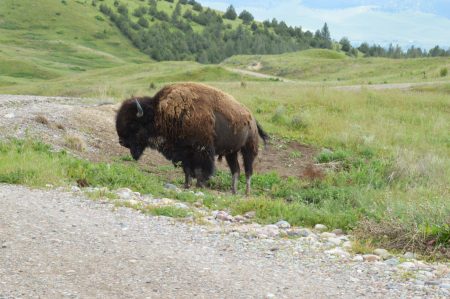
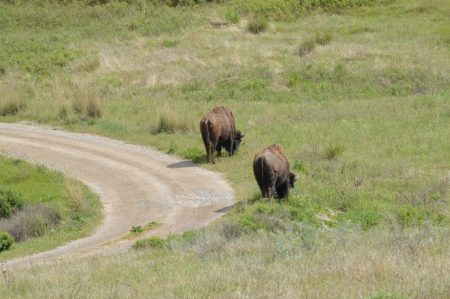
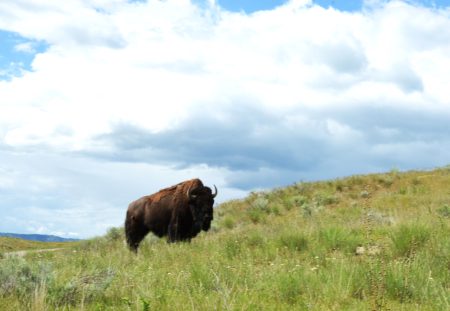
There was little traffic when I entered the park at 11:00 o’clock the next morning. Along the way to Lamar Valley there were more geysers, long ascents up winding roads with magnificent views of rivers threading their way around and through the landscape covered with wildflowers. Herds of Bison grazed throughout Lamar Valley. The red dogs (bison calves) stayed close to the cows, and the bulls wandered in groups.

The road began to rise again and I was driving through forest. Up ahead I saw cars parked along the road and people staring at the hillside. As I passed, a gentleman pointed, “Bear,” he said. I looked up and sure enough, there was a bear hightailing it out of there.

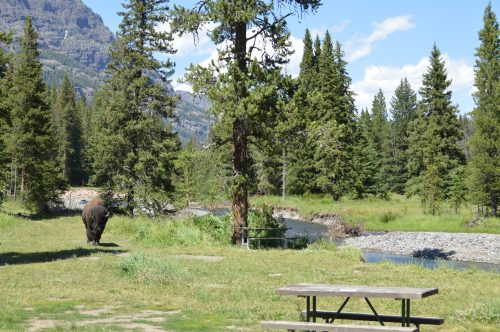
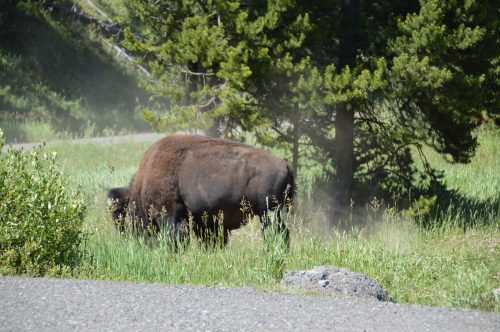
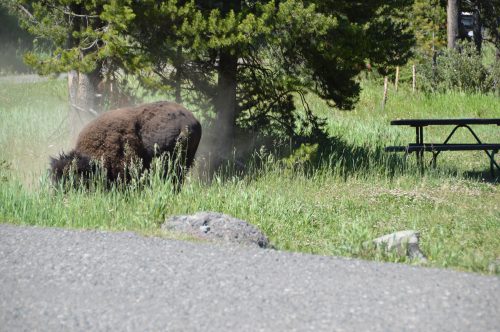
I realized that I’d been driving for three and a half hours. I turned around and stopped at Soda Butte Creek to stretch and breathe the fresh air before the long drive back to the motel. The creek sparkled in the sunlight and the sound of water splashing on rocks was soothing. I saw a man casting his line and sat on a bench to watch the motion of his rod flick the line through the air. I heard a man shout, “There’s a buffalo coming in your direction about fifty yards away.” I turned to see an SUV in the road and a man pointing to a path in the trees. I’m not an expert at judging distance, but there was a bison headed in the direction of the campsite and he was closer than seemed safe. People ran from picnic benches and the creek to the parking lot, ready to capture this magnificent creature on camera, or run if necessary.

That bull sauntered to the edge of the tree line as if he owned the place, kicked up some dust, and then rolled around in it with utter pleasure.

The next morning I went to a little café for breakfast and ordered a cheese omelet. When It was served to me, the cheese, though melted, was still wrapped in paper. Something broke inside me. For the two nights I’d been at this motel the people in the room to the right of me had the TV blaring from first thing in the morning until late at night. When they had a conversation, they needed to yell to hear each other. Someone in the room the left of mine snored all night. I was tired. Tired of eating in restaurants. Tired of being on  the road. I went back to the motel, checked out, and packed the car. On the way out of town, I saw a lone bison walking on the road. He looked tired, too.

As I drove, seeing all the beauty around me lifted my spirit. I scanned the foothills of the Tobacco Root Mountains from the vast expanse of the valley floor dotted with remote cabins and thought of the places I visited on my journey. The splendor of nature throughout this country delighted me. I was gratified with the pleasant interactions I had with people, but I was perplexed. People are nice on a one-on-one basis, so why is there such division and discord in our country? We all want the same thing, a roof over our head, good food to eat, loving companionship of friends and family, and to live in harmony with our neighbors. The specifics are different for all of us. Nature is abundant and there is plenty for each of us to have what we want and need. Sadly, there is an ethos of greed right now where some want not only what they already have, and also want more, to the detriment of those who have less. Throughout the centuries philosophers have taught moderation and treating others as we wished to be treated, from the “Golden Rule” as taught by Confucius and Jesus, to the Stoics’ philosophy to live in accordance with nature and to practice moderation, to Aristotle’s “Golden Mean,” even Ben Franklin, one of our Founding Fathers advocated a philosophy of moderation. I like the way George Harrison said it best, “All the world is a birthday cake, so take a piece but not too much.”

When I turned onto I-90 heading west, excitement grew within me with every turn of Freedom’s wheels, and I felt joyful when I arrived in Missoula. Home.

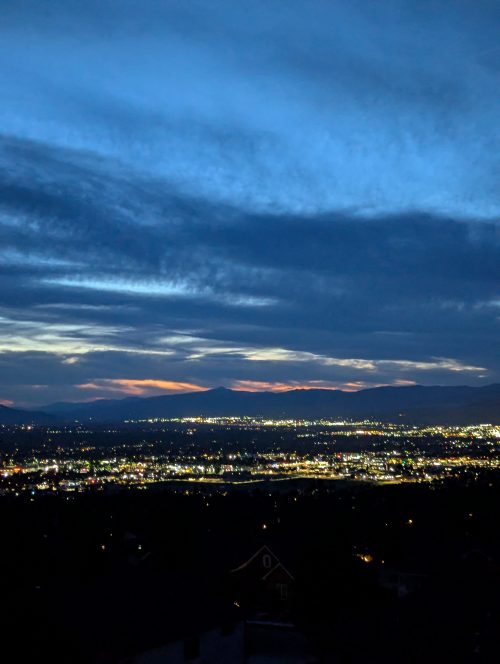
Missoula viewed from Stone Mountain

Flt 93 Memorial

At the end of the Fourth of July weekend, I made my way along the Lincoln Highway, around curves that exposed verdant farmland, and up and over the historic terrain of the Allegheny Mountains. The drive was slow and relaxing. I lost track of time and was surprised that it was past four o’clock when I arrived at the Flt 93 Memorial.

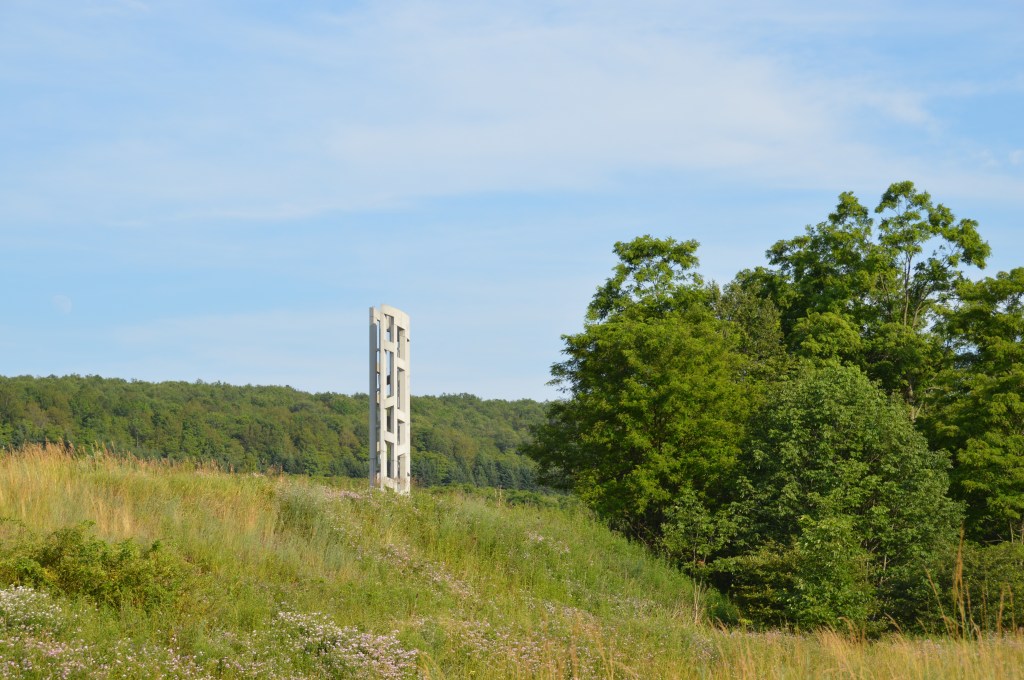
The gateway to the four hundred acre National Memorial is the Tower of Voices, a precast concrete and steel structure. It is ninety-three feet tall in honor of Flt 93 and contains forty wind chimes representing the voices of the passengers and crew members aboard the flight. The polished aluminum chimes vary in tonality and length from five feet to ten feet. The pitch of the chimes was conceived by composer Samuel Pellman, and constructed by a wind engineering consultant, an acoustics engineer, and a musical instrument fabricator. The chimes are activated by the wind and will sound at wind speeds of 15-25 mph. I didn’t hear the sound of the chimes. There were only gentle breezes the day of my visit.

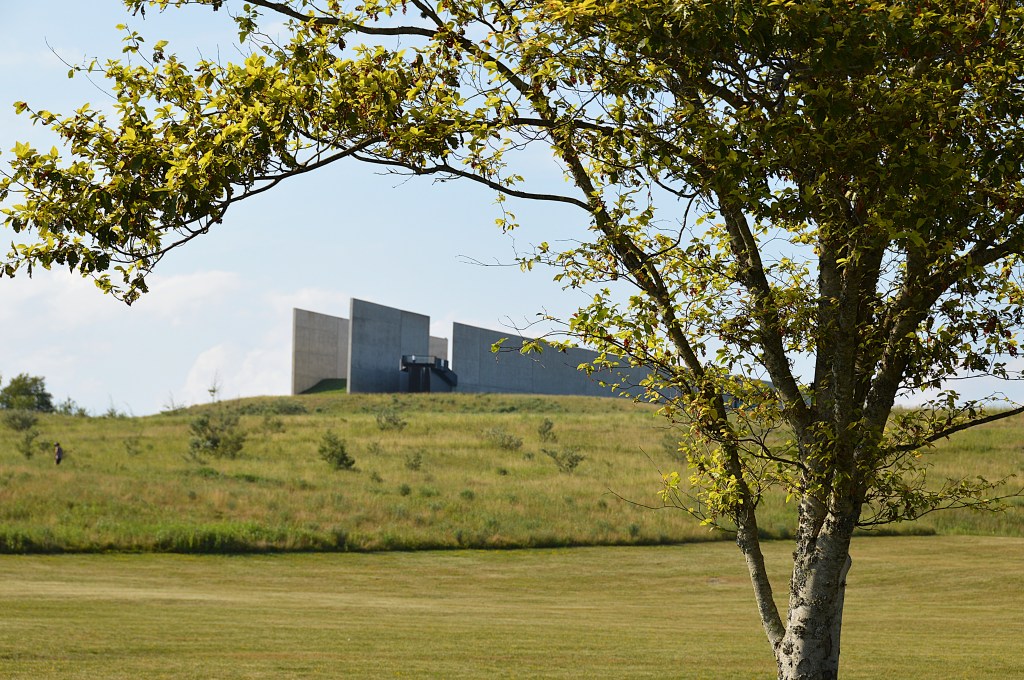
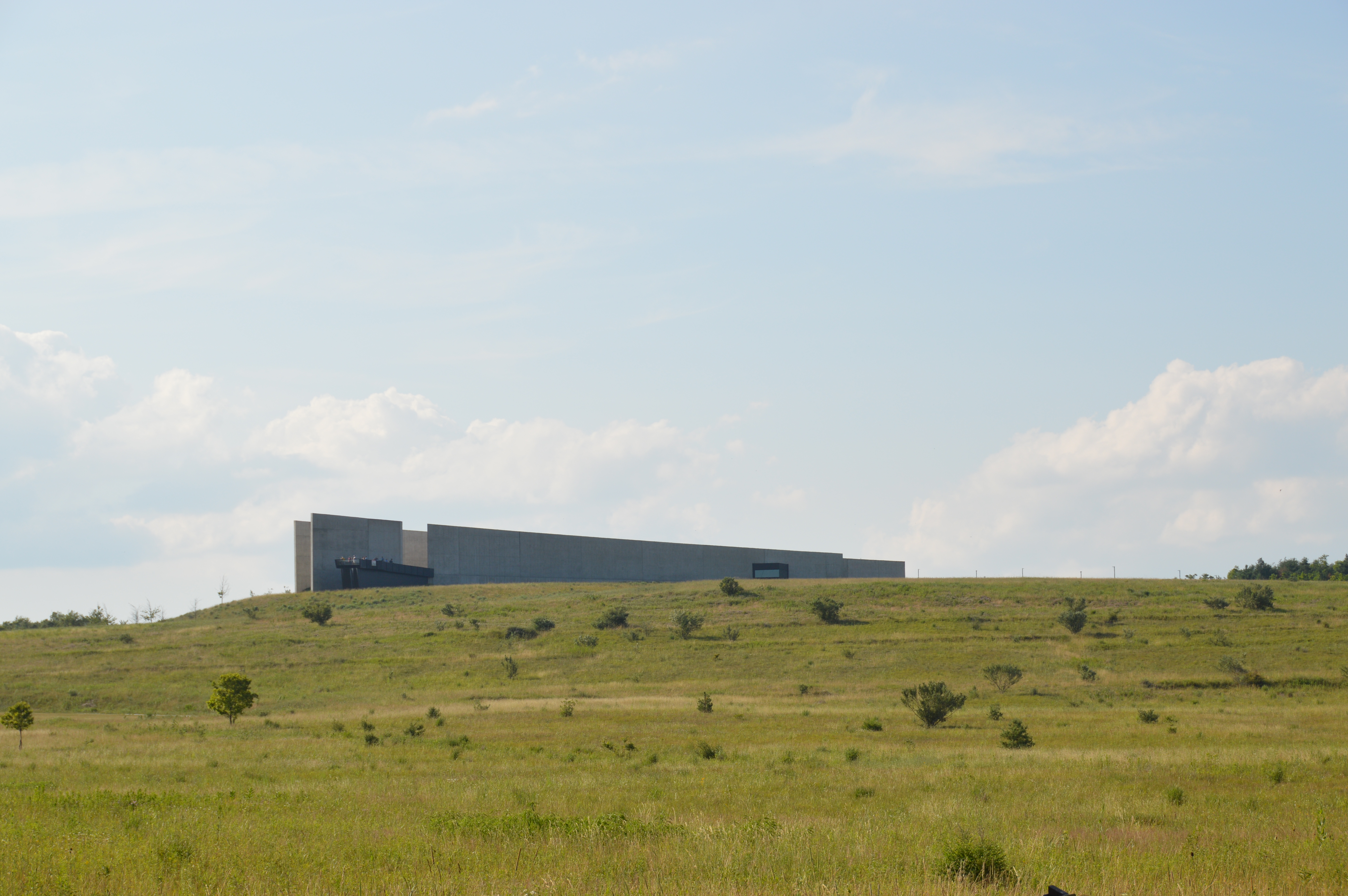
As I approached the long, angular visitor center, I decided to go straight to the memorial site because it was later in the day than I planned.

The site is stark in its commemoration of the events of September 11, 2001. I entered the pavilion to look at photos and read notes of interest. Other visitors spoke in whispers, if at all. A sense of solemnity and sorrow filled the air.

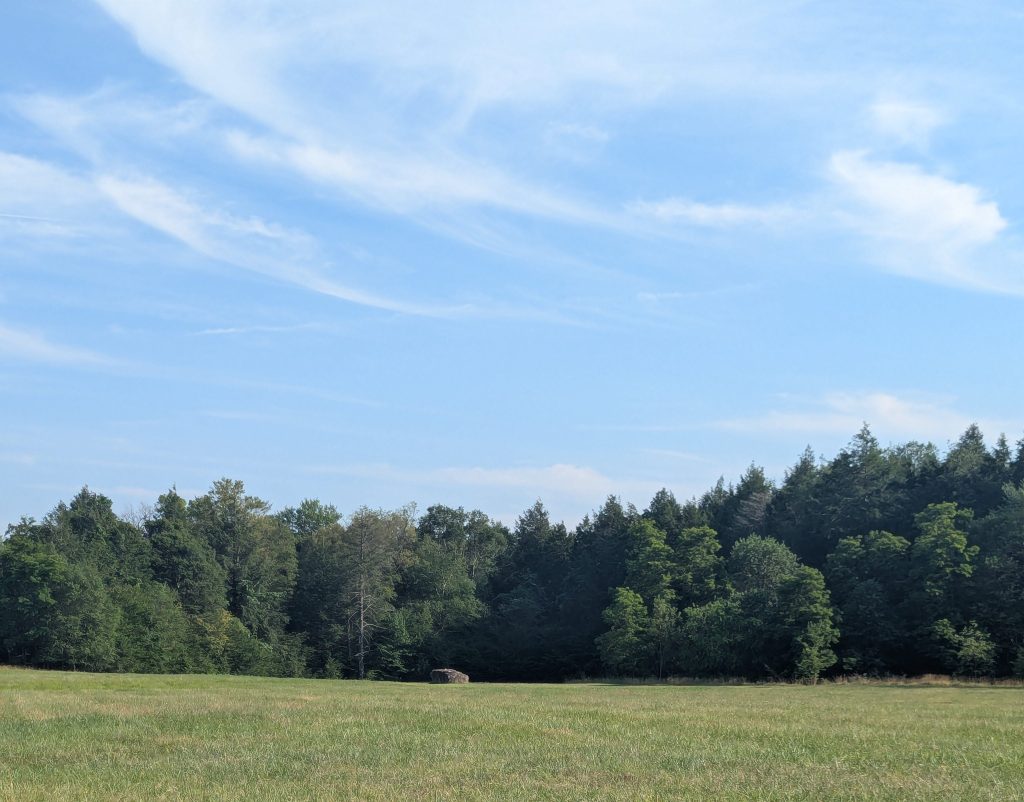
On the hill above the site, the Visitor Center is in line with the trajectory of the flight. There is a walk towards the Wall of Names, to the left is the Field of Honor where the plane made impact in a grove of Hemlock trees at 563 MPH, nose down in an inverted attitude. The crater measured approximately fifteen feet deep and thirty feet across. A seventeen ton sandstone boulder surrounded by wildflowers marks the crash site.

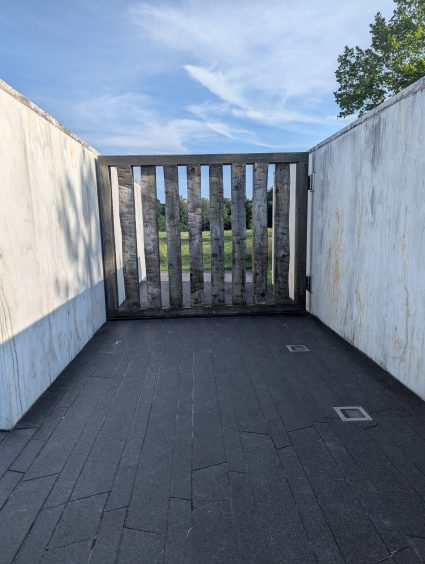
There is a ceremonial gate made from Hemlock beams. Forty angles within the gate represent the strength and unity of the crew and passengers who lost their lives that day. The public can view the site from the gate, but only family members are permitted to enter that sacred ground on September 11th.

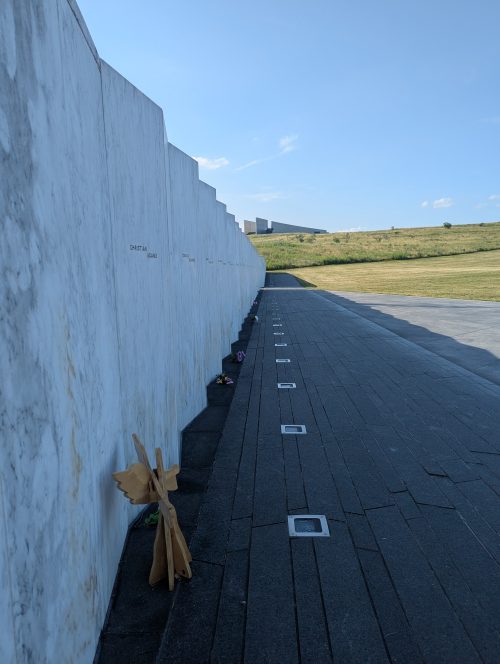
Here begins the Wall of Names, forty panels of polished white granite slabs, each inscribed with the name of a hero who fought back against the hijackers. I read each and every name, whispering it to the breeze with a blessing. When I read the name Lauren Catuzzi Grandcolas, I burst into tears. Beside her name is written “and Unborn Child.” Until that moment I didn’t know that there had been a pregnant woman on that flight. As a woman, as a mother and grandmother, the loss of this baby struck something deeply emotional within me. Of course, every life lost that day was precious, they were someone’s mother, sister, daughter, wife, father, brother, husband, son, friend, a soul in a human body; even so, babies represent hope for the future. I can only imagine the inner strength of this mother as she courageously faced the hijackers, and death, with a baby growing within her.

Lauren Catuzzi Grandcolas was a marketing and sales representative and a certified EMT. She was returning home from her grandmother’s funeral in New Jersey where she told her family that she was three months pregnant. She and the surviving passengers and crew members voted on whether to act (democracy in action) and then stormed the cockpit where the hijackers had taken control of the plane by ramming the door with the food cart. The plane crashed shortly afterwards. Their brave and selfless act saved the lives of many people in Washington D.C. that day.

On news reports, we heard calls made to family and friends by passengers and crew members. Here are Lauren’s last words on a voice message to her husband: “Jack, pick up sweetie, can you hear me? Okay. I just want to tell you, there’s a little problem with the plane. I’m fine. I’m totally fine. I just want to tell you how much I love you.”

9/11 is a universally shared event, and anyone over seven years old that day remembers the moment they heard that two planes had crashed into the World Trade Center in New York City, and then one into the Pentagon in Arlington, Virginia, and the fourth in a field in Shanksville, Pennsylvania. I remember the feeling of grief, not only for the country, but for the families of those who died that day. I thought about the people at work in the World Trade Center, looking out their office windows, seeing a plane headed straight for them, or at the Pentagon, or the passengers on Flt. 93 trying to overtake the hijackers, and I hoped that they all were filled with the Grace of God in their last moments.

What I remember most about that time in the days, weeks, and months after the horrific events of September 11th 2001, is the unity, the kindness, and compassion towards each other as Americans, and the support and kindness we received from the rest of the World.

At the time, I was working as a Beauty Advisor for a cosmetic company at a local department store. I remembered the days of stunned silence in an empty store in an empty mall. One evening an older woman came up to me. She said she was from Lebanon, an immigrant who had been taken in by America. She said that she loved America and was deeply sorry for what had happened, and that she wanted to show her gratitude to America by spending money to help the economy. She was going around to all the stores buying little things. She showed me a scarf she bought, and a pair of gloves, and some socks, all from different stores. As we talked she said, “All the people of the world want peace, it is the politicians who want war.” She bought a red lipstick, and I never forgot that lovely woman, not for spending a little money for the economy, but to uplift a grieving community and spread love.

Here we are, twenty-four years later, a divided country, families and friendships broken by divisive politics driving fear of the other, when we are really the same. Each of us wants the closeness of our loved ones, to enjoy peace within our homes, nourishment from the food we enjoy, and the pleasant acquaintance of our neighbors.

Yesterday, as I was formatting this blog to post there were two violent events, one at a college in Utah where a political activist who pushes a right-wing agenda on high school, college, and university campuses and recently said, “It’s worth it to have a cost of, unfortunately, some gun deaths every single year so that we can have the Second Amendment,” who was critical of gay and transgender rights and the separation of church and state, who said that women should be submissive to their husbands, who was anti-immigration, dismissive of climate change, and said that empathy was a “made up New Age term that does a lot of damage,” was assassinated. I do not believe or support any of the things this man promoted, but I am deeply saddened that he was murdered. A family lost a husband and a father.

Less than an hour later, at a high school in Colorado, a shooter died from a self-inflicted gunshot after shooting two schoolmates. I grieve with all of the students at Evergreen High School and their families. Too many children have died and/or been injured and traumatized by senseless shooting.

According to Ammo.com, there were over 840,000 gun deaths in the United States in the twenty-five years from 2000 to 2024. When will there be meaningful legislation to end this madness? Wouldn’t it be ironic if the murder of a pro-gun activist was the turning point?

I wrote this blog to honor those who lost their lives twenty-four years ago on 9/11, and to remind all who read this that there was a time when America was united. On my journey this summer across the Heartland of America, everyone I met was nice and helpful. I know we have it in us as a People to find our way back to that time and again be kind, caring, and helpful to each other.

“Imagine all the people
Livin’ life in peace

You may say I’m a dreamer
But I’m not the only one
I hope someday you’ll join us
And the world will be as one.”  John Lennon

ROAD TRIP

“’Cause tramps like us, baby, we were born to run…” Bruce Springsteen

On an overcast morning in the middle of June, I began my journey. I set the streaming service to the Bruce Springsteen station and the first song to play was Thunder Road. Bruce sang “…roll down the window and let the wind blow back your hair…” and that’s what I did.

It was a joy to be on the road again, Freedom doing what she loves best: long drives at freeway speeds. The rainy spring left the hillsides green and the highways edged with wildflowers. I watched the sky fill with rolling clouds as words from Bruce’s songs ran in and out of my awareness. Outside of Big Timber there was a cloudburst, a clear blue sky waiting up ahead.

An arrow along the highway pointed to the Beartooth Mountains in the distance. They looked like gentle, rolling foothills. I drove on the Beartooth Highway three years ago. There were steep inclines and sharp curves. The highest point is 10,947 ft. They were hardly the rolling hills I saw from I-90 that day.  It reminded me of how important perspective is. Things look (and feel) differently depending on how close you are to them.

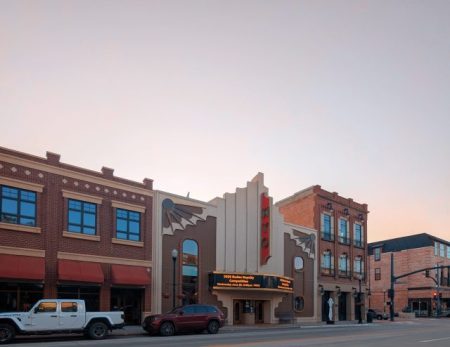
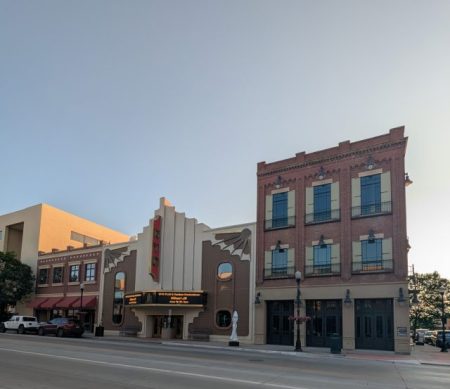
I spent the night in Sheridan Wyoming, a tidy little city with architecture from the Old West, and lovely Art Deco buildings from Franklin Roosevelt’s WPA that brought America out of the depression.

As I lie in bed that night, words from Bruce Springsteen’s songs swirled in my mind, words of love and desire, words of social justice in a Promise Land, words of Rising from the darkness of troubled times. The last thought I had as I feel asleep was, “I don’t think Bruce looks like a dried up prune…”

This was the first time I’ve driven I-25 through Wyoming that there haven’t been gusty winds. Like Montana, Wyoming was lush with wildflowers, having benefitted from an extended wet spring.

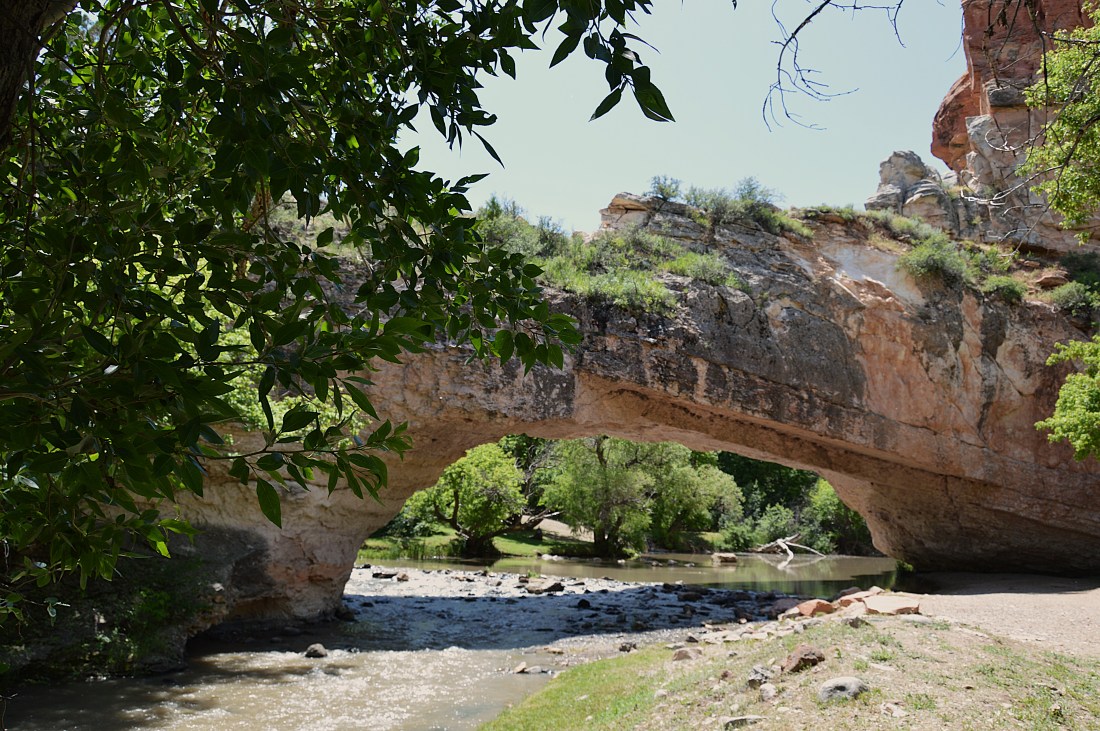
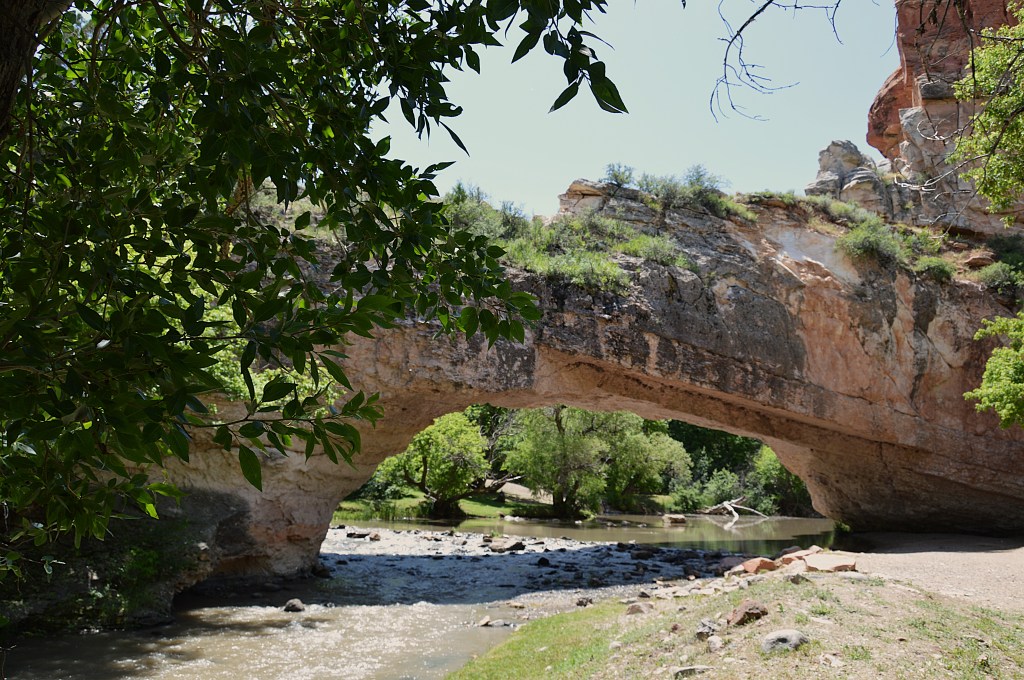
I stopped at Ayres Natural Bridge Park in Douglas. The road from the freeway to the park is narrow, curvy, and uppy downy. The dips are deep and the curves have hair pin bends. The drive was as startling as a roller coaster ride.

The park is at the bottom of a red rock canyon. Ayres Natural Bridge is one of only three natural bridges with water flowing under it in the United States. The sandstone bridge arch is fifty feet high and one hundred feet long. LaPrele Creek streams beneath it. It is a peaceful, secluded park with shady trees, picnic areas, a playground, sand volleyball courts, hiking, and fishing. There are camping spots for RVs under 30 feet.

Alva Ayres settled there in 1882. She was a freighter and bull whacker, driving oxen drawn freight wagons, a job that required animal handling skills, whip use and, I imagine, a great deal of physical strength and fearlessness. The more I travel around the west and southwest, the more women’s fingerprints become visible on the settling and building of this country. In 1920 Alva’s stepson, Andrew C. Ayres, donated land that included the bridge to Converse County.

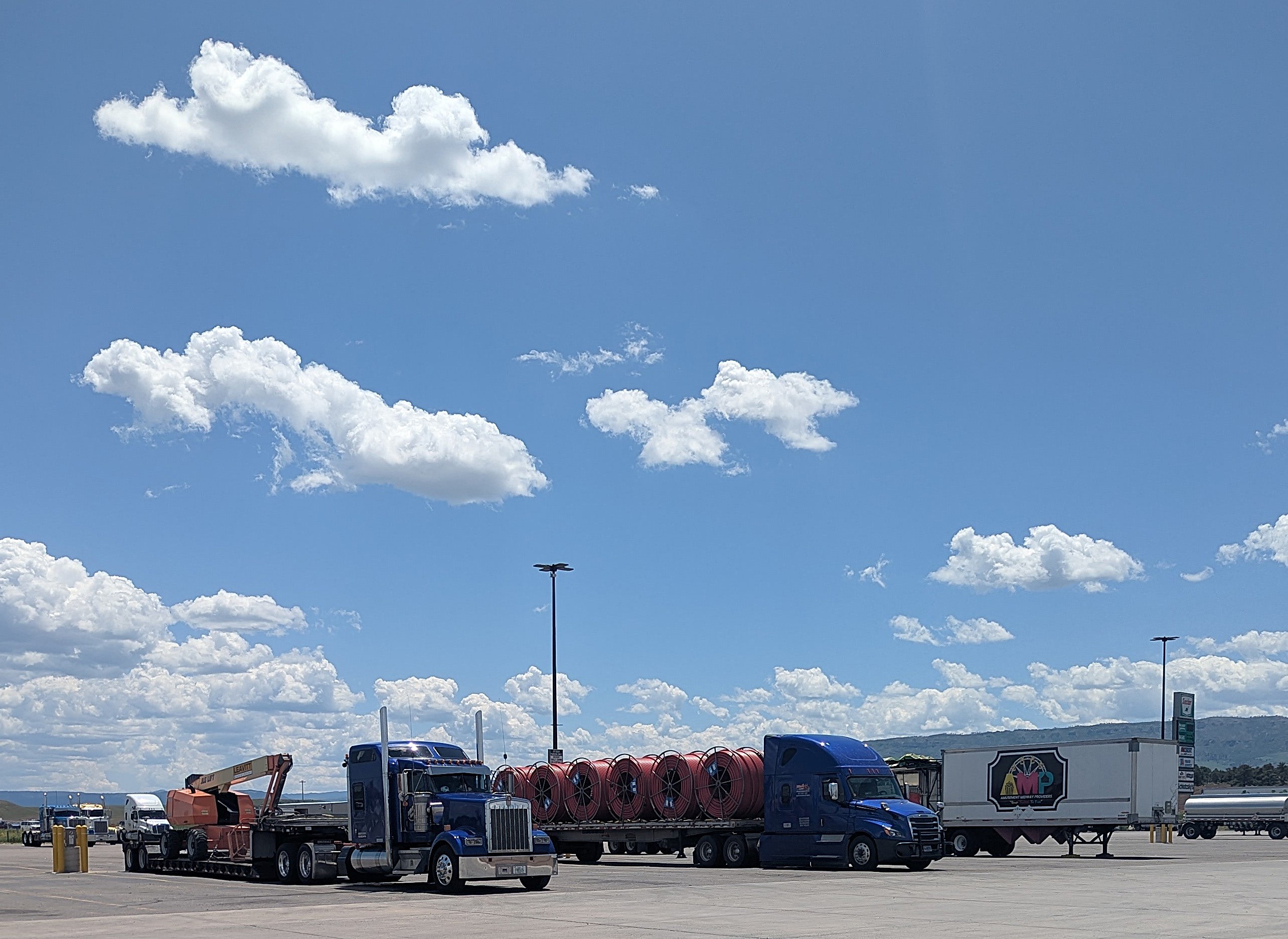
As I drove, I noticed that vehicles are more colorful, not only cars, but semi cabs are now in vibrant colors. I saw two semis side by side in lime green and neon orange followed by a bright yellow semi. They were spectacular! The variety of colors made me think of the boxes of crayons I had as a little girl, starting with the basic eight colors: six primary colors plus brown and black, followed by the box of forty-eight colors. On long stretches of highway across I-70, identifying the colors I saw became a game. There were the twelve shades of the spectrum: red, green, blue, yellow, cyan, magenta, orange, yellow-green, turquoise, light blue, violet and teal, in every hue. I even saw my favorite color, puce. I used puce to color the gowns of princesses in my coloring books. I looked up puce to describe it in this piece. It is pronounced “pooce” and is the French word for flea.

UPS has new semis to tote your packages across the country. I call it UPS brown, and there are at least fifty shades of gray: charcoal, gunmetal, aluminum, pewter, cloud, smoke, slate, dove…I could go on and on, but I’ll leave the rest for you to name. Streams of red, white, and blue semis, nose to nose or in a line were like the flag flying in the wind. When I was hungry I saw the colors as Candy Apple Red, Granny Smith Green, Orange Sorbet, Banana, and two semis side by side were Ketchup and Mustard. They entertained me, colorful streamers flowing across America.

The trucks I saw most were UPS, FedEx, and Prime. There was a time when I didn’t like driving near large trucks, but on this trip I found that truckers are safer and more courteous drivers than people driving vehicles.

The photos below were taken at a truck stop where I charged Freedom. I was unable to photograph the more colorful semi cabs on the road while I was driving. Perhaps I should get a dashcam?

KANSAS

Dust in the Wind by Kansas was playing as I drove through western Kansas, flat land with no hills or trees to slow down the wind, and billows of dust surging across I-70. I stopped in Goodland, KS to charge Freedom and go for a walk. The wind was so intense I thought I would be blown away. I don’t think Dorothy needed a tornado to get to OZ.

Towns were farther apart with miles and miles of farmland between, growing corn about as high as my knees for as far as the eye could see. There was less traffic here and highway billboards enlightened me.

  • KILL RELATIVISM NOT BABIES
  • Protect your Second Amendment Rights ~ Vote Pro-Gun in the Election
  • GOD IS PRO-LIFE

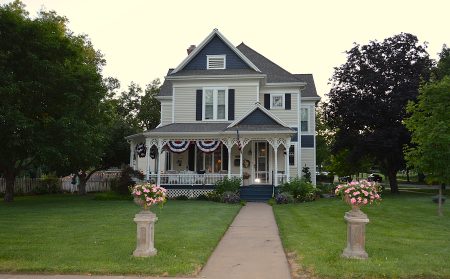
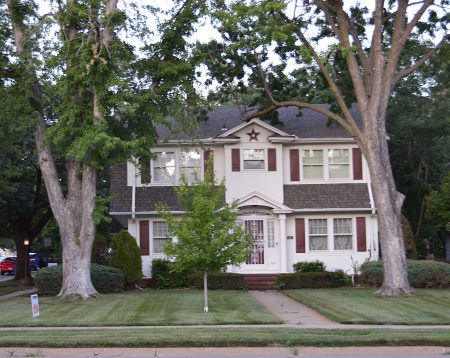
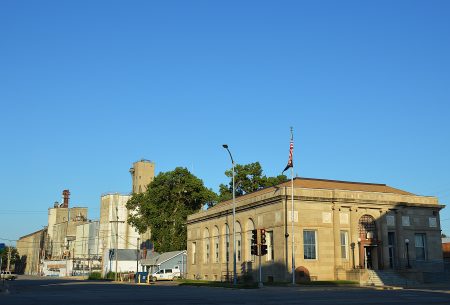
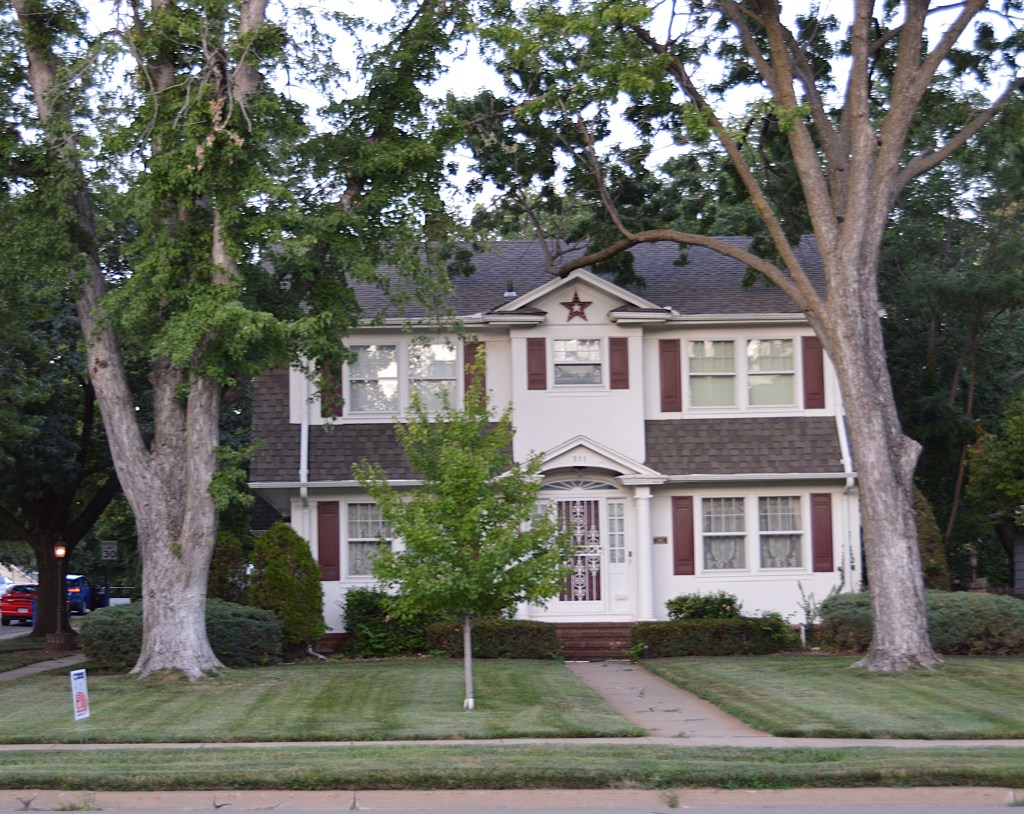
The next morning, I charged Freedom in Abilene, KS. I drove through the town and was quite taken with it. There is an area of Heritage Homes with well-maintained gardens along tree lined streets. It was a lovely respite from freeway driving.

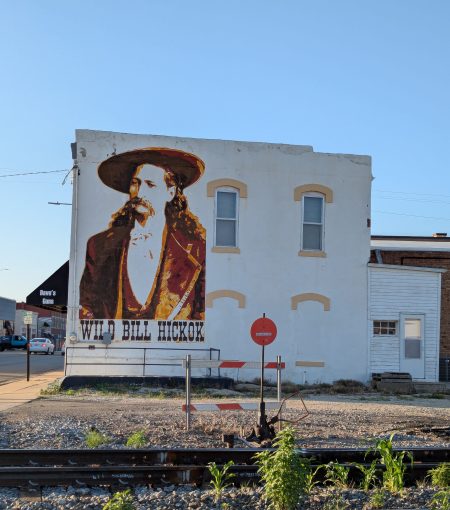
Abilene was part of the original Wild West, not merely a region, but also a period of time after the Civil War. It was at the end of the Chisholm Trail, where herds of cattle were driven from Texas to the railheads in Kansas. Wild Bill Hickok was Marshall of Abilene. His tenure ended after the shooting of two men, one who was his friend and deputy, killed accidentally in the heat of the fray. Wild Bill was devastated and relieved of his duties, and cattle drives were banned from Abilene.

I stopped at the Eisenhower Museum and Presidential Library for an hour. I had a long drive ahead of me that day, so I returned to Abilene on my return trip to spend more time at the museum. I will post a separate blog about my visit to the museum.

President Eisenhower was an extraordinary person. Among his many accomplishments, he was President of Columbia University from May 1948 until January 1953. Columbia recently paid $221,000,000 to the current administration and promised that it will not use “race, color, sex, or national origin” (DEI) in hiring decisions in exchange for $1,300,000,000 in funding that the government withheld on trumped up allegations of “antisemitism.” I can only imagine what President Eisenhower would say if he were still among us.

Andy Williams crooned Moon River as Freedom rose to the top of a freeway overpass, and Kansas City appeared before me. That was my theme song when I moved there to train and become a TWA Hostess. There was an emotional tug from the synchronistic timing of hearing that song, and the shock of seeing how much Kansas City had grown from the picturesque town it was when I lived there for a brief time in my life.

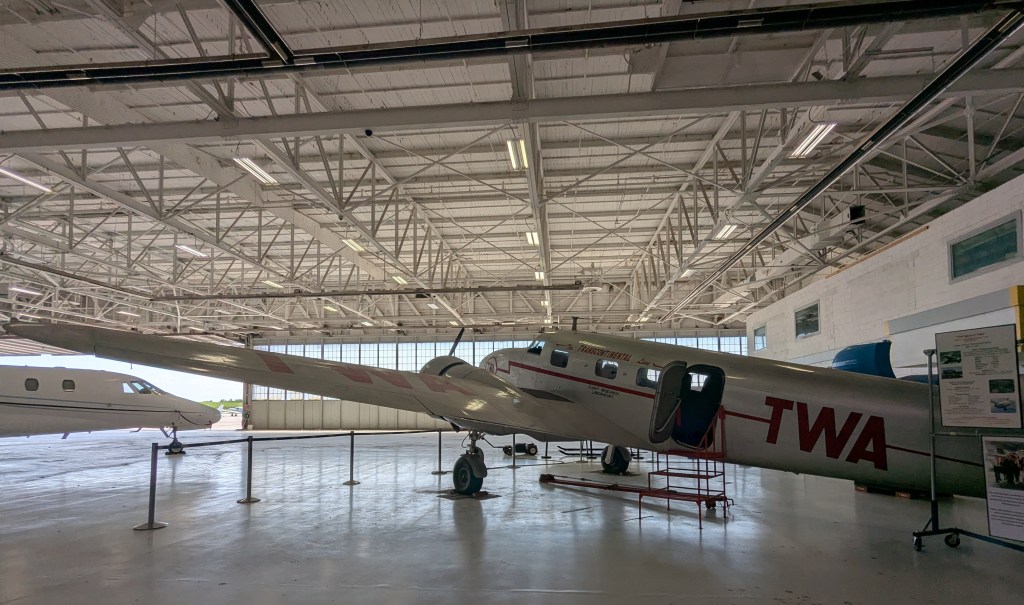
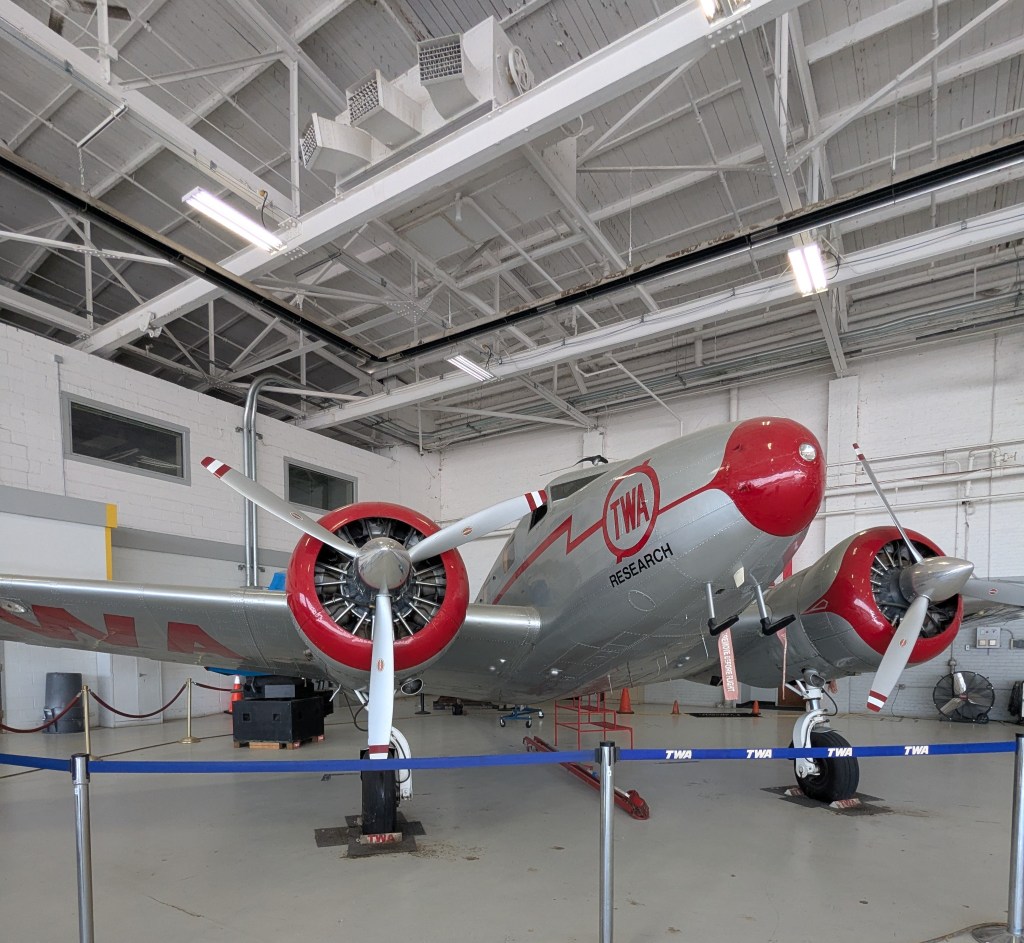
My destination was the TWA Museum. It holds the history of TWA from its inception in the 1930s by the consolidation of two airlines and the leadership of Charles Lindberg, Howard Hughes, and Jack Frye. The museum has artifacts that include a Lockheed Electra 12A , a section of a Boeing 707 that was used for training, and much more. TWA was a great airline and people who worked for TWA in any capacity, from flight crew, to maintenance, to reservations, Et al, are fervently loyal to TWA.  My visit to this museum will also be a separate blog.

Driving through St. Louis the next day was a mix of road construction and avoiding potholes. Once past that, my route took me through cities I had layovers in during my early days as a TWA Hostess. First was Indianapolis, IN called “India-no-place” by a fellow Hostess. Well, it’s someplace now. Indianapolis is a big city, clean and modern. The sprawling Indiana University medical complex is impressive. Like cities with rivers running through them, it has a lovely riverwalk.

I laughed driving through Dayton, OH remembering layovers at Desi’s Motel that looked like a location for a psychological thriller. I googled it, but found nothing. Desi’s may have vibrated to another dimension before google was a thing.

This was my fifth day on the road and the longest drive that I planned. Because of construction delays through St. Louis, I was on the road nearly twelve hours. When I arrived at the hotel in Triadelphia, WV, I took a quick shower and fell asleep as my head hit the pillow.

PENNSYLVANIA

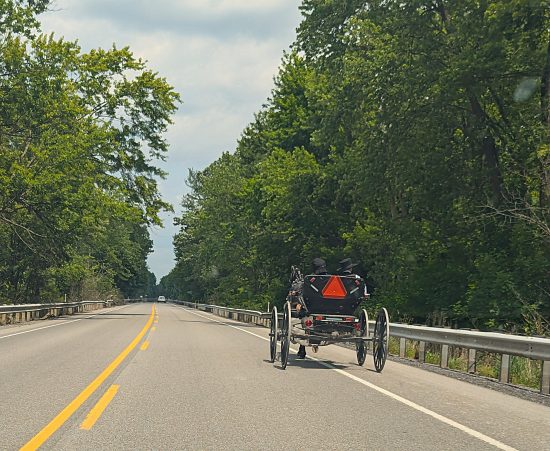
When I thought of Pennsylvania, big cities like historic Philadelphia and industrial Pittsburgh came to mind, so I was surprised and delighted to see its rolling hills and verdant landscape. I was also surprised to see that much of the state is agricultural. I enjoyed a peaceful drive through Amish country and wondered how the couples in horse drawn carriages driving on the road’s shoulder felt about the automobiles passing them on the road. As I drove deeper into the state, the rolling hills crested in the beautiful Allegheny Mountains.

Traffic was free flowing at speeds higher than the posted rate. There were vehicles driving at high speed weaving in and out of lanes. Motorcyclists were out en masse and I was shocked to see so many of them riding in t-shirts and shorts. As Pennsylvania intertwined with New Jersey, the traffic became heavier.

Soon I was on the Jersey Turnpike. After a turn there was a rise and before me was the skyline of Lower Manhattan, and I felt another emotional tug. I grew up in Brooklyn and Long Island, and Manhattan was my backyard and playground; it filled my imagination and cultivated my dreams. Now I return, no longer the little girl who wandered off to faraway places, yearning to experience all that life had to offer, but a woman filled with all that I met on life’s path: a sequence of endings and new beginnings, filled with successes and losses, with love given and love received, and ready for more.

I hadn’t been to the city since 2011 and the skyline, while recognizable, has changed. So many new, pointy buildings! I was in the thick of a massive traffic jam, cars coming from a maze of directions, all headed to the same four lanes of the Holland Tunnel. This was worse than the uppy downy, hair pin curvy road to Ayres Natural Bridge Park, the lane merges, road construction, and pothole dodging. I took long, slow breaths until I made it to the tunnel.

I thought it would be smooth sailing from there, but I needed to thread my way through lower Manhattan to the Williamsburg Bridge, and through Queens. It wasn’t until I reached the Wantagh Parkway that traffic subsided. I drove another forty-five minutes before arriving at the home of my sister and brother-in-law, Kathy and Bob, happy to be among my loved ones.

To be continued…

The Golden Triangle

O beautiful for spacious skies,

For amber waves of grain,

For purple mountain majesties

Above the fruited plain!

                                                Katherine Lee Bates

Late in July there was an unexpected, severe storm in Missoula. One minute it was daylight, the next, the sky was black. There was one lightning strike after another, the earth rumbled with thunder, and fierce winds gusted up to 110 MPH. Tree limbs and all sorts of debris flew through the air. Entire trees and power lines were knocked over. I was without electricity for thirty-six hours, but consider myself fortunate, some areas were without it for nearly two weeks.

The wind blew the air handlers for the air conditioners off their bases on the roof of the apartment building where I live. The one for the wing I live in was severely damaged. After twelve days of sleeping in a stuffy apartment, I decided I needed to go somewhere.

I’m in the midst of writing a novel that takes place in the “Golden Triangle,” where the main crop is wheat. Even though the story has nothing to do with wheat or farming, it seemed a good idea to explore the area to get a sense of place for my writing. The drive began on HWY 200 through twisty, forested roads before flattening out to farmland. There was much more to see, but first, a stop in Great Falls.
Charles Marion Russell ~ The Cowboy Artist ~ Painter of the West

“If both hands were cut off, I could learn to paint with my toes. It is not in my hands but heart what I want to paint.” Charles Marion Russell

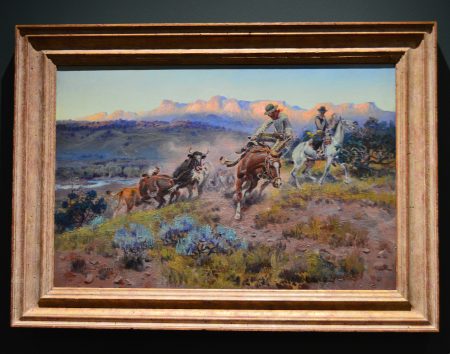
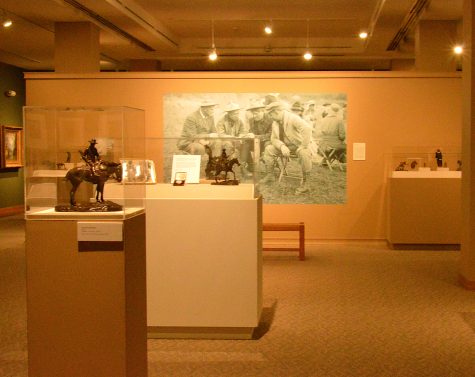
The C. M. Russell Museum is located in a neighborhood of charming Victorian houses where Charles Russell lived with his wife, Nancy. Born in 1864 in St. Louis, MO, Russell grew up on tales of the West and wanted to be a cowboy. He struggled at school, but art was always part of his life. When he was sixteen, his family arranged for him and a family friend to work on a sheep ranch in Montana. He didn’t last long at the job, but he did meet a trapper named Jake Hoover and lived with him for two years, learning about the land and studying the animal form.

And then he became a cowboy, a night wrangler, for twelve years. He carried watercolors and brushes in his bedroll, and using whatever carboard and paper he could find in camp, he sketched the animals, the landscape, and the other cowboys. The winter of 1886-87 was severe. The owner of the O-H Ranch where Russell worked, sent the ranch foreman a letter asking how the herd had fared through the harsh weather. Instead of a letter, the ranch foreman sent a postcard sized watercolor that Russell had painted. It showed a gaunt steer being watched by wolves under a gray sky. Russell had captioned the sketch, “Waiting for a Chinook.” (Warm, dry winds.) The owner of the ranch displayed the postcard in a shop in Helena and Russell began to get commissions for illustrations. Later, Russell painted a more detailed version of the sketch that became one of his best known works.

In 1888, Russell lived in Canada for a year with the Blood Indians, a branch of the Blackfeet Nation. His paintings of his time there showed great detail, even of the beading on moccasins. He had a great affinity for Native Americans and became an advocate for them. He supported the Chippewas in their effort to establish a reservation, and in 1916 congress passed legislation to create the Rocky Boy Reservation in north central Montana.

Russell became a full time artist in 1893. He married Nancy Cooper in 1896. Nancy marketed and sold his art, and Russell became an acclaimed artist. His art captured the old west before it was lost to the call of Manifest Destiny, the lust for natural resources, and the industrial age. He is also known for his use of color. In his lifetime, Russell created more than 4,000 works of art: paintings, sketches, and sculptures.

In 1936, President Franklin D. Roosevelt created the Charles M. Russell National Wildlife Refuge. It is the second largest wildlife refuge in the lower forty-eight states with approximately 1.1 million acres of native prairie, forested coulees, river bottoms, and badlands, much of which are portrayed in Russell’s paintings.

I find Russell to be a fascinating human being as well as a gifted artist. PBS created a documentary “C. M. Russell and the American West.” Watch it if you’d like to learn more about him and see more of his paintings. If you are ever in Great Falls, the C. M Russell Museum is worth a visit.

The Golden Triangle

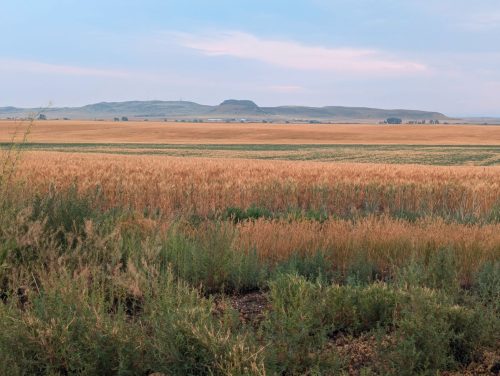
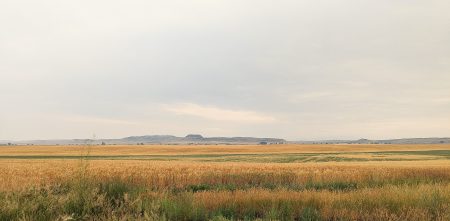
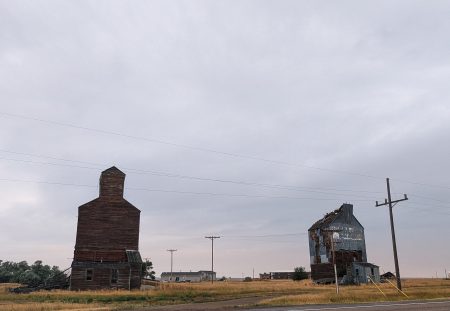
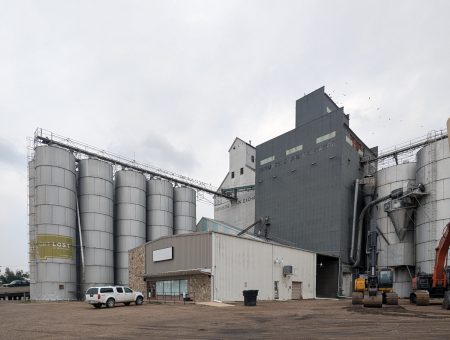
The longest leg of the Golden Triangle is from Great Falls to Havre. Driving north on US87 the vast northern prairie is strewn with sixteen hundred farms threaded together with small towns or truck stops with gas stations and cafes. Wheat fields stretch out to a horizon marked with buttes or shadowed by massive cloud formations. Barns and steel silos are clustered together, reaping equipment and trucks are parked nearby. I pass old wood silos that look as if they are ready to crumble, but stand as proud reminders of their past service.

The Mighty Mo

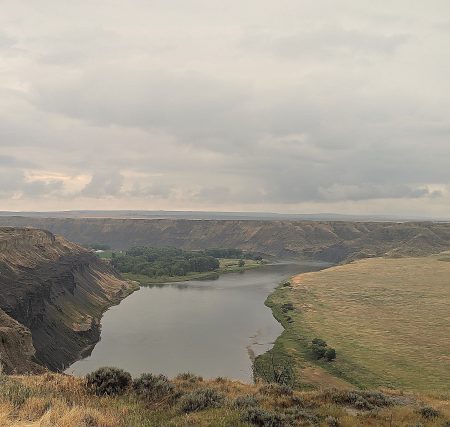
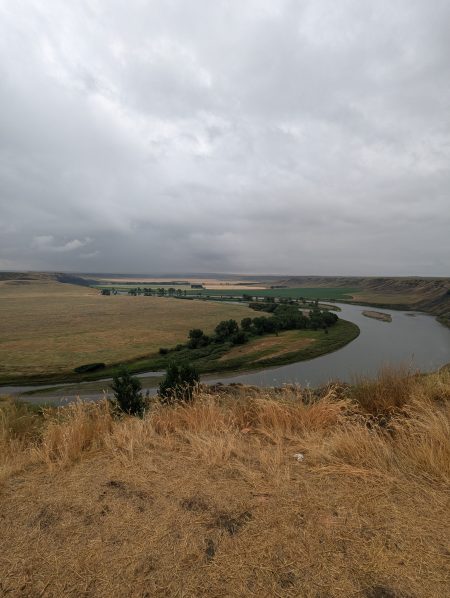
There are pull offs at historic sites that provide not only information, but also beautiful vistas. My first stop is at a loop in the Missouri River. The Missouri joins the Mississippi River in St. Louis, Missouri. Starting there, in May, 1804, Lewis and Clark and the Corps of Discovery followed the 2,540 mile long Missouri River to its headwaters in Montana, at the confluence of the Jefferson, Madison, and Gallatin Rivers. They arrived in July 1805.

They followed the Jefferson River to Missoula, and then to Travelers’ Rest in Lolo. From there it was an arduous overland trek through the mountains until they reached the Clearwater River in Idaho, into the Snake River, and then the Columbia River to the Pacific Ocean, where they wintered in present day Astoria, Oregon.

They returned to St. Louis In September, 1806. During the expedition, they encountered over seventy Native American tribes and learned and recorded the languages and customs of those tribes. They mapped the topography of the land, rivers, and mountain ranges and described more than two hundred new plant and animal species, with information about their natural habitat. They brought back many artifacts as well as plant, seed, and mineral specimens.

Farther up the road is the oldest town in Montana, Fort Benton. Established in 1846, it was once the world’s largest inland port. The fort was built for the fur trade. Steamboats and travelers arrived in 1860, and then the gold seekers in 1862. It became a main destination and supply hub on the upper Missouri, and was called “the Chicago of the West.” By the 1890s, railroads had become the favored form of transportation, and the era of steamboats ended. Fort Benton is a National Historic Landmark.
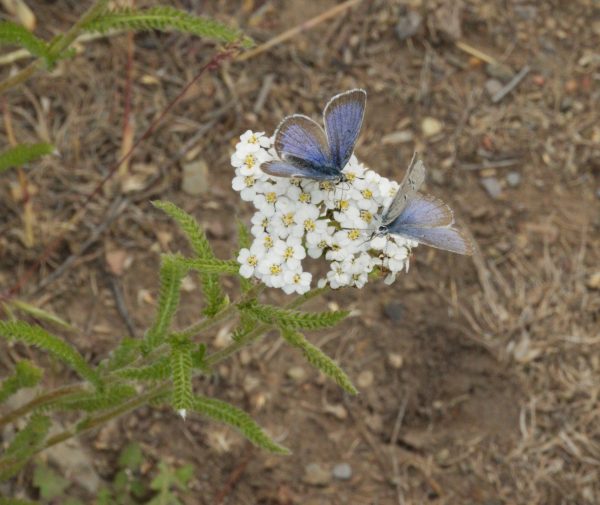
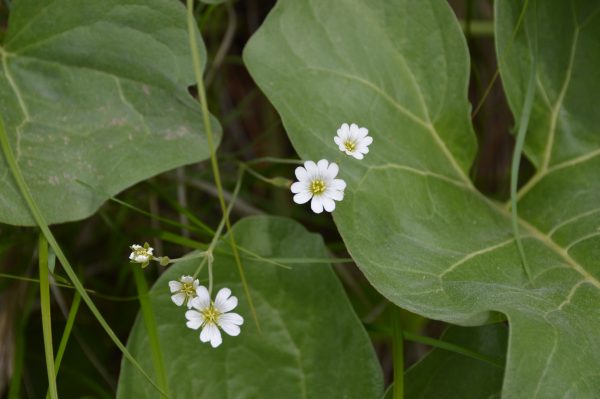
The landscape rolls along and I stop when I can to appreciate the beauty of the land. Besides the farmland, there are many opportunities for outdoor recreation: camping, fishing, and hiking. There is so much more of this beautiful area that I would like to spend time exploring.

When I arrived in Havre, I’d been on the road for two and half hours and needed to stretch my legs. I plugged Freedom into an EV charger and walked to the H. Earl Clack Museum. There are exhibits of local history, as well as dinosaur bones. The museum is part of the Dinosaur Trail, made up of fourteen sites throughout Montana.

The Golden Triangle is a vital part of Montana’s economy, and the wheat industry is the largest contributor, producing 186,705,000 bushels annually. Eighty percent of Montana’s wheat is exported. About 2.2 million acres of hard red winter wheat and spring wheat are planted annually. The next time you eat bread or pasta, consider that it may have been made of Montana hard winter wheat, or Montana spring wheat for your pancakes, cakes, and pastries. Other crops such as oats and barley, as well as peas, lentils, chickpeas, and canola are also part of Montana’s farming industry.

On the drive back to Great Falls, the side of the road was lined with wild sunflowers. They looked so joyful, I had to stop and walk among them. After driving around southwestern deserts and the mountains and prairies of the west the past four summers, I have come to associate them with this part of the United States and the month of August.

If I were in charge of the Department of National Anthems, I would choose “America the Beautiful” for the United States. Besides being difficult to sing, “The Star Spangled Banner” was written after a battle during the War of 1812. I think we should change our focus from war to America’s beauty and abundance, and all the good that can come from brotherhood.

O beautiful for spacious skies,

For amber waves of grain,

For purple mountain majesties

Above the fruited plain!

America! America!

God shed His grace on thee

And crown thy good with brotherhood

From sea to shining sea!

                                                Katherine Lee Bates

Flathead Lake, Montana

Spring was tempestuous with every kind of weather imaginable, sometimes all within one day. After several sunny, warm days in early May, it felt as if spring had arrived, and I drove up to Flathead Lake in the hope of seeing the cherry orchards abloom. On the way up, the vista is a palette of greens, from the soft yellow-green of newly leafed trees, to the verdant grasses, and the forest green of pine trees climbing the mountainsides.

Along HWY 93, there is a grade that’s gentle at first, and then gets steeper. For a moment it’s just road and sky, and then, suddenly, the jagged tops of the Mission Mountains burst over the horizon. It took my breath away.

I had the same sense of amazement when I arrived in Polson and glimpsed Flathead Lake. The blue of it- teal near the shore, deeper blue in the distance, was the color of a clear sky, which it was that day.

Flathead Lake is the largest freshwater lake west of the Mississippi River, and is one of the clearest lakes in the United States. It has two hundred square miles of surface area, one hundred eighty-five miles of shoreline, and a depth of three hundred seventy feet. There are a dozen small islands within the lake. Wild Horse Island is the largest at 2,164 acres of rolling hills, the highest of which is 3,749 feet. The Salish and Kootenai people used this island to pasture their horses to protect them from being stolen by other tribes. Wild Horse Island was designated a state park in 1978.

The lake is at the southern end of the Rocky Mountain trench, and is the remainder of glacial Lake Missoula. It is bordered on the east by the Mission mountains and by the Salish Mountains on the west. This ecoregion is rich in biodiversity and includes large mammals such as the grizzly bear and the black bear, elk, white tail deer and mule deer, moose, mountain goats, gray wolves, and mountain lions. Its climate is favorable for cherry orchards on the east shore and vineyards on the west shore. Apples, pears, plums, vegetables, hay, nursery and Christmas trees, sod, wheat, and canola are produced around the lake. It is known for recreational activities that include fishing, sailing, boating, water skiing, swimming, picnicking, and camping.

And then there is Flossie, a giant serpent like creature reported to inhabit Flathead Lake. Since 1889, there have been one hundred nine documented sightings of this twenty to forty foot long creature. She was last seen in the fall of 2017.

Walking along the crystalline shoreline, I read the placards with stories of Native American life before the Europeans arrived, and imagined what a paradise this must have been.

Archaeological discoveries indicate that western Montana had been inhabited by humans for twelve thousand years before the Lewis and Clark Expedition traveled through the Bitterroot Valley in 1805. It was the first written record of European contact with the Salish people who lived there. Settlers arrived for the gold rush of 1864, along with the Missoula and Bitterroot Valley Railroad, forcing the Salish out. Soldiers marched the Salish people, who were suffering from starvation, sixty miles from Fort Missoula to the 1.3-million-acre Flathead Reservation. Twenty-two million acres of the Salish homeland were yielded to the United States. The Flathead Reservation is home to the Bitterroot Salish, the Upper Pend’ Oreilles, and Kootenai tribes.

All but the northern end of Flathead Lake is in the Flathead Reservation.

After a long walk, I drove around the cherry orchards, but there were few blossoms. A cold spell in mid-January with temperatures as low as minus thirty-two degrees caused the flower buds to freeze, and in some areas caused damage to the trees. This has had an unfortunate impact on the cherry season. It is anticipated that the harvest of the sweet and juicy cherries will be lower than normal.

Wild Horse Island

When I learned that five wild horses lived on and roamed the island, I knew I had to visit it. I’ve always had an affinity for horses. To me, they are the most elegant animal, even in the wild, and that’s the way I love to see them, wild and free. So, in early June, I made another trip to Flathead Lake, this time to drive around the perimeter of the lake, as well as to visit the island.

After a string of sunny, summerlike days, I woke to a chilly, overcast morning, but spring was in full bloom and the landscape was even more beautiful than the last time I drove on Hwy 93. The Mission Mountains startled me again when they emerged above the road, now covered with fresh snow from a storm in late May.

The drive around the lake reminded me that agriculture is Montana’s main industry. Cattle grazing in fields and trucks driving by with rolled bales of hay contrasted with the recreational aspects of the lake: people fishing off the sides of sailboats; motorboats and pontoon boats darting across the open water.

When I walked in the door at Big Arm Boat Rentals for the three o’clock shuttle to Wild Horse Island, I was warmly greeted by Matt, the owner. He tells me and the other passengers, Rick and Rachel, about points of interest, instructs us to take to take a photo of the map of the island at the landing, and that we will be picked up at 6:30.

It’s a twenty minute pontoon ride from Big Arm to Wild Horse Island. When we arrive, we snap photos of the map. Rick and Rachel go left toward the high point of the island, and I make my way up the path towards my adventure. Walking through the Pondersoa pines, I was enchanted by the abundance of white wildflowers. It looked like a faerie garden. When I did a search of these lovely flowers, I learned that they are called Death Camas. They are pretty to look at, but poisonous.

When I emerged from the forest, I met a couple with two little girls. I asked one of the little girls if she’d seen the horses. “No,” she said, “only butterflies.” She ran up the hillside with her sister, her parents in pursuit.

I followed a path that ended in a clearing where there was a flutter of periwinkle blue butterflies. Their gossamer wings were vibrant on that overcast day, and I was spellbound as they danced in the air. These lovelies are Celastrina Ladon Lycaenidae or Spring Azure butterflies. They are tiny, with a wingspan of 0.87” to 1.8.” Their habitat ranges from the Alaskan Tundra to mountainous areas of Colombia, and are widespread throughout the U. S. They can be found in old fields, clearings, and at the edges of forests, wooded marshes, and freshwater swamps. When two of them settled on a yarrow flowerhead, I managed to capture this photo. Doesn’t it look as if the one on the right is looking into the camera?

I walked through a grassy meadow keeping an eye out for wildlife, especially the wild horses who inhabit the island. The rolling hillsides are hip high with native grasses interspersed with wildflowers: yarrow, field chickweed, death camas, blanketflower and arrowleaf balsam root. The deer and big horn sheep like to eat the flowers of the arrowleaf balsam root plants.

Chickweed
A bouquet of pinecones

I cross paths with hikers who say they spotted two bighorn sheep, but no horses. Although I scanned high and low, there was no wildlife in sight. The cloud cover turned dark, and it began to rain.

Higher up, the views are spectacular. There’s a rusted marker, on it is written “loop” with arrows pointing in opposite directions. Needing to decide which way to go, and since I’d come from the left and the loop from the landing point had two ways to go, I thought by going right I’d make the complete loop, so right I went.

What is that? Two horses in the distance? I take out my camera shaking with excitement, and look through the viewfinder. As I adjust the focus, I realize that it is a tree stump and fallen branches.

Now I’m walking through the forest, still hoping to see the horses, but intent on arriving at the landing on time for pick up. I feel as if I’m being watched and look around. I see a deer lying in the grass, studying me. I look back and feel a connection with it. The deer stands up, and then another stands beside it. There is one more deer in the photo. Can you see it?

They watch me until I reach the cove. The beach doesn’t look anything like the one where we landed. I looked at the map there and saw a star at Eagle Cove. I looked at the map on my phone and saw all the landing sites, but there are no stars on any of them. I don’t know where I’m supposed to be.

I called Matt to tell him my situation. He says to stay where I am and his son, Kenton, will pick me up. Soon enough, Kenton arrived in the pontoon, and piloted us back to Skeeko Bay where Rick and Rachel waited. They were excited to say that they witnessed the mama Bald Eagle in the nest above us swoop into the bay, catch a fish, and feed it to her two chicks.

The clouds thinned and revealed patches of blue sky. We chatted as Kenton steered us back to Big Arm. He’s majoring in Biomedical research. “I love science and math, and I’m interested in the brain.”  He said he’s impressed with the work Neuralink is doing, referring to the YouTube video of Neuralink’s first research participant, playing chess with thoughts transmitted to a computer.

I stopped in Polson for dinner, and by the time I left the restaurant, cumulonimbus clouds were scattered across the big sky. I drove south on HWY 93 appreciating what a wonderful day it had been. I didn’t see the wild horses, but I walked through a landscape filled with wildflowers and exquisite butterflies, a herd of deer of acknowledged my presence, and I saw a mother eagle sitting proudly on her nest with one of her chicks. I also got to hear the dreams of a young man filled enthusiasm about the future.

As I drove along the wetlands, the setting sun cast its last rays on the Mission Mountains, and the whole valley was filled with golden light. It was magical.

I will go back again to look for the horses, and maybe I’ll catch a glimpse of Flossie.

CSKT Bison Range

“Oh give me a home, where the buffalo roam
Where the deer and the antelope play,
Where seldom is heard, a discouraging word
And the skies are not cloudy all day.”               Dr. Brewster Higley

The Confederated Salish and Kootenai Tribes Bison Range is in Charlo, Montana on the Flathead Reservation. Three hundred fifty bison roam the 18,766-acre range that is also home to black bear, elk, mule deer, white tailed deer, coyote, cougar, big horn sheep, pronghorn antelope, mountain cottontail, chipmunk, and badger. Excited to see these animals, I began the nineteen-mile-long drive on Red Sleep Mountain Road, up into the open rolling hills.

The road is narrow and unpaved. I’m happy to drive slowly to take in the surrounding beauty. There are few other visitor vehicles, and every so often I pullover to allow a trailing car to pass. The lower grasslands are comprised of bunchgrasses and forbs, herbaceous broadleaf plants that are not grasslike.

A little higher, Pauline Creek supplies water for streamside thickets. I hear a sweet and lilting birdsong that is new to me, but see no birds. Wildflowers are in bloom, as well as a stand of Saskatoon Serviceberry. Although I stop frequently and scan the hillsides, I haven’t glimpsed bear, elk, bison, or any other wildlife.

There is space for about five cars to park at the Bitterroot Trailhead. It’s a quarter mile walk along a ridge. The vistas are breathtaking: the Mission Mountains to the East, and below the ridge, the gently winding Flathead River looks like a turquoise silk ribbon.

The trail is shorter at High Point. There’s more parking and restrooms. At 4,885 feet, it is the highest point on the drive. Here I see four bison resting on the hillside. On the other side of the ridge is a view of the Mission mountains.

Driving down Antelope Ridge, there’s not an antelope in sight. As I passed Jon’s creek, I heard the same birdsong I’d heard at the beginning of the drive and glimpsed a bird sitting on the barbed wire fence. I put Freedom in reverse and slowly backed up, hoping that the bird would not fly away. To my joy, he sat there, singing his song, and posing for me, Mr. Western Meadowlark, the Montana State bird. Isn’t he beautiful?

I entered the Western Loop and drove around the curve. On the road is a bison. I’m beside myself with excitement. He looks at me and I can almost hear him think, “Oh, another Lookie-Lou.” He takes his time crossing the road. I sit in utter wonderment at his enormity, and then take his picture. I continued on and encountered two more bison. After taking a few more photos, I exited the Bison Range feeling as if it was Christmas morning, and I’d gotten everything I wished for.

It took me two and a half hours to drive Red Sleep Mountain Road and West Loop Road. Inside the Range, there is a Visitor Center and Museum. There is a picnic area outside the entrance. It’s a wonderful way to spend a day.

You are probably wondering why I refer to them as bison when they are buffalo. Aren’t they? Bison and Buffalo are in the Bovidae family, but they are different animals. Buffaloes are native to Africa and Asia. They are more docile and easily domesticated, but can be found in the wild. Bison are found in North America and Europe. Bison have massive heads and thick muscles on their neck and shoulders that allow them to survive and thrive in the bitter cold prairie winters, using their heads as plows to sweep away snow drifts to find food: grasses, sedges, and other grass-like plants. 

So, Bison is the scientific name and buffalo is the culturally accepted common name. The names have come to be used interchangeably; call them what you wish.

There was a time an estimated thirty to sixty million bison roamed North America like a great furry carpet, from the Appalachian Mountains in the East to the Rocky Mountains in the west, from northern Canada to northern Mexico, mostly in the Great Plains.

Bison provided not only food for Native Americans, but also clothing and tipis made from the hides. Also, soap was made from the fat, rope was made from hair, tools were made from the bones, cups, ladles, and other utensils were made from the horns. Bladders were used for storage, stomachs were used to boil water, tails were used as fly swatters, teeth and toe bones for games, sinew to bind things, and a hodge-podge of parts to make glue. Dry bison dung was used for fuel. Because Bison provided so much of itself for their survival, Native Americans also had a spiritual connection with them. They were honored as relatives and paid tribute through songs, dance, and prayers.

As European settlers arrived and Manifest Destiny surged westward, the mass destruction of Bison began, first for “parts,” such as hides and tongues, that were marketable in cities in the East, leaving bison bodies to rot in the Plains. Because bison were so important to the lives of Native Americans, annihilation of the Bison became part of the plan to subjugate them. In 1870, two million plains bison were killed in one year. Between 1874 and 1876, 5.4 million were killed, but it was the completion of the Transcontinental Railroad that accelerated the slaughter of the Bison, and by the late 1880s it is estimated that out of the millions that once roamed the American West, only 541 bison remained.

In the 1860s, when the Bison were on the brink of extinction, a tribal member, Atatice, asked the tribal chiefs if he could bring some Bison to the Flathead reservation. The chiefs could not reach a consensus, and Atatice abandoned his vision. While on a buffalo hunt, his son, Latati, brought some orphaned calves across the Continental Divide to the Flathead Reservation and fulfilled his father’s vision. A small herd began to flourish, and in 1884 Latati’s stepfather, Walking Coyote sold the herd of thirteen bison to Michel Pablo and Charles Allard without Latati’s consent.

Pablo’s mother was Blackfoot and Allard’s mother was Cree. Both married into the Confederated Salish Tribes and ranched on the Flathead Reservation, where they turned the bison loose to roam and wander over an area of fifty square miles. Protected from annihilation, the bison propagated freely, and the herd grew.

Shortly after graduating Yale University in 1870 with a degree in Zoology, George Bird Grinnell joined an expedition by the Peabody Museum to collect vertebrate fossils in the West. He spent many years studying the natural history of the region. In 1875 he was invited to serve as a naturalist and mineralogist on an expedition to Montana and the newly founded Yellowstone Park. During the winter of 1874-75 he documented the poaching of no less than three thousand buffalo, deer, elk, and antelope for their hides.

Grinnell was editor and contributor to Forest and Stream Magazine and his articles became the catalyst for the conservation movement. His expertise on western natural history helped form a friendship with Theodore Roosevelt. They launched the Boone and Crockett Club in 1887 to stop the profligate hunting of large mammals that could lead to their extinction, and worked together on legislation to preserve Yellowstone’s wildlife.

By the time Charles Allard died in 1896, the Allard- Pablo herd had grown to three hundred twenty bison. The herd was divided, and Allard’s wife received fifty-four bison that she sold to Charles Conrad. His two daughters received twenty-seven. When that herd grew to sixty-five, eighteen were sold to Yellowstone Park whose bison herd had diminished to twenty-two. In 1906, Pablo sold his herd of 700 Bison to Canada.

In 1908, The U.S. Government seized 18,524 acres of the Flathead Reservation to establish the National Bison Range. Thirty-six bison were purchased from the Conrad family for the initial herd. They were the direct descendants of the Allard-Pablo herd. Although the Range was on the Flathead Reservation, tribal members were prohibited from working there.

The Bison Range was returned to the stewardship of the Confederated Salish and Kootenai Tribes in 2020 by Congress by Public Law. The Tribes take pride in their relationship and history with these Bison, and hold an ongoing sense of responsibility for their well-being.

Yellowstone National Park is the only place in the United States where Bison have lived continuously since prehistoric times and represent the best example for preservation of wild plains Bison. Approximately five thousand bison roam Yellowstone and some nearby areas in Montana. They congregate during the breeding season to compete for mates, as well as migrate to new habitat areas. Allowing these natural behaviors has enabled the successful return of a species that was on the brink of extinction just over a century ago, although Bison are considered “ecologically extinct” as a wild species.

The North American Bison was named the national mammal of the United States on May 9, 2016.

Tower of Trash

The current exhibit at the Missoula Art Museum (MAM) is Human//Nature-A Retrospective from the collections of Terry Karson is the ultimate recycling project.

“I take stuff people throwaway and turn it into art.” Terry Karson

Commons was built into the Aresty Gallery at MAM in 2012 as an immersive experience. Karson created tiles made of discarded cardboard packaging, such as cereal boxes and beer cartons, that were sanded, sorted by color, and assembled into grids, then built into architectural sculptures. He referred to them as “nature and culture.” Only portions of the original installation are in this exhibit but are still impressive. A diorama of the original exhibit seems like walking within a temple. I would love to see Commons in its entirety.

Karson and his wife, Sara Mast, collaborated on Indian Flats, another large-scale installation created from trash found around the remote mountain cabin in Helena National Forest where they lived and began this creation. Karson filled glass boxes with that litter. I think of these stacked boxes as the “Tower of Trash.” The abstract paintings are by Mast. On the paintings are found game pieces, bottle caps, a dartboard, mirror, framed painting, bicycle crankset, a necklace, and more. The centerpiece represents the hut they lived in and is covered with butterflies cut out of cardboard packaging.

“Natural History collections by necessity involve death. Glorifying found objects involves resurrection.” Terry Karson.

Karson took scraps of coffee packaging and rolled them into the shape of larvae and pinned them to a board as an entomologist would.

The exhibit is beautiful and moved me to write a blog about garbage.

In the late 1990s, I worked at a home furnishings store for the holiday season and was horrified to see the amount of waste that goes into the purchase and giving of a gift. Merchandise comes in large crates that are unwrapped to reveal smaller, well wrapped parcels. The outer and inner wrappings are broken down and discarded. Some of the discarded wrapping goes to recycling, but there is a tremendous amount of trash in plastic bindings, Styrofoam cushions, etc. that are taken to the landfill.

Lovely objects are artfully displayed for customers to choose from. At purchase, they are carefully wrapped in tissue, boxed, and placed into carrying bags to take home, where the box is wrapped in festive paper to be given as a gift. The recipient tears off the wrapping, utters words of appreciation for the contents, and disposes of the wrapping, tissue, and box. This is one gift from one store. Imagine all the stores and sources worldwide, and all the gifts given, and then imagine all the packaging generated that becomes garbage.

Americans generate 268 million tons of trash annually. That is nearly 1,800 pounds per person every year. Of the waste discarded, 65.4% is dumped into landfills or burned in incinerators. Only 36.4% of discarded materials are composted or recycled. And then there is litter; there are nearly 50 billion pieces of it along roads and waterways in the United States.

The U.S. generates 12% of global municipal solid waste (MSW); whereas China and India with a combined population eight times that of the U. S., generate slightly more than twice the MSW than Americans.

It is estimated that there are 75 to 199 million tons of plastic waste eddying over 40% of the world’s ocean surface; 70% of this debris sinks into the ocean’s ecosystem, 15% floats, and 15% lands on beaches. Every day, eight million pieces of plastic make their way into our oceans. At the rate plastic is dumped into the ocean, it is predicted that plastic will outweigh all the fish in the sea by 2050. Floating plastics keep circulating, breaking down into smaller and smaller pieces that are harder to clean up and easier to mistake for food by sea life.

The Great Pacific Garbage Patch (GPGP), located between Hawaii and California, has the largest accumulation of ocean plastic. The Ocean Cleanup has been monitoring and removing plastic pollution in oceans and rivers globally since 2019. A catch runs hundreds of tons, and with improved operations, catches are growing larger. However, plastic will continue to impact our ecosystems, health, and economies for centuries.

Glass is not keenly recycled because it breaks and requires more cleaning and sorting than plastic, making it less profitable to recycle. However, unlike plastic, glass can be recycled endlessly with no loss in quality or purity.

 After water, sand is the second most extracted resource on our planet and is in danger of becoming scarce. Sand is used in building homes and roads, agricultural fertilizers, computers, and electronic chips, as well as glass. Between 40 and 50 billion metric tonnes of sand are removed from rivers, lakes, and beaches around the world each year. That would build a wall 87.5 feet tall and 87.5 feet wide around the globe. Mexico City is addressing part of this problem with a concrete recycling plant to reuse demolition waste for aggregates and pre-mixed concrete or asphalt.

I became aware of sand mining a few summers ago as I drove around the southwest desert. On a less traveled highway, the horizon seeming too far to reach, the monotony of the road was broken by magenta, pink, and ochre-colored buttes and spires. I was enthralled with their beauty in the stark landscape, and then I saw convoys of large flatbed trucks heaped with sand that excavators were clawing out of these stunning formations. Tears streamed down my face seeing the destruction of these natural wonders that took millions of years to create.

As I began digging into garbage, I found that I could fill pages with statistics. I’d rather seek ways to resolve the problem of garbage and the cause of it: rampant consumerism that depletes our natural resources to become garbage. As we take from and destroy one resource, we destabilize other fragile ecosystems. It’s also important to look at what is being accomplished to give us hope, to think about what more we can do to resolve the garbage problem, and to take on the responsibility of good citizens to care for our home, Planet Earth.

While recycling is still not implemented to its highest and best capacity, industries are being created utilizing recycled garbage. Many of us own shoes, clothing, rugs, yoga mats, furniture, car parts, and pens made from recycled plastic. Making products out of recycled plastics instead of new plastic reduces energy usage by 66%, and for every ton of plastic recycled, the equivalent of one to two thousand gallons of gasoline are saved. However, plastic can only be recycled two or three times before the quality becomes inadequate for use. Glass and aluminum don’t degrade during the recycling process and can be recycled endlessly. By the way, it is estimated that known oil-deposits will run out by 2052. Plastic is made from oil.

There is a company called Ridwell that picks up recyclable and reusable items not usually taken by recycling companies: batteries, lightbulbs, fluorescent tubes, clamshell containers, flat lids, bottle caps, bread tags, prescription bottles, Styrofoam, and reusable and non-reusable clothes, shoes, linens, and towels. Ridwell operates in California, Colorado, Georgia, Minnesota, Oregon, Texas, and Washington. I used Ridwell when I lived in Oregon and loved doing business with them. I found them to be friendly, professional and efficient.

Beyond recycling, we need to become less wasteful. The concept of zero waste is becoming a goal for cities and countries to break the trash to landfill cycle completely by 2040 or sooner. Some steps being taken are banning Styrofoam, plastic bags, and single use plastics. We should also be mindful of decreasing our personal waste by taking reusable shopping bags with us when we shop, or not taking a bag for smaller items, and choosing to buy items with the least amount of packaging. Carry a water bottle instead of buying water in plastic bottles. There are many public places that now have fountains for filling water bottles. Use cloth napkins instead of paper napkins. It’s easy to wash cloth napkins with your laundry.

And then there is the circular economy, an economic system of continuing production and consumption in a sustainable and environmentally friendly way. It reduces waste to a minimum by sharing, leasing, reusing, repairing, refurbishing, and recycling existing materials and products as long as possible.

Many libraries now have “things” to lend, from sewing machines and electric drills, to camera lenses and tripods. Before the pandemic, there were community Repair Faires where you could take a non-working item and have it fixed. There were seamstresses who repaired clothing, motor enthusiasts who repaired inoperable appliances, and computer techs to figure out what ailed your laptop. It would be great to see those happen again.

I’ve thought about “purchasing power.” It’s defined as the amount of goods and services that can be purchased with a unit of money. What if we established our power in how we purchase, and change the idea of supply and demand by not purchasing what we don’t need? If enough of us do this, Big Business will adjust to the way we spend money. There are unlimited opportunities for entrepreneurs to start businesses within the circular economy by creating what we need from recycled resources. Put your thinking caps on!

I’ve begun carrying a bag with me to pick up litter on my walks. It’s amazing how much litter there is within a short distance of trash bins. When I was growing up the motto was:

Don’t Be a Litterbug

Charging Forward, Jay Laber, Blackfeet. Found Objects, 2001 University of Montana, Missoula

“A warrior on horseback at full gallop throws a lance through a hoop. This is a traditional Native American hoop game, recreated with parts of abandoned automobiles harvested in the Flathead Reservation. This juxtaposition of the modern and old comments ironically on reservation life.”

“The human race is challenged more than ever before to demonstrate our mastery, not over nature but of ourselves.” Rachel Carson, Silent Spring

Human//Nature-A Retrospective from the collections of Terry Karson will be on exhibit until July 27, 2024. If you live in Missoula or are visiting, be sure to visit the Missoula Art Museum. There are lots of other interesting things to see there as well.