As much as I wanted to see Calabria, the heart of my trip was to visit the birthplaces of my grandparents. I wished to see where they lived, and perhaps get a glimpse of what their lives had been like. Daniele Tricoli, my host at La Corte del Geco, made arrangements for Father Salvatore Corrado to drive me and act as translator. Our first trip was to Crucoli, the birthplace my mother’s father, Armando Ruggiero
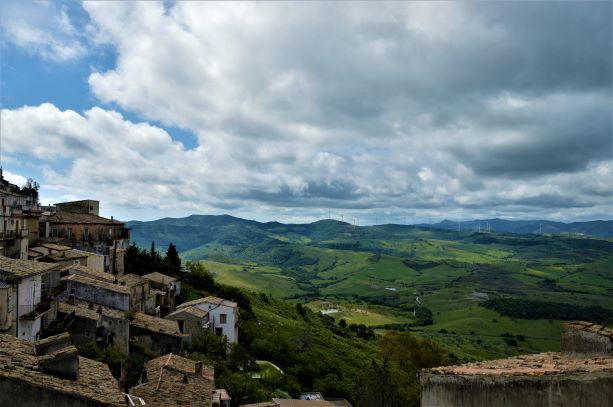
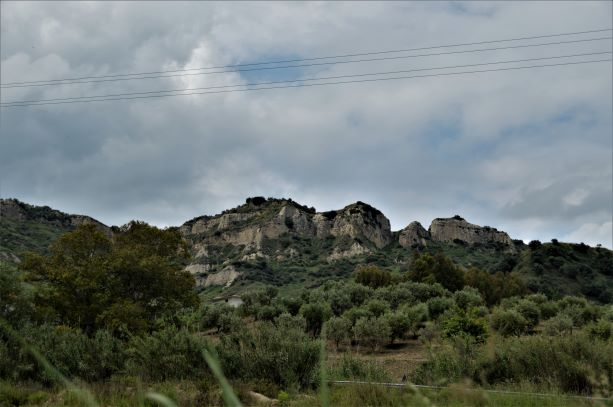
Crucoli is about a forty minute drive from Crotone through a countryside dotted with vineyards, olive groves, and small flocks of sheep or cows. There is a stretch along the Ionian Sea, and then a gentle rise inland that gradually becomes steeper as it approaches the hilltop village. When I got out of the car the view took my breath away. Why would anyone want to leave such beauty? Of course it’s a rhetorical question; poverty was the motivation to leave. You can’t eat beauty.
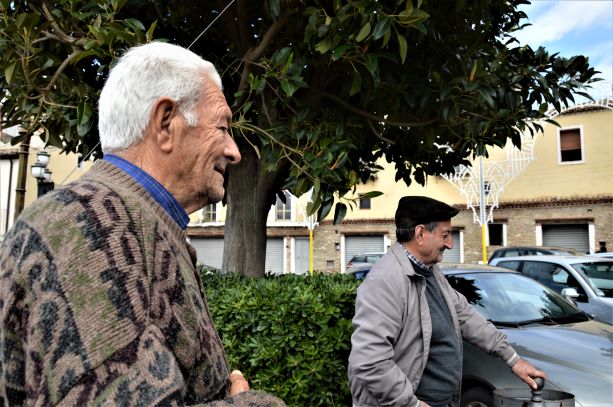
Two gentlemen stood in the village square smoking cigarettes. Father Salvatore explained to them that my grandfather had been born there. In their conversation they said that Crucoli was once a village of forty thousand people; now only four hundred families live there. Of my family, there were no Ruggieros left, and only one family of Pallettas. The only business was a bar. There was no city hall and the church was not open, so there was no opportunity to check records to see where my grandfather had lived. He left there over one hundred years ago and these gentlemen weren’t able to answer questions I had about those times.
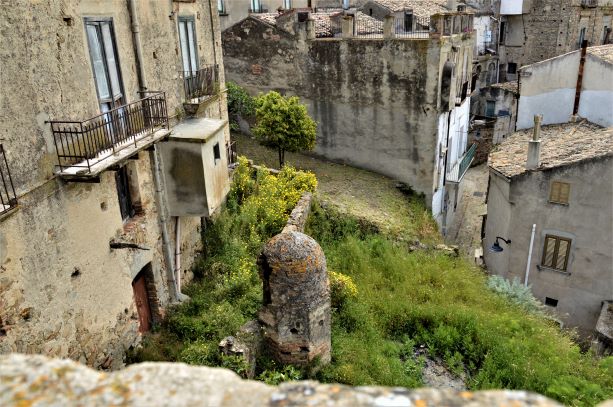
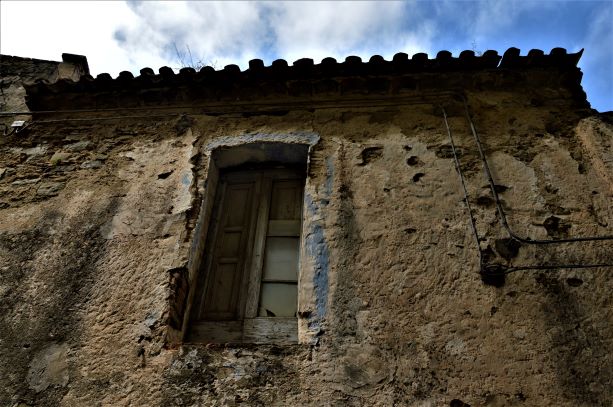
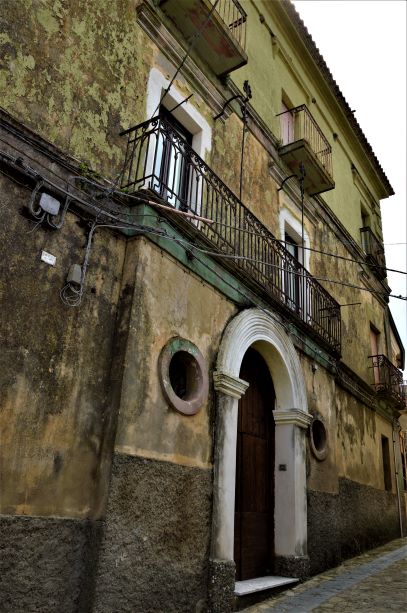
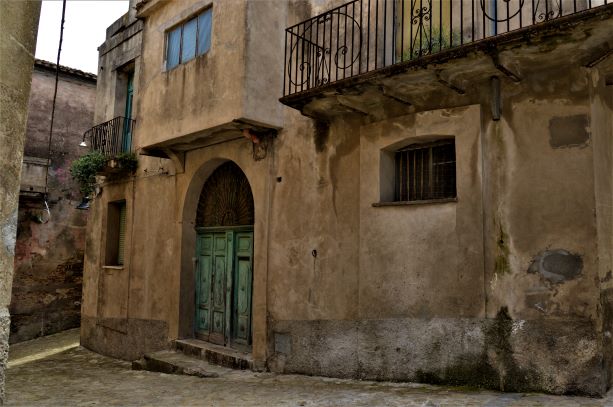
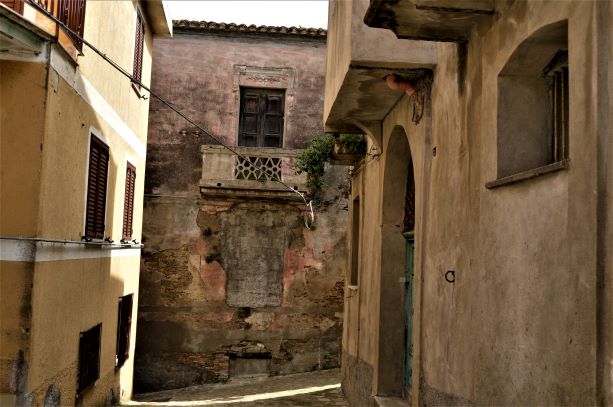
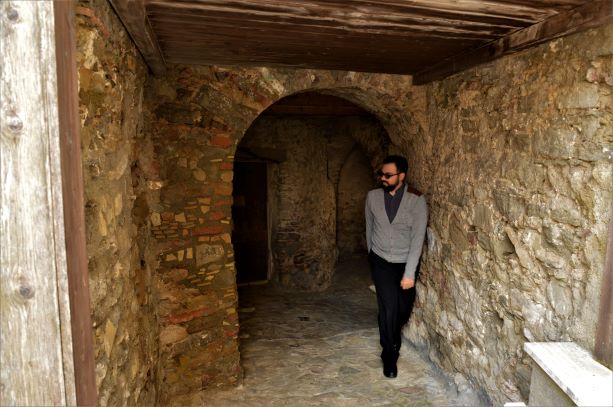
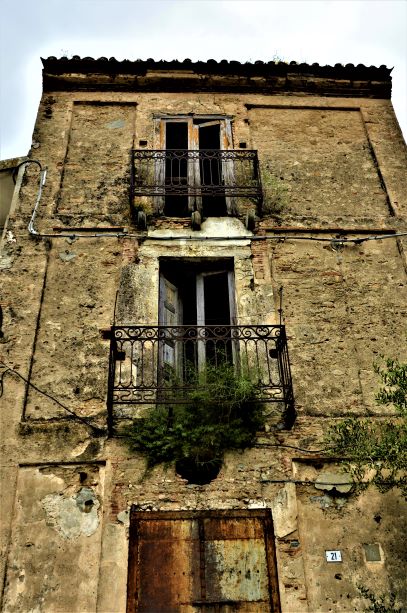
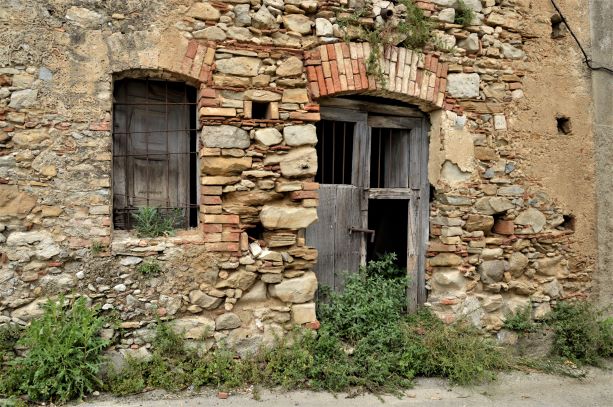
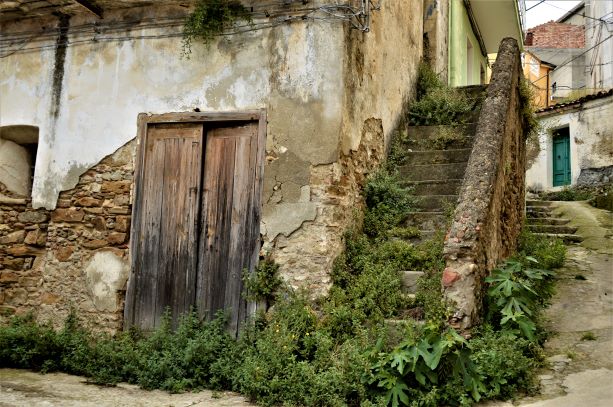
Father Salvatore and I walked around the village. Many of the homes were in disrepair, but I was struck by the aesthetics of the architecture and the stone and iron work. The narrow cobble stone streets led to even narrower alleys. Below the church steep steps wound underground to the other side of the village. It made a circle which led us back to the village square.
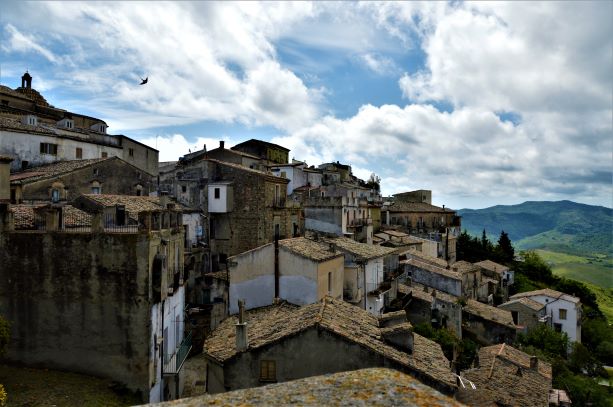
Casabona is the birthplace of my father’s parents, Alessandro Tallarico and Francesca Sirianni, for whom I was named.
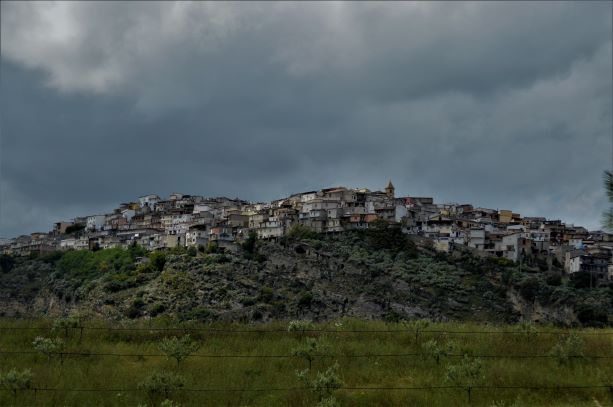
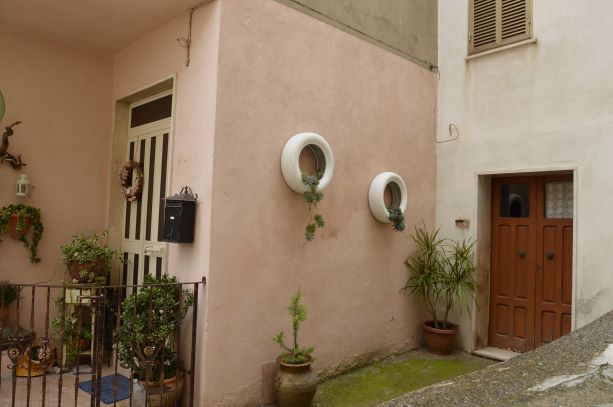
As Father Salvatore drove through olive groves and vineyards, Casabona seemed to float on a ridge of tufa thrusting up above the valley. We were there during riposo, the hours businesses are closed, and the town was quiet. I saw shops of every sort, from salumaria, to clothing stores. We parked in the town square and walked around the old section. Some homes were remodeled and looked modern, many are abandoned and in disrepair. As we walked the narrow streets, sounds of life emanated from homes; the whine of a vacuum cleaner from one, voices on a TV program from another
My grandmother didn’t receive a formal education, and was proud that she’d taught herself how to read and write. When she was in her seventies, she wrote her autobiography. Her story remained tucked in my memory. Throughout the years when I thought of my grandmother, little anecdotes floated up into my awareness, and I wondered about missing details. It lead to a yearning several years ago to see where she lived and perhaps find the answers to those questions.
Grandma Frannie had a happy childhood in Casabona, fully involved in community and church matters, from pruning the vineyards, to carrying the lantern when the priest brought communion to the sick and dying. She wrote that she was a tomboy. The thought of my grandmother as a tomboy surprised me and captured my imagination. One day she took a rope, tied it to an olive branch and swung on it, out over the tufa cliffs. When her mother saw her, she took her home, but it was her older sister that got into trouble for not watching her.
I’d hoped to find the grove and the tree from which she’d swung with such abandon, but Casabona is a sprawling village and our time there was short. We walked only a small area along the lip of the cliff and all of the olive groves were below us, but I was happy to walk through my grandmother’s birthplace, and perhaps on the same paths that she had once trod.
Any questions I had went unanswered. There is only the nagging regret I’ve had for so long, that I hadn’t asked the people I loved, who were such a strong influence in my life, to tell me their stories, and not just the outlines, but to fill in the details with vivid color.


 The Write Mind of a Lefthander
It’s a little sad that you didn’t get any answers to your questions about your family. But it’s a good read for others like me who will most likely never visit these places. Jan
LikeLike
A well written story, very interesting and heart warming.
LikeLike