“When the well is dry, we know the worth of water.” Benjamin Franklin
On the way to the Grand Canyon, I drove through Page, Arizona. The terrain beyond Page captivated me. The colors were vibrant shades of mauve, crimson, and dusky pink. I decide to stay there on my way to Cortez, CO and take a closer look.
On the drive up, I’m dismayed to see heavy machinery bite into the buttes to fill trucks with the colorful sand. I watch these trucks haul their loads on the highway and wonder what would be done with it.
When I arrive in Page, I go directly to the Air BnB where I have reservations. It’s advertised as “a cute caretaker’s cottage.” Close your eyes. What do you see? It’s nothing like that. It’s a remodeled storage shed behind an apartment building at the edge of a commercial/industrial area. The inside is small, but has everything I need to spend the night. I bring in my suitcases, and go to check out the town and have dinner.
The energy in Page is heavy. There are few smiles, little eye contact. I came to learn that the Navajo people are the largest sector of the population in the Glen Canyon area, and the Navajo Nation was heavily affected by COVID19. The loss of elders of the community is also the loss of knowledge and traditions that are handed down verbally.
In the morning there is clanking and grunting of trucks in the parking lot behind the cute caretaker’s cottage. The room is heavily scented. I have a headache and my eyes are irritated from the phthalates in the cleaning products. I can’t spend another night here. I check out and go to the hotel where I’d charged Freedom, and then on to view Lake Powell.
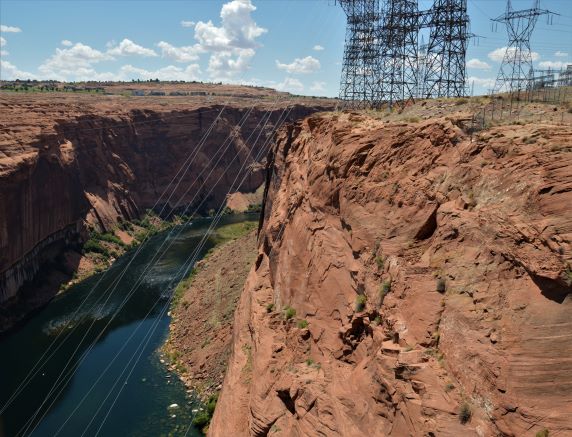
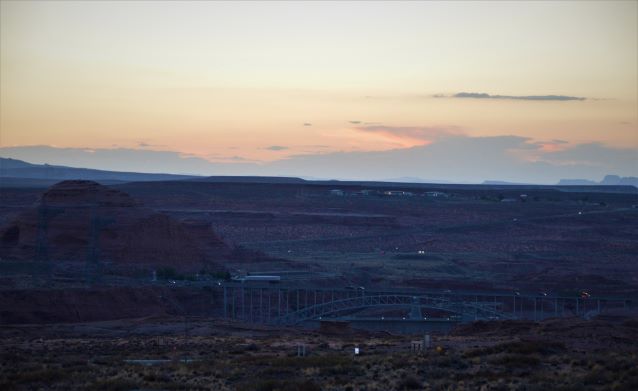
The visitor center is closed. I walk around and am disheartened by what I see. Lake Powell is quite low, a painful example of the effects of climate change from higher temperatures and not enough rain and snow.

I return to the hotel. There are washing machines down the hall from my room. I throw clothes into two washers and return to my room. Having seen how low Lake Powell is, I feel guilty for using the water to have clean clothes. Raised Catholic, I spent every Sunday morning at mass, on my knees in church saying “Mea culpa, mea culpa, mea maxima culpa,” and to this day I feel guilty not only for my faults, but also for all the wrongs in the world.
Drought conditions are extreme and accelerating in the Colorado River Basin. It supplies water from Rocky Mountain snowfall runoff to around forty million people in seven western states and Mexico. Denver, Las Vegas, Phoenix. Tucson, Los Angles, San Diego and Albuquerque all depend on it.
Next year Arizona will lose eighteen percent of its share from the river, eight percent of the state’s total water use. The allocation to farmers in central Arizona comes from water deemed extra, making them the first to lose it during a shortage. They are the state’s largest producers of livestock, dairy, alfalfa, wheat, and barley.
“There is little to no livestock feed available in the West, farmers are considering selling their livestock or land, and many species of wildlife are suffering from wildfires and lack of water.” Democratic Representatives, Joe Neguse of Colorado and Jared Huffman of California, wrote in a letter to the President in August.
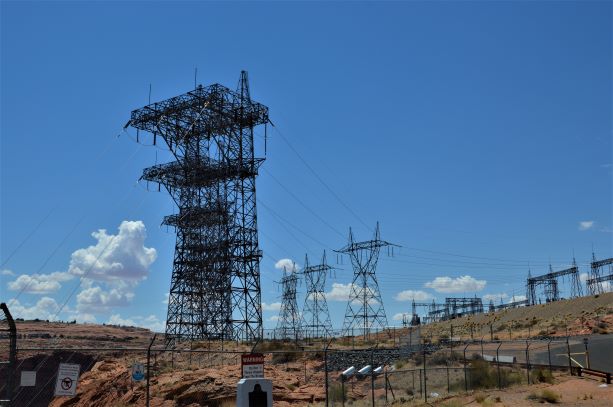
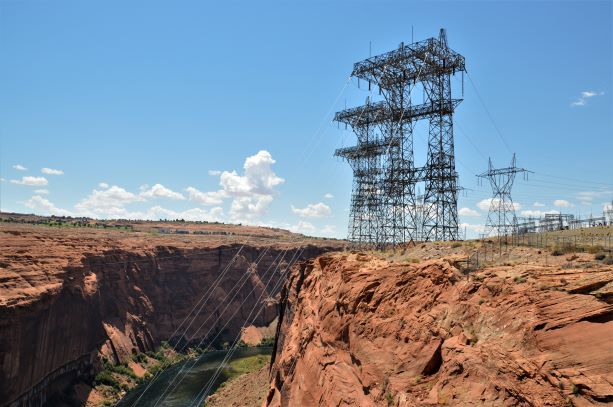
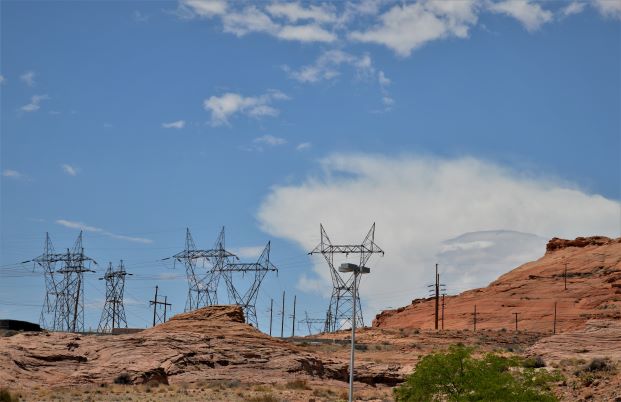
In July, the water levels in Lake Powell fell to one hundred fifty-three feet below full pool and have continued to drop, holding just thirty percent of its capacity. If the water level continues to drop below 3,490 feet, it will reach “dead pool,” meaning that there is not enough water to flow through Glen Canyon Dam’s gates to generate the hydropower to the West’s electric grid. It provides electricity for about 5.8 million customers from Arizona to Wyoming. Lake Powell’s water levels are projected to drop to around 3,586 feet by the end of the year. There is a one in three chance that the dam will not be able to generate electricity by 2023.
What can we do? We can be mindful of how we use water. We can take shorter showers and not run the water to wash dishes. A fully loaded dishwasher uses water more efficiently than handwashing. Do we really need lawns, not only in front of our homes, but in public places? We can plant native and drought tolerant gardens.
For energy conservation, turn off lights we don’t need. Use energy efficient appliances. We can weatherize and insulate our homes. Get a programmable thermostat. Do you need a new roof? Get a solar roof; excess energy that you generate is shared with the grid.
While we need to take responsibility for our day to day behaviors, the meaningful changes we need to make to the way we live, with forward thinking innovations, will take cooperation between government and business, locally and globally. We need investment in green energy and infrastructure. We need to stop seeing the ways we disagree and start seeing that we all have the same basic needs. People with jobs in fossil fuel industries need to know they will have training and jobs in green industries. Write to your government representatives and let them know if you have positive input for change, or to business leaders if you have a novel idea to resolve the issues we are facing.
Elon Musk is offering a total of one hundred million dollars for workable solutions for reducing the planet’s CO2 emissions in a durable and sustainable way. The contest started on Earth Day this year and will continue to Earth Day 2025.
Recovering and rebuilding from fires, floods, and other disasters costs billions of dollars, and human, animal, and other species’ lives. That money could be used in making the changes needed before “natural” disasters becomes more extreme.
“Our motivation should not be fear, but hope.” Sir David Attenborough

 The Write Mind of a Lefthander
One thought on “Page, Arizona”