“’Cause tramps like us, baby, we were born to run…” Bruce Springsteen
On an overcast morning in the middle of June, I began my journey. I set the streaming service to the Bruce Springsteen station and the first song to play was Thunder Road. Bruce sang “…roll down the window and let the wind blow back your hair…” and that’s what I did.
It was a joy to be on the road again, Freedom doing what she loves best: long drives at freeway speeds. The rainy spring left the hillsides green and the highways edged with wildflowers. I watched the sky fill with rolling clouds as words from Bruce’s songs ran in and out of my awareness. Outside of Big Timber there was a cloudburst, a clear blue sky waiting up ahead.
An arrow along the highway pointed to the Beartooth Mountains in the distance. They looked like gentle, rolling foothills. I drove on the Beartooth Highway three years ago. There were steep inclines and sharp curves. The highest point is 10,947 ft. They were hardly the rolling hills I saw from I-90 that day. It reminded me of how important perspective is. Things look (and feel) differently depending on how close you are to them.
I spent the night in Sheridan Wyoming, a tidy little city with architecture from the Old West, and lovely Art Deco buildings from Franklin Roosevelt’s WPA that brought America out of the depression.
As I lie in bed that night, words from Bruce Springsteen’s songs swirled in my mind, words of love and desire, words of social justice in a Promise Land, words of Rising from the darkness of troubled times. The last thought I had as I feel asleep was, “I don’t think Bruce looks like a dried up prune…”
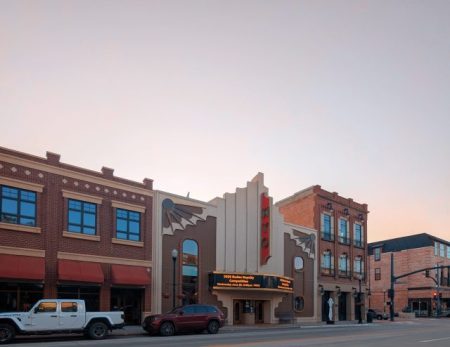
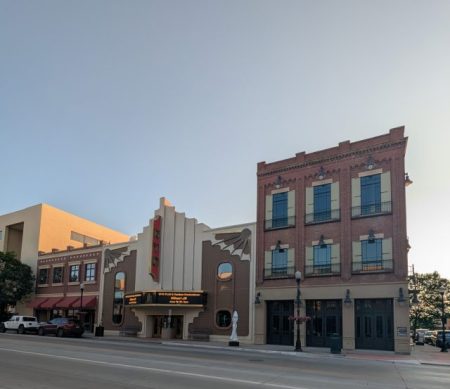
This was the first time I’ve driven I-25 through Wyoming that there haven’t been gusty winds. Like Montana, Wyoming was lush with wildflowers, having benefitted from an extended wet spring.
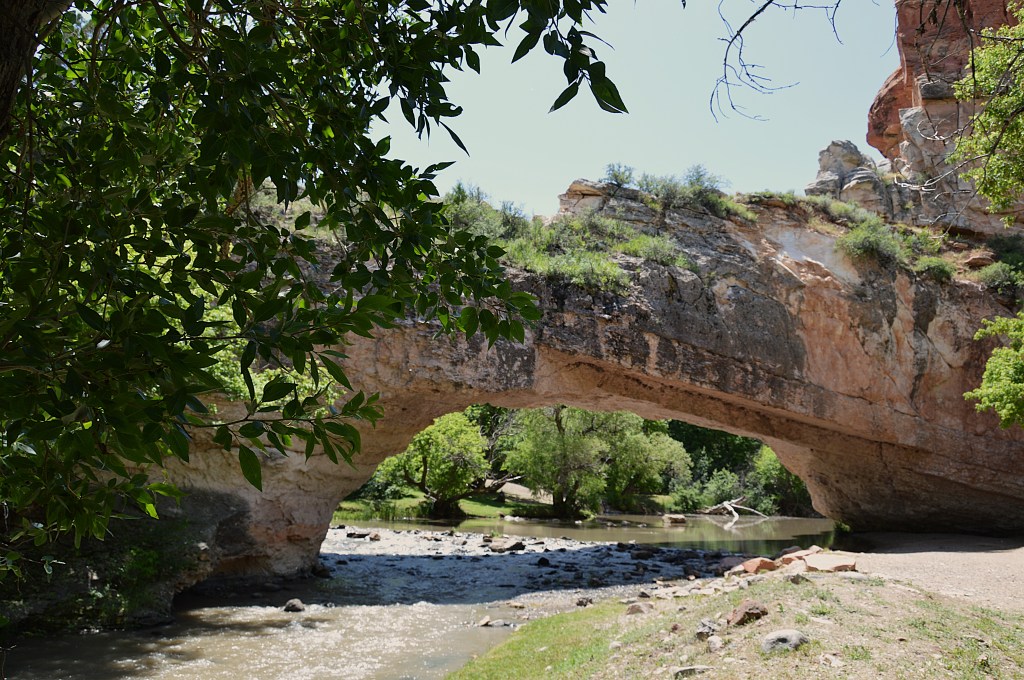
I stopped at Ayres Natural Bridge Park in Douglas. The road from the freeway to the park is narrow, curvy, and uppy downy. The dips are deep and the curves have hair pin bends. The drive was as startling as a roller coaster ride.
The park is at the bottom of a red rock canyon. Ayres Natural Bridge is one of only three natural bridges with water flowing under it in the United States. The sandstone bridge arch is fifty feet high and one hundred feet long. LaPrele Creek streams beneath it. It is a peaceful, secluded park with shady trees, picnic areas, a playground, sand volleyball courts, hiking, and fishing. There are camping spots for RVs under 30 feet.
Alva Ayres settled there in 1882. She was a freighter and bull whacker, driving oxen drawn freight wagons, a job that required animal handling skills, whip use and, I imagine, a great deal of physical strength and fearlessness. The more I travel around the west and southwest, the more women’s fingerprints become visible on the settling and building of this country. In 1920 Alva’s stepson, Andrew C. Ayres, donated land that included the bridge to Converse County.
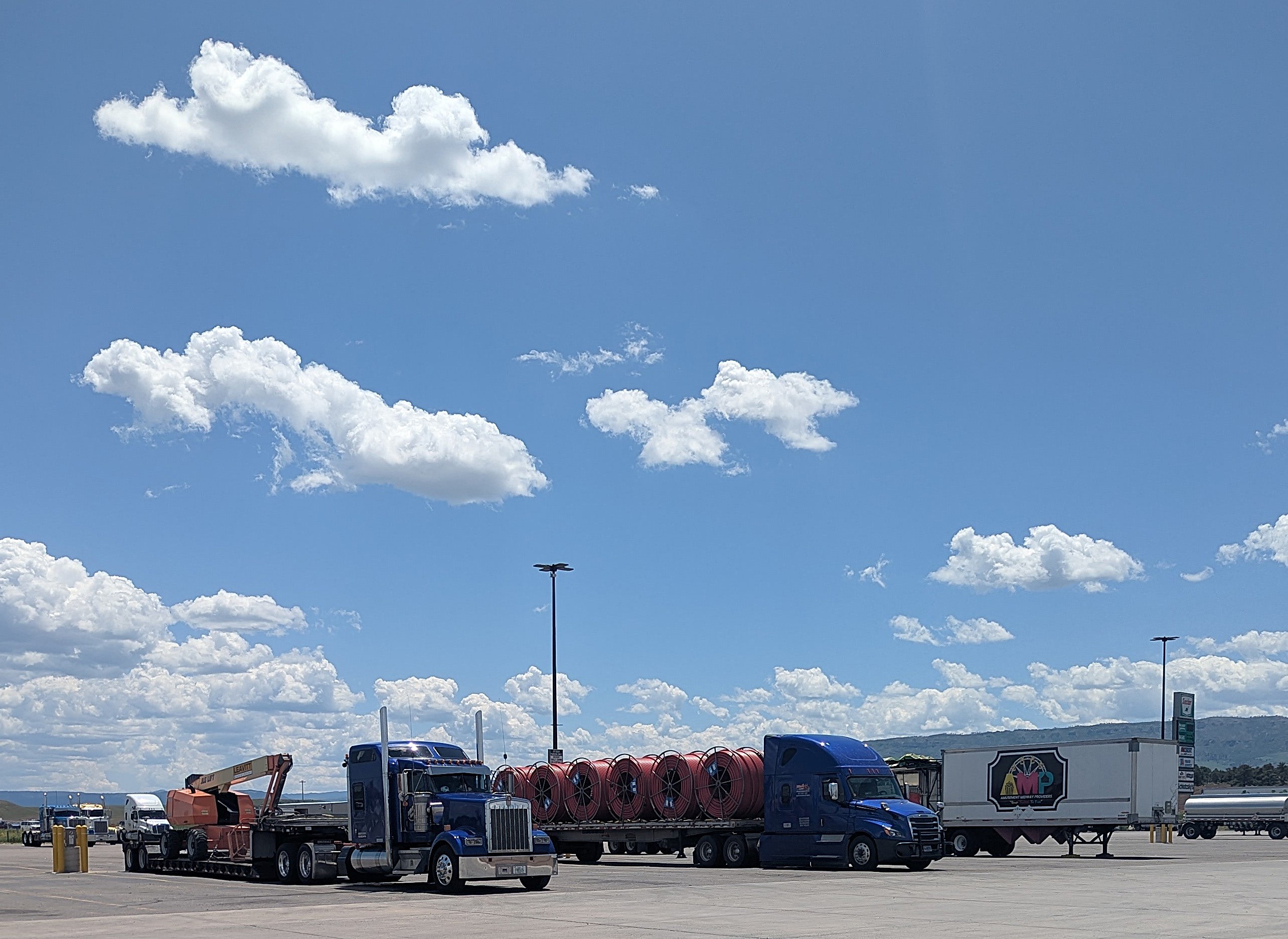
As I drove, I noticed that vehicles are more colorful, not only cars, but semi cabs are now in vibrant colors. I saw two semis side by side in lime green and neon orange followed by a bright yellow semi. They were spectacular! The variety of colors made me think of the boxes of crayons I had as a little girl, starting with the basic eight colors: six primary colors plus brown and black, followed by the box of forty-eight colors. On long stretches of highway across I-70, identifying the colors I saw became a game. There were the twelve shades of the spectrum: red, green, blue, yellow, cyan, magenta, orange, yellow-green, turquoise, light blue, violet and teal, in every hue. I even saw my favorite color, puce. I used puce to color the gowns of princesses in my coloring books. I looked up puce to describe it in this piece. It is pronounced “pooce” and is the French word for flea.

UPS has new semis to tote your packages across the country. I call it UPS brown, and there are at least fifty shades of gray: charcoal, gunmetal, aluminum, pewter, cloud, smoke, slate, dove…I could go on and on, but I’ll leave the rest for you to name. Streams of red, white, and blue semis, nose to nose or in a line were like the flag flying in the wind. When I was hungry I saw the colors as Candy Apple Red, Granny Smith Green, Orange Sorbet, Banana, and two semis side by side were Ketchup and Mustard. They entertained me, colorful streamers flowing across America.
The trucks I saw most were UPS, FedEx, and Prime. There was a time when I didn’t like driving near large trucks, but on this trip I found that truckers are safer and more courteous drivers than people driving vehicles.
The photos below were taken at a truck stop where I charged Freedom. I was unable to photograph the more colorful semi cabs on the road while I was driving. Perhaps I should get a dashcam?

The first time I saw Coal Rollers was on the journey I took through the Southwest the summer of 2021. “What are Coal Rollers,” you ask? They are diesel engine pickup trucks that are modified to emit large amounts of black exhaust containing soot and incompletely combusted diesel fuel. It is a form of protesting Environmental laws. I have noticed Coal Rollers in my home town of Missoula, Montana since the new administration took over the government in January, and I saw many others on this road trip across the country. Coal Rollers like to target EVs, cyclists, and protesters as well as pedestrians. Coal Rolling violates the Clean Air Act, but with the current administration rescinding environmental laws in favor of the fossil fuel industry, it seems that Coal Rollers feel they can do as they please. The practice increases nitrogen oxide emissions as much as 310 times, non-methane hydrocarbons 1,400 times, and carbon monoxide 120 times. Coal Rolling is harmful to the health of individuals and the environment, and fuel economy is significantly reduced and apt to damage the engine’s components. Don’t these people understand what they do to others and the environment, they are doing to themselves? Perhaps with increasing gas prices, Coal Rolling will not be as much fun for them.
KANSAS
Dust in the Wind by Kansas was playing as I drove through western Kansas, flat land with no hills or trees to slow down the wind, and billows of dust surging across I-70. I stopped in Goodland, KS to charge Freedom and go for a walk. The wind was so intense I thought I would be blown away. I don’t think Dorothy needed a tornado to get to OZ.
Towns were farther apart with miles and miles of farmland between, growing corn about as high as my knees for as far as the eye could see. There was less traffic here and highway billboards enlightened me.
- KILL RELATIVISM NOT BABIES
- Protect your Second Amendment Rights ~ Vote Pro-Gun in the Election
- GOD IS PRO-LIFE
The next morning, I charged Freedom in Abilene, KS. I drove through the town and was quite taken with it. There is an area of Heritage Homes with well-maintained gardens along tree lined streets. It was a lovely respite from freeway driving.
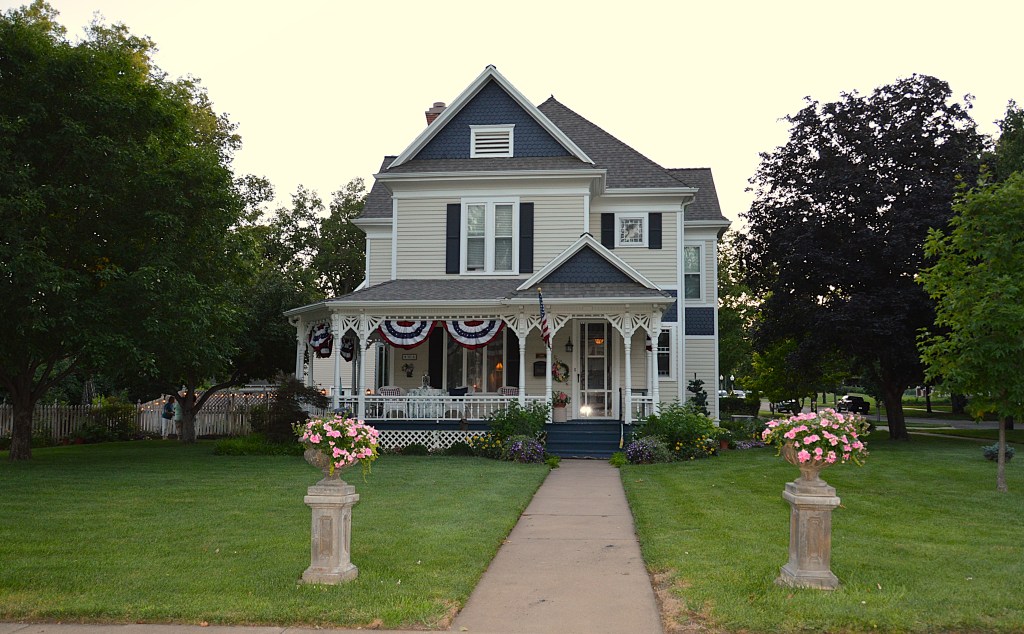
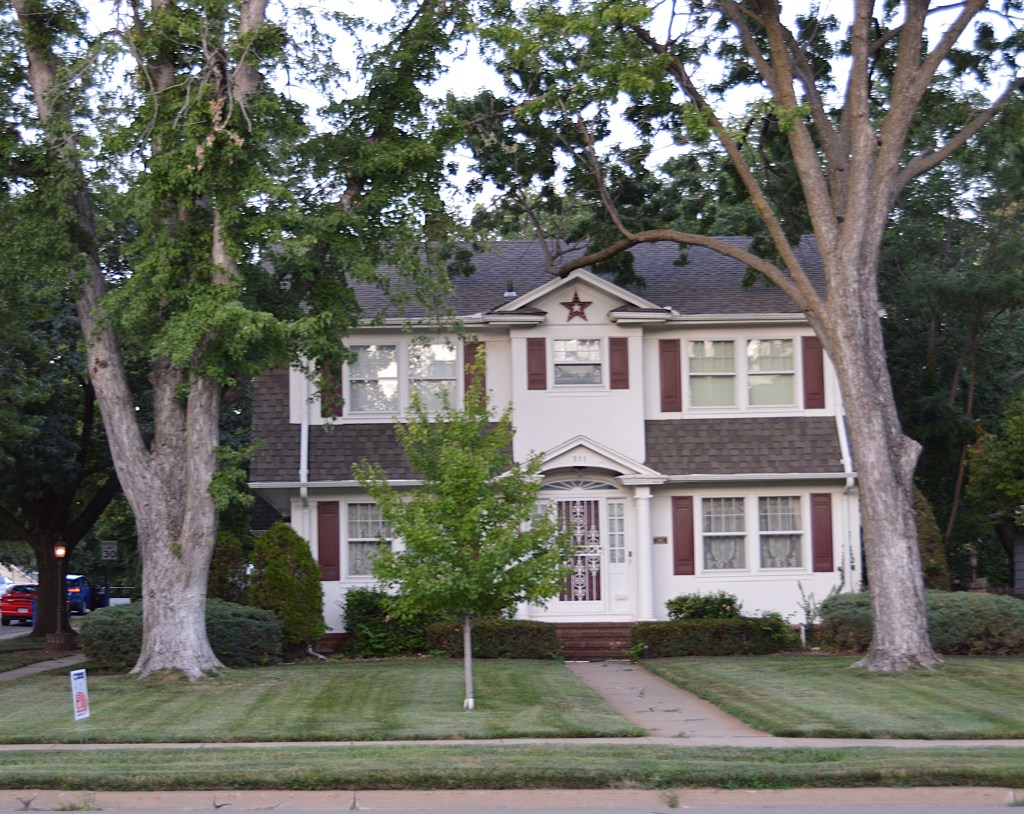

Abilene was part of the original Wild West, not merely a region, but also a period of time after the Civil War. It was at the end of the Chisholm Trail, where herds of cattle were driven from Texas to the railheads in Kansas. Wild Bill Hickok was Marshall of Abilene. His tenure ended after the shooting of two men, one who was his friend and deputy, killed accidentally in the heat of the fray. Wild Bill was devastated and relieved of his duties, and cattle drives were banned from Abilene.

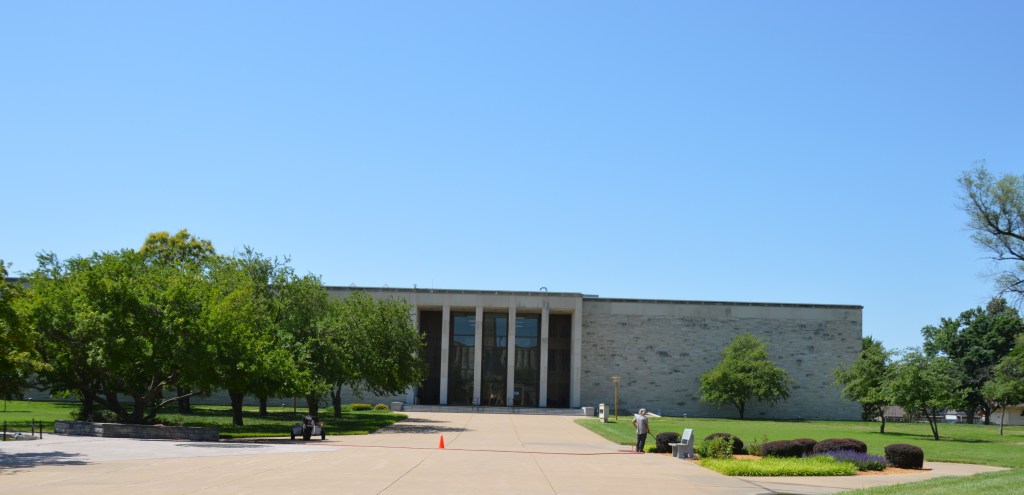
I stopped at the Eisenhower Museum and Presidential Library for an hour. I had a long drive ahead of me that day, so I returned to Abilene on my return trip to spend more time at the museum. I will post a separate blog about my visit to the museum.
President Eisenhower was an extraordinary person. Among his many accomplishments, he was President of Columbia University from May 1948 until January 1953. Columbia recently paid $221,000,000 to the current administration and promised that it will not use “race, color, sex, or national origin” (DEI) in hiring decisions in exchange for $1,300,000,000 in funding that the government withheld on trumped up allegations of “antisemitism.” I can only imagine what President Eisenhower would say if he were still among us.
Andy Williams crooned Moon River as Freedom rose to the top of a freeway overpass, and Kansas City appeared before me. That was my theme song when I moved there to train and become a TWA Hostess. There was an emotional tug from the synchronistic timing of hearing that song, and the shock of seeing how much Kansas City had grown from the picturesque town it was when I lived there for a brief time in my life.
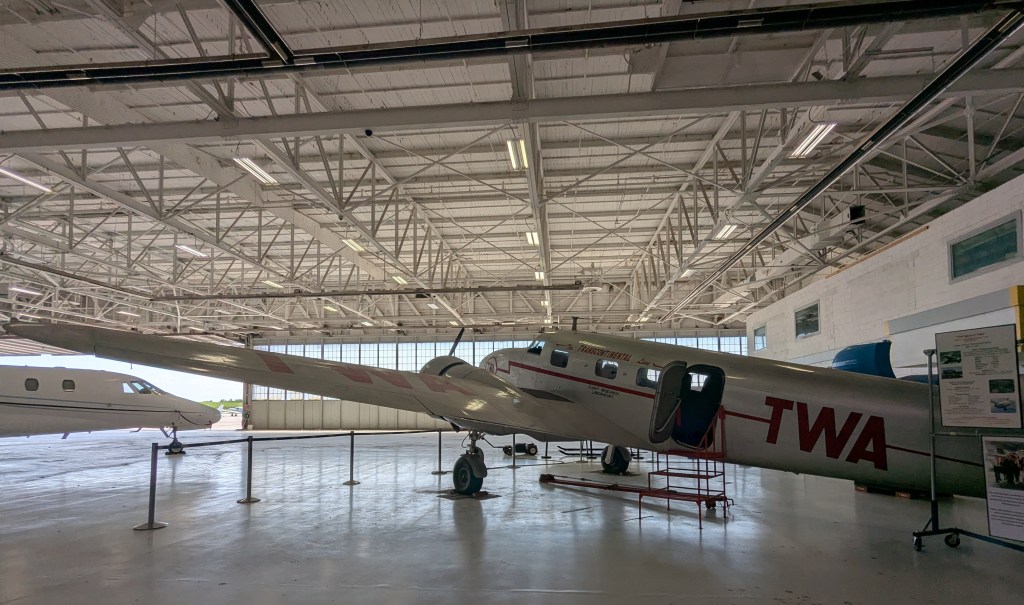
My destination was the TWA Museum. It holds the history of TWA from its inception in the 1930s by the consolidation of two airlines and the leadership of Charles Lindberg, Howard Hughes, and Jack Frye. The museum has artifacts that include a Lockheed Electra 12A , a section of a Boeing 707 that was used for training, and much more. TWA was a great airline and people who worked for TWA in any capacity, from flight crew, to maintenance, to reservations, Et al, are fervently loyal to TWA. My visit to this museum will also be a separate blog.
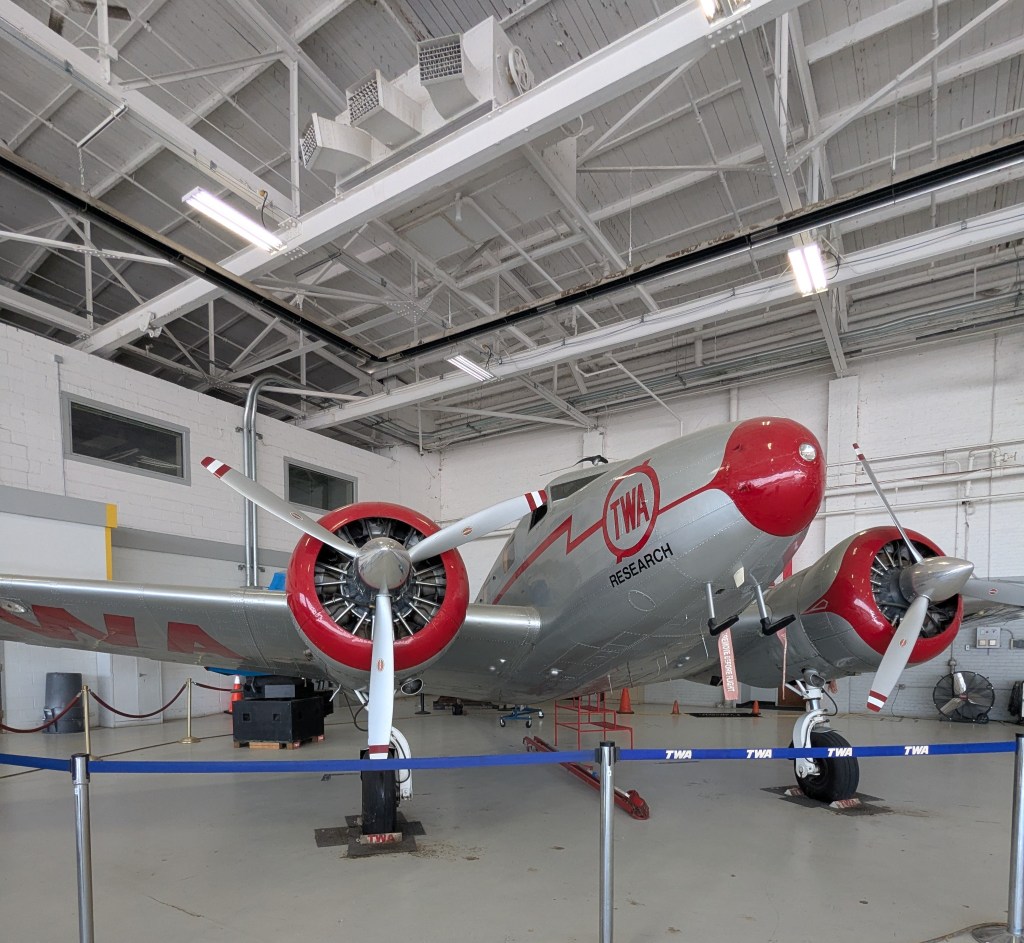
Driving through St. Louis the next day was a mix of road construction and avoiding potholes. Once past that, my route took me through cities I had layovers in during my early days as a TWA Hostess. First was Indianapolis, IN called “India-no-place” by a fellow Hostess. Well, it’s someplace now. Indianapolis is a big city, clean and modern. The sprawling Indiana University medical complex is impressive. Like cities with rivers running through them, it has a lovely riverwalk.
I laughed driving through Dayton, OH remembering layovers at Desi’s Motel that looked like a location for a psychological thriller. I googled it, but found nothing. Desi’s may have vibrated to another dimension before google was a thing.
This was my fifth day on the road and the longest drive that I planned. Because of construction delays through St. Louis, I was on the road nearly twelve hours. When I arrived at the hotel in Triadelphia, WV, I took a quick shower and fell asleep as my head hit the pillow.
PENNSYLVANIA
When I thought of Pennsylvania, big cities like historic Philadelphia and industrial Pittsburgh came to mind, so I was surprised and delighted to see its rolling hills and verdant landscape. I was also surprised to see that much of the state is agricultural. I enjoyed a peaceful drive through Amish country and wondered how the couples in horse drawn carriages driving on the road’s shoulder felt about the automobiles passing them on the road. As I drove deeper into the state, the rolling hills crested in the beautiful Allegheny Mountains.
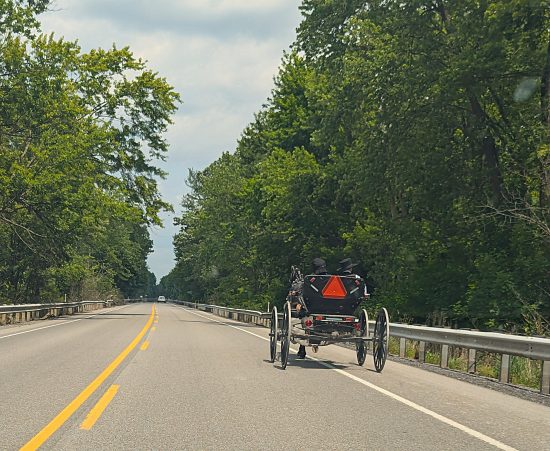
Traffic was free flowing at speeds higher than the posted rate. There were vehicles driving at high speed weaving in and out of lanes. Motorcyclists were out en masse and I was shocked to see so many of them riding in t-shirts and shorts. As Pennsylvania intertwined with New Jersey, the traffic became heavier.
Soon I was on the Jersey Turnpike. After a turn there was a rise and before me was the skyline of Lower Manhattan, and I felt another emotional tug. I grew up in Brooklyn and Long Island, and Manhattan was my backyard and playground; it filled my imagination and cultivated my dreams. Now I return, no longer the little girl who wandered off to faraway places, yearning to experience all that life had to offer, but a woman filled with all that I met on life’s path: a sequence of endings and new beginnings, filled with successes and losses, with love given and love received, and ready for more.
I hadn’t been to the city since 2011 and the skyline, while recognizable, has changed. So many new, pointy buildings! I was in the thick of a massive traffic jam, cars coming from a maze of directions, all headed to the same four lanes of the Holland Tunnel. This was worse than the uppy downy, hair pin curvy road to Ayres Natural Bridge Park, the lane merges, road construction, and pothole dodging. I took long, slow breaths until I made it to the tunnel.
I thought it would be smooth sailing from there, but I needed to thread my way through lower Manhattan to the Williamsburg Bridge, and through Queens. It wasn’t until I reached the Wantagh Parkway that traffic subsided. I drove another forty-five minutes before arriving at the home of my sister and brother-in-law, Kathy and Bob, happy to be among my loved ones.
To be continued…

 The Write Mind of a Lefthander