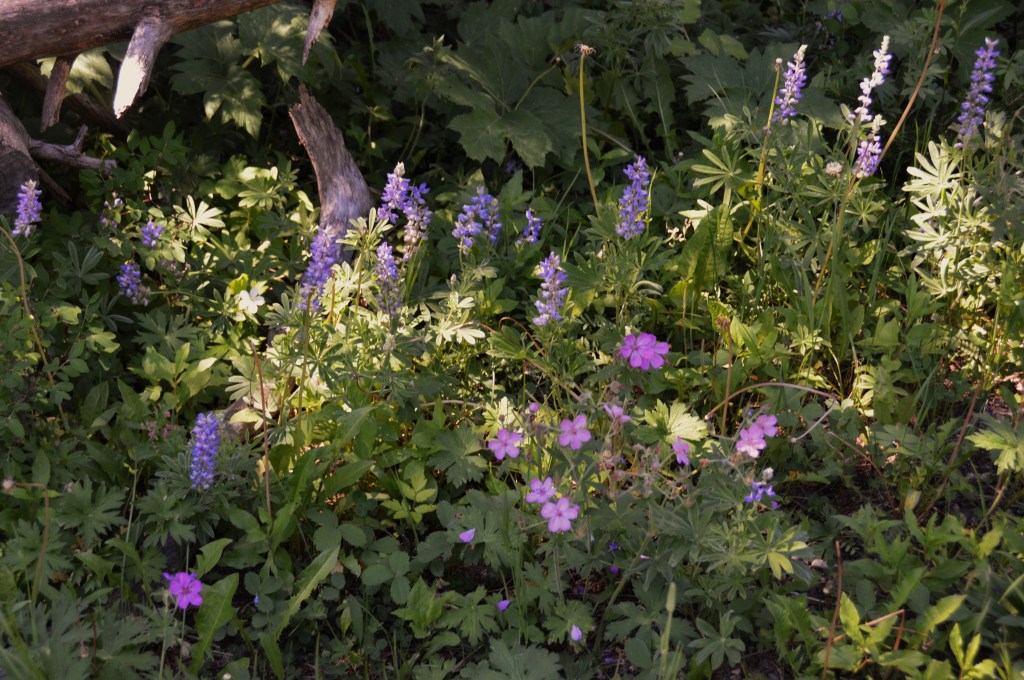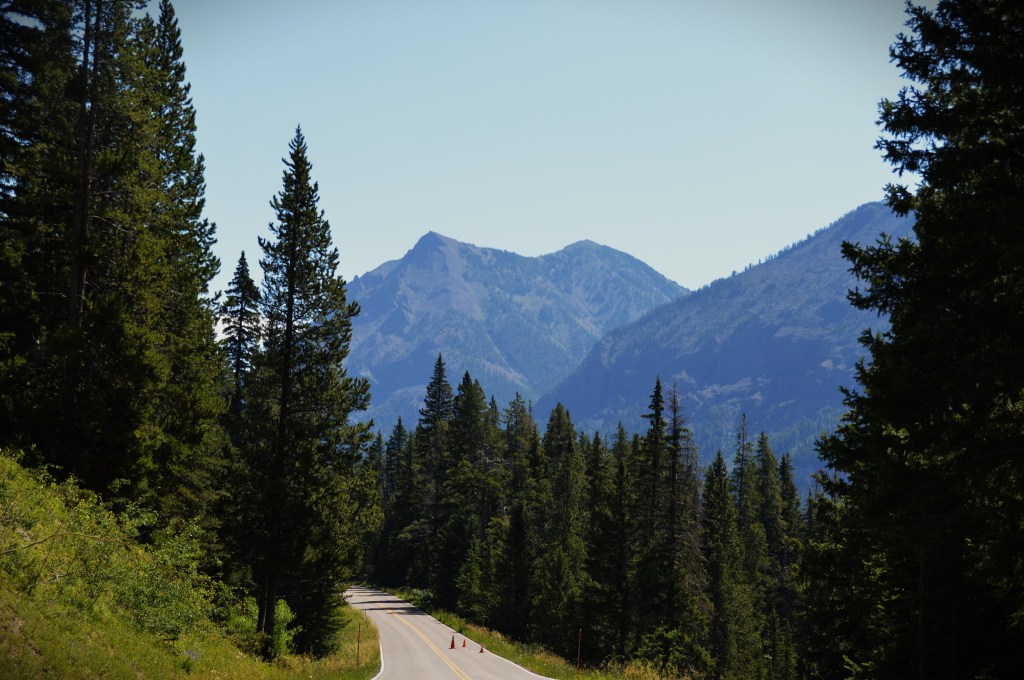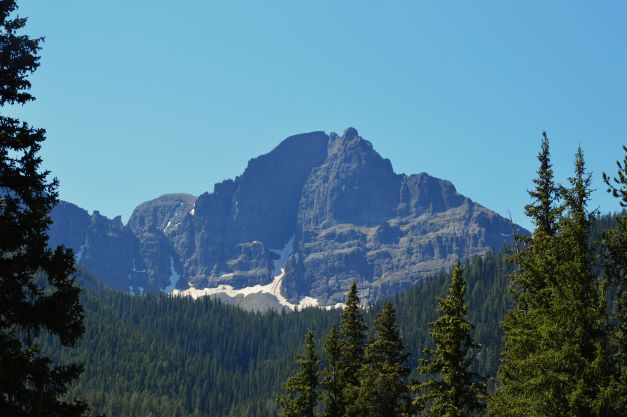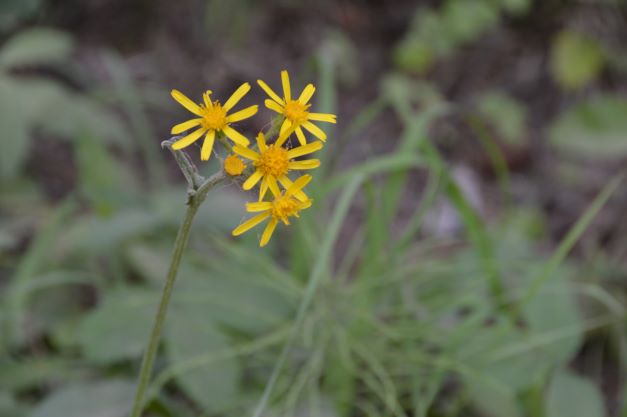
The Golden Triangle

O beautiful for spacious skies,

For amber waves of grain,

For purple mountain majesties

Above the fruited plain!

                                                Katherine Lee Bates

Late in July there was an unexpected, severe storm in Missoula. One minute it was daylight, the next, the sky was black. There was one lightning strike after another, the earth rumbled with thunder, and fierce winds gusted up to 110 MPH. Tree limbs and all sorts of debris flew through the air. Entire trees and power lines were knocked over. I was without electricity for thirty-six hours, but consider myself fortunate, some areas were without it for nearly two weeks.

The wind blew the air handlers for the air conditioners off their bases on the roof of the apartment building where I live. The one for the wing I live in was severely damaged. After twelve days of sleeping in a stuffy apartment, I decided I needed to go somewhere.

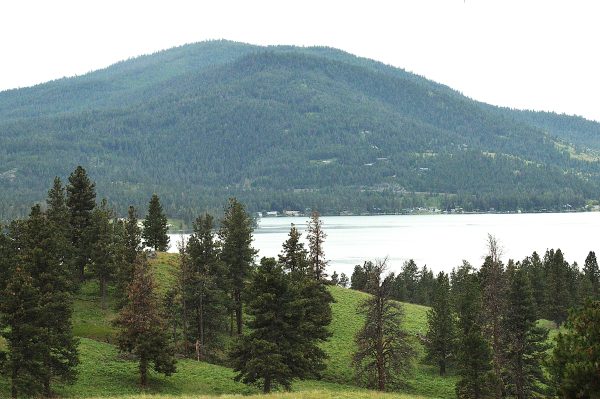
I’m in the midst of writing a novel that takes place in the “Golden Triangle,” where the main crop is wheat. Even though the story has nothing to do with wheat or farming, it seemed a good idea to explore the area to get a sense of place for my writing. The drive began on HWY 200 through twisty, forested roads before flattening out to farmland. There was much more to see, but first, a stop in Great Falls.

Charles Marion Russell ~ The Cowboy Artist ~ Painter of the West

“If both hands were cut off, I could learn to paint with my toes. It is not in my hands but heart what I want to paint.” Charles Marion Russell

The C. M. Russell Museum is located in a neighborhood of charming Victorian houses where Charles Russell lived with his wife, Nancy. Born in 1864 in St. Louis, MO, Russell grew up on tales of the West and wanted to be a cowboy. He struggled at school, but art was always part of his life. When he was sixteen, his family arranged for him and a family friend to work on a sheep ranch in Montana. He didn’t last long at the job, but he did meet a trapper named Jake Hoover and lived with him for two years, learning about the land and studying the animal form.

And then he became a cowboy, a night wrangler, for twelve years. He carried watercolors and brushes in his bedroll, and using whatever carboard and paper he could find in camp, he sketched the animals, the landscape, and the other cowboys. The winter of 1886-87 was severe. The owner of the O-H Ranch where Russell worked, sent the ranch foreman a letter asking how the herd had fared through the harsh weather. Instead of a letter, the ranch foreman sent a postcard sized watercolor that Russell had painted. It showed a gaunt steer being watched by wolves under a gray sky. Russell had captioned the sketch, “Waiting for a Chinook.” (Warm, dry winds.) The owner of the ranch displayed the postcard in a shop in Helena and Russell began to get commissions for illustrations. Later, Russell painted a more detailed version of the sketch that became one of his best known works.

In 1888, Russell lived in Canada for a year with the Blood Indians, a branch of the Blackfeet Nation. His paintings of his time there showed great detail, even of the beading on moccasins. He had a great affinity for Native Americans and became an advocate for them. He supported the Chippewas in their effort to establish a reservation, and in 1916 congress passed legislation to create the Rocky Boy Reservation in north central Montana.

Russell became a full time artist in 1893. He married Nancy Cooper in 1896. Nancy marketed and sold his art, and Russell became an acclaimed artist. His art captured the old west before it was lost to the call of Manifest Destiny, the lust for natural resources, and the industrial age. He is also known for his use of color. In his lifetime, Russell created more than 4,000 works of art: paintings, sketches, and sculptures.
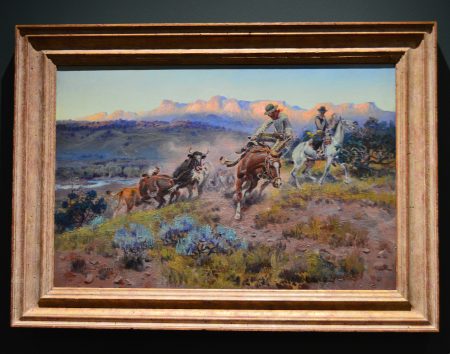
In 1936, President Franklin D. Roosevelt created the Charles M. Russell National Wildlife Refuge. It is the second largest wildlife refuge in the lower forty-eight states with approximately 1.1 million acres of native prairie, forested coulees, river bottoms, and badlands, much of which are portrayed in Russell’s paintings.

I find Russell to be a fascinating human being as well as a gifted artist. PBS created a documentary “C. M. Russell and the American West.” Watch it if you’d like to learn more about him and see more of his paintings. If you are ever in Great Falls, the C. M Russell Museum is worth a visit.
The Golden Triangle

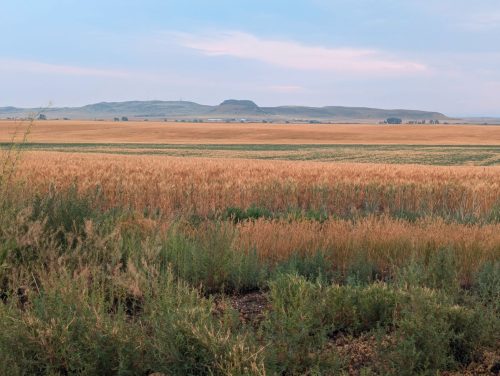
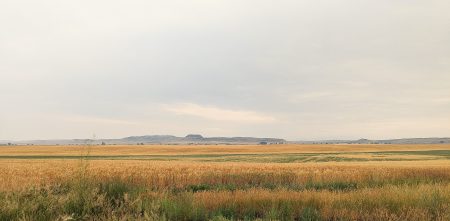
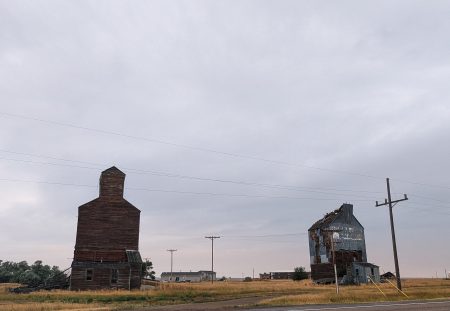
The longest leg of the Golden Triangle is from Great Falls to Havre. Driving north on US87 the vast northern prairie is strewn with sixteen hundred farms threaded together with small towns or truck stops with gas stations and cafes. Wheat fields stretch out to a horizon marked with buttes or shadowed by massive cloud formations. Barns and steel silos are clustered together, reaping equipment and trucks are parked nearby. I pass old wood silos that look as if they are ready to crumble, but stand as proud reminders of their past service.
The Mighty Mo

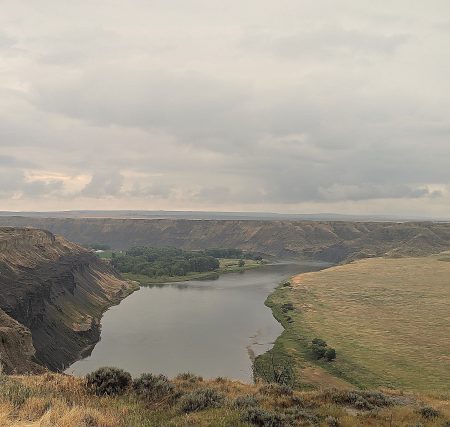
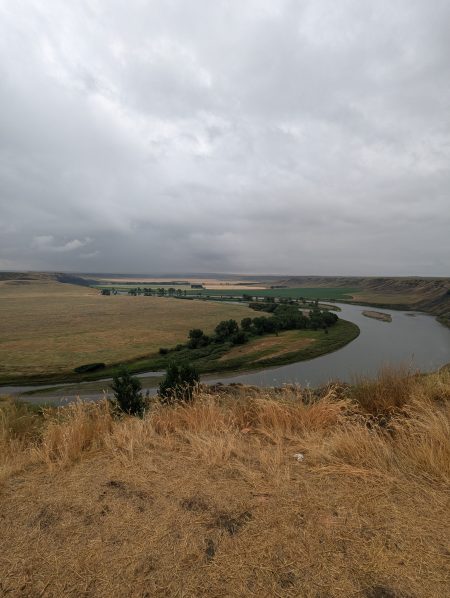
There are pull offs at historic sites that provide not only information, but also beautiful vistas. My first stop is at a loop in the Missouri River. The Missouri joins the Mississippi River in St. Louis, Missouri. Starting there, in May, 1804, Lewis and Clark and the Corps of Discovery followed the 2,540 mile long Missouri River to its headwaters in Montana, at the confluence of the Jefferson, Madison, and Gallatin Rivers. They arrived in July 1805.

They followed the Jefferson River to Missoula, and then to Travelers’ Rest in Lolo. From there it was an arduous overland trek through the mountains until they reached the Clearwater River in Idaho, into the Snake River, and then the Columbia River to the Pacific Ocean, where they wintered in present day Astoria, Oregon.

They returned to St. Louis In September, 1806. During the expedition, they encountered over seventy Native American tribes and learned and recorded the languages and customs of those tribes. They mapped the topography of the land, rivers, and mountain ranges and described more than two hundred new plant and animal species, with information about their natural habitat. They brought back many artifacts as well as plant, seed, and mineral specimens.
Farther up the road is the oldest town in Montana, Fort Benton. Established in 1846, it was once the world’s largest inland port. The fort was built for the fur trade. Steamboats and travelers arrived in 1860, and then the gold seekers in 1862. It became a main destination and supply hub on the upper Missouri, and was called “the Chicago of the West.” By the 1890s, railroads had become the favored form of transportation, and the era of steamboats ended. Fort Benton is a National Historic Landmark.

The landscape rolls along and I stop when I can to appreciate the beauty of the land. Besides the farmland, there are many opportunities for outdoor recreation: camping, fishing, and hiking. There is so much more of this beautiful area that I would like to spend time exploring.

When I arrived in Havre, I’d been on the road for two and half hours and needed to stretch my legs. I plugged Freedom into an EV charger and walked to the H. Earl Clack Museum. There are exhibits of local history, as well as dinosaur bones. The museum is part of the Dinosaur Trail, made up of fourteen sites throughout Montana.

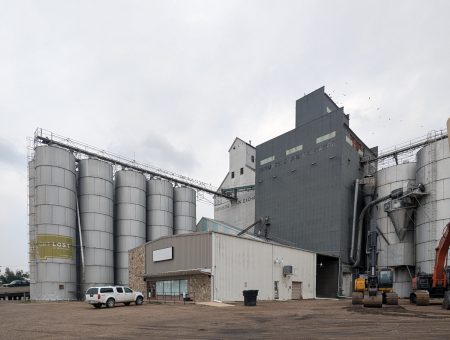
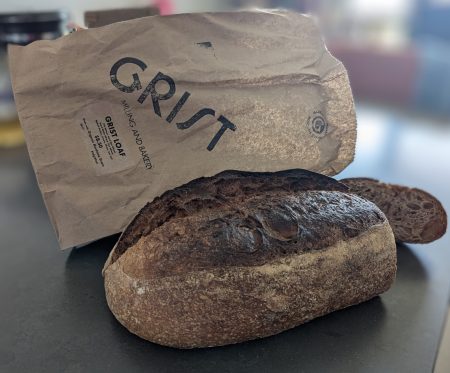
The Golden Triangle is a vital part of Montana’s economy, and the wheat industry is the largest contributor, producing 186,705,000 bushels annually. Eighty percent of Montana’s wheat is exported. About 2.2 million acres of hard red winter wheat and spring wheat are planted annually. The next time you eat bread or pasta, consider that it may have been made of Montana hard winter wheat, or Montana spring wheat for your pancakes, cakes, and pastries. Other crops such as oats and barley, as well as peas, lentils, chickpeas, and canola are also part of Montana’s farming industry.
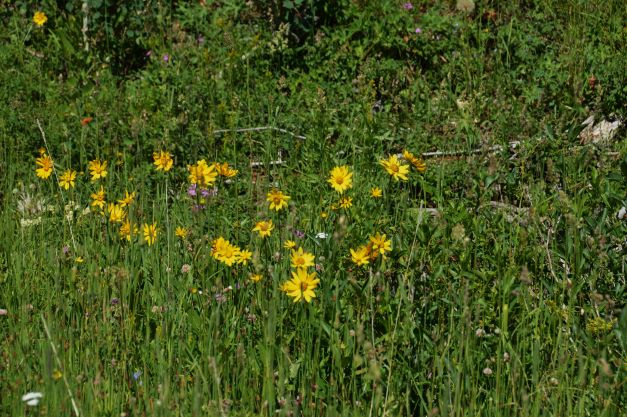
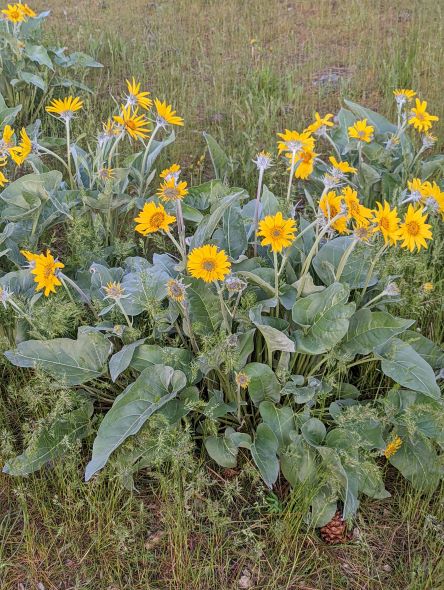
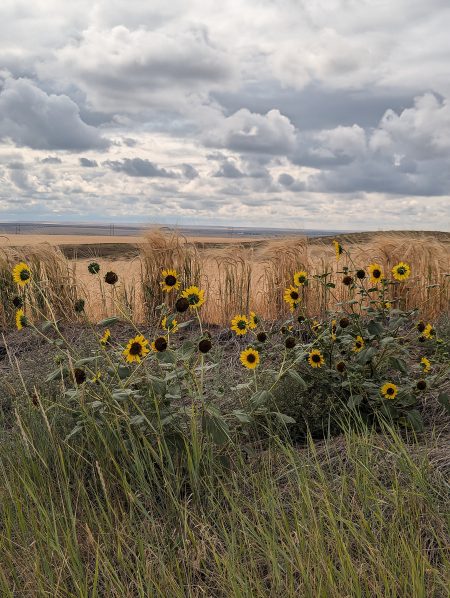
On the drive back to Great Falls, the side of the road was lined with wild sunflowers. They looked so joyful, I had to stop and walk among them. After driving around southwestern deserts and the mountains and prairies of the west the past four summers, I have come to associate them with this part of the United States and the month of August.
If I were in charge of the Department of National Anthems, I would choose “America the Beautiful” for the United States. Besides being difficult to sing, “The Star Spangled Banner” was written after a battle during the War of 1812. I think we should change our focus from war to America’s beauty and abundance, and all the good that can come from brotherhood.

O beautiful for spacious skies,

For amber waves of grain,

For purple mountain majesties

Above the fruited plain!

America! America!

God shed His grace on thee

And crown thy good with brotherhood

From sea to shining sea!

                                                Katherine Lee Bates
Flathead Lake, Montana

Spring was tempestuous with every kind of weather imaginable, sometimes all within one day. After several sunny, warm days in early May, it felt as if spring had arrived, and I drove up to Flathead Lake in the hope of seeing the cherry orchards abloom. On the way up, the vista is a palette of greens, from the soft yellow-green of newly leafed trees, to the verdant grasses, and the forest green of pine trees climbing the mountainsides.

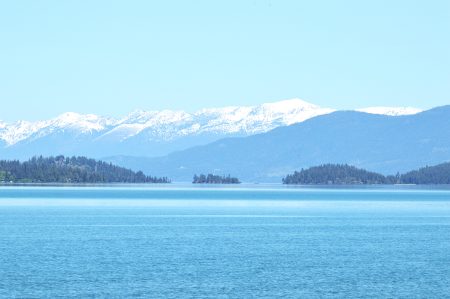
Along HWY 93, there is a grade that’s gentle at first, and then gets steeper. For a moment it’s just road and sky, and then, suddenly, the jagged tops of the Mission Mountains burst over the horizon. It took my breath away.

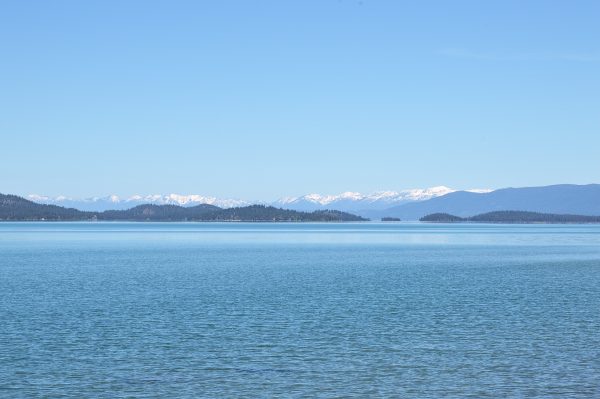
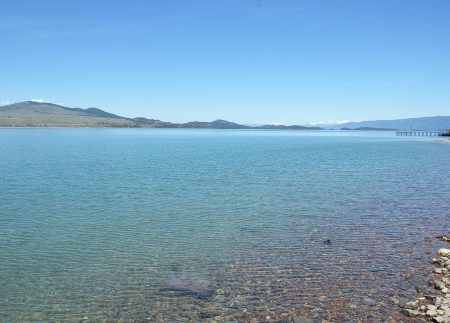
I had the same sense of amazement when I arrived in Polson and glimpsed Flathead Lake. The blue of it- teal near the shore, deeper blue in the distance, was the color of a clear sky, which it was that day.

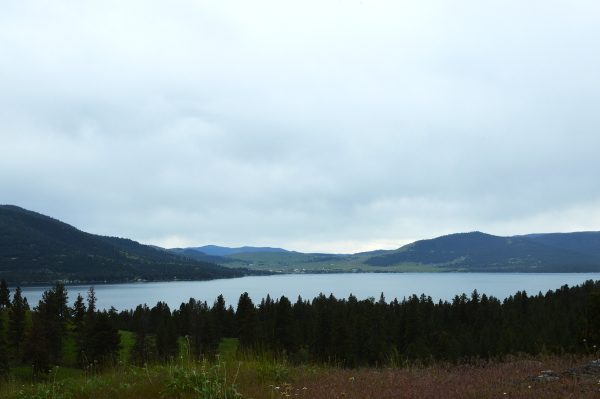
Flathead Lake is the largest freshwater lake west of the Mississippi River, and is one of the clearest lakes in the United States. It has two hundred square miles of surface area, one hundred eighty-five miles of shoreline, and a depth of three hundred seventy feet. There are a dozen small islands within the lake. Wild Horse Island is the largest at 2,164 acres of rolling hills, the highest of which is 3,749 feet. The Salish and Kootenai people used this island to pasture their horses to protect them from being stolen by other tribes. Wild Horse Island was designated a state park in 1978.

The lake is at the southern end of the Rocky Mountain trench, and is the remainder of glacial Lake Missoula. It is bordered on the east by the Mission mountains and by the Salish Mountains on the west. This ecoregion is rich in biodiversity and includes large mammals such as the grizzly bear and the black bear, elk, white tail deer and mule deer, moose, mountain goats, gray wolves, and mountain lions. Its climate is favorable for cherry orchards on the east shore and vineyards on the west shore. Apples, pears, plums, vegetables, hay, nursery and Christmas trees, sod, wheat, and canola are produced around the lake. It is known for recreational activities that include fishing, sailing, boating, water skiing, swimming, picnicking, and camping.

And then there is Flossie, a giant serpent like creature reported to inhabit Flathead Lake. Since 1889, there have been one hundred nine documented sightings of this twenty to forty foot long creature. She was last seen in the fall of 2017.

Walking along the crystalline shoreline, I read the placards with stories of Native American life before the Europeans arrived, and imagined what a paradise this must have been.

Archaeological discoveries indicate that western Montana had been inhabited by humans for twelve thousand years before the Lewis and Clark Expedition traveled through the Bitterroot Valley in 1805. It was the first written record of European contact with the Salish people who lived there. Settlers arrived for the gold rush of 1864, along with the Missoula and Bitterroot Valley Railroad, forcing the Salish out. Soldiers marched the Salish people, who were suffering from starvation, sixty miles from Fort Missoula to the 1.3-million-acre Flathead Reservation. Twenty-two million acres of the Salish homeland were yielded to the United States. The Flathead Reservation is home to the Bitterroot Salish, the Upper Pend’ Oreilles, and Kootenai tribes.

All but the northern end of Flathead Lake is in the Flathead Reservation.

After a long walk, I drove around the cherry orchards, but there were few blossoms. A cold spell in mid-January with temperatures as low as minus thirty-two degrees caused the flower buds to freeze, and in some areas caused damage to the trees. This has had an unfortunate impact on the cherry season. It is anticipated that the harvest of the sweet and juicy cherries will be lower than normal.

Wild Horse Island

When I learned that five wild horses lived on and roamed the island, I knew I had to visit it. I’ve always had an affinity for horses. To me, they are the most elegant animal, even in the wild, and that’s the way I love to see them, wild and free. So, in early June, I made another trip to Flathead Lake, this time to drive around the perimeter of the lake, as well as to visit the island.

After a string of sunny, summerlike days, I woke to a chilly, overcast morning, but spring was in full bloom and the landscape was even more beautiful than the last time I drove on Hwy 93. The Mission Mountains startled me again when they emerged above the road, now covered with fresh snow from a storm in late May.

The drive around the lake reminded me that agriculture is Montana’s main industry. Cattle grazing in fields and trucks driving by with rolled bales of hay contrasted with the recreational aspects of the lake: people fishing off the sides of sailboats; motorboats and pontoon boats darting across the open water.

When I walked in the door at Big Arm Boat Rentals for the three o’clock shuttle to Wild Horse Island, I was warmly greeted by Matt, the owner. He tells me and the other passengers, Rick and Rachel, about points of interest, instructs us to take to take a photo of the map of the island at the landing, and that we will be picked up at 6:30.

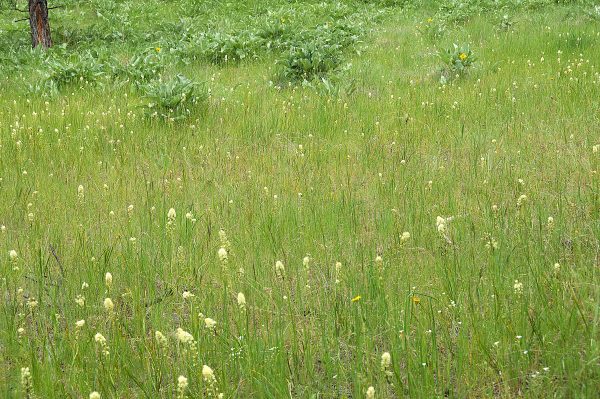
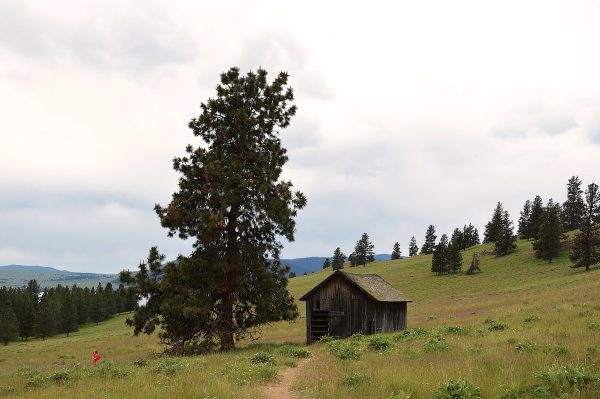
It’s a twenty minute pontoon ride from Big Arm to Wild Horse Island. When we arrive, we snap photos of the map. Rick and Rachel go left toward the high point of the island, and I make my way up the path towards my adventure. Walking through the Pondersoa pines, I was enchanted by the abundance of white wildflowers. It looked like a faerie garden. When I did a search of these lovely flowers, I learned that they are called Death Camas. They are pretty to look at, but poisonous.

When I emerged from the forest, I met a couple with two little girls. I asked one of the little girls if she’d seen the horses. “No,” she said, “only butterflies.” She ran up the hillside with her sister, her parents in pursuit.

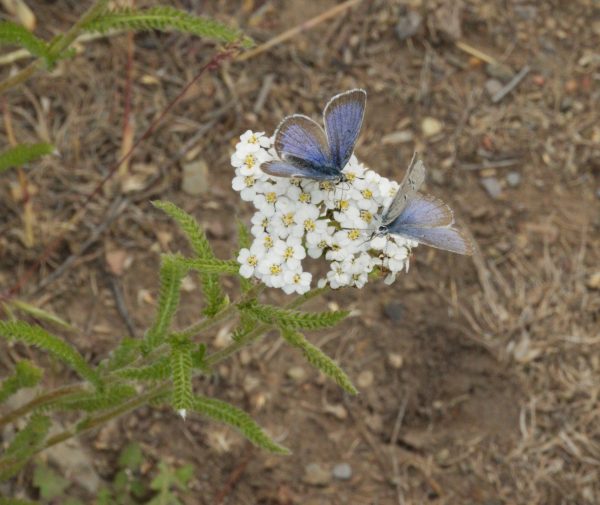
I followed a path that ended in a clearing where there was a flutter of periwinkle blue butterflies. Their gossamer wings were vibrant on that overcast day, and I was spellbound as they danced in the air. These lovelies are Celastrina Ladon Lycaenidae or Spring Azure butterflies. They are tiny, with a wingspan of 0.87” to 1.8.” Their habitat ranges from the Alaskan Tundra to mountainous areas of Colombia, and are widespread throughout the U. S. They can be found in old fields, clearings, and at the edges of forests, wooded marshes, and freshwater swamps. When two of them settled on a yarrow flowerhead, I managed to capture this photo. Doesn’t it look as if the one on the right is looking into the camera?

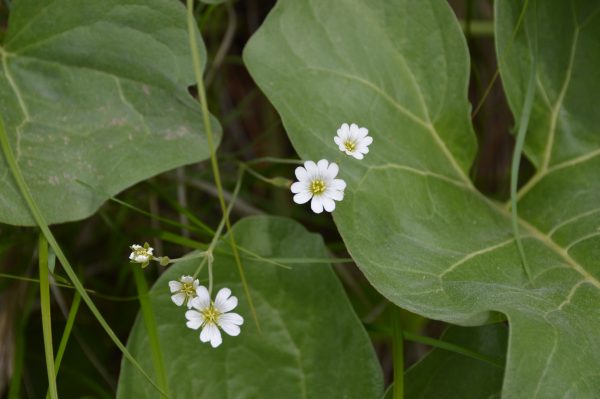
I walked through a grassy meadow keeping an eye out for wildlife, especially the wild horses who inhabit the island. The rolling hillsides are hip high with native grasses interspersed with wildflowers: yarrow, field chickweed, death camas, blanketflower and arrowleaf balsam root. The deer and big horn sheep like to eat the flowers of the arrowleaf balsam root plants.

Chickweed
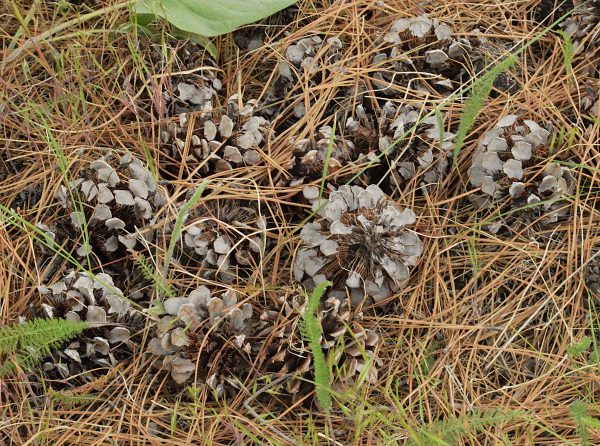
A bouquet of pinecones

I cross paths with hikers who say they spotted two bighorn sheep, but no horses. Although I scanned high and low, there was no wildlife in sight. The cloud cover turned dark, and it began to rain.

Higher up, the views are spectacular. There’s a rusted marker, on it is written “loop” with arrows pointing in opposite directions. Needing to decide which way to go, and since I’d come from the left and the loop from the landing point had two ways to go, I thought by going right I’d make the complete loop, so right I went.

What is that? Two horses in the distance? I take out my camera shaking with excitement, and look through the viewfinder. As I adjust the focus, I realize that it is a tree stump and fallen branches.

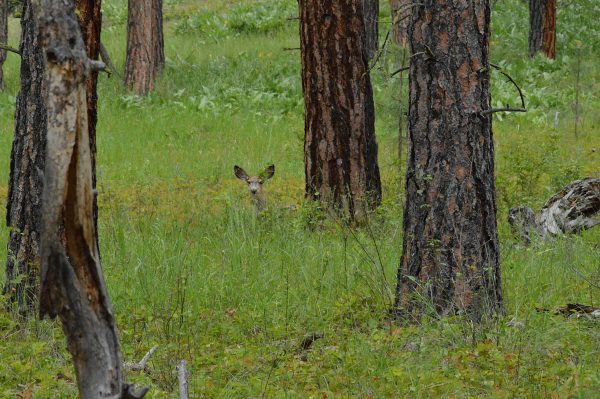
Now I’m walking through the forest, still hoping to see the horses, but intent on arriving at the landing on time for pick up. I feel as if I’m being watched and look around. I see a deer lying in the grass, studying me. I look back and feel a connection with it. The deer stands up, and then another stands beside it. There is one more deer in the photo. Can you see it?

They watch me until I reach the cove. The beach doesn’t look anything like the one where we landed. I looked at the map there and saw a star at Eagle Cove. I looked at the map on my phone and saw all the landing sites, but there are no stars on any of them. I don’t know where I’m supposed to be.

I called Matt to tell him my situation. He says to stay where I am and his son, Kenton, will pick me up. Soon enough, Kenton arrived in the pontoon, and piloted us back to Skeeko Bay where Rick and Rachel waited. They were excited to say that they witnessed the mama Bald Eagle in the nest above us swoop into the bay, catch a fish, and feed it to her two chicks.

The clouds thinned and revealed patches of blue sky. We chatted as Kenton steered us back to Big Arm. He’s majoring in Biomedical research. “I love science and math, and I’m interested in the brain.”  He said he’s impressed with the work Neuralink is doing, referring to the YouTube video of Neuralink’s first research participant, playing chess with thoughts transmitted to a computer.

I stopped in Polson for dinner, and by the time I left the restaurant, cumulonimbus clouds were scattered across the big sky. I drove south on HWY 93 appreciating what a wonderful day it had been. I didn’t see the wild horses, but I walked through a landscape filled with wildflowers and exquisite butterflies, a herd of deer of acknowledged my presence, and I saw a mother eagle sitting proudly on her nest with one of her chicks. I also got to hear the dreams of a young man filled enthusiasm about the future.

As I drove along the wetlands, the setting sun cast its last rays on the Mission Mountains, and the whole valley was filled with golden light. It was magical.

I will go back again to look for the horses, and maybe I’ll catch a glimpse of Flossie.

Tower of Trash

The current exhibit at the Missoula Art Museum (MAM) is Human//Nature-A Retrospective from the collections of Terry Karson is the ultimate recycling project.

“I take stuff people throwaway and turn it into art.” Terry Karson

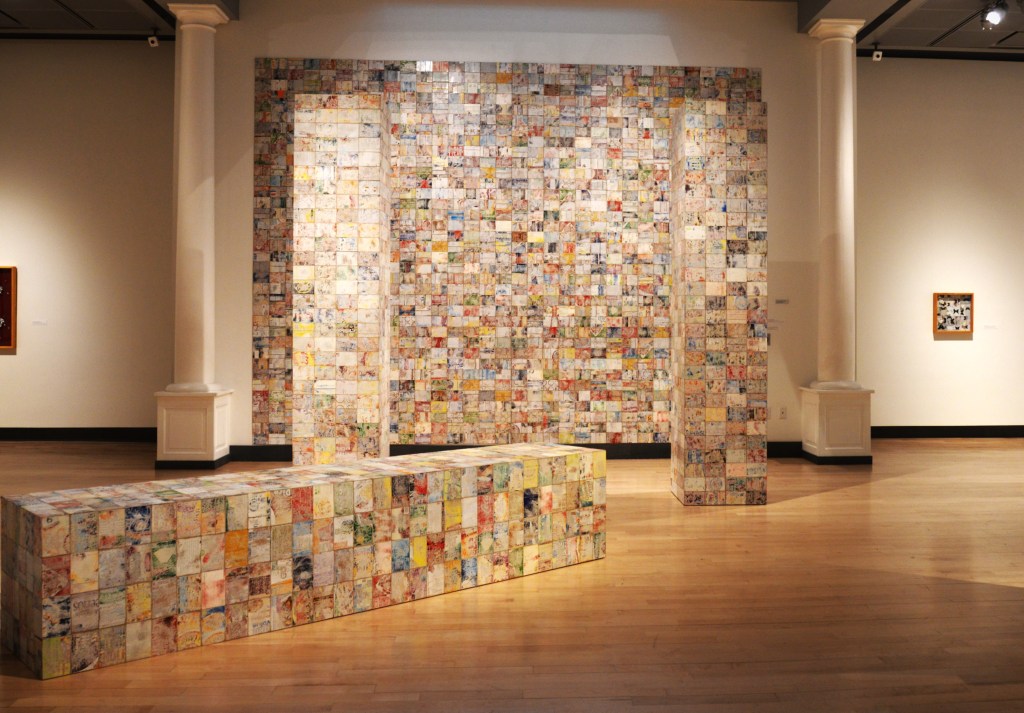
Commons was built into the Aresty Gallery at MAM in 2012 as an immersive experience. Karson created tiles made of discarded cardboard packaging, such as cereal boxes and beer cartons, that were sanded, sorted by color, and assembled into grids, then built into architectural sculptures. He referred to them as “nature and culture.” Only portions of the original installation are in this exhibit but are still impressive. A diorama of the original exhibit seems like walking within a temple. I would love to see Commons in its entirety.

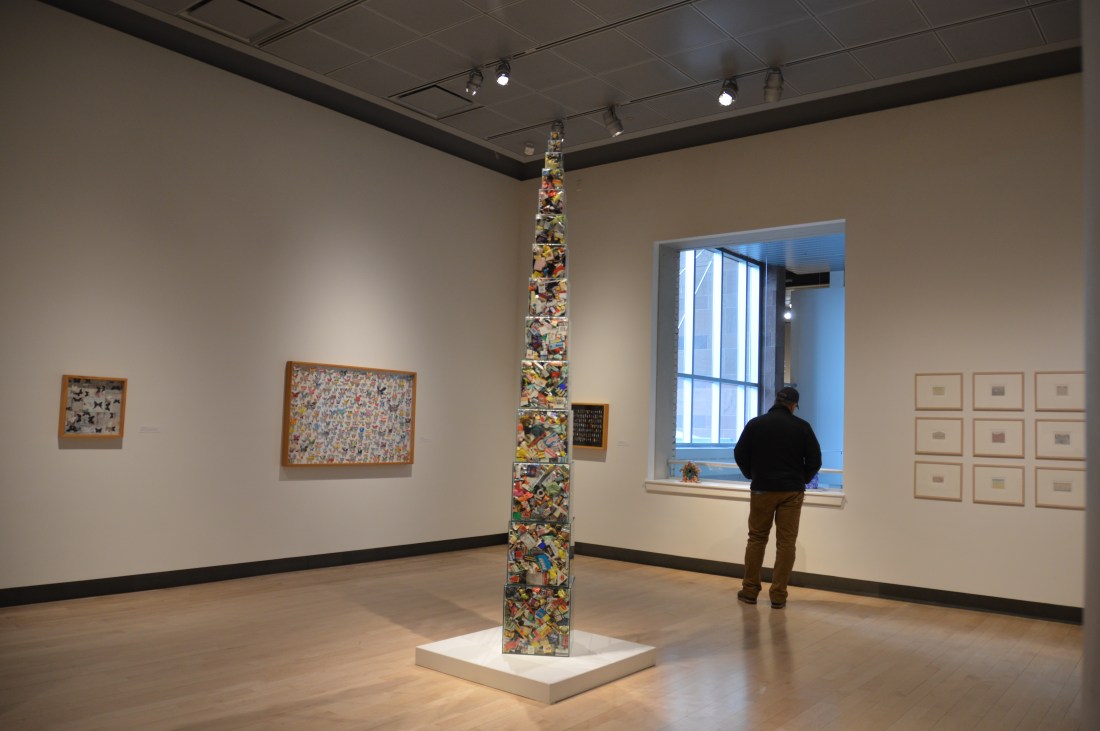
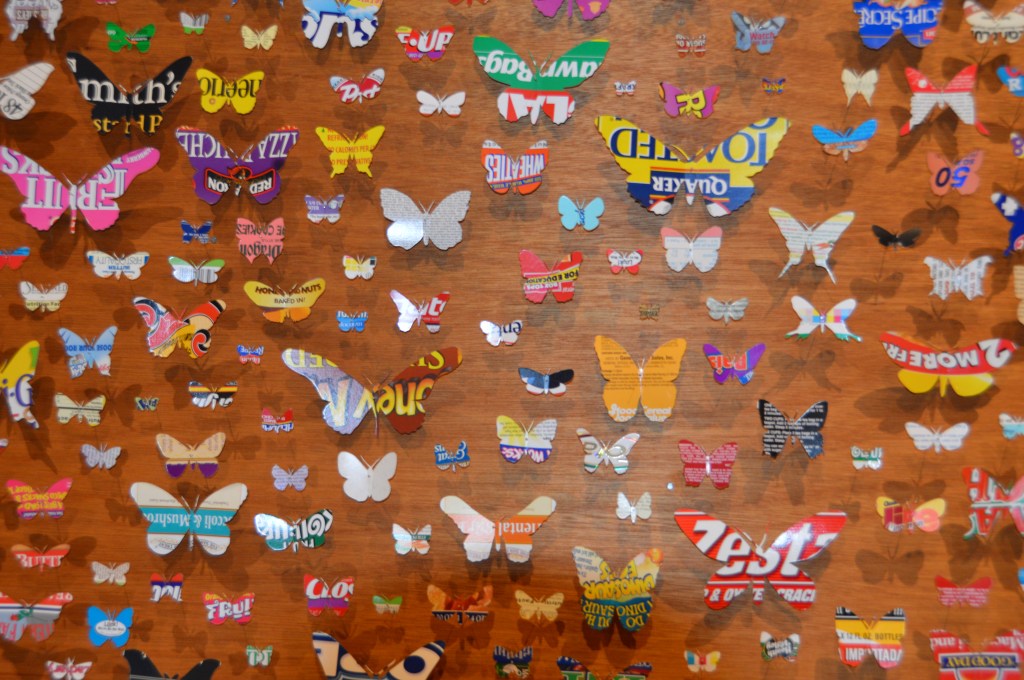
Karson and his wife, Sara Mast, collaborated on Indian Flats, another large-scale installation created from trash found around the remote mountain cabin in Helena National Forest where they lived and began this creation. Karson filled glass boxes with that litter. I think of these stacked boxes as the “Tower of Trash.” The abstract paintings are by Mast. On the paintings are found game pieces, bottle caps, a dartboard, mirror, framed painting, bicycle crankset, a necklace, and more. The centerpiece represents the hut they lived in and is covered with butterflies cut out of cardboard packaging.

“Natural History collections by necessity involve death. Glorifying found objects involves resurrection.” Terry Karson.

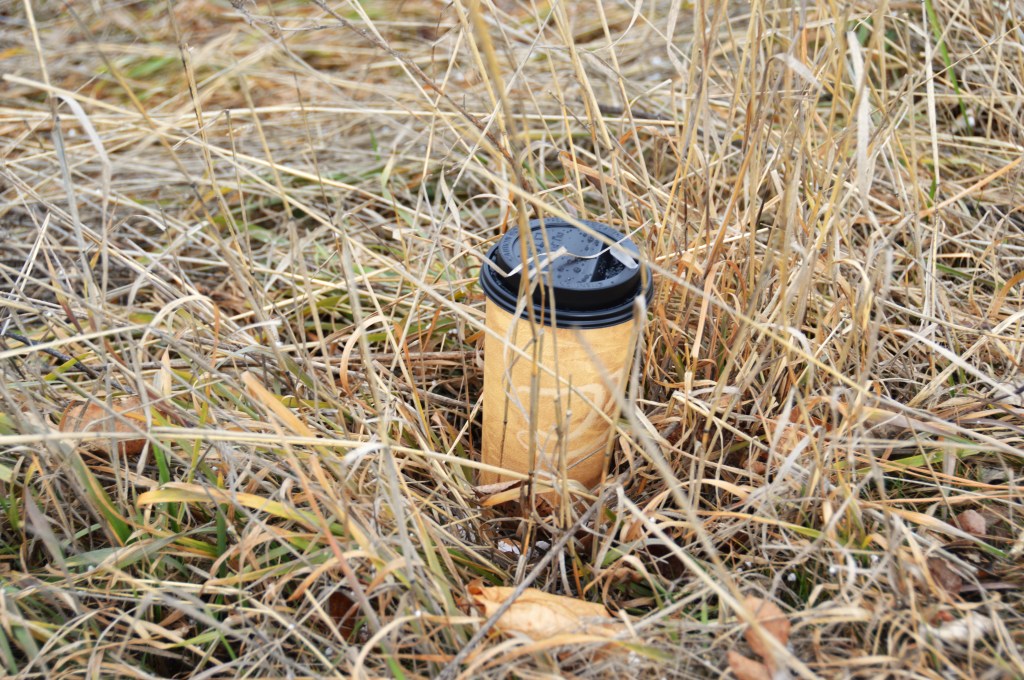
Karson took scraps of coffee packaging and rolled them into the shape of larvae and pinned them to a board as an entomologist would.

The exhibit is beautiful and moved me to write a blog about garbage.

In the late 1990s, I worked at a home furnishings store for the holiday season and was horrified to see the amount of waste that goes into the purchase and giving of a gift. Merchandise comes in large crates that are unwrapped to reveal smaller, well wrapped parcels. The outer and inner wrappings are broken down and discarded. Some of the discarded wrapping goes to recycling, but there is a tremendous amount of trash in plastic bindings, Styrofoam cushions, etc. that are taken to the landfill.

Lovely objects are artfully displayed for customers to choose from. At purchase, they are carefully wrapped in tissue, boxed, and placed into carrying bags to take home, where the box is wrapped in festive paper to be given as a gift. The recipient tears off the wrapping, utters words of appreciation for the contents, and disposes of the wrapping, tissue, and box. This is one gift from one store. Imagine all the stores and sources worldwide, and all the gifts given, and then imagine all the packaging generated that becomes garbage.

Americans generate 268 million tons of trash annually. That is nearly 1,800 pounds per person every year. Of the waste discarded, 65.4% is dumped into landfills or burned in incinerators. Only 36.4% of discarded materials are composted or recycled. And then there is litter; there are nearly 50 billion pieces of it along roads and waterways in the United States.

The U.S. generates 12% of global municipal solid waste (MSW); whereas China and India with a combined population eight times that of the U. S., generate slightly more than twice the MSW than Americans.
It is estimated that there are 75 to 199 million tons of plastic waste eddying over 40% of the world’s ocean surface; 70% of this debris sinks into the ocean’s ecosystem, 15% floats, and 15% lands on beaches. Every day, eight million pieces of plastic make their way into our oceans. At the rate plastic is dumped into the ocean, it is predicted that plastic will outweigh all the fish in the sea by 2050. Floating plastics keep circulating, breaking down into smaller and smaller pieces that are harder to clean up and easier to mistake for food by sea life.
The Great Pacific Garbage Patch (GPGP), located between Hawaii and California, has the largest accumulation of ocean plastic. The Ocean Cleanup has been monitoring and removing plastic pollution in oceans and rivers globally since 2019. A catch runs hundreds of tons, and with improved operations, catches are growing larger. However, plastic will continue to impact our ecosystems, health, and economies for centuries.

Glass is not keenly recycled because it breaks and requires more cleaning and sorting than plastic, making it less profitable to recycle. However, unlike plastic, glass can be recycled endlessly with no loss in quality or purity.

 After water, sand is the second most extracted resource on our planet and is in danger of becoming scarce. Sand is used in building homes and roads, agricultural fertilizers, computers, and electronic chips, as well as glass. Between 40 and 50 billion metric tonnes of sand are removed from rivers, lakes, and beaches around the world each year. That would build a wall 87.5 feet tall and 87.5 feet wide around the globe. Mexico City is addressing part of this problem with a concrete recycling plant to reuse demolition waste for aggregates and pre-mixed concrete or asphalt.

I became aware of sand mining a few summers ago as I drove around the southwest desert. On a less traveled highway, the horizon seeming too far to reach, the monotony of the road was broken by magenta, pink, and ochre-colored buttes and spires. I was enthralled with their beauty in the stark landscape, and then I saw convoys of large flatbed trucks heaped with sand that excavators were clawing out of these stunning formations. Tears streamed down my face seeing the destruction of these natural wonders that took millions of years to create.
As I began digging into garbage, I found that I could fill pages with statistics. I’d rather seek ways to resolve the problem of garbage and the cause of it: rampant consumerism that depletes our natural resources to become garbage. As we take from and destroy one resource, we destabilize other fragile ecosystems. It’s also important to look at what is being accomplished to give us hope, to think about what more we can do to resolve the garbage problem, and to take on the responsibility of good citizens to care for our home, Planet Earth.
While recycling is still not implemented to its highest and best capacity, industries are being created utilizing recycled garbage. Many of us own shoes, clothing, rugs, yoga mats, furniture, car parts, and pens made from recycled plastic. Making products out of recycled plastics instead of new plastic reduces energy usage by 66%, and for every ton of plastic recycled, the equivalent of one to two thousand gallons of gasoline are saved. However, plastic can only be recycled two or three times before the quality becomes inadequate for use. Glass and aluminum don’t degrade during the recycling process and can be recycled endlessly. By the way, it is estimated that known oil-deposits will run out by 2052. Plastic is made from oil.

There is a company called Ridwell that picks up recyclable and reusable items not usually taken by recycling companies: batteries, lightbulbs, fluorescent tubes, clamshell containers, flat lids, bottle caps, bread tags, prescription bottles, Styrofoam, and reusable and non-reusable clothes, shoes, linens, and towels. Ridwell operates in California, Colorado, Georgia, Minnesota, Oregon, Texas, and Washington. I used Ridwell when I lived in Oregon and loved doing business with them. I found them to be friendly, professional and efficient.

Beyond recycling, we need to become less wasteful. The concept of zero waste is becoming a goal for cities and countries to break the trash to landfill cycle completely by 2040 or sooner. Some steps being taken are banning Styrofoam, plastic bags, and single use plastics. We should also be mindful of decreasing our personal waste by taking reusable shopping bags with us when we shop, or not taking a bag for smaller items, and choosing to buy items with the least amount of packaging. Carry a water bottle instead of buying water in plastic bottles. There are many public places that now have fountains for filling water bottles. Use cloth napkins instead of paper napkins. It’s easy to wash cloth napkins with your laundry.

And then there is the circular economy, an economic system of continuing production and consumption in a sustainable and environmentally friendly way. It reduces waste to a minimum by sharing, leasing, reusing, repairing, refurbishing, and recycling existing materials and products as long as possible.

Many libraries now have “things” to lend, from sewing machines and electric drills, to camera lenses and tripods. Before the pandemic, there were community Repair Faires where you could take a non-working item and have it fixed. There were seamstresses who repaired clothing, motor enthusiasts who repaired inoperable appliances, and computer techs to figure out what ailed your laptop. It would be great to see those happen again.

I’ve thought about “purchasing power.” It’s defined as the amount of goods and services that can be purchased with a unit of money. What if we established our power in how we purchase, and change the idea of supply and demand by not purchasing what we don’t need? If enough of us do this, Big Business will adjust to the way we spend money. There are unlimited opportunities for entrepreneurs to start businesses within the circular economy by creating what we need from recycled resources. Put your thinking caps on!

I’ve begun carrying a bag with me to pick up litter on my walks. It’s amazing how much litter there is within a short distance of trash bins. When I was growing up the motto was:

Don’t Be a Litterbug

Charging Forward, Jay Laber, Blackfeet. Found Objects, 2001 University of Montana, Missoula

“A warrior on horseback at full gallop throws a lance through a hoop. This is a traditional Native American hoop game, recreated with parts of abandoned automobiles harvested in the Flathead Reservation. This juxtaposition of the modern and old comments ironically on reservation life.”

“The human race is challenged more than ever before to demonstrate our mastery, not over nature but of ourselves.” Rachel Carson, Silent Spring

Human//Nature-A Retrospective from the collections of Terry Karson will be on exhibit until July 27, 2024. If you live in Missoula or are visiting, be sure to visit the Missoula Art Museum. There are lots of other interesting things to see there as well.

In the Rear View Mirror

As I gathered my thoughts on the year that just closed, the word bittersweet came to mind. I might throw in upheaval, loss, and heartache. I know that I am not alone in this; 2023 was a difficult year for almost everyone I know, but, there was also magic, miracles, renewal, and growth.

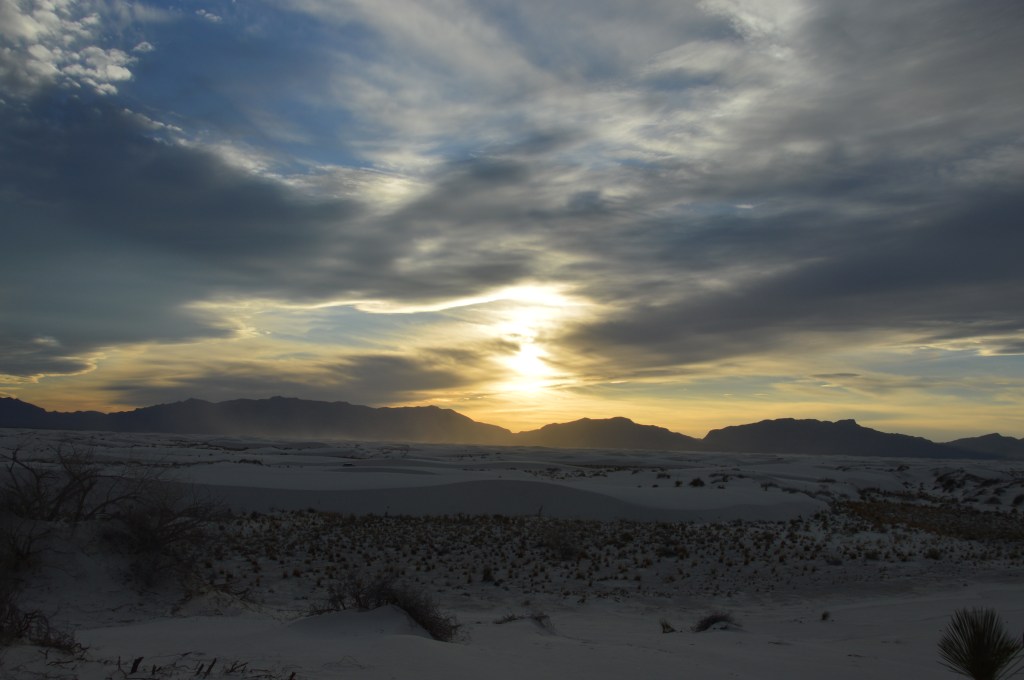
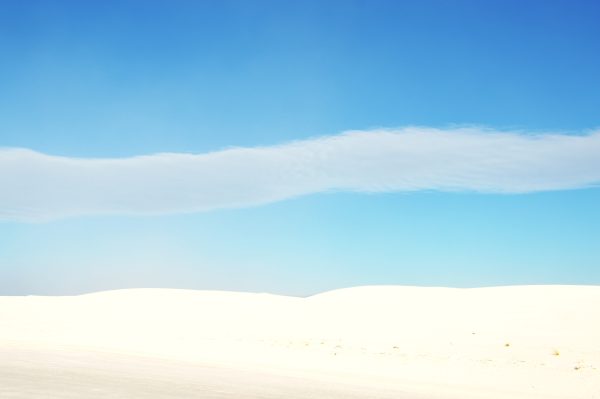
In February, there was a sudden change in my life. I drove to Tucson, Arizona and Las Cruces, New Mexico to sort thigs out.  I found solace at White Sands National Park as I wandered the desert dunes, enraptured by the otherworldliness of the powdery white sands against the blue sky. The silence there evoked a sense of peace, and I found the strength to do what I needed to do to move on.

A little over two years ago, the cosmos sent me an invitation to consider Montana as a place of residence. It had never crossed my mind as a place to live before that day. It’s too hot in the summer and too cold in the winter were among the long list of reasons why I wouldn’t want to live there. 

The first bidding came as a thunderbolt in the form of a blue eyed Montanan at a Tesla Supercharger. We had a twenty minute conversation that held the essence of eternity.

The second summons came in my mailbox two months later, as a beautiful trifold brochure: Come home to Montana it said.

Instead, I took a detour to Colorado. Some lessons needed to be learned there, and now I had to move again. It was time to listen to the cosmos and try Montana. After a stressful month of looking for a rental on the internet, like magic, the cosmos guided me to the best place to live. Everything I want and need is here. It’s a small city with a strong cultural heartbeat, a river runs through it, and it’s surrounded by wild nature.

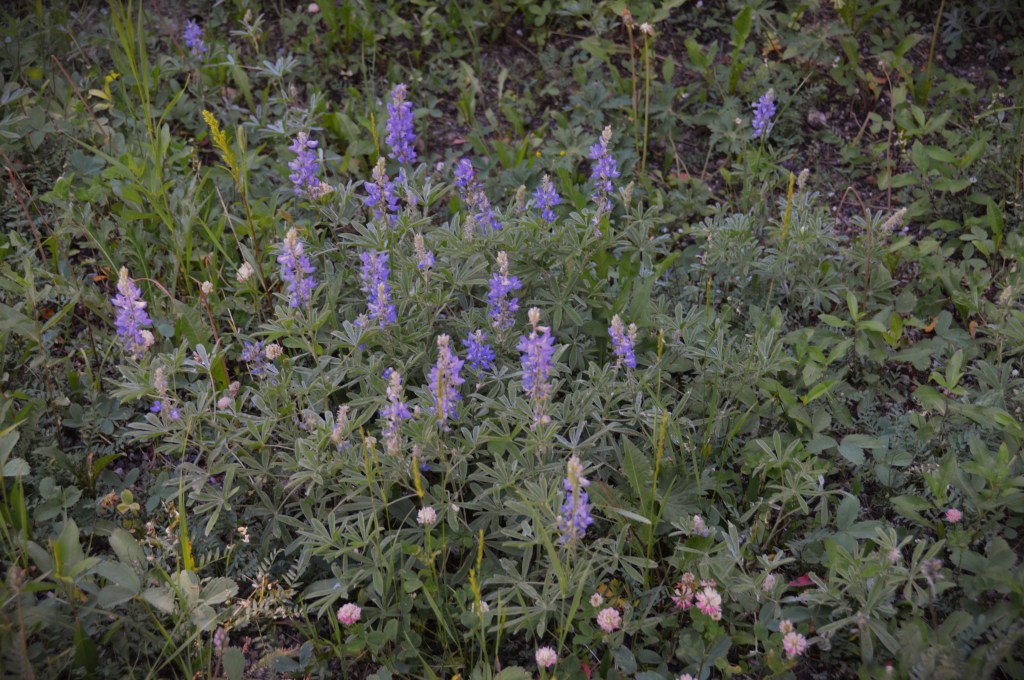
To affirm that I had come to the right place, I soon met friendly people who welcomed me into their social circles. There were trails to walk, sunsets to watch, and hillsides and mountains to climb and explore. I arrived just as spring began to unfurl the buds on trees into perfumed flowers. Soon the fields and hillsides were abloom with dandelions, arrow leaf balsamroot, lupine, shooting star, and many more wildflowers that continued to blossom throughout the summer and into the fall. I found favorite little spots in the woods, along the creek to hide and heal, to meditate, let go, forgive, and practice unconditional love.

In November, my ophthalmologist informed me that pressure on the optic nerve in my left eye was too high. He performed eyesight saving surgery by inserting a microscopic-sized stent in that eye. The surgery took fifteen minutes, but healing and recovery continue. After surgery I said that I was grateful to have my eyesight, and that I didn’t live a hundred years ago or I might have been blind. Dr. Berryman said that I would most surely have been blind in that eye; even sixty years ago we didn’t have the technology for this surgery.

I believe that when I have a problem with my body, there is something I need to learn about myself. I’ve been meditating on what have I lost sight of? What is it I do not see? What do I not want to look at? What have I turned a blind eye to?

And every day I look at the world anew, even more grateful for the gift of sight.

Mid-December, my brother Nick called and asked If I wanted to spend Christmas with my family. It had been five years since I visited; the time had come to see my siblings and extended family again.

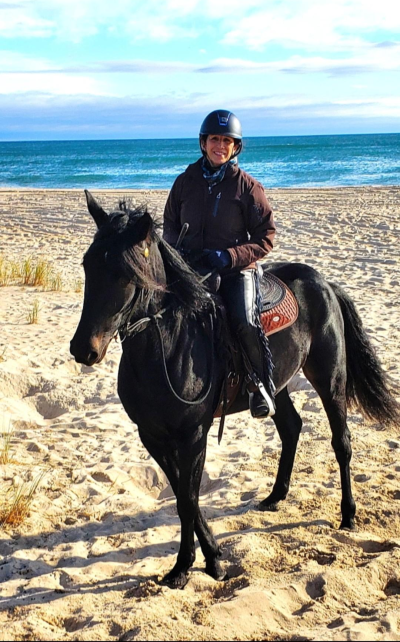
It was a wonderful reunion filled with laughter, love, and delicious Italian food. I stayed with Nick and my sister-in-law, Cathe Ann, for a few days. They are both equine veterinarians, and I made the rounds on Christmas Eve morning with Cathe Ann. Most of her calls were to horses that were foundering. First we visited her horse, Leo.

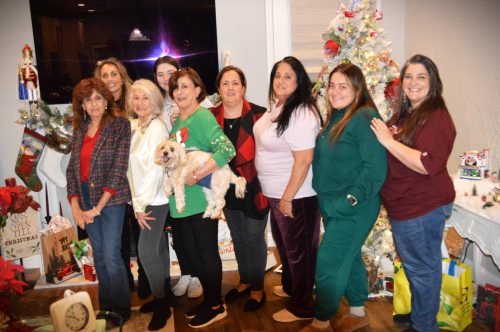
The next few days were filled with Christmas festivities and the joy of reuniting with family. The day after Christmas, my sister Kathy and I made pitta, a traditional Calabrian holiday pastry. The dough is made with red wine, cinnamon and cloves, rolled with nuts, raisins, and honey. The next day was Girls’ Day. My sisters Kathy and Sandy, their daughters, Dona, Tara, Jackie, and Dina, and granddaughters, Cassandra and Giana, all gathered at Kathy’s house. We talked and laughed all afternoon, telling stories of growing up, and loving memories of our parents, grandparents, aunts, uncles, and cousins.

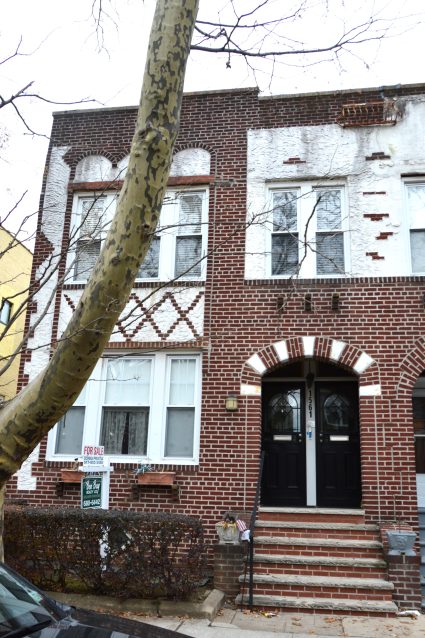
Since my flights arrived and departed at JFK in the middle of the night, I stayed with my cousin Teresa at her home in Flatbush. It was the highlight of the visit. This house has been in the family for seventy-six years. My mother’s parents, Grandma Katie and Grandpa Armando, Uncle Pat, Aunt Mary, and Uncle Ralph bought the house, but it’s always been referred to as Grandma’s house. Teresa was a baby when they moved in, and she grew up there. She moved back to the house about fifteen years ago to care for her parents as they aged. Aunt Mary passed away two years ago, and now the two family, three story house is more than Teresa needs. It’s been sold and she’s moving to Long Island.

Grandma Katie was an excellent cook. Her Sunday gravy was luscious. Her homemade tagliatelle was light as a feather. Sometimes there was lasagna, but that was usually for holidays or a special occasion, as was ravioli, manicotti, or cannelloni. Meals were to be delighted in and consumed slowly, with conversation. There were numerous courses, from antipasto to dessert. After the main courses were served, my father and uncles took all of us kids for a walk to Marine Park to play on the swings and jungle gym. When we returned, the dishes were done, coffee was perking, and there was clean linen on the table along with an array of Italian pastries, or cakes from Butter Bun that Uncle Pat bought in the City, or some of the traditional pastries that Grandma made: pitta, cuzzupa, strufoli, tirali…she was as good a baker as she was a cook.

There was a time during my early adolescence that Aunt Mary would give us girls Toni permanents after dinner. I remember the stench of ammonia in the air as each tress was tortured into submission, followed by the thinning shears. “You have too much hair,” Aunt Mary would say. One day I conjured up the nerve to say I didn’t want a perm. She said, “Okay,” and I never had another Toni. If I had known it would have been that easy, I would have spoken up sooner.

We’d have a snack before the drive back to Long Island, and were sent on our way with grocery bags filled with leftovers of Grandma’s delicious food.

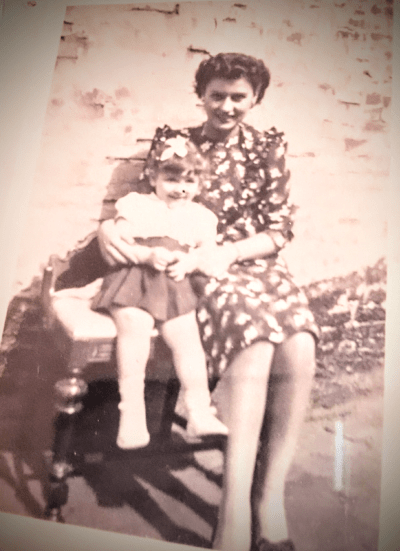
Grandpa died when he was fifty years old, and Grandma was still in her forties. In Italian tradition, she mourned by wearing black for a year, but she continued to work during that time, as a seamstress in the New York City garment district. She worked until she was seventy-two. She didn’t talk a lot, but when she did, it was memorable. Some of her famous sayings are: “blood is thicker than mud,” and “money is the evil of all roots.”

I went to Brooklyn College, and rather than commute from and to Long Island every day, I lived at Grandma’s house. It was a short bus ride from Nostrand Avenue and Kings Highway to the college. I lived in the basement and remember great conversations with Uncle Pat and Uncle Ralph. I had a parttime job at Rainbow Shoppe, a ladies clothing store, and worked some shifts with Aunt Mary. Sometimes she’d take me to lunch at Dubrow’s and wanted to know all about what I was learning at college. She said she wished that she’d had the opportunity to go. Teresa and I danced to rock music when we helped clean up after dinner, or she’d come downstairs and we’d talk and listen to music together.

Eventually, I became an Airline Hostess and followed my dreams to the west coast, but I returned to visit the family as often as possible. Of course, I visited Grandma’s house whenever I was in New York, and my children got to grow up with their cousins and be loved by grandparents, aunts, and uncles, just as I did.

When Grandma Katie was eighty seven years old, she fell and broke her femur. The doctor told her that she would never walk again. She looked him in the eye and said, “That’s what you think.” Of course, she walked again. She used a cane when she was outside the house, and a walker in the house that was hidden away when anyone visited. Grandma lived to be one hundred five years old.

Grandma Katie is role model for me. She accepted whatever life threw at her without complaint and a good attitude. She lived a quiet, humble life, and was there for her family in the things she could do. I never saw her angry or say a bad word about anyone. Her generation wasn’t given to saying “I love you,” but you could see it in her eyes when she looked at you.

There are many precious memories of life lived in this house, of dear family members and the times we shared, memories that I tuck in my heart and carry with me. I left the house at 3:30 A.M. on December 29th.  Saying goodbye as the Uber driver slowly drove past it, I knew that this isn’t merely the close of a chapter for my family, it’s the end of an era.

“I was born into a culture that lived in communal houses. My grandfather’s house was eighty feet long. It was called a smoke house and it stood down by the beach along the inlet. All my grandfather’s sons and their families lived in this dwelling. Their sleeping apartments were separated by blankets made of bull rush weeds, but one open fire in the middle served the cooking needs of all. In houses like these, throughout the tribe, people learned to live with one another; learned to respect the rights of one another. And children shared the thoughts of the adult world and found themselves surrounded by aunts and uncles and cousins who loved them and did not threaten them. My father was born in such a house and learned from infancy how to love people and be at home with them.” Chief Dan Geroge, Tsleil-Waututh First Nation

Happy New Year. May you find fulfillment of all you wish to achieve. May you find peace within, peace in your relationships, peace in your community. May there peace on Earth.

Yellowstone High Country

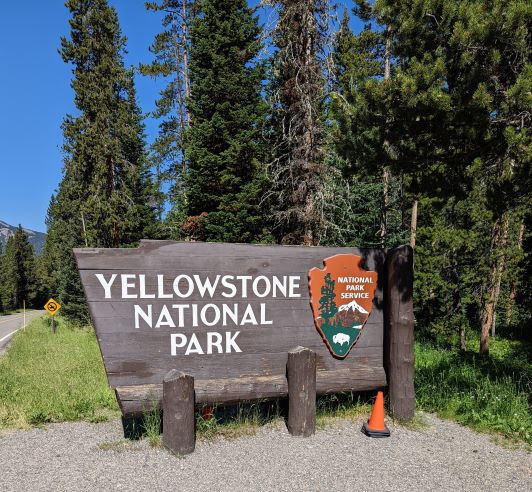
In June, Yellowstone National Park was devastated by flooding from torrential rains and rivers full from snow melt. Roads and bridges washed away. Visitors were asked to leave, some needed to be evacuated. The park was closed for a week so that damages could be assessed. Some entrances have reopened, but the northern tier entrances are still closed, having sustained the greatest damage.

A few weeks ago, I saw a post on Facebook by Silver Gate Lodge in Montana. They are one mile from the closed northeast entrance to the park, and it’s had a severe impact on tourism, the source of their livelihood. Please come, the post said, offer what you can afford. I called the next morning, thinking that they’d be booked by then, but to my joy, they had availability.

It’s a twelve hour drive to Silver Gate from Castle Rock, too long a drive for me to make in a day. I decide to spend the night in Sheridan, WY, at a KOA Campground, a safe way to solo tent camp for the first time, and a baby step toward my ultimate goal, to be able to camp in Mother Nature’s arms.

It takes seven hours to drive to Sheridan, from the congestion through Denver, detours for road repairs, and two twenty minute stops to charge Freedom. I enjoy those stops at three hour intervals to get out and walk.

My favorite songs come in and out of awareness as I watch the landscape roll by. I enjoy being the only car for miles, the road a long tongue licking the horizon, as puffy white clouds drop shadows like drapery over the mountains. The rolling hills are pale yellow, baled hay in rolls along the roadside. There are herds of black cows grazing. Every so often there is a metal sculpture on a butte: a bison, a cowboy on a horse, and then a dinosaur, on the other side of the road, oil rigs pump its remains out of the ground.

I also see billboards that make me think, Wyoming! Land of Exclamation Points!!! The campaign slogan for a gubernatorial candidate is, “Fossil fuel, yes!” Liz Cheney’s opponent proclaims, “Ditch Liz!” And, in case you are hungry, a roadside market offers, “Beef! Hogs! Lamb! Wild Game!” I’m not kidding!

Sunset at KOA Campground, Sheridan, WY

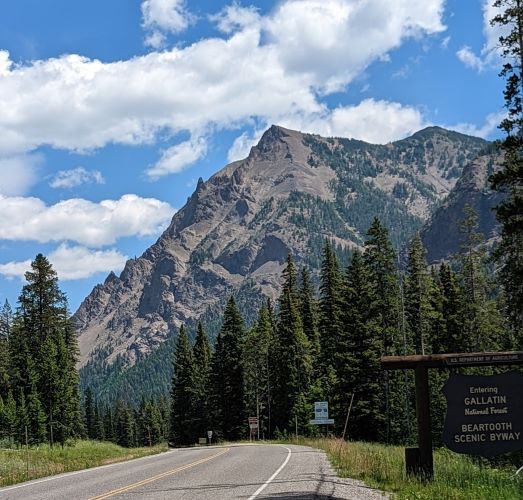
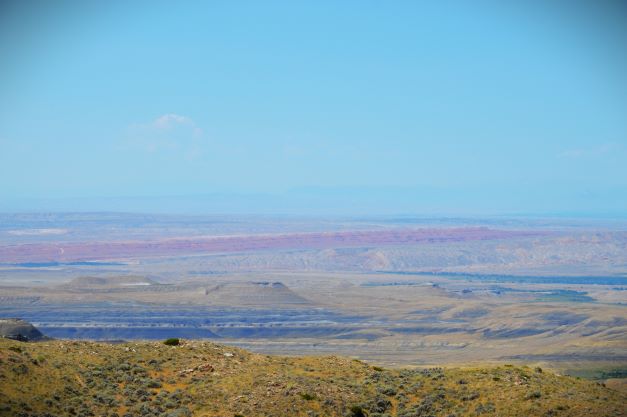
From Sheridan, I drive HWY 14 through the Big Horn Mountains. I think it’s probably the most beautiful drive I’ve ever taken, and just when I think it couldn’t possibly be more beautiful, it is. Sometimes there are majestic sandy colored mountains with magenta veins running through. Then I see a hazy valley below of pastel pink, tan, and yellow-green, with strands of turquoise running though. I descend to the valley and learn that those turquoise strands seen from above are the Big Horn River. I wish I were an artist to paint what I see of color, shape, and texture….

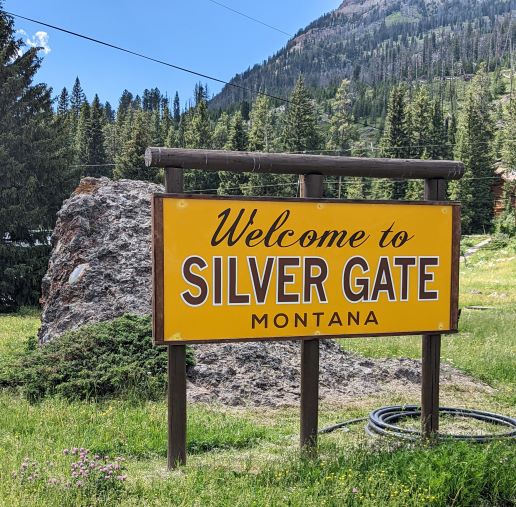
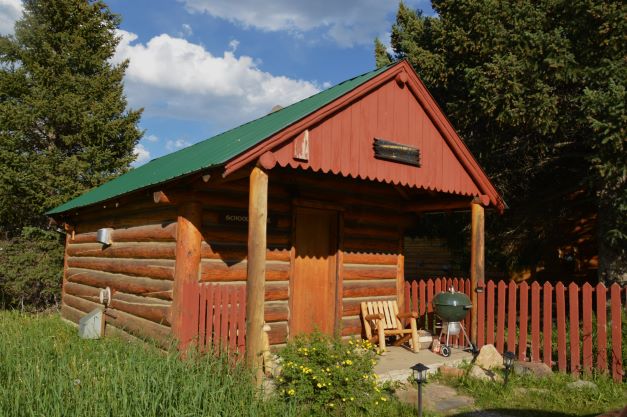
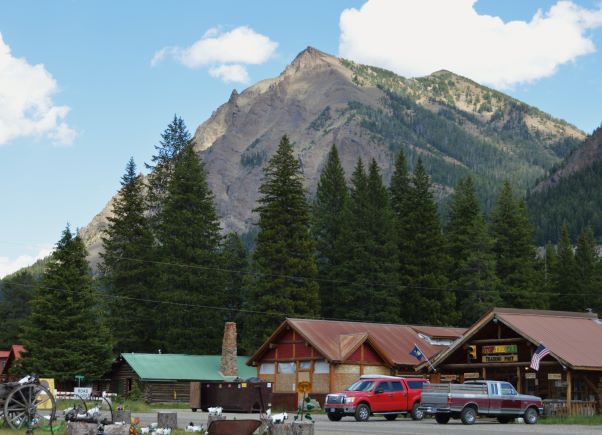
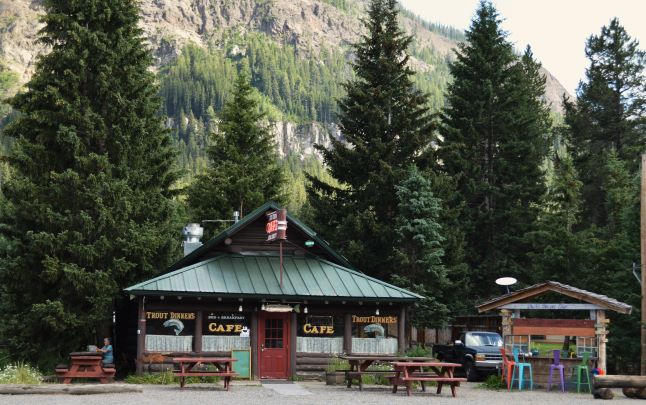
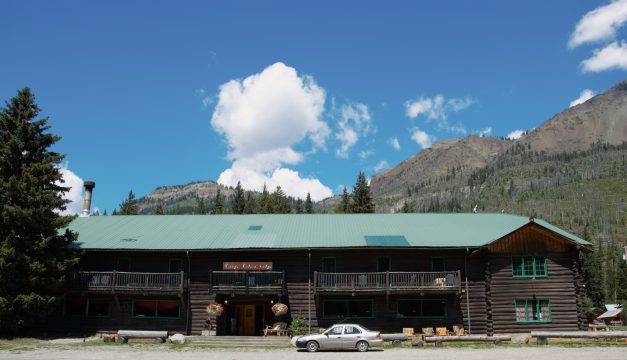
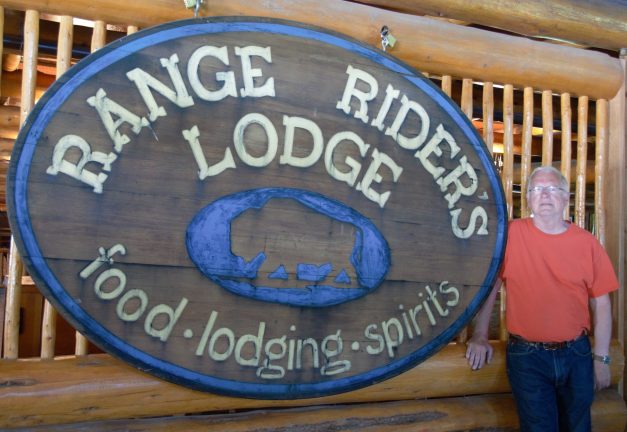
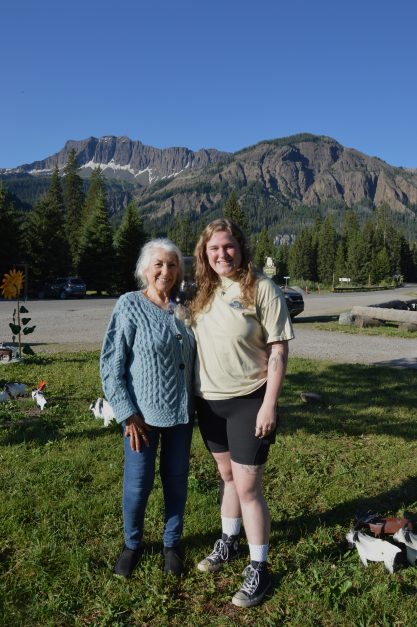
Silver Gate, Montana is one mile from the northeast entrance to Yellowstone National Park. It’s a block long on a two lane highway, cradled in a valley along the Absaroka Beartooth Mountain Range. On the southeast side of the road is the Trading Post and the Log Cabin Café. On the right side of the road is the Range Rider Lodge, and the General Store, where I check in to Silver Gate Lodging. I’m greeted by Katie, a young woman who radiates a zest for life. She gives me the keys to the School House Cabin, and all the information I need to be comfortable during my stay.

After I settle in, I walk around to get a feel for this beautiful place. I’m filled with awe looking at the majestic mountains. There is an outdoor fireplace and one of the other guests is feeding logs into it. There are six other people there, from the Carolinas and upper Michigan. Everyone is friendly and we chat late into the evening.

There is a pleasant chill to the evening air, and it’s quiet. There’s no noise pollution from traffic, and no light pollution from city lights. I put my head on the pillow and fall into a deep, restful sleep, the best night’s rest I’ve had in a long time.

*No cars are allowed into Yellowstone National Park, but you can walk or bike for six and a half miles into the park, then the road drops off, having been washed away during the floods six weeks ago. A thirteen mile round trip hike is a stretch for me, but I walk as far as I am able to see as much of this beautiful landscape as I can. The entrance to the park is blockaded to vehicles, but park rangers are on site, and Loren greets me as I walk through. She instructs me on care to take around wild animals. She says bears attack only when surprised and will move on if they hear someone approaching. She suggests that I make noise or sing as I walk. I’m thrilled. No one ever suggests that I sing.

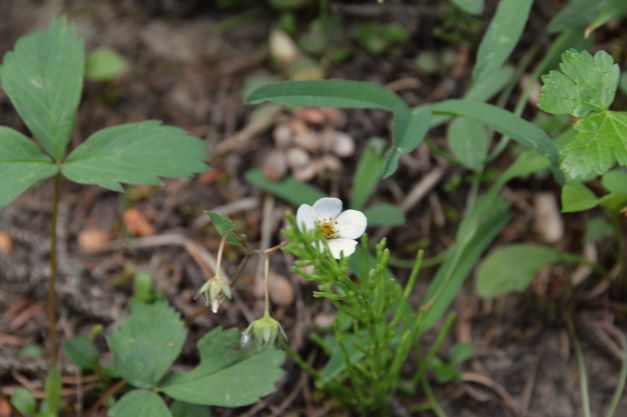
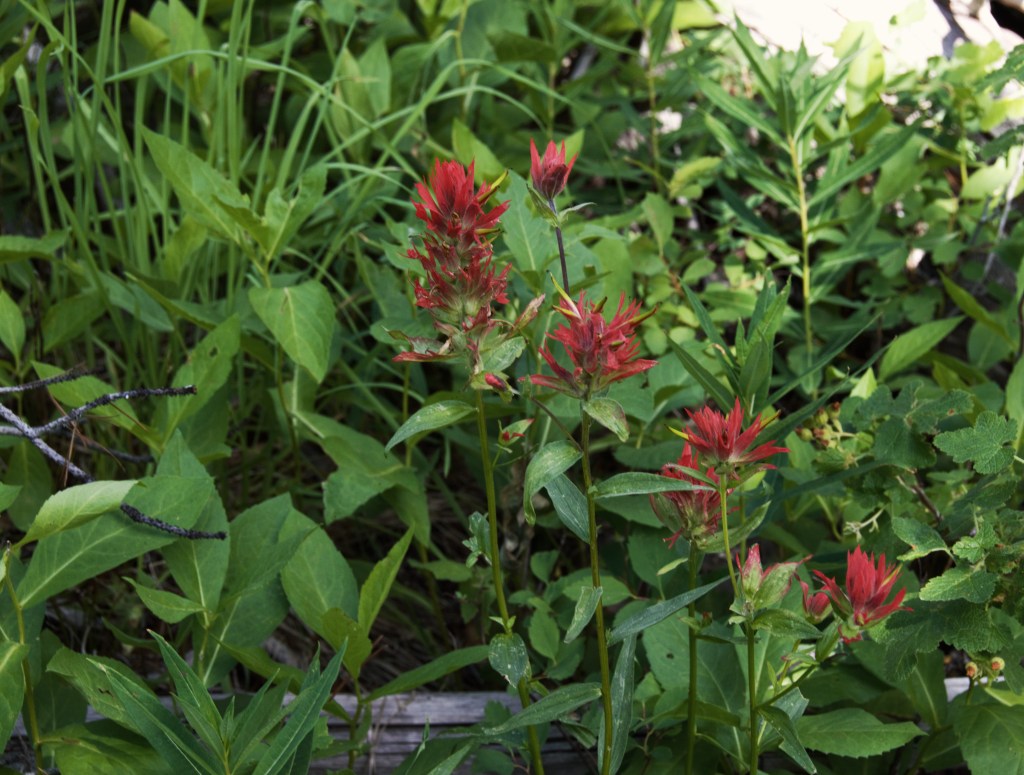
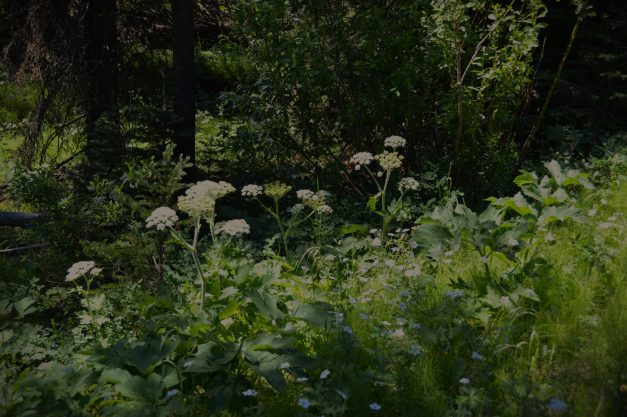
Soda Butte Creek wends its way below the road. It’s a beautiful shade of blue-green, and the sound of water rushing over rocks is soothing. There’s an abundance of wildflowers in bloom, fanciful flowers that look like a faerie garden. I sing and hum from time to time, to keep the grizzlies at bay. I hope to see some of the wildlife that live in the area, but see only a chipmunk and a deer, both too fast for me to capture on camera.

Bannock trail to Bridal Falls is heavily forested, with cabins tucked in among the pine trees. I cross the creek where the road washed out from the floods. Mother Nature has healed herself, and wild roses and wild strawberries are in bloom. Only what was created by human hands remains damaged and in need of repair or rebuilding.

I walk deeper into the forest, breathing the fragrant pine air, enthralled by the beauty of the flowers, and the birds singing to each other as they flit about the trees, then realize that I’m walking away from the mountain, the source of the waterfall. Tolkein said, “Not all who wander are lost,” but I’m a wanderer who tends to get lost… in the beauty of what surrounds me, in the moment. I turn around and cross the creek again where the road washed out. A resident drives up on an ATV and stops to chat. He says I just passed the trailhead to Bridal Falls on the other side of the creek, and that a mother moose and her calf have been seen grazing in the area.

Hoping to see mama moose and her calf, I cross the creek again and find the trail marker amid the debris from the storm. The path is strewn with fallen trees and limbs. After clambering over a few, I decide this isn’t a hike to do alone.

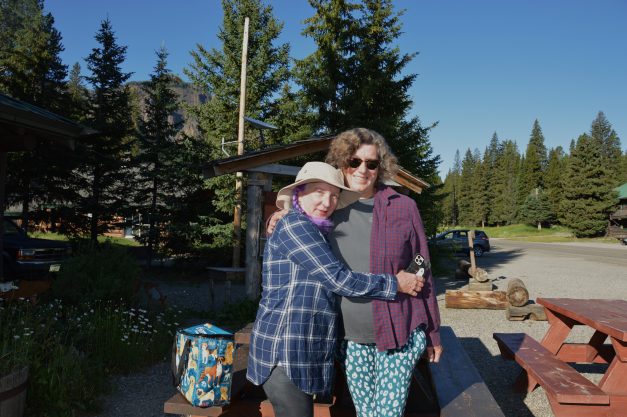
The General Store is the gathering place early in the morning or in the evening because that’s where there is internet connectivity. It’s been wonderful disconnecting from the outside world, still, it’s good to be able to communicate with family and friends a few minutes a day. I seek out a table on the side of the store where there is some shade. Hypatia and Leslie are sitting on one end, happy to share the space with me. We start talking and I feel as if I’ve known them forever. Hypatia is a ceramicist and Leslie is a chef. They are both from Georgia and I love their soft southern accents. Hypatia’s brother, Henry, is the owner of Silver Lodge. I say that I would love to ask him some questions for my blog. She corrals her brother, and she and Leslie are off to pick rhubarb from Henry’s garden to make a cobbler for dinner.

Hypatia and Leslie

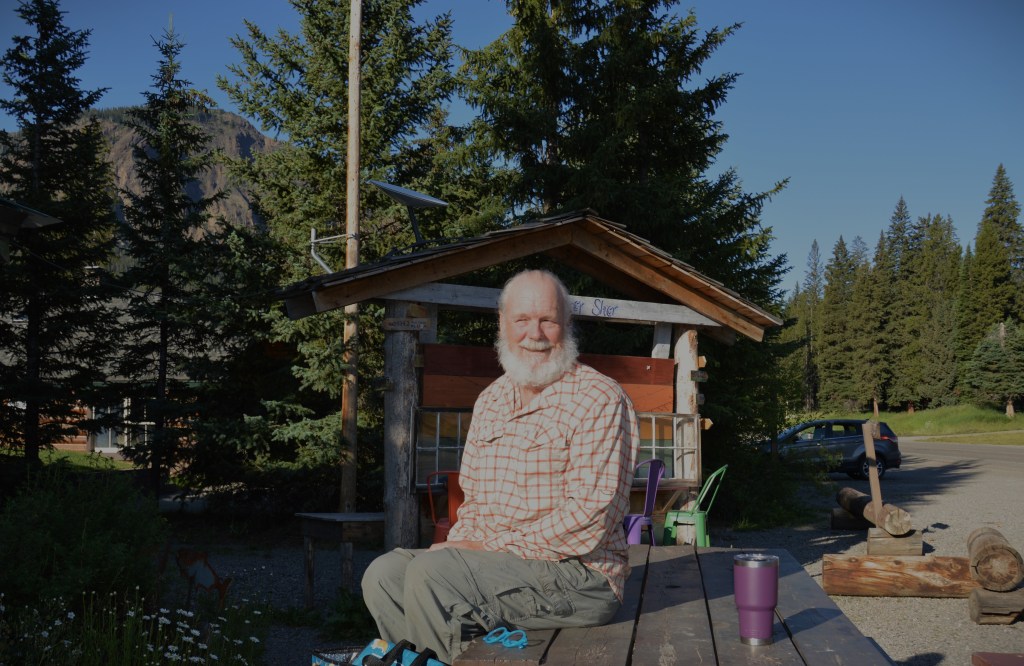
I carry my camera around, adjusting the lens for shots of the mountains, of buildings and streams, and close ups of flowers. Now, talking with Henry Finkbeiner, I feel as if what I’m experiencing here is coming into focus, and he is the heart of the picture.

Henry is a soft-spoken man. He says that his grandparents brought him to Yellowstone when he was ten years old. The experience made him a lover of nature. He says that the ecosystem is larger than himself, and separation from it is illusory. When talking about Nature he says, “Our only job is to love Her back.” Henry believes the meaning of life is to be a kind human, and to participate in a positive way.

In 2000, he bought Whispering Pines, across the road from Silver Lodge, to use as a summer camp for underprivileged children, to introduce them to the joy of being in nature, and to act as a mentor. It worked well, but the groups he worked with found it difficult to get the children here.

Later, Henry bought the General Store, Silver Gate Lodge, and the Range Rider Lodge. He realized that he could be a mentor to the young people he employed by creating a community for them to feel involved. It appears to be succeeding. His employees are upbeat, friendly, and helpful.

He gives me directions to Silver Falls on Mineral Mountain and lends me bear spray to carry. He says, “It’s like taking Prozac. You probably don’t need it, but it makes you feel better.”

Henry Finkbeiner

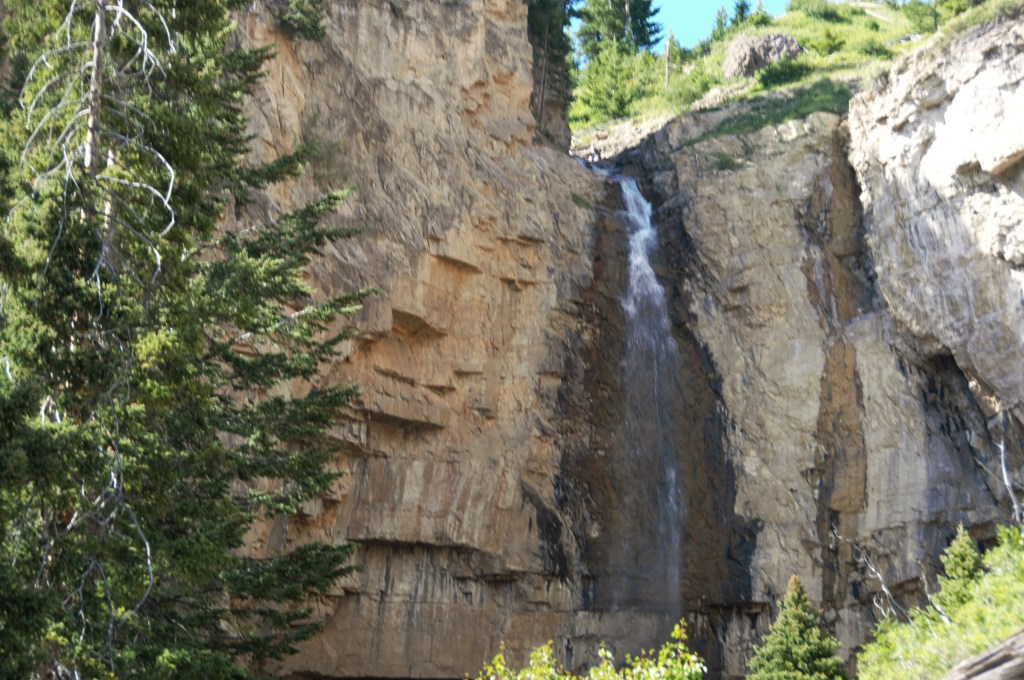
On Mineral Mountain, Silver Falls streams more than one hundred feet over a limestone cliff face. I hike up through alpine meadows and over scree. As I photograph the stream that flows into Soda Butte Creek, a family passes me. Nearing the falls, I hear them laughing. I stay at a distance to photograph the falls, so they can have privacy, and the joy of being a family in this marvelous place.

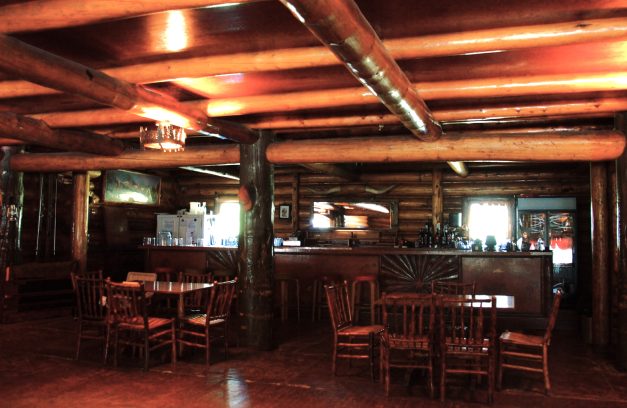
Terry Ward came to Yellowstone years ago and never left.  He’s a manager at Silver Gate Lodge, and is known as Terr Bear and WBB (World’s Best Boss.) He gives me a tour of the Range Rider Lodge. The lodge was built in 1937 and opened in 1938 as the Gorham Chalet.

They had just hosted the annual Hemingway Conference. Ernest Hemingway and his second wife, Pauline, lived at the L-T Ranch in neighboring Cooke City from 1930-1939. They came to the Royal Wulff Tavern every Saturday night for dining, dancing, and drinks. Some Hemingway memorabilia is in the lodge.

I ask Terry about the recent floods. He says it started with rain or snow every day since the end of May. By June twelfth it rained five inches a day and didn’t stop. Water ran down the roads and visitors were asked to leave. Soon, everything was under water and the employees were mandated to leave.

“We drove against the water until we came to a slide on the road, The kids (the employees under his management) moved rocks and trees to make a lane for cars to get through. Two days later, the southeast side of Silver Gate was covered with mud. Trucks carried out mud a foot deep. Within four days, it was cleaned up.”

Because of clean-up efforts, Silver Gate looks pristine, as if the floods never happened, but repairs to some personal residences, businesses, and roads are ongoing.

Terry Ward

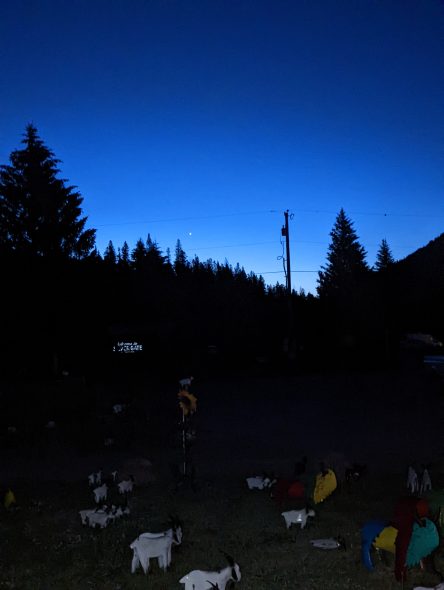
Every evening, I hope to see starry skies and the Milky Way, but clouds mask the heavens, and some nights it rains. I’m rewarded when I wake pre-dawn one morning to see Venus shining in all her glory. Alone in front of the General Store, sipping a hot cup of coffee, I watch the sky brighten with the approach of the sun, and listen to the birds sing their praises to the new day.

Even though I didn’t see the wildlife I’d hoped to see: moose, elk, bison, and bears, or star filled skies every night, my stay in Silver Gate was magical. The air was fresh. The days were warm, and the nights were cool. The landscape filled me with awe, and Mother Nature arrayed herself with garlands of glorious flowers. It was so quiet that my thoughts slowed down, and time became meaningless. I did have solitude, but the other guests, residents, and employees of Silver Gate were warm and friendly, and I never felt alone. I will go back, and next time my stay will be longer.

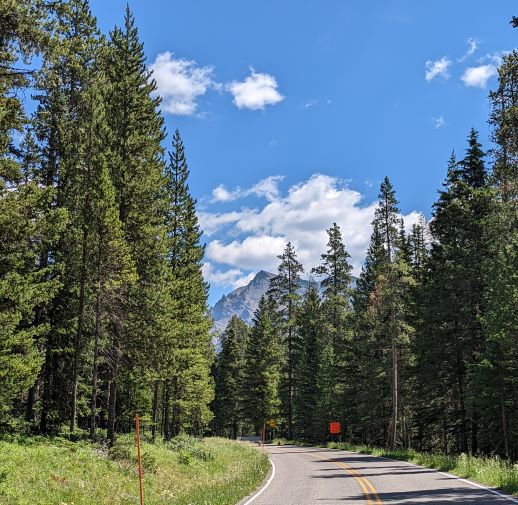
The navigation system routes me back to Sheridan via HWY 212, the Beartooth HWY. It reaches an elevation of 10,947 feet. There’s a delay due to road repair work, but the drive provides spectacular vistas, as well as frightful hairpin curves with nothing but metal railings between you and all the way down. I see a bear cross the highway. It’s the biggest thrill of all.

*A recent news update states that major construction repairs on the Northeast Entrance Road to the park has begun.  Hikers and cyclists will still be able to go as far as Warm Creek trail head, two miles into the park. Repairs are projected to be completed by October 15th. These repairs are temporary, and alternatives are being considered for the permanent reconstruction of the Northeast Entrance Road that have the least impact on the environment, are most resistant to natural disasters, take advantage of unimpacted existing road infrastructure, and are the most expedient and cost effective.

On the Road

“I was surprised, as always, by how easy the act of leaving was, and how good it felt. The world was suddenly rich with possibility.”
                        from On the Road, Jack Kerouac

I moved to Oregon to be near my grandchildren when they were toddlers. It was a joy to watch them grow up, and a delight to see the wonderful young adults they’ve become. My last week in Oregon I spent as much time as I could with them and friends who are dear to me. They are an interesting mix of people who helped me walk the path of life, sharing laughter when life was happening as one would wish, and giving encouragement during the rough patches. I will miss them all, but it’s time to move on.

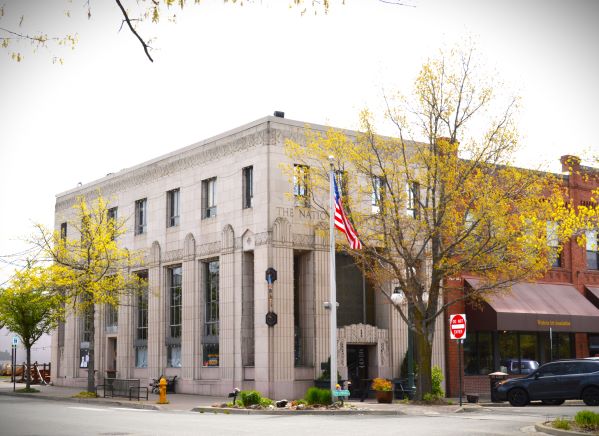
Wanting to see a part of the country I’ve never been to, I take Highway 90 across Washington, through Idaho, and into Montana. I spend the first night in Ellensburg, WA, a charming community along the Yakima River. It’s an agricultural region, and the main crop is hay and other forage, ninety percent of which is shipped internationally. It is also the home of Central Washington University. I love the architecture of the town, a mix of Italianate from the time of its establishment, to Art Deco of the 1930s.

I have dinner at the Palace Café. From the front window I see the Davidson building down the street, under a bright blue sky. A dark cloud hovers along the side street. It begins to rain and the wind kicks up. There’s a flurry of whiteness outside. For a moment I think it’s a blizzard, and then realize that it’s petals from the flowering plum trees drifting in the wind.

I want to spend the weekend in Coeur d’Alene, ID, but accommodations are too expensive. I stay in Spokane instead. In the morning I drive to Coeur d’Alene. When I arrive, the Women’s March for the Right to Self-determination is in progress. It’s a cold, dreary, misty day. Women of all ages march, some are pregnant. Men march with them. They chant, “My body, my choice.” The truck in front of me has an American flag flying from the tailgate. The man driving it sticks his head out the window and shouts, “If you have a baby in your belly, you’re supposed to keep it!” He turns left and zooms off.

People across the street shout, “Murderers!” In one hand they hold an American flag, in the other, a picture of Jesus.

Now I’m behind a car with California license plates. We stop at a red light. A woman from the non-marching side of the street screams, “Go back to California you #%^&*@!

I find a place to park, but by the time I walk back to the main throughfare, the parade has passed. Only the flag toting, Jesus-picture-carrying-mob remains. In the store windows are signs, “Idaho Wild & Free. It seems ironic to me that people who pride themselves on personal freedom, would deny others the freedom, and right, to make decisions that affect only their personal lives.

I walk to the lake. It’s beautiful but looks forlorn, or maybe it’s me who is forlorn. I get in my car and drive back to Spokane.

On the TV in the lobby of the hotel where I’m staying is breaking news of a mass shooting in Buffalo, New York. I’m heartsick. What’s become of this country? Why can’t we be civil with each other? Why can’t we just get along? We all want the same thing, to be able to sustain ourselves and live peacefully in our homes, the love of our family and friends, to have pleasant interaction with our neighbors, and that includes the world at large.

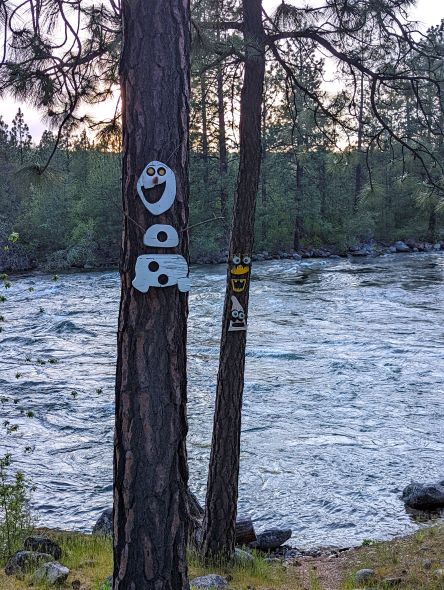
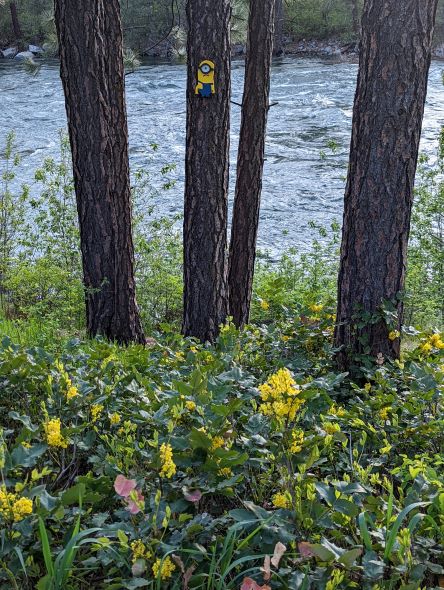
I spend the rest of the day walking along the Spokane River on the Centennial trail. The river is running high and fast from the spring melt; the trail is beautiful and peaceful, with touches of whimsy.

A River Runs Through It

Missoula, Montana surprises me. I imagined the weather would be cold, with clouds hovering over an old western town in the heart of a city of modern buildings, and filled with cowboys. When I arrive, it’s sunny and seventy-two degrees, and I don’t see any cowboys. It’s Sunday and the town is quiet, but restaurants are busy. Even though it’s the second largest city in Montana, it has a small town feel. It’s home to the University of Montana. I’m told that it’s graduation weekend, but there are no signs of celebration.

I have dinner at a restaurant on the river, then walk along the riverfront trail. I cross a bridge over the Clark Fork River, the river that runs through it, and walk around the Hip Strip. People are sitting at outdoor tables in front of bars and restaurants. There is a line to the corner of families waiting their turn for ice cream at the Big Dipper.

Bicyclists ride by and I watch someone in a kayak playing on Brennan’s Wave, a manmade whitewater wave. I cross the river again at the Higgins Avenue Bridge, and then walk in the opposite direction, back to the motel where I’m staying.

The sky becomes overcast. I’m disappointed because I’d hoped to see the full moon rise, and watch the Flower Blood Moon eclipse.

Every fifteen minutes, a train runs behind the motel I’m staying at. It isn’t just the clickity clack of the wheels on the railroad tracks all night, but also the whistle that blows as it passes my room that startles me and makes sleep impossible. I get up and search the internet for different accommodations. What few rooms that are available are well over two hundred dollars a night. When I started planning my trip in February, I was shocked that prices were sixty to eighty dollars a night more than last summer, but they’d increased even more in the past few weeks. I decide to leave in the morning.

I’d planned to stay a few days to hike the Lolo trail and explore more of the surrounding wilderness. During my journey last summer, I realized that what I really want to do when I travel is to camp in the arms of Mother Nature. I’m working on building the courage to camp solo. When I’ve conquered the hesitance within, I will re-visit the Missoula wilderness.

Big Sky Country

The sky is big in Montana, and it is more than blue, it has a tinge of violet, and appears to curve above me rather than at the horizon. Driving beside sparkling streams, the mountains seem near, yet far off. They aren’t gently rolling and crested, but jutting and oblique, and purple, not verdant. My eyes feast on the beauty as I drive across the state. I wish there were places to pull over to take photos.

When I left on my trip, I was warned that Montanans drive fast. The speed limit does go up to eighty miles per hour, and slows down to sixty-five when passing by towns. I stay in the right lane and I’m surprised that Montanans do, as well. It seems the left lane is used as it’s intended, as a passing lane. Drivers stay well back, there are no bumper huggers, and if they want to pass, they don’t cut in front after passing, but put distance between the vehicles before returning to the right lane.  Yes, they drive fast, but I think Montanans are the politest drivers I’ve encountered on the road.

Billings is the largest city in Montana and the most industrialized. I spend the night and then take HWY 25 down into Wyoming. It is more rolling than flat. I hope for a glimpse of the Grand Tetons, but it’s too far east of them. I promise myself to visit Yellowstone National Park in the fall. ***

I spend the night in Casper and I’m up early, eager to get to my destination.

“I was halfway across America, at the dividing line between the East of my youth and the West of my future.”

                        From On the Road by Jack Kerouac

Denver is a big sprawling metropolis with a heavily trafficked, multi-laned freeway system. It reminds me of Los Angeles, the center of a spiderweb of outlying suburban areas. Castle Rock is one of those suburbs, a half an hour south of Denver. It’s seventy-eight degrees the day I arrive, the next day it’s eighty-eight. The temperature drops to twenty-six degrees overnight and a foot of snow falls.

It’s good to be with my son, Paul, and daughter in law, Heather. I’m adjusting to fitting in with a newly formed family as well as a new environment. I join a writer’s group to meet people, hike in the beautiful mountains surrounding Castle Rock, and watch my new life unfold.

***As I write this, all entrances to Yellowstone Park are closed. An unusual amount of rain and spring snowmelt caused severe flooding of rivers, eroding roads, collapsing bridges, and sweeping homes into swiftly running streams. The greatest damage is to the northern entrances to the park. Until damage is fully assessed, those portions of the park may be closed for the rest of the season.

Forest fires have swept New Mexico since early April. The Black Fire in southern New Mexico has consumed over 3212,00 acres and is only 47% contained.

Because of severe drought conditions, Mendocino County, CA is running out of water.

It seems the weather is becoming more and more extreme. Extreme conditions mean extreme actions must be taken to bring humanity back into balance with nature. We need our political leaders to stop bickering with each other and work hand in hand with leaders of industry to focus on resolving these serious issues, and as individuals, we must live lightly upon the earth. I don’t like thinking about the consequences unless we act swiftly and soon.

Mercy, Mercy Me

“Mercy, mercy me,

Things ain’t what they used to be, no no

Where did all the blue skies go?

Poison is the wind that blows from the north and south and east…”

Marvin Gaye

I went inside my heart to see how it was. Something there makes me hear the whole world weeping.

Rumi

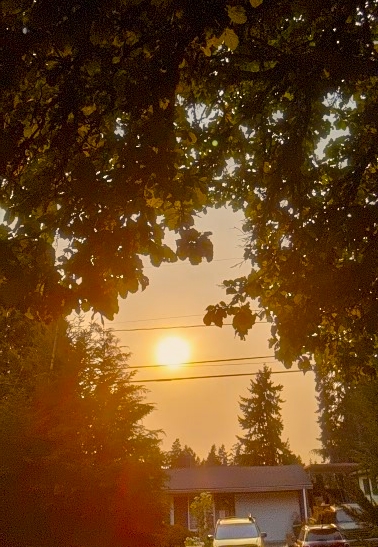
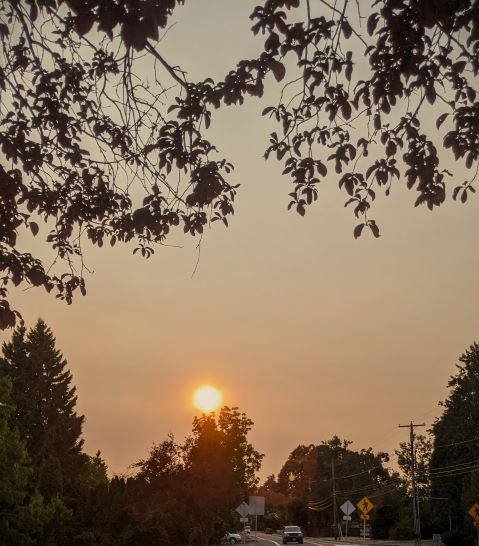
I return to Oak Grove to look for a place to rent, and get off the road for the winter. It feels good to be back to the familiar, to know how to get where I’m going, and take my secret shortcuts to get there. Although everything is the same, it seems different. There’s a yellow pall across the sky from a fire somewhere, and it looks as if everything is covered with a layer of ash.

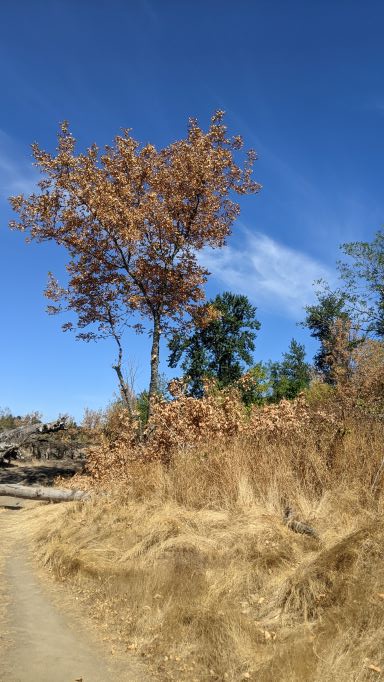
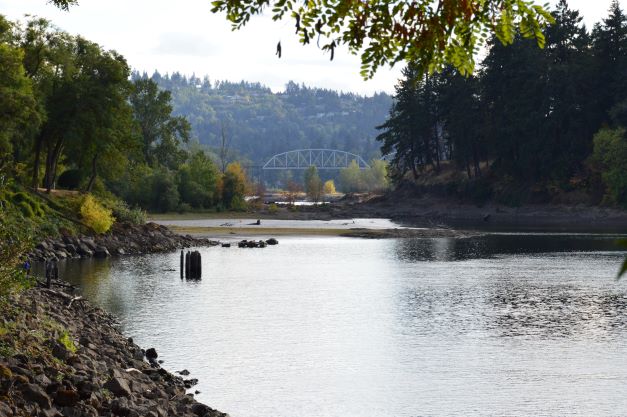
I go for a walk along the Willamette River. I’ve never seen the river this low. The land bridge to Elk Rock is completely exposed. Pine trees are filled with dry, brown needles, not a few here and there, but whole limbs.

Later, I walk around my old neighborhood. Yards are dry and dusty. The leaves on trees are curled and crisped, as if burned, from heat and lack of rain. It’s a tinderbox. A careless fire and a strong wind, and all of this would be gone in moments.

My body trembles. I can’t breathe. I crumple to the ground. I feel as if I’m going to die here, under a pine tree, gasping for breath, on a patch of dry pine needles. I think of once mighty rivers running so low that they are rivulets, and leaves on trees that are scorched from the heat, and the smoke from fires that have swept across the west that shroud the night sky, and I cry,

chest heaving,

sobbing,

wet and salty

tears.

 If only these tears could fill the rivers and water the trees. I want to save the world but I don’t know how.

In the past year, a firestorm swept through a large portion of Oregon that came too close for comfort to where I lived. Five months later, an ice storm brought down limbs and whole trees on power lines throughout the Willamette Valley. Some areas were without electricity for weeks. I felt fortunate to have been without it for only four days.

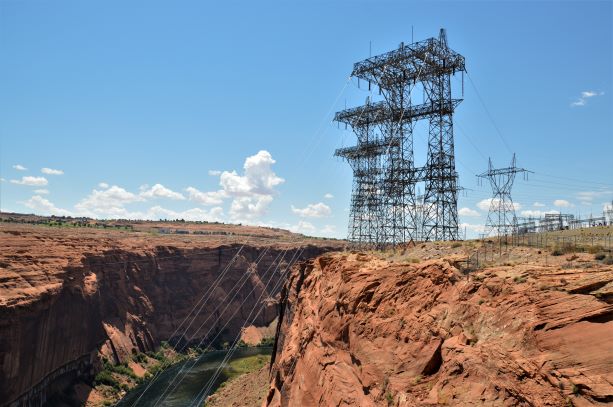
Mid-June it’s one hundred fifteen degrees in the Portland area for a few days. There’s a wildfire in Oregon, another in California. Lake Powell is so low; it seems a trickle between its two great banks.

Everywhere I go, roads are being re-paved, and new roads are made with black asphalt. Why do we continue to use it, when it absorbs the sun’s heat and then radiates it back at the end of the day where we live, making it uncomfortably hot, creating a demand for air conditioning, putting a strain on energy grids that, in many areas, are powered by dammed rivers that are reaching dead pool levels?

Through Arizona, Utah, and New Mexico, I notice many vehicles, usually trucks for small businesses, spew black exhaust. There are floods in Germany. Sardinia is on fire. It’s one hundred twenty-four degrees in Sicily. Because there hadn’t been enough rain, the people of Ireland are told to conserve water.

Flooding devastates the city of Zhengzhou in China, and the fires in Oregon and California are out of control. A shroud of smoke hangs over the night sky.

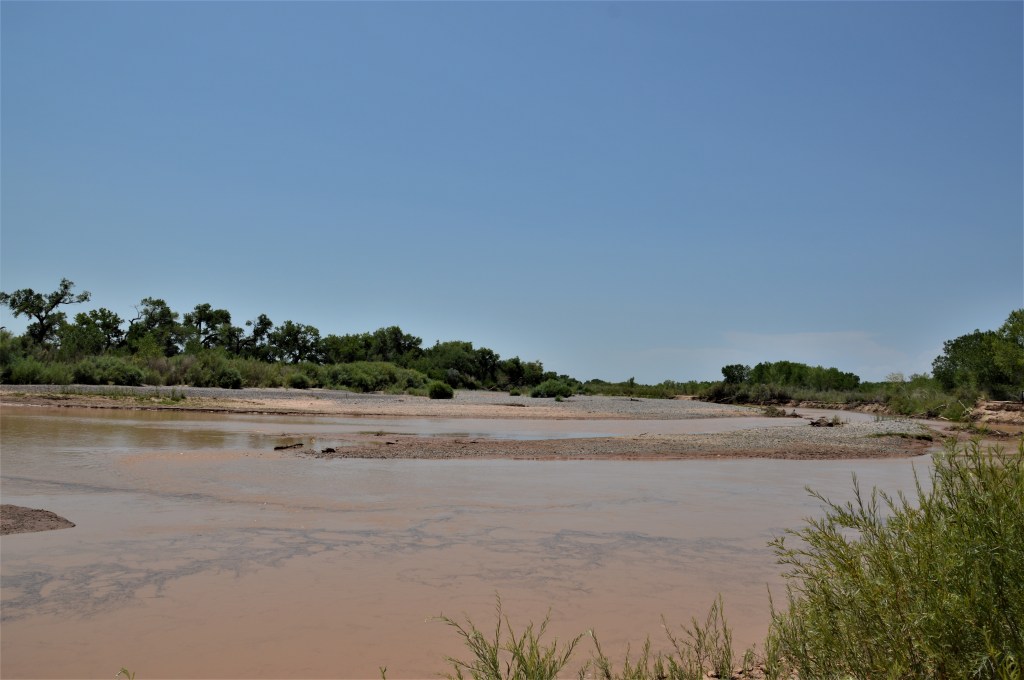
In Abiqui, there are dramatic storms with sharp lightning strikes and booming, rolling thunder, followed by downpours. In the morning the earth is dry, as if the rain had been a figment of my imagination. The Rio Grande is reduced to a stream by the time it reaches Albuquerque.

Sicily is on fire. And then Greece. And Calabria. Torrential rains flood Japan.

It seems there is a weather disaster somewhere in the world every week. I don’t understand how people can deny climate change. Do they not pay attention to how the Earth has changed during their lifetime? I don’t understand how they can excuse the climate chaos that is happening as simply another earth cycle.

I don’t know if it’s minutes or hours that I’m on the ground, weeping, my mind replaying all the things I’ve seen and heard over the summer. Earth is compromised. What will there be for our grandchildren?

I don’t know why I feel personally responsible to make changes beyond the daily things I do to live lightly upon the Earth. Words are all I have to offer to encourage people to make changes in their lives to help Earth’s healing process, and to our local, national and world leaders to make the sweeping changes that will make the greatest impact. Even though I have much to say, words fail me.

When there’s not another tear left, I get up and walk back to the room where I’m staying, picking pine needles off my arms and legs, and out of my hair.

It takes weeks to find a rental. Aside from the outrageous cost of rent, most places want a lease for one year. I plan to be here only until spring. Friends tell me that Waverly Greens has short term rentals. It’s easily accessible to everything I do, and it’s near the Willamette River for walks. By mid-October, I settle in for the winter.

Heading North

Interstate HWY 70 between Denver and Palisade, Colorado is one of the most beautiful roads I’ve driven. There are deep, colorful canyons, even as pine forests rise on the mountains above. The Colorado River and its tributaries run alongside.

The road is a civil engineering feat that won awards for design and consideration of natural beauty, wildlife, and environmental issues. Construction over Vail Pass included fencing to prevent wildlife from crossing the highway, and directs the animals to several underpasses. One underpass is landscaped to coax the deer to follow it.

The highway crosses the Continental Divide at the Eisenhower Tunnel. The elevation is 11,158 feet and is the highest point on the U. S. interstate system. There’s a seven percent grade over seven miles, and the tunnel is 1.7 miles long. A boring device was used to create the tunnel; not explosives. It’s quite impressive to approach and drive through.

Heavy rain in July caused mudslides to inundate I70 at Glenwood Canyon. It was reopened about a week before I drive there. Large green nets are strung beside the road to capture any wayward debris that may fall.

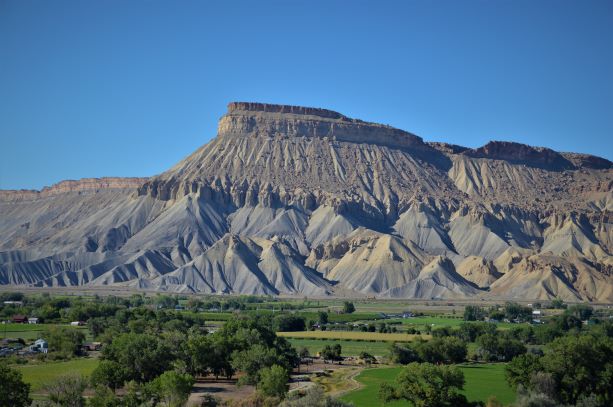
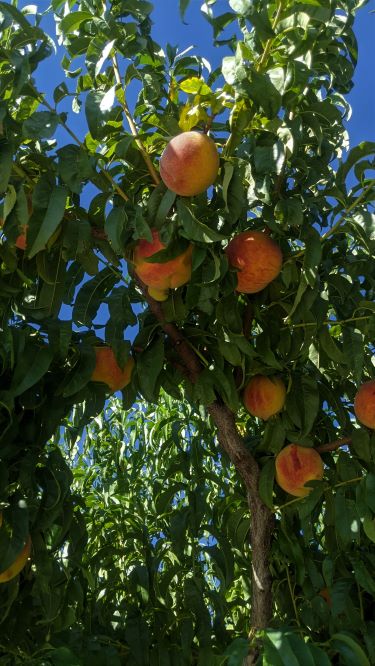
A train runs on the other side of the river. Our courses run parallel to each other until Palisade, the “Peach Capital of Colorado.” It’s peach season and that’s my favorite fruit.  I check in at the Dreamcatcher B& B, and then go out to take in the area. I stop at the Mt. Lincoln Peach Co. fruit stand across the way. The peaches are golden with a red blush, and I can smell the delicate sweetness of the fruit. I want to buy a flat to bring with me, can I pick them up I the morning? Can half the flat be white peaches? Laura, the young woman who runs the store, says yes. I buy a peach to enjoy after dinner.

There is little traffic on the road, only an occasional truck laden with crates of peaches. I stop at Colterris Vineyard Tasting Room and buy some wine for my son and walk through the orchard, row after row of trees laden with beautiful peaches.  The overlook is across the river from Mt. Garfield, part of the Book Cliffs. There’s a hiking trail that’s only two miles to the top, but is challenging, climbing two thousand feet in that stretch. Will I try it next summer, when I come back for more peaches?

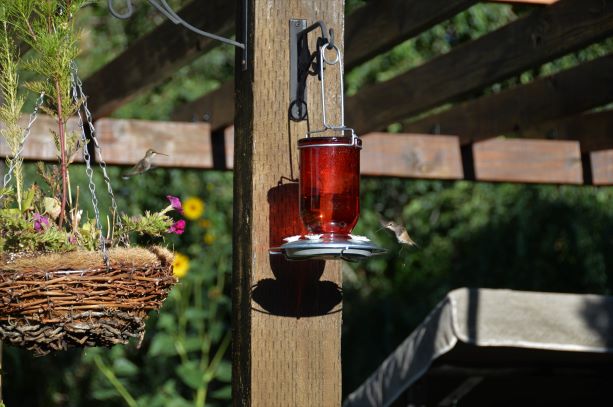
I’m up early the next morning and go for a walk in the yard. I’m entertained by a pair of hummingbirds darting around the feeder.

This is the first time I’ve stayed at a bed and breakfast on my journey. It’s homey and comfortable. At a motel or an Airbnb, one retains a certain anonymity, but it’s nice to meet new people and hear about their travels over coffee at breakfast. Julie, the host, is a wonderful cook. She serves a delicious vegetable omelet made with fresh eggs from the hens running around the yard.

We talk about the problem of poverty and hunger when food is abundant in farming areas. Julie says there was a time that high school classes didn’t start until the peach harvest was done so that teenage students could glean the fields as well as earn some money; now the last fruits are left to fall, are machine gathered and left to rot in heaps. It seems to me that there is an industry in need of development here.

I stop at the fruit stand and expect to wait while Laura puts my order together, but there’s a flat of twelve perfectly ripened peaches, half white fleshed, with my name on it. I am pleasantly surprised by the great service, and charmed by Laura’s sweet personality. I also buy some Olathe corn and I’m on my way.

The beauty of the southwest continues to astound me with great vistas and canyons of colored layers of sandstone. I enjoy the drive until the outskirts of Provo, Utah, where the traffic is heavy and the freeway becomes multi-laned. The worst part is the air pollution. I’d noticed many vehicles, usually trucks. spewing black smoke as I drove through Arizona, Colorado, and Utah.

Utah has some of the worst air quality in the U. S. Winter inversions cause eighteen days of pollution above National Ambient Air Quality Standards; in the summer ozone and lakebed dust impact air quality. This summer, wildfire smoke caused Salt Lake City to exceed federal standards for particulate pollution sixteen times. Utah has a contradictory response to poor air quality. In 2015 the state offered a $1500 credit for clean fuel vehicles, and in 2021raised registration fees on the same vehicles.

To make the problem more complex, the Great Salt Lake is drying up. It is ten feet below its average level and the exposed lakebed is a source of toxic pollution. Not only is it an air quality issue, it points out the pressing problem of water. It isn’t merely drought conditions. The diversion of water from upstream sources for agricultural and residential use doesn’t leave enough water to flow to the lake.

Three gnomes have taken up residence under the tree in front of Anna and Steve’s house. I arrive late in the afternoon, on time to go to soccer practice with Anna and her two boys, five year old Wren and three year old Dashell. It delights me to watch them at play and brought me back to the days when I sat on the sidelines watching my son learn the game. I’m happy to reconnect with Anna. I watched her grow up and now I get to see her parent her children.

After dinner, Steve grills some of the peaches I brought from Palisade for dessert. How can something so delicious become even more delectable?

As twilight deepens, we go for a walk in the charming, tree lined neighborhood. We look at the gardens along the way, full of flowers, and ripening tomatoes and squashes. We see insects and birds. Wren and Dashell know where all the special places are. I look for Venus. She’s glorious in the night sky.

The truck stop outside Twin Falls is a massive complex. They have every type of gasoline imaginable on a lot full of pumps with huge semi’s, an assortment of other trucks, RVs, campers, boats, an assortment of outdoor toys and accessories, and the cars that haul them, all filling up.

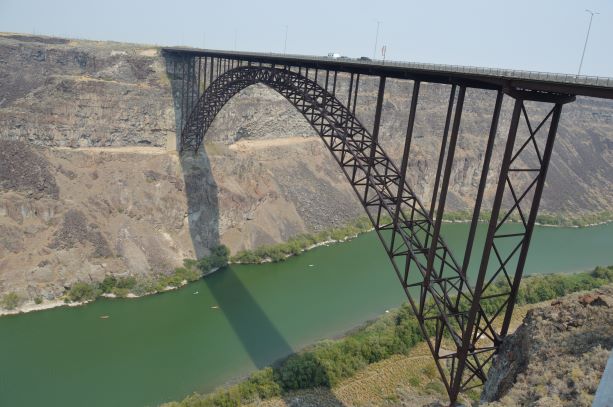
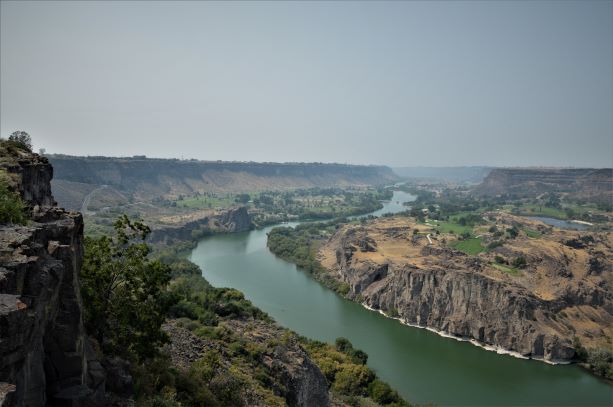
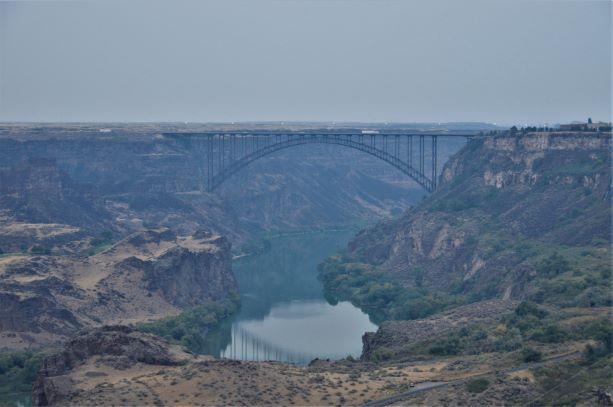
The landscape is barren here. I turn onto HWY 93 and approach the Perrine Bridge, a truss suspension bridge 486 feet above the Snake River. The Twin Falls Visitor Center is on the other side with a Tesla Supercharge in the parking lot. I plug Freedom in and walk along the trail to view the bridge and the river below. The Snake River is the largest tributary of the Columbia River, the largest north American river that flows to the Pacific Ocean.

The bridge is a popular Base Jumping site, the sport a bit extreme for my timid soul. Less than two miles to the east is the spot where Evel Knievel attempted to jump the Snake River Canyon on his Skycycle X-2 in 1974. He didn’t succeed because of a parachute malfunction.

I check in at the Fillmore Inn. Denise is a delightful host, and I love the room I’m assigned. The bedroom is cheerful with light coming through the windows, but secluded behind high brick walls. There’s an alcove with a desk where I can write, the shower is large and there are lots of fluffy towels. On the table are two large flourless peanut butter cookies in a cellophane bag, tied with a ribbon. I’ve been foregoing desserts, but decide to nibble a corner of one cookie. It’s delicious, and nibble a little at a time over the next few days.

I shower, put on the nicest clothes I have, and go for dinner at Elevation 486. It’s crowded and short staffed, like so many places I stopped along the way. The service was slow, but the food was good. Having spent a portion of my life as a waitress and understand the pressure the entire staff is under. I enjoy taking in the view with a glass of prosecco while I wait for dinner to be served..

Afterwards, I walk along the rim of the Snake River. All summer there’s been a thin pall of smoke across the southwest from the fires on the west coast. The smoke is thick tonight. I don’t know if it’s an accumulation from all the fires, or if there’s a newer one.

Breakfast is in the dining room. Denise has set tables appropriately distanced.  There are two couples and myself. She introduces us, noting that one couple is on their honeymoon, and serves breakfast. Within a heartbeat, the man who is on his honeymoon raises his voice to say grace, his wife’s head bowed, their hands folded in prayer. He proclaims that his God is the only living God, and that all other gods are dead. He even names a few. There is stunned silence. Denise offers more coffee and goes around filling cups. The honeymooners eat quickly and leave, never addressing me or the other couple.

Denise starts a conversation. The other couple live in Palo Alto. He’s from Switzerland; she’s from Greece. They both work at Stanford University, he as tech support, and she in cognitive therapy of the psychology department. We talk about travel and places we’ve been that we enjoyed the most.

As I pack to leave, I think about what happened in the dining room. I’ve met all sorts of people from varied backgrounds on this journey, but this was the most uncomfortable moment I’ve experienced. I didn’t mind that he wanted to pray, I wouldn’t even have minded if he had invited us to join him. What bothered me wasn’t merely the imposition of his beliefs, or that his belief was the one and only way, but the denigration of any belief but his. It saddened me deeply to witness this, a blatant example of what divides this country: my rights and beliefs are more right than your rights and beliefs.

It’s my wish, prayer if you will, that we learn to communicate better with each other, to build a bridge to understanding. We all want the same thing; to live happily with our families and friends, peacefully with our neighbors, shelter and food to eat, and a purpose in life.

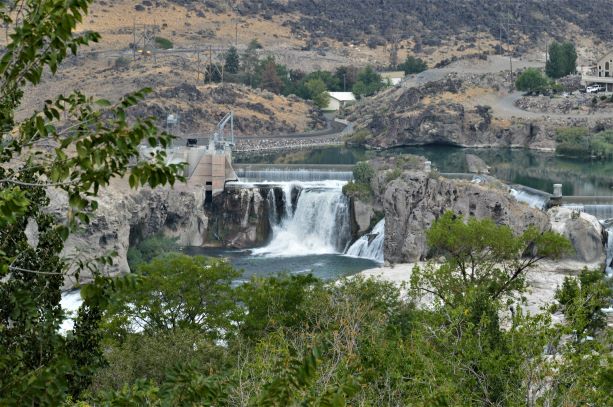
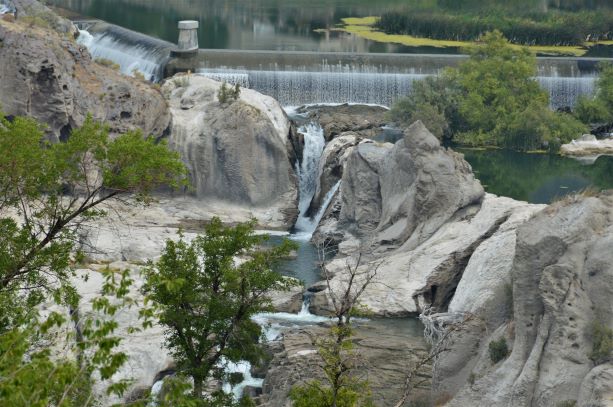
Before I leave Twin Falls, I stop at Shoshone Falls Park. This waterfall on the Snake River is 212 feet tall, one of the largest natural waterfalls in the U. S. and is fed by Rocky Mountain snow melt. The flow varies depending on snowfall and the fact that the river is diverted twenty miles upstream to irrigate a half million acres of farmland. The dam upstream from the falls also diverts water to the hydroelectric plant that generates electricity for Idaho Power.

Because of its height, the falls mark the upper limit of fish migration, including salmon, steelhead and sturgeon. This spot was a major food source for local Native Americans, the Shoshone Indians.

It’s beautiful along the Snake River. This is another place I would like to revisit.

I stop in Baker City and visit John Simpkins who graciously allows me to visit him at his studio, even though we’ve never met. John is one of the many friends I’ve made on Facebook. Over the years, he shared his paintings in progress with daily posts. It was interesting to see his process, to watch the paintings develop, and see the finished work.

His latest work, Chaya, hangs on the studio wall. It is even more amazing in life than the photos on Facebook. There is a red ball in the picture that looks flat in photos, but here it has dimension and seems to pop off the canvas.

You can view John’s work at www.johnsimpkins.com. There is an online virtual exhibit called elephant in the room where you can see his art. It’s worth the visit.

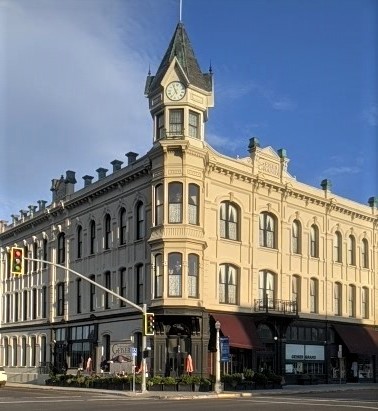
The Baker City historic district seems to be lost in time. I love the architecture of the older buildings. I have dinner at the Geiser Hotel and return to the motel.

I spend the evening looking for someplace to stay over the weekend. I want to go to Sequim, WA but everything is booked. I look for the halfway point between there and Yakima. Cle Elum seems to be closest. The neighboring town is Roslyn, where the TV series Northern Exposure was filmed. Fortunately, accommodations are available in Cle Elum and I’m excited to visit Roslyn.