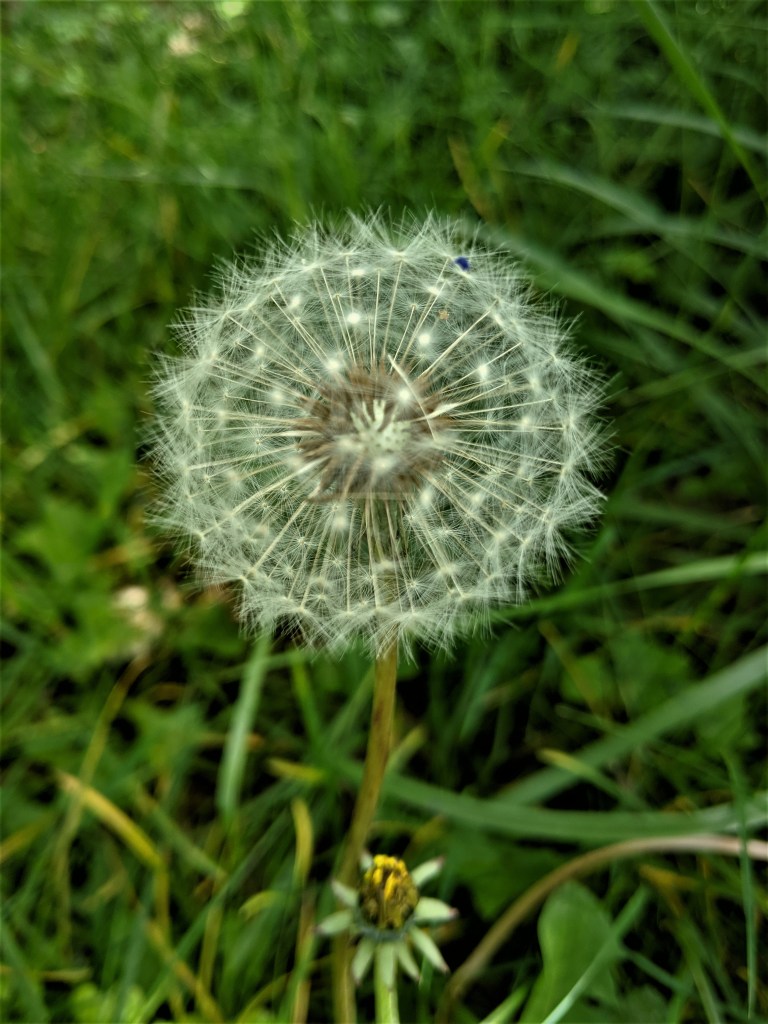
One day when I was working in the garden I saw this dandelion and thought it looks like the Coronavirus. and seems to spread the same way.
Will we remember when we return to our daily routines
The pain you inflicted on those whose bodies you invaded
The precious lives you stole, isolated from loved ones
Our grief quarantined
Will we remember the dedication of those who helped and healed
And those who worked to provide vital resources
As we waited for the blight to pass
That lives were spared because we stayed home
Will we remember how time changed shape
With no Where to be except here and now
That we breathed long slow breaths in
And out
Will we remember the never ending days
That turned into weeks of Samedays
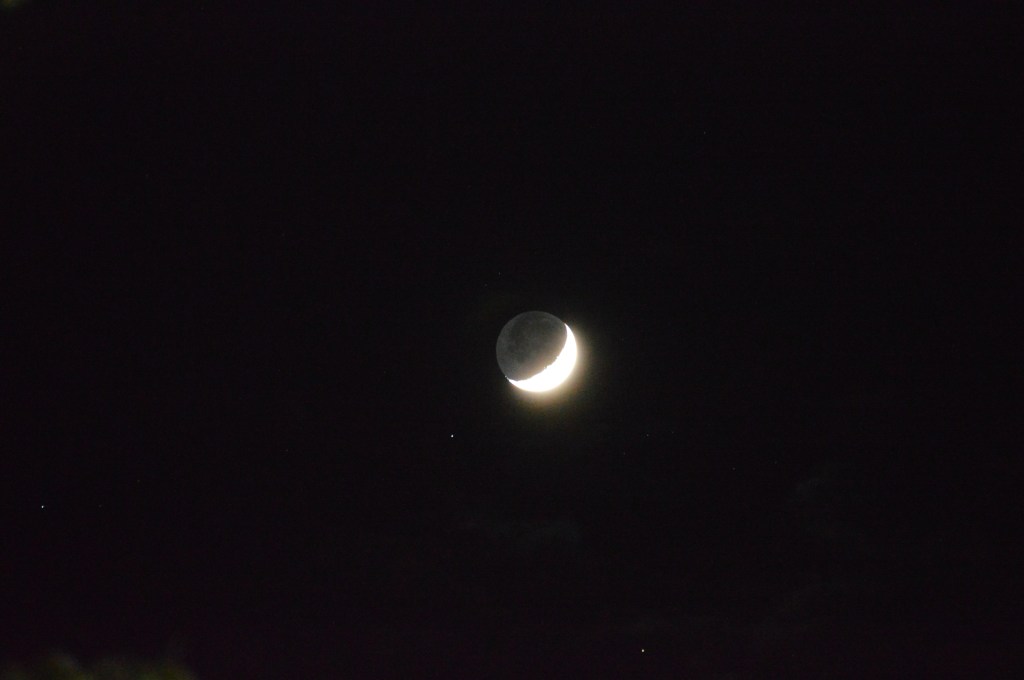
Watching the waxing and waning moon
To mark the passing months
Will we remember the Earth’s stillness when all busy-ness stopped
The fresher air, the clearer sky
The brighter sparkle of the stars
That spring unfurled from bud to petal to leaf
Will we remember the loneliness of physical distancing
The letters and phone calls to check in with a “Hi”
That meant “I care”
That a gesture of kindness is called love
Will we remember the promise we made
That things would be different once we got through this
That we’d know what we could live without
And what we truly need
And what we truly need
I started to write this blog in April. By the time it was ready to send out into cyberspace, the pandemic turned to pandemonium. Some folks decided they needed haircuts and invaded various state capitals with their guns. In other places folks broke stay at home orders and invaded parks and beaches. Somehow the blog no longer seemed relevant, so I scrapped it, waited for the news to settle, and wrote another blog.
By the time that one was ready to post, a policeman murdered George Floyd by kneeling on his neck for 8.5 minutes, every brutal and inhumane moment captured on cell phone videos. A great tumult grew, not only in Minneapolis where this grievous act occurred, but all across the nation as people called for justice for Mr. Floyd, and other young men who were killed because of the color of their skin. The outrage grew to protests and marches, and renewed vigor for the Black Lives Matter movement. Sadly, it came with more violence, some by the hand of the government. There were protests around the world, not only in support of Black Lives Matter, but also for the oppressed that cried for justice in their own countries.
At this point I spent a few weeks crying. I was overwhelmed with sadness at the state of the country I live in, and the world; not only for the spread of Covid19 and the damage it’s done, for social injustices that need to be rectified, but also for the Earth herself who is suffering from a global climate crisis. On the first day of summer it was 100.4° above the Arctic Circle in Siberia, and after all the months of staying home and wearing a mask in public, Covid19 is on the rise. I’ve come to believe that Covid19 is an allegory for a greater, psychic dis-ease that is infecting our world. The cure for what ails us is available and free. All we need to do is live in harmony with each other and nature.
Recently I listened to Chants of India by Ravi Shankar and George Harrison. Here are the translated words from Om Saha:
“May the Lord protect us together
May He nourish us together
May we work together uniting our strength for the good of humanity
A year ago today I set out on a journey to visit my grandparents’ birthplaces in Calabria, Italy. I’d daydreamed about going for years, and when I zoomed in on their birth towns via Google Earth, I knew I had to turn the dream into a reality.
Crucoli
I carefully researched what I wanted to see. During my visit I did everything I wanted to do, and left myself open to unplanned moments. I felt as if I were in a gelato store with a wide variety of choices, given a little spoonful of something new and exhilarating, but there is so much history, culture, and natural wonders in Calabria that a little taste wasn’t enough. I wanted more.
I’d intended to return this year and stay three months to wander and savor as much as I could. And then Covid19 came along and changed how we are living and will live for the foreseeable future. We don’t know when we will be able to travel again, and when we do, how the way we travel will change.
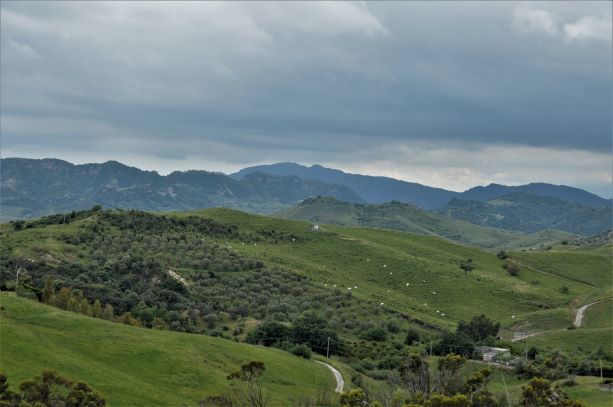
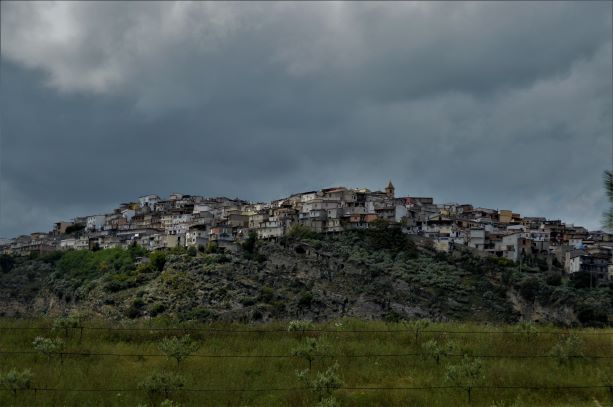
For now, I must content myself with memories that are like the moon on a still sea; a reflection of a bountiful land of olive groves and vineyards, ancient villages perched on sheer cliffs above fields of red poppies growing wild in the rolling terrain.
Casabona
It is difficult to say what impressed me the most, what I enjoyed the most, what I miss the most because every experience was rich and full. It may sound strange, but what I am left with is regrets.
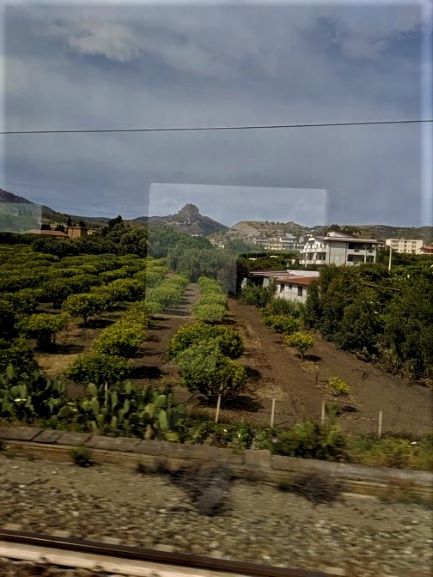
I regret the times I didn’t carry my camera with me. After a while it felt heavy and cumbersome. Sometimes, even though I had my camera with me, it was easier to use the phone’s camera. I missed capturing interesting moments because I fiddled too long with settings and the moment was gone. There were times I was so drawn in by what I was seeing that I didn’t think of using the camera, but those pictures are fixed indelibly in my mind.
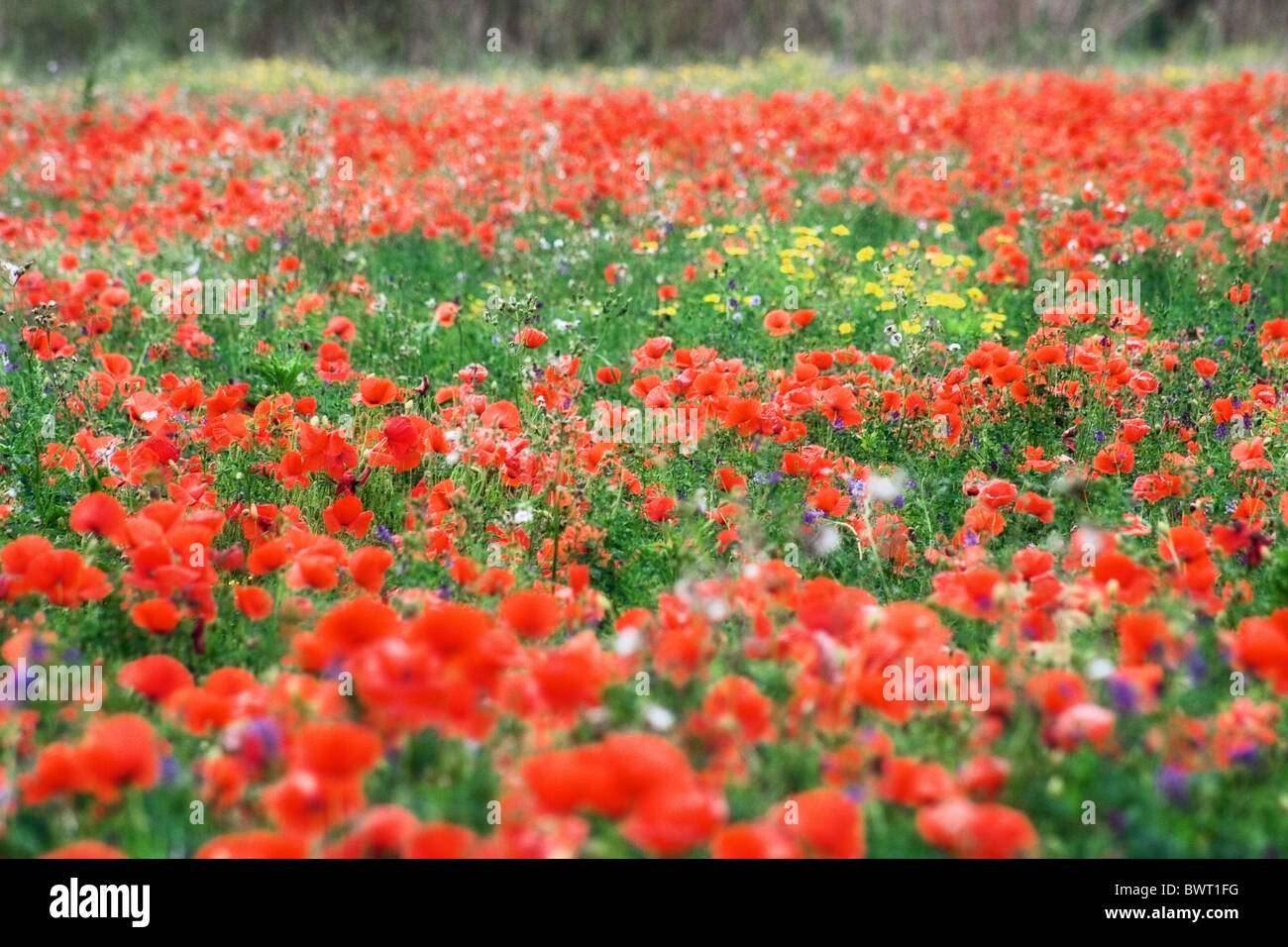
In spring the roadsides of Calabria are adorned with red poppies and wild flowers. Red poppies are said to be the gift of the goddess Demeter, the Bringer of Seasons, expressing her joy at being reunited with her daughter, Persephone, returning from her life in the underworld.
The poppies dominated the landscape between vineyards and olive groves as we drove along country lanes on the way to Casabona, the birthplace of my paternal grandparents. The red of the poppies was enhanced by dainty yellow marguerites that grew beside them. They took my breath away. Most likely, they are in bloom now. I close my eyes and I am in a meadow surrounded by them; their red blossoms feel like silk to my touch.
Field of red poppies in Calabria
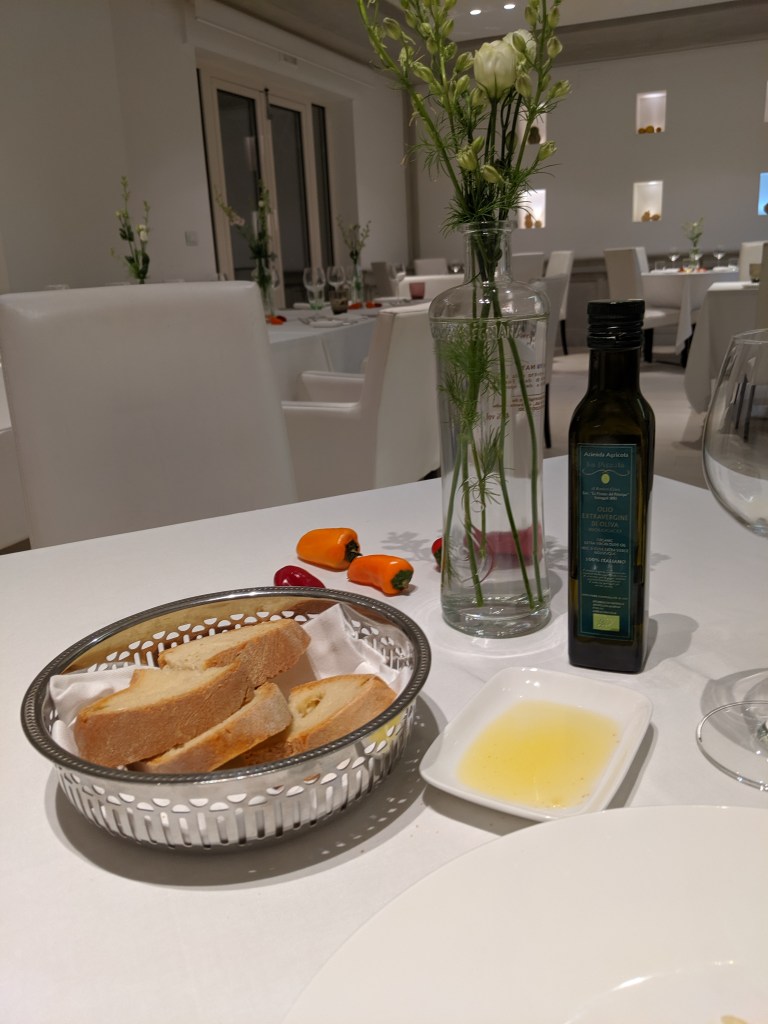
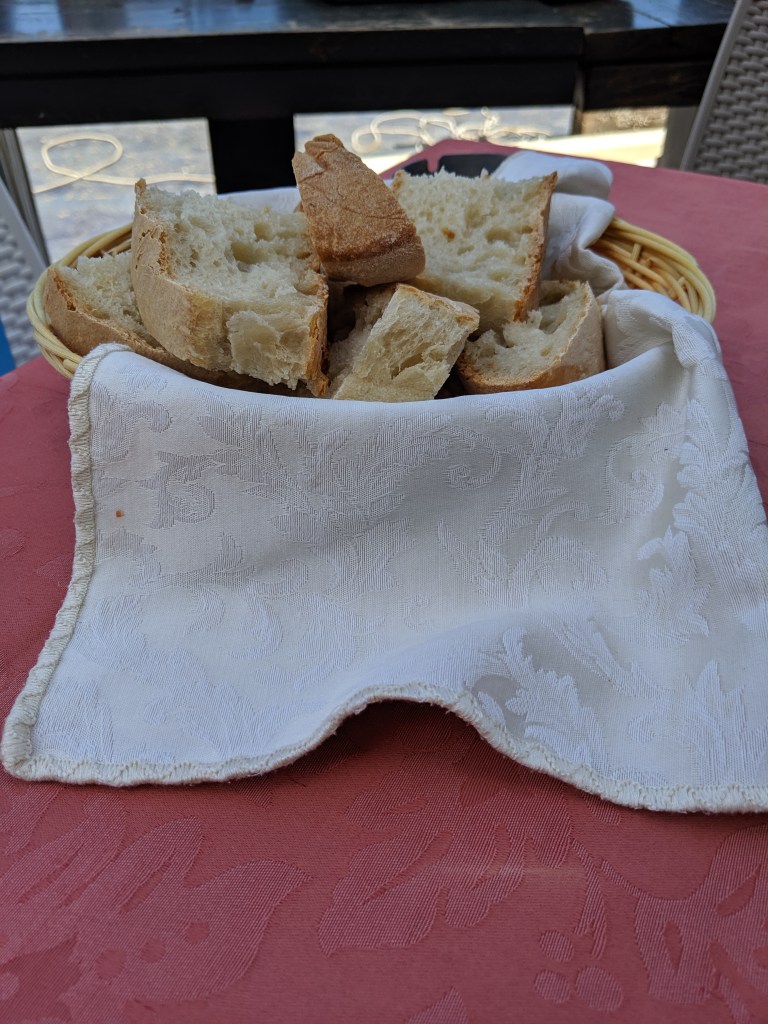
Many of the meals I ate were remembered tastes from my childhood. I ate whatever I wanted, but limited bread to one slice if it was part of the meal, with an occasional second slice. Now I regret not eating more of the delicious bread that was set before me. La Figlia di Annibale served a delightful yellow bread. The waiter said it was made with “grano d’oro.” Every morning my host at La Corte del Geco, Daniele Tricoli, served a different kind of bread fresh from the bakery. At Com na Vota the bread was dense and chewy, served with sardella, a paste made of sardines and peppers.
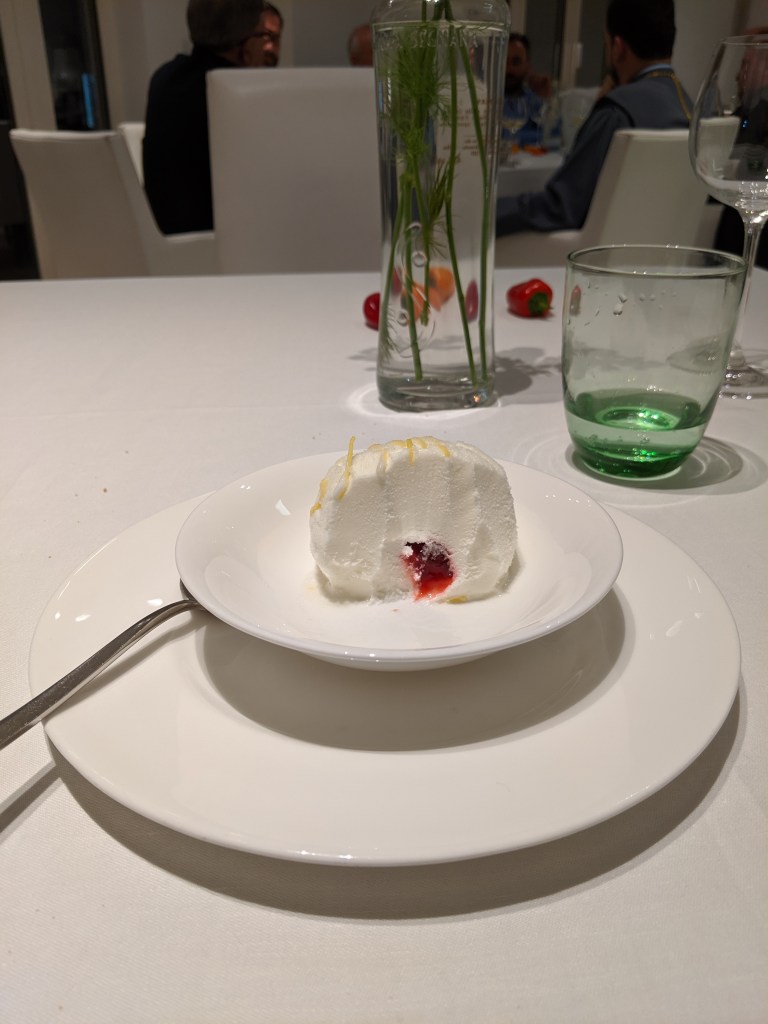
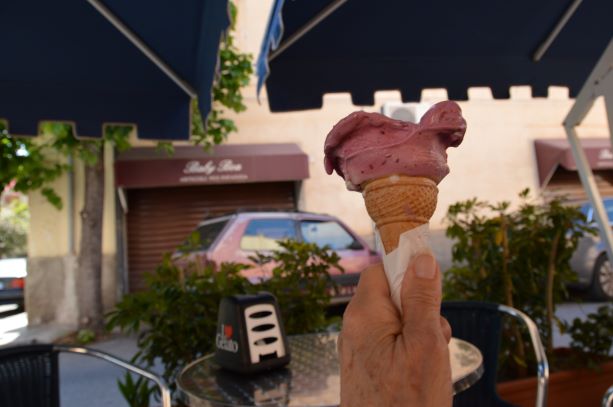
And gelato, I wish I’d eaten more gelato.
My greatest regret is the Missed Connection when I got off the train in Catanzaro Lido. But life isn’t lived in regret. I am grateful for the memories I’ve collected, and for now I will enjoy the beauty of my garden while I wait with the rest of the world for healing and new ways to live.
I have been working on this blog for three weeks, but because of the coronavirus my thoughts on what I should write about change daily. Fear and anxiety are pandemic as the virus spreads around the world. There is not enough information, or there is misinformation. Something is happening, but nothing is happening. I think of the words to a Bob Dylan song, “Something is happening here, but you don’t know what it is, do you Mr. Jones?” I take a slow, deep inhale. Exhale. Another, and another. I am present. I am calm.
In many places, activity is at a standstill. We are advised to wash our hands often, sneeze or cough into our elbows, confine ourselves, or at least practice social distancing. I love words and the feelings they evoke. I laughed when I first heard the term social distancing because it sounded contrived. It seems to me that we have experienced social distancing since the cell phone became a computer in the palm of our hands. We are surrounded by people, yet distanced from them while being connected to the whole world. Under current circumstances, social distancing means physical separation; and yet touch, whether a hug or the holding of a hand, won’t be available to us, especially to those most in need of that comfort when they are ill.
Oddly enough, the cell phone and social media are our connection now. Soon after the citizens of Italy were quarantined, there were posts of people singing and playing musical instruments from their windows and balconies in communities throughout Italy. The Italians lifted not only their own spirits, but the spirits of people around the world. St. Patrick’s Day festivities were canceled in Ireland, but the Irish shared posts of in-home parades and music.
As we begin to practice physical distancing here in the United States, we are reaching out on social media sharing musical parodies and comical memes, and telling stories of sharing and help given. I’ve noticed that there are more conversations on posts beyond the usual likes. We are checking in on each other more often. I received a phone call from a high school classmate this morning, someone I’ve stayed in contact with but haven’t spoken with in years. Perhaps social distancing will teach us how important we are to each other, restore a sense of commonality, and renew kindness and consideration towards each other.
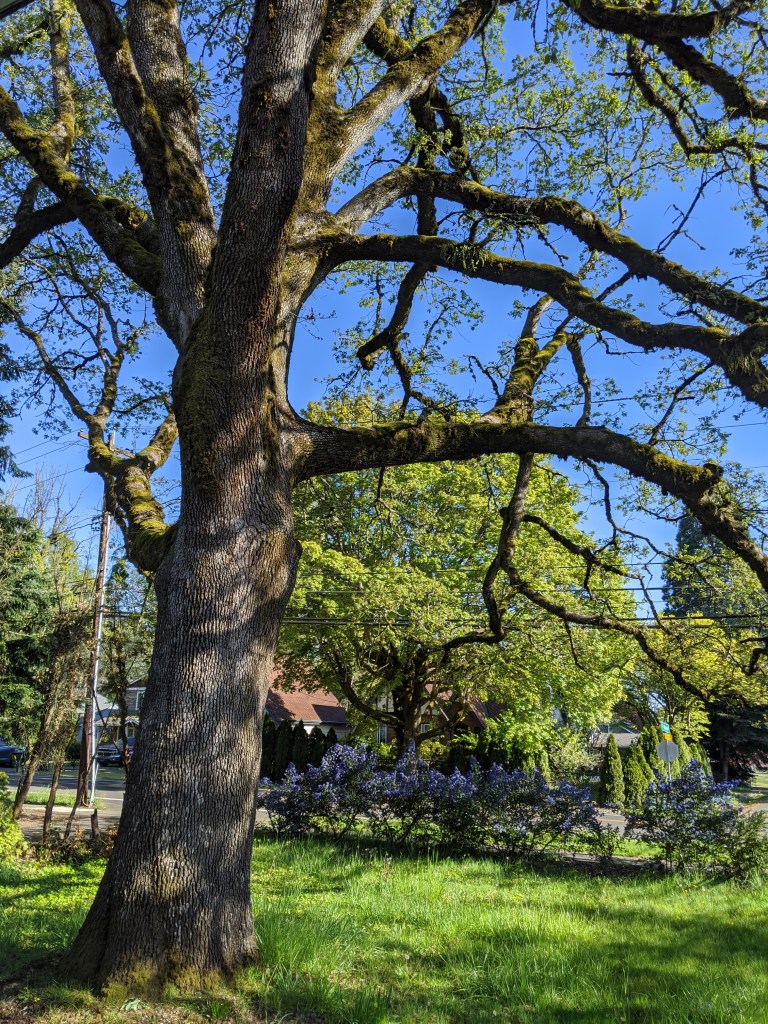
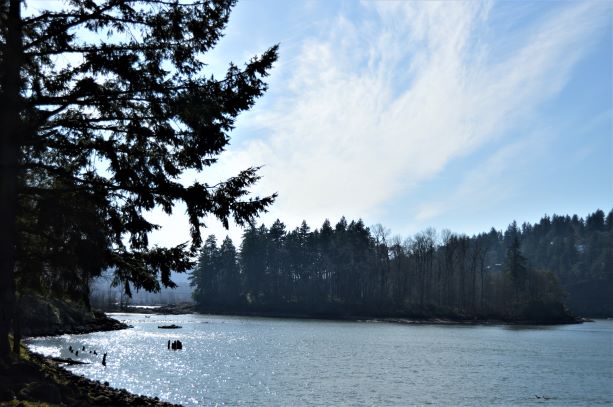
I’ve been practicing social distancing. It isn’t a hardship for someone who is inherently introverted but can be extroverted when necessary; however, there’s a part of me that is restless and full of wanderlust. Travel plans have been put on hold, and because we haven’t been ordered to shelter in place, I go for daily walks around the neighborhood. I live in an area with magnificent trees that is walking distance to the Willamette River. Having lived beside the Pacific Ocean for many years, a fluent body of water nearby makes me feel whole.
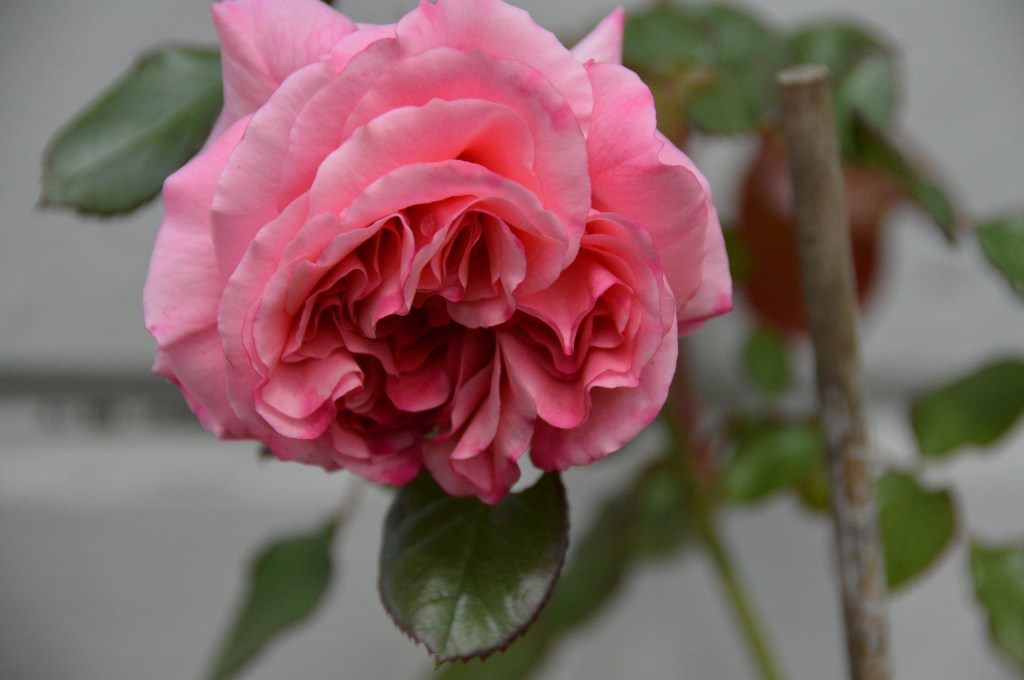
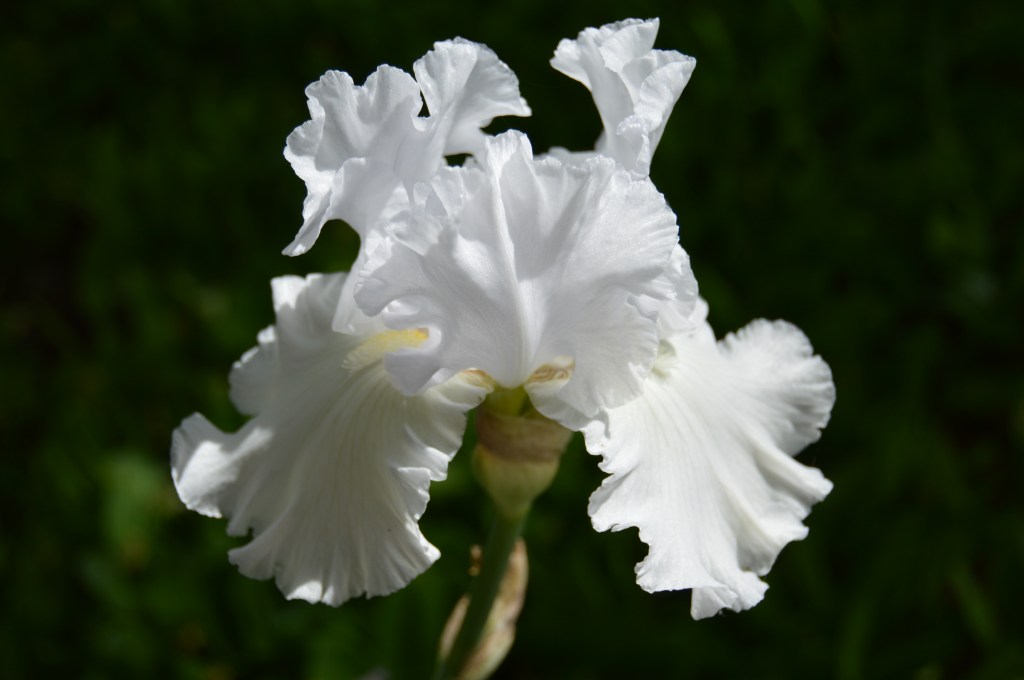
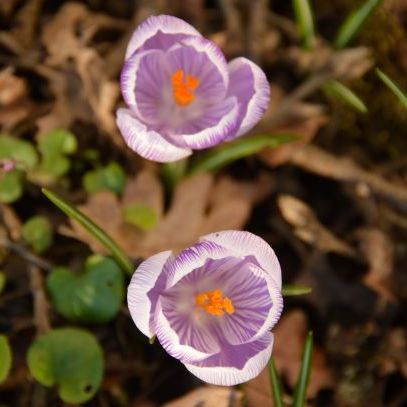
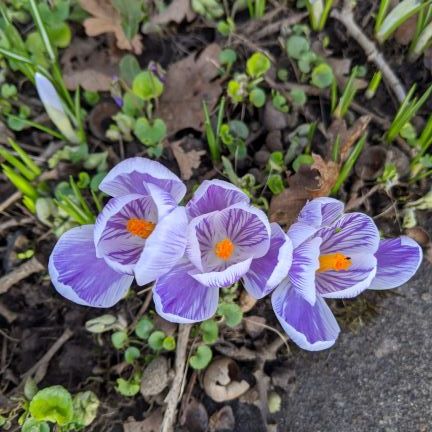
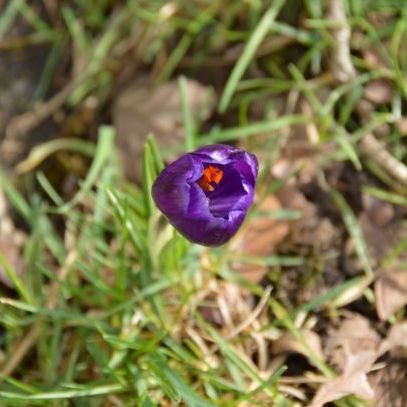
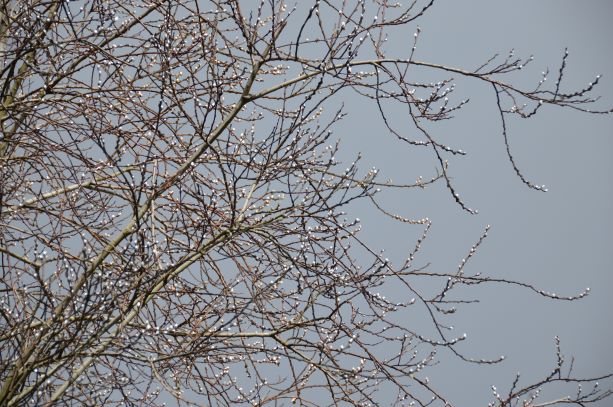
Over the past month I’ve taken my camera on walkabouts to watch spring unfold. The crocuses are always the first to appear. Just when I think I cannot take another day of a drab Northwest winter, they push through hard ground, promising that spring is on its way.
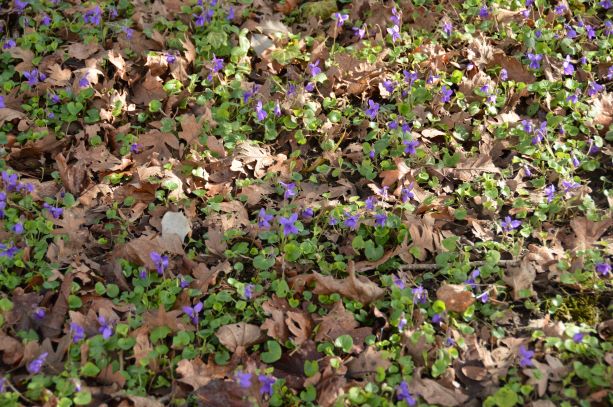
Violets bloom next
Peeping from under their leaves
Their scent in the air
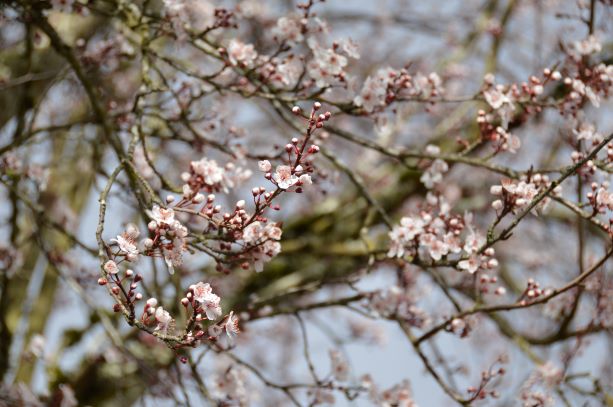
Dormant trees waken
Tipped with buds like Christmas lights
They bloom in pink frills
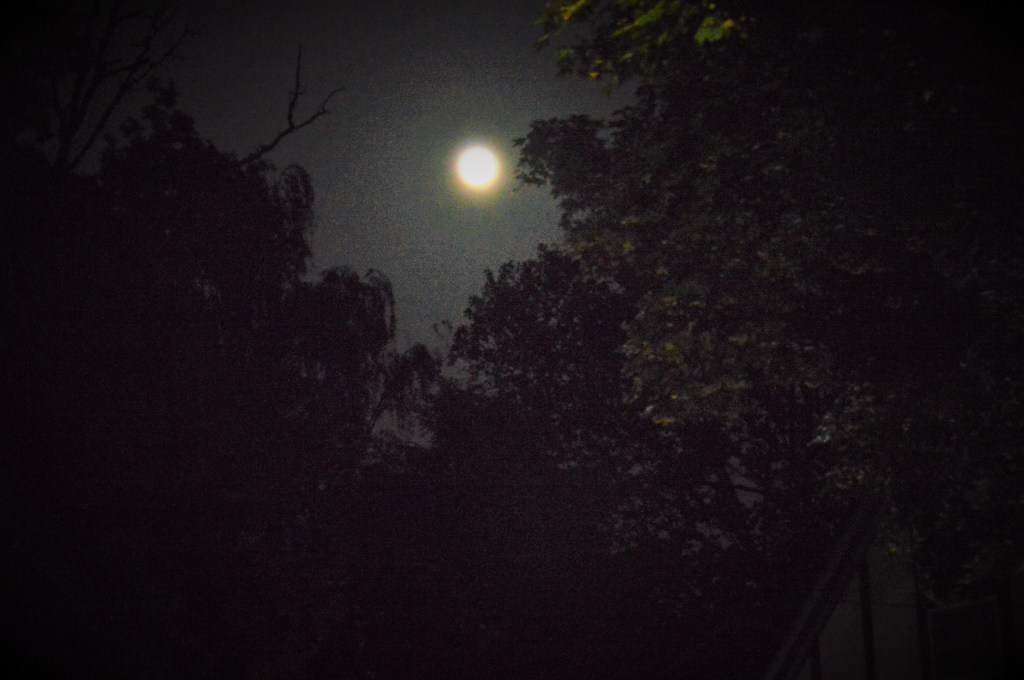
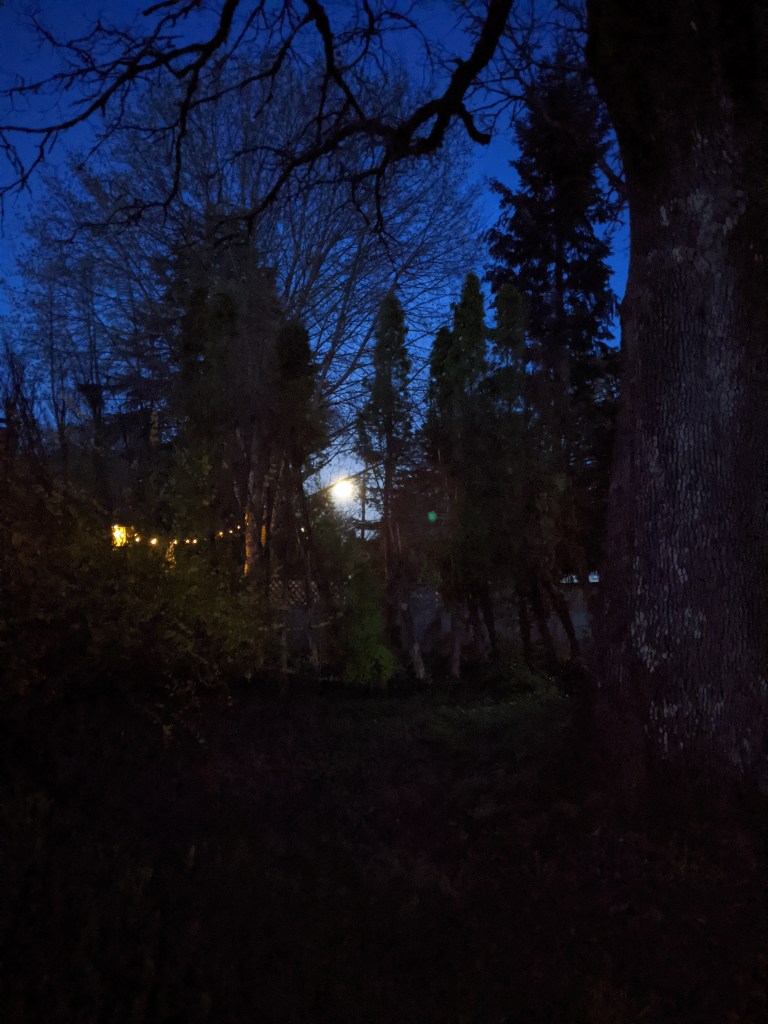
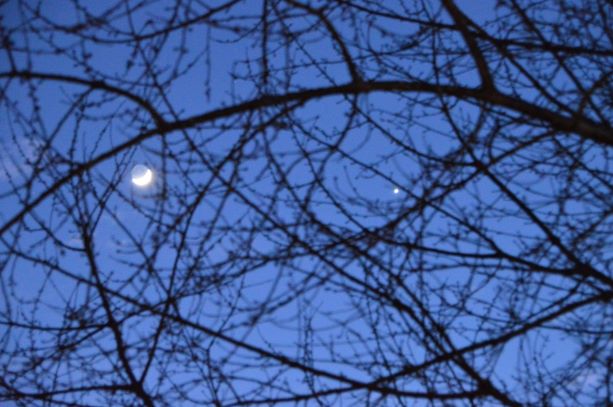
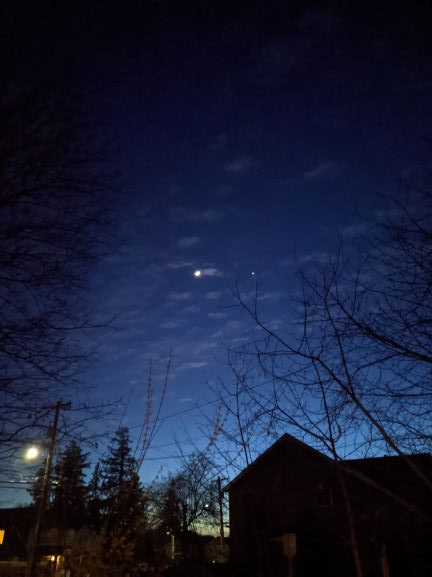
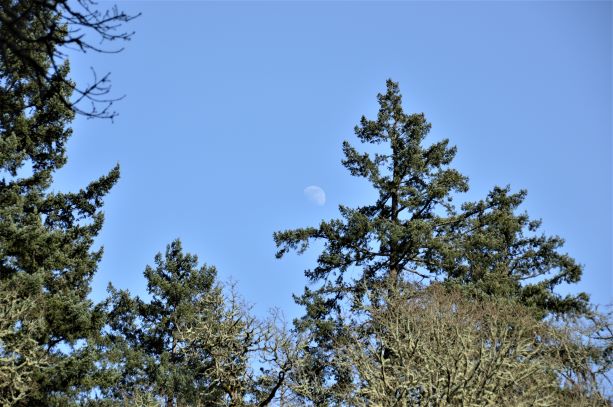
And then there are celestial events. Beautiful Venus flirts in the evening sky, the moon tagging close behind. The moon shows off during the day, and the Worm Moon was super. My Google Pixel phone has a night mode, so the sky appears brighter than it was.
The land bridge to Elk Rock in the Willamette River is already visible, an indication of the lack of rain we’ve had this year. We are rightly concerned for our health and that of our loved ones, but let’s not forget the health of our Mother, Earth. Perhaps she will also experience healing as we slow down.
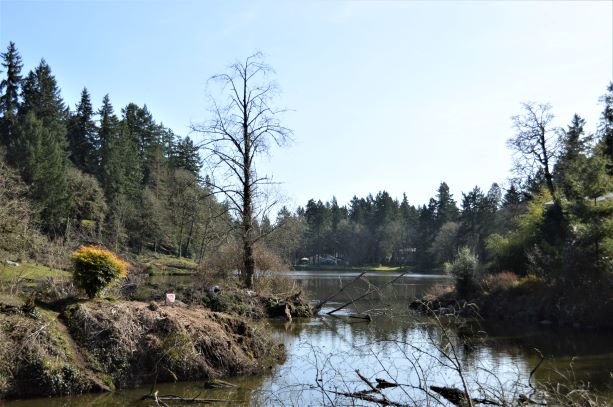
There is a pond near my house. Right after I took this photo, the ducks took flight, but I wasn’t fast enough to capture them.
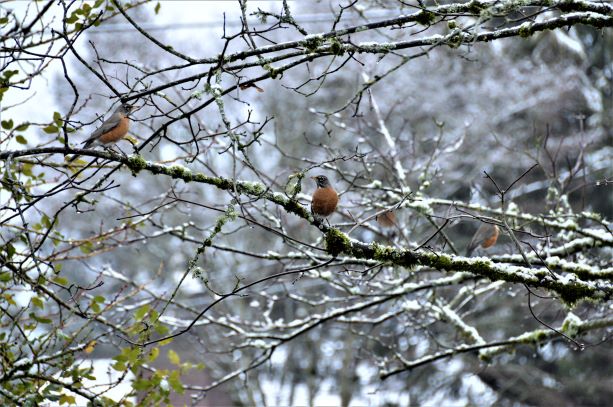
New Year’s morning 2019 I stood at the living room window sipping coffee and taking in winter’s barren landscape when a flash of red in the cherry tree caught my eye. I watched as a robin red breast settled on a limb. Another one flew in, and then another, and then several more until the tree was alive with robins. It took my breath away.
Robins signify beginnings, growth, happiness, and hope, so I took it as a good omen for the start of the year. But new beginnings come out of endings, and growth and happiness come in how one deals with those changes.
The robins hung around the front yard for several months. Watching them play in the trees and feed on the seeds I scattered on the ground brought me much joy and filled me with hope for what could be. It emboldened me to fulfill a long desired wish.
For several years I’d yearned to visit the birthplace of my grandparents, Calabria, Italy. I’d researched the towns they were born in, as well as the rest of the toe of the Italian boot. With a push from my friends Steve who said, “You aren’t getting younger,” and the help of his wife, Bobbie, who tracked reasonable airfares, I made reservations for a special vacation.
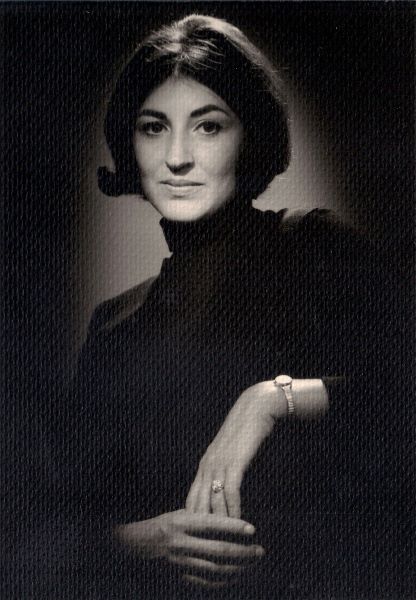
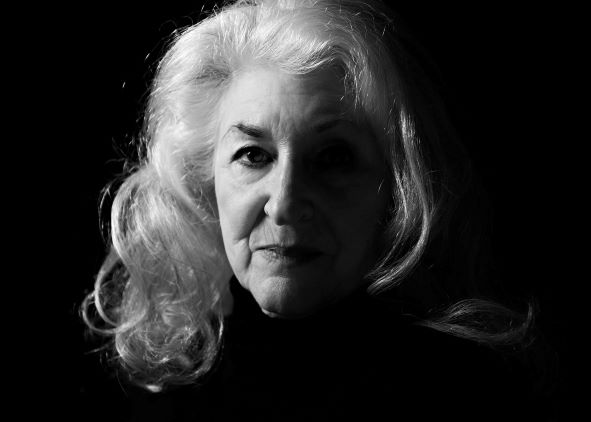
Soon after that, my friend, Jamie Bosworth, invited me to do a photo shoot at her studio. Jamie is a talented photographer and I was honored by her offer. We set a date for late February when I had a week off from work. I thought it would be interesting to replicate a photo of myself that was taken by Gene Wright, a photographer in San Francisco when I was twenty-three. It was a fun afternoon as Jamie’s subject, and watching her do what she does best.
When I returned to work I was met by my manager and ushered into the back room where I was terminated from a job I’d held for eleven years. A reason was given, but I believe that at the root of it was ageism. The company may deny it, but I always sensed that to them I had an expiration date, whereas my younger co-workers were encouraged and nurtured to move up to other, better paying positions.
It was a bitter pill to swallow, not only to lose a job, but also to have to look for a new one. And then I received the proofs from Jamie.
What was I thinking? I know I am a mature woman and didn’t expect to see a fresh faced, dreamy eyed girl in her twenties envisioning a utopian world. Nor would I see the glowing thirty something that liberated herself from a difficult marriage, the mother of a young son, free to grow as an independent woman.
In my forties, after a second divorce, and the mother of another young son, I spoke to my friend Trini about concerns I had regarding age. She said, “Oh, Franny, you’re still a girl. A woman blooms, and blooms, and blooms, until she don’t bloom no more.”
And so I re-invented myself, then and every decade after that with the changes life brings: becoming a grandmother and then as an empty nester after my youngest son graduated high school. I heeded what Trini said and bloomed and bloomed.
The new century brought about several changes of location and jobs. Eventually I became a bank teller, spending my days with co-workers who were young enough to be my grandchildren. They were surprised that I knew their music and lingo, and what was happening in pop culture. I was shocked by how little many of them knew of what came before them, whether it was music, culture, or the history of their country and the world. There were some who were aware; with them I enjoyed a bond beyond being co-workers, and still enjoy their friendships.
I felt ageless working with young people. I knew the years were stacking up, but being old was not on my agenda. Yet, the camera does not lie; I didn’t look as ageless as I felt. Perhaps in my heart of hearts I did want to see a more glowing version of myself, but the girl with a faraway look, visualizing what could be: a world at peace, everyone living in harmony with each other and nature was now a woman who looked the camera in the eye; weary, concerned, disappointed.
Some things didn’t change, I hold the same ideals my younger self did, but it seems the world has changed, falling apart environmentally and politically, and now I had to figure out how I fit in the changing employment market. Frustrated, I put aside the job search and took the trip to Calabria.
It was the high point of the year. I saw the birthplaces of my grandparents, absorbed the beauty of the countryside, and the history and culture of that ancient land. I met many wonderful people and ate delicious food. I did everything I wanted to do, yet there was always another path to take, or staircase to climb that I couldn’t quite make.
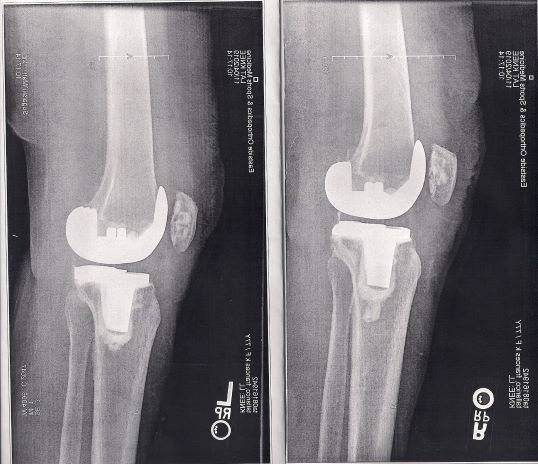
I’d put off knee replacement surgery for eight years, and realized that to continue to live fully the time had come to do it. In September I had surgery and was incapacitated for ten weeks. While I was recovering, working hard with physical therapists and on my own to become mobile again, I had to swallow my Leo pride and ask for help. I was overwhelmed by the kindness of family, friends and neighbors who cared for me.
Here I am on New Year’s Eve, reflecting on the year that was, and the lessons learned from both the difficult events and the joyful ones; what to let go of and what to embrace. I move on to the New Year accepting that I am an elder of society, knowing that a lifetime of experiences has provided knowledge and a modicum of wisdom to share. As I continue to figure out how to earn a living, I hope it will be in a way that helps this earth we live on and to use my creativity as a writer.
And I’m still blooming!
I look ahead to the New Year and decade prayerful that all people can put aside differences and work together to heal the planet.
May 2020 be filled with love, peace, and joy, and may you fulfill your deepest desires.
This is a different sort of journey that I’ve recently taken. Eight years ago I was told that I needed knee replacement surgery. Because the procedure is so invasive, I sought alternatives to deal with pain: Synovisc injections, a knee brace, and physical therapy. They all worked well enough for a while.
On my trip to Calabria I found that there was always another path to explore, a few more steps that I could have taken had I not been limited by what my knees could bear. The time had come to do something about it.
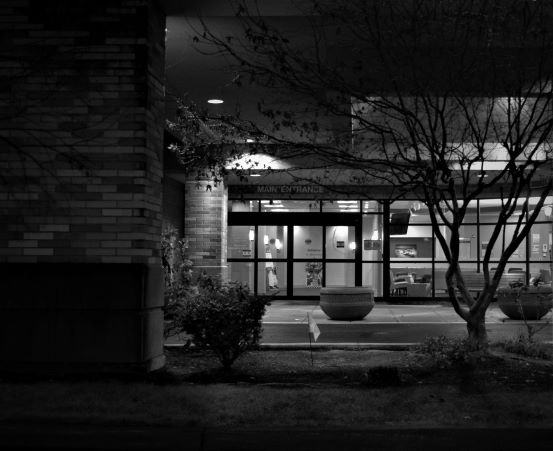
In pre-dawn darkness I enter the hospital and walk into a dimly lit room. Connie, the attending nurse, washes me with antiseptic soap and dresses me in a hospital gown. On the bed she covers me with blankets that have been warmed. We talk about our mutual connection, growing up in Italian families on the East coast.
Connie expertly inserts an IV into my arm and hangs a bag of fluids with electrolytes and antibiotics from the stand beside the bed.
Craig, the nurse anesthetist, adds another bag to the IV. “What’s that?” I want to know. “Fluids,” he says. He unlocks the brakes on the bed and rolls me down the shadowy corridor into a brightly lit room. People dressed in blue scrubs and shower caps bustle around. I see one person in a veiled hat. I ask, “Who’s the beekeeper?”
I open my eyes. I’m in a different room filled with people, all looking at me, someone asks, “What’s your name? Do you know where you are?”
I’m vaguely aware of my granddaughter, Lauren, in the periphery of my vision. She’s dressed in a black shirt. My mother is standing beside her. My father is at the foot of the bed. I wonder if I’ve died and she’s in mourning. The room is full of people I know, I can’t see them, but I feel their presence: my grandmothers, my dear friends, Jacquie and Trini, more dearly beloved, and people whose names I don’t know, but who are familiar.
People come and go, wake me, give me injections, give me pills to swallow, ask me questions. Someone says I need to stand up. She lowers the bed and lifts my legs over the side. My feet touch the floor. She has me hold on to her arms to help me stand. Ow. Ow.
Oh wow. I’m standing. Left foot forward; right foot together. Another tentative step, and then another. I can walk.
It’s dark. Shift change. “Brendan will be your night nurse,” swing shift nurse says. “Brennan, no d,” night nurse Brennan says. He and I have a conversation. He doesn’t understand what I say. I need to explain in a variety of ways until he does.
Nate appears beside my bed. He’s smiling, golden bearded. “How can I help you?” I tell him that my hands are cold. “Let’s see what we can do about that.” He returns with hospital socks cut off at the toes and heels. He slips them on my hands, fingers and thumbs exposed. They warm my hands and I fall asleep. I wear the gloves for three days, but I don’t see Nate again.
Day shift rushes into the room bringing wake up energy. They open the curtains. The window looks out on a tree studded hillside. There are questions to answer, more medications to take. They leave a phone and menu to order breakfast. I want a steaming cup of strong coffee. I receive a lukewarm cup of weak coffee served with non dairy creamer.
My phone is full of text messages. I answer them and then call my sister, Kathy. “I’m alive,” I say. She knows. She says I called her last night. It seems it was a humorous conversation. I don’t remember the conversation, no less calling her.
Kym, a physical therapist, comes in. She massages my legs and helps me slide my feet to bend the knees. They are stiff and difficult to move. She helps me to stand and I take a few steps. When she leaves I drift in and out of sleep.
I open my eyes and there is a dark haired woman sitting at the edge of my bed. She is well dressed with a shawl wrapped around her shoulders. She is made up and wears red lipstick, gold hoops dangle from her ears. In her hand she has Lifesavers with only a few left in the roll. The rainbow colors of the wrapper are alive. She asks if I would like one. The Lifesaver she offers me is dark, emerald green. I hope it isn’t lime. Now I see that the woman is my friend, Jacquie. Trini stands beside her. I open my mouth for her to give me the Lifesaver. A hand reaches out of a golden white light and places a Eucharist on my tongue.
Brennan with no d comes in with a young nurse. “Julie is training with me,” he says. Julie is a beautiful young woman with short blonde hair in waves and a nice smile. She looks like an angel. Julie gives me my meds. She says that she recently graduated from nursing school and this is her first job. She is self assured in all that she does, and has an extra element that isn’t learned from books, gentle kindness. I fall asleep comforted, knowing that she is on the other side of the door.
The room is bright with sunlight. There are visits from administrators, papers to sign. A social worker asks me when I plan to leave. I have no idea. How would I manage at home alone? I can’t move without assistance.
I need to ask for a bowl of water to wash up and brush my teeth. I am red and itchy all over. A nurse gives me Benadryl and I fall asleep. The room is full of people; shadows in the corners, beside my bed. Hands reach out to caress me; I reach out to them and wake up, my hands flailing in the air.
The man in the next room throws something at the wall. He shouts, “Help!” I hear the sound of feet running. The man is loud, querulous, until he is calmed.
My grandchildren, Lauren and Alex, visit. I’m happy to see their beautiful faces. Lauren says when I came out of recovery I kept asking, “Is it snowing?” We laugh, but I sense that it frightened her to see me incoherent, on the border of here and there.
When night shift comes on, Julie is there to help me. While she gives me meds and a shot, she tells me about the trip to New York she has planned with her friends. I feel cared for, not managed.
It is the fourth day since surgery. Again, I need to ask for water to wash up. A nice looking man comes in the room. He’s wearing jeans and a sweater. “Who are you?” I ask. He’s my surgeon’s partner. It’s his weekend to visit patients. “You’re doing great,” he says.
Kym comes in and asks if I’d like to go for a walk. Getting out of bed is still an ordeal. I can’t move my legs, and getting to a standing position is painful, but once I take a few steps, motion becomes easier with each step. I walk to the door. “Can you walk in the hallway a few steps?” Kym asks. I take one step, and then another, and another until I’ve walked the length of the hall. It feels good to walk.
Another social worker comes in telling me how it’s going to be when I’m released. I don’t like her attitude. She leaves. A little while later another social worker, Jesse, comes in. She asks me where I want to go when I leave. I tell her the name of the facility. It has beautiful gardens and is near my home. I want to be near home so my friends can visit. “I will advocate for you,” Jesse says.
My grandson, Alex, arrives with a bag of fresh, organic fruit. We talk about his plans for his future. Another social worker comes in to say that arrangements have been made and I will be leaving. I will be going to a skilled nursing facility that I haven’t visited, in a part of town I am unfamiliar with, far from my home. My grandson is rushed from the room. I am dressed and within half an hour I am in a wheel chair in an ambulette, on my way to who knows where.
I clutch the bag of fruit Alex gave me. My knees are painful as I watch the streets we drive past, trying to figure out where I am.
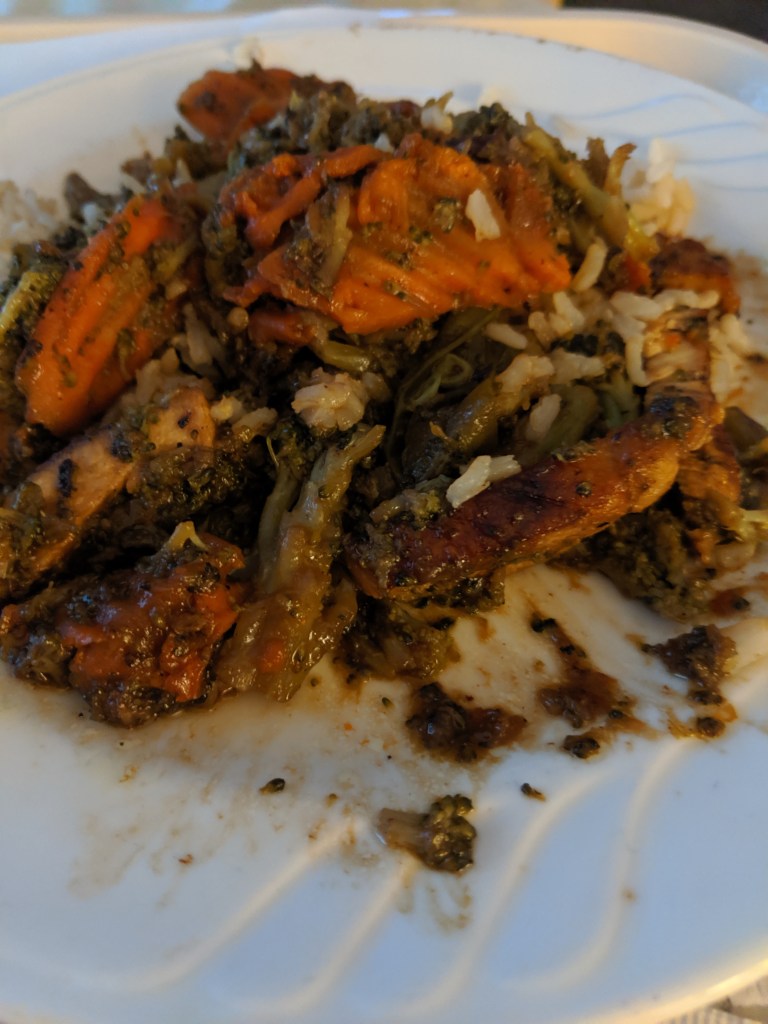
I am put in a beige room. Someone helps me change into pajamas and into bed. The loud tic, tic, tic of the clock irritates me. “Please take it away,” I beg. There are papers to sign, meds to take. Thuy, the nurse, tells me to press the red button if I need anything and asks if I’d like dinner. I order veggie stir fry with brown rice. This is what I am served.
Unable to eat it, I turn on the Emmy’s and eat the fresh fruit salad Alex brought me. I start to cry. I wanted Maisie Williams to win the Emmy for her role as Arya Stark. I don’t want to be here, so far from home. I don’t like feeling vulnerable, not in control of my body, my life. The tart pieces of pineapple and sweet pop of blueberries are seasoned with salt from my tears.
All night long I watch the waning moon glide through the sky until it slips below the horizon.
Gloria Halleluiah Gloria
It’s seven o’clock in the morning, and she is smiling at me. She says her name is Gloria and she is my CNA. I wonder if I am dreaming because she looks like Trini. “How are you feeling today?” I can’t move my legs. I ache all over. My body isn’t functioning as it should. “Would you like a shower? You’ll feel better.”
Gloria moves my legs over the edge of the bed so I can stand and helps me into the wheelchair. In the bathroom I am overcome with pain. Gloria massages my back until it passes. She helps me into the shower and sprays my body with warm water. While I wash my hair, she washes my back, and legs. Her touch is gentle, her voice soothing. She rinses the soap off, wrings the excess water out of my hair. I wrap a towel around it. Gloria dries my body, and then wraps me in a dry towel. The warm water and her soothing massages make it easier to stand, and then sit in the wheel chair.
She pushes me up to the sink, in front of the mirror. I use toner all over my face, then eye cream and moisturizer, foundation, blush, mascara, and lipstick. I look in the mirror and see myself emerging from a fog.
Gloria helps me dress. She says, “Chad is your nurse. He’s a good one.”
“That’s Chadd with two d’s.” He has a cup of water and another filled with medications in his hands. His eyes sparkle. I wonder if he got the extra d that Brennan didn’t want. He doesn’t leave until I’ve taken each pill, explaining what each is and why I’m taking it. “If you need anything, press the red button. I’ll check in on you to see how you’re doing from time to time.” He keeps his promise
There’s a knock at the door. A tall, young man comes in. “I’m Matthew, your physical therapist. I’m here to do an evaluation.” Matthew is warm and soft spoken. We talk about the program I will follow over the next few weeks. “Let’s go for a walk,” he says. He doesn’t move to help me out of bed. He watches as I struggle to move my legs, and makes suggestions on which muscles to utilize to swing my legs over the side of the bed. He tells me how to place my feet on the floor in order to stand. Once I’m standing, I’m fine. I push the walker up the hall and back to my room. Matthew says I’m doing great.
The anesthesia and other drugs they pumped into me for surgery wear off, but there is still need of drugs for pain management that are given at specific intervals. Between those times, there is ice to alleviate the pain and swelling. Annie, the swing shift CNA, puts on the Kryo-cuffs filled with ice water that wrap around the knee. They are so cold that I’m chilled to the bones. When she removes the cuffs I ask for more blankets and fall into a restless sleep.
Wonder Drug
I wake in a sweat, my feet on fire, aching all over. I press the red button and Janet, the night CNA, comes in. I ask her to please remove my socks. She lifts the blankets, “You have no socks on,” she says. She massages my burning feet with her cool hands. From lying flat on my back for days, my hips hurt. She rolls me to one side and places a pillow under that hip and does the same on the other side. An hour passes. Restless and unable to sleep, I press the red button again. “Janet, I’m sorry to bother you, but I’m still hot and I ache all over.” It is two hours before I can have more pain meds. She smiles, “I have what you need.”
Janet returns with a scoop of chocolate ice cream. She raises the head of the bed and puts the tray in front of me. I take the first bite. Mmmmm. I savor the taste of creamy chocolate melting in my mouth. I take small bites, wanting it to last. I feel my body cool down. When it is done, I move the tray aside and fall asleep for the rest of the night.
“Let food be thy medicine…” Hippocrates
The head nurse visits. It is her administrative duty to visit each new patient and make an evaluation. She asks how I’m feeling and if there is anything I need.
I show Ms. Head Nurse the picture of the veggie stir fry I was served the night I arrived, explaining that I feel nutrition from properly prepared food is essential to healing. “If you don’t like what we offer, you can have food delivered.” Her words and tone are dismissive and insulting. Our conversation comes to an unpleasant end and she leaves.
For dinner I eat the Honeycrisp apple my grandson brought me. I enjoy every juicy bite.
Morgan, the Dietary Manager, visits. Thuy told her that I wasn’t happy with the food. I showed her the photo of the stir fry I was served. She asks, “What’s that?” Morgan says that I’m not the only one who is unhappy with the food and asks what she can do to improve it. I say the same thing I said to Head Nurse, that nutrition is essential to healing, and over cooked food loses its nutrition. She promises me that she will work with the cooks to improve the fare. Even though she visits me a few more times, the quality of the food does not improve.
For the remainder of my stay I eat salad and lentil soup. The lentil soup is Gloria’s suggestion; it is edible, even if at times it’s watery and unseasoned. To vary the basic green salad I go to the dining room for the salad bar at lunch. Sometimes there are thin slices of red cabbage, or diced celery, or shredded carrots to add color and crunch. The few times I try a daily special I’m disappointed. The oven baked chicken is so over cooked it’s the consistency of jerky, and the turkey pot pie contains pieces of uncooked turkey.
Food Glorious Food
My friend Shauna visits. She stopped at my house to pick up the mail and some extra clothing. She brings books and a brightly colored paper sunburst that cheers the bleak beige room I’m confined to, and lunch from Laurelhurst Market.
I open the container of tomato, vegetable, and chickpea soup. The aroma rouses my senses. The chickpeas are creamy when I chew them. I can taste the flavor of each piece of carrot, broccoli, and cauliflower. There’s a hint of cayenne in the broth, just enough to pique the taste buds, but not overwhelm them.
There is also half a sandwich. The bread is from Grand Central Bakery, smeared with mayonnaise, filled with arugula, fresh roasted turkey and pickled onions. The bread is firm and chewy, the pickled onion a sweet counterpoint to the bitter arugula. And there is a surprise, the crunch of a slice of salty bacon. I don’t normally eat bacon, but at this moment I accept its luscious addition. I chew slowly, taking delight in every flavor and texture in that bite.
Sated, I save the remainder of the sandwich and salad for dinner. The salad is mixed greens with thinly sliced radishes and pickled onion. The dressing is olive oil and fresh lemon juice. For the first time in a week I feel nourished.
My neighbor, David, visits with bagels from Henry Higgins, and my daughter in law, Eva, brings food from a Mediterranean food cart. My cousin Teresa sends cookies from an Italian Pasticceria in Brooklyn. A pignoli cookie in the morning makes the coffee palatable. Shauna visits every week and brings Thai food, or walks with me to Ozzie’s Greek Deli in the hospital across the street.
Motion is Lotion
I have physical therapy five days a week. I work with Mandy, or Matthew or Rachel on her days off. They are all supportive and helpful, but firm in their expectations of how to progress. I pedal on a recumbent bike to warm up. There are exercises for balance, and eventually, I practice walking up and down stairs; up with the strong leg, down with the leg that’s not as strong. Once a week, Mandy massages the areas around the knees and helps me bend them as far as they will go. I think of the song, Hurts So Good, but sometimes it hurts so much. She gives me bed and chair exercises to do on my own. The exercises seem simple, but each one is challenging, designed to prevent scar tissue, and aid flexion and extension.
Walking is encouraged. I love to walk. It is pain free. Until I’m cleared to walk on my own, I need to wait until a CNA is available to accompany me.
Kelly, the occupational therapist, teaches me how to be safe on my own around the house, and what to do if I fall. She shows me adaptive equipment to use, everything from a long handled shoe horn, to a shower chair.
Depth of Field
As I settle in, learn how to manage pain, and become mobile, life around me comes into focus. There are two couples in my wing who touch my heart.
A woman comes every day to visit her husband. She helps him into the wheelchair, and pushes him into the lounge. She reads to him and feeds him his meals. While she is attentive to her husband, I see that she is heavy with sadness.
There is a woman in the room across from mine. Her husband comes first thing every morning and leaves after he puts her to bed at night. Because of the proximity of our rooms, I see them often. He is cheerful and friendly. She smiles and nods, but doesn’t speak. He says they’ve been married fifty-two years and she is still his sweetheart. One evening as I walk the hallway he leaves. He waves to me and turns his head to hide the tears in his eyes.
Caregivers
When I arrive at the skilled nursing facility I need help to do almost everything. My basic needs are tended to by the CNAs; the nurses oversee their activities and dispense medications. All the nurses are efficient and meet whatever needs I may have, but Chadd, Jordan, and Peter relate to me as a person. They check in from time to time to ask how I’m doing.
Chadd remembers to cut the large pills into smaller pieces to make them easier to swallow, that I prefer to drink water that is room temperature, and that I like peppermint tea. He’s cheerful and likes to joke. He’s serious when I have concerns and resolves any issues I have.
Jordan walks the hall with me when a CNA isn’t available. He tells me about his Romanian grandmother who told him the original Grimm’s fairy tales. He recounts how Cinderella’s stepmother convinces her daughters to cut off their toes so that the glass slipper will fit one of them. “You won’t need your toes if you marry the Prince,” he giggles, “We’ll have servants to do the work.”
Peter is calm and composed. He tells me about his year old son who sleeps with him and his wife. We talk about the joys and challenges of the family bed, about books and movies. Peter supports me when I decide to stop taking Oxycodone before going home. He suggests that I start taking smaller doses and stretch out the time between. I stop completely three days before I go home. It isn’t as difficult as I thought it would be, and Peter is there if I need help.
I’ve come to the conclusion that CNA stands for Caring Nurturing Angels. I love and appreciate each of them, not only for how they care for me, but how I observe them care for others.
A patient wheels herself to the end of the hallway. She shakes the handle of the exit door and bangs on it. Brooke hears the commotion and quickly walks to the door. She kneels next to the wheelchair, puts her arm around the woman and talks quietly with her. When the woman is calm, she wheels her back to her room.
When I need anything, the CNAs are kind and helpful. They make me feel as if I am the only person they are caring for, even though I know they are responsible for at least twelve people on my wing. Over the three weeks I spend at the facility, I get to know each of them a little, but it is with Gloria that I feel a bond.
Gloria takes me for walks outside. It’s nice to be out in the sunshine and fresh air, to see kids play soccer on the school field next door. I enjoy her cheerful presence. I ask her how long she’s been a CNA. She says that she moved to Portland from Southern California with her boyfriend when she graduated high school twenty years ago.
“I really needed a job, any job. One day I got on the MAX. I didn’t know where I was going, but I prayed, “Dear God, I need a job, please help me.’ A woman got on the train at the next stop and sat next to me. We started to talk and I told her I was looking for a job. She said she knew of a place that was hiring CNAs, and she would take me there. After a few stops we got off and she walked me to the nursing facility. They said I need a credential to be a CNA, but they hired me to work in the kitchen and sponsored me to take the CNA course. I took all the classes and I’ve been a CNA ever since. I love my job. When I go to bed at night I sleep well. I know that I did my best and that I did good.”
Nurses and CNAs are on their feet for their entire shift. The nurses stand in the hallway at a locked cabinet from which they dispense medications, in front of a computer to monitor each patient. The CNA’s work is physically demanding. They take care of a person’s most basic needs. They lift and move and wash and clean and soothe each patient. They are on the go for their entire shift. Their pay is low for the work they do.
HOME
My son, Luke, had a short leave from his military duties the weekend prior to my return home. Before coming to visit me, he and Eva went to my house to move the furniture, and remove trip hazards so that I could move around safely. They brought a recliner for me to sit with my legs elevated and stocked the refrigerator with easy to prepare food.
It was wonderful to be in my own space, to sleep in my own bed, and to have Alexa play my favorite music, but I was still dependent on other people. Having an independent nature, it was difficult for me to ask for help. When I did, I was overwhelmed with the kindness of people willing to help in big and small ways.
My neighbors were caring and helpful. Dianna picked me up at rehab and drove me home with stops at the pharmacy and library. She also took me to appointments with the physical therapist and grocery shopping.
David dropped by from time to time to make sure I was okay. He put together adaptive equipment that made things, such as taking a shower, safe and easy. He’d tell me stories about his life that he laughed as hard at as I did.
My dear friend, Shauna, has been my life line through all of this. She watered my plants and brought my mail when she visited me. For ten weeks she gave one of her days off from work to help me with whatever needed to be done.
There aren’t enough words to express how welcome cards, texts, phone calls, and Facebook posts are. The hours are long when alone and any communication is uplifting. Thanks to Alice Olsen for her daily links to her music and special works of art via messenger, to Pamela and Jamie for spending time with me at home, and Bunny for driving me to the hospital the day of surgery
The healing continues. I’ve made great progress working with Duncan Mitchell at Mitchell Physical Therapy. He encourages me, and makes me work hard. While I’m warming up on the recumbent bike we talk about the progress and limitations I experience in daily life and work on what will help increase flexibility.
Every day motion feels more fluid, and I am able to sit at my desk for longer periods of time. Walking is easiest to do, and as long as it isn’t raining, I enjoy walks around the neighborhood. Since I’ve been able to drive again I am self sufficient, and feeling stronger.
Dr. Matthew Sugalski did a wonderful job replacing my knees, and his staff at Eastside Orthopedics took good care of me pre and post surgery. X-rays were taken during my last visit to his office. He beamed at his handiwork when he showed me my new knees.
It was pouring rain when I arrived at JFK for my flight to Italy. There was a long line to check in at Alitalia, but the efficient staff moved us along. The line to go through security filled an arena sized room. I inched my way through the zigzag maze of dividers observing other travelers, taking in the institutional surroundings and watching birds that had somehow gotten into the building try to escape through the high windows that flooded the floor with light.
In the next to last row of the maze, I saw a beautiful young man in an Alitalia uniform standing outside the ropes with a German short hair pointer on a leash. I was impressed with the discipline of both man and dog to remain still but alert as people walked by. I wish I’d taken a photo of them.
Going through security was not the ordeal I thought it would be, and I made it to the boarding area with time to spare before boarding.
After all the passengers were boarded, the doors closed, and we pushed away from the gate, we sat on the tarmac for over an hour. There were no communications about the delay. Having flown in and out of JFK many times, I knew that the rain and heavy air traffic at five o’clock in the evening were the causes. Fifteen minutes before take off the captain announced, “We are fourth in line for departure.” Slowly, we moved forward until we were at the end of the runway. The engines revved and the plane thrust forward to lift us up and away from Long Island, over the Atlantic Ocean and southeast toward Rome.
I shared the row with a lovely couple named Ann and Todd who were on their way to Santorini to get married. They’d been together for twelve years and realized that there are important reasons to get married when you are older. We had a nice conversation during dinner, after which they both went to sleep. I was so excited, I couldn’t wind down. I wrote. I read. I watched a movie. Soon enough we were preparing to land.
Our delay taking off and a slight head wind trimmed
the time to catch connecting flights. I had twenty minutes to make my
connection. Ann said, “There will be a bus to take us to the terminal. When you
get there, run to your gate.”
Three buses waited on the tarmac, the terminal in
the distance. I got on one, and when not another person could squeeze in, the
bus drove to the gate. I looked for gate
area E and, following Ann’s instruction, ran.
I was glad that I’d heeded the advice I’d gotten
from friends who travel to pack lightly and have only one carry-on bag and a
backpack. I moved as quickly as I could with the surge of the crowd, and then
came upon what seemed to be Las Vegas and Disneyland rolled into one: the Duty
Free Mall. I ran past Gucci and Dolce and Gabbana, shoes and hand bags a blur;
Hermes, Prada, Burberry, and Armani with clothing I can only dream of wearing
making a vague impression as I kept the pace, pulling my carry on behind me.
The corridor narrowed and funneled into an area with boxes of chocolate and
other sweets.
Suddenly I realized I was going around in a circle. I saw faces I’d passed moments ago. We all looked for a way to the E gates; there were no signs, no less a way out of candy land. I entered the Bulgari store and asked the sales person, “Dov’e gate E?” He pointed to a narrow hallway with an arrow pointing to the letter E. I waved to my fellow travelers milling about and we dashed down a ramp to security. I showed my passport and ran to the gate of the departed flight.
Now I was in line at the Accommodations desk waiting
to be ticketed for a new flight to Lamezia Terme in Calabria. As I looked
around, Italian men stood out. Long or short haired, bearded or shaven, they
are well groomed. In uniform, business attire, or casual clothing, they dress with
flair and elegance. For Italians “bella figura” is important. It is the way you
present yourself to the world, not only the way one dresses and looks, but also
in the way one lives.
As I waited for my flight, I had a conversation with two couples from the Netherlands on their way to Sicily. I found Europeans to be friendly, interesting and interested, and everyone I spoke with was multi-lingual.
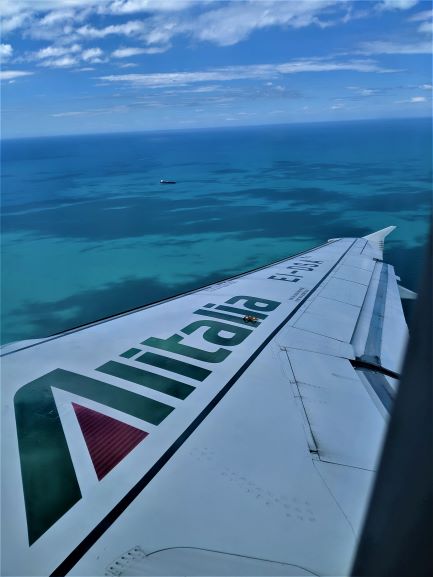
I took this photo as the flight headed out from Rome over the blue Tyrrhenian Sea, and then fell sound asleep.
The short nap, and the joy of finally arriving in
Calabria, revived me for the next leg of my trip. The shuttle bus to the train
station waited outside the terminal. According to Rome2Rio I’d arrive with fifteen
minutes to spare to catch the train to Crotone. It seems the time on that
schedule was not the same as the actual departure time. When I paid for the ticket, the agent said, “Go!
Now!” The train was on platform six and I saw no way to cross the tracks. A
nice woman showed me to the stairway and I began my next marathon of the day.
Down a long, steep staircase I dragged my carry-on bag. I ran the width of the
station, blessing the person who thought of putting wheels on suitcases, to # 6
and then lugged it up another long, steep staircase. I stepped onto the
platform to see the train pull out of the station…
I knew before I left home that my carrier didn’t have phone coverage in Italy, but I could use the internet. What I learned at this moment is that wifi is not available everywhere in Calabria. As if not enough sleep and two athletic feats were not enough, I was unable to use my phone. I had no way to communicate with anyone. I could feel tears trickling down my cheeks when a tall man appeared before me, white shirt and blue eyes shining in the bright Italian sun. He asked if I was okay. I told him my predicament and he assured me that everything would be okay.
He said his name was Michael, and together we looked at the sign on the platform with destinations and departures. A direct train to Crotone would leave in two hours, but a train that would depart soon stopped at Catanzaro Lido. I could change there and wait fifteen minutes for a train to Crotone. It was the train Michael was taking to Locri.
Michael asked if I’d validated my ticket. I thought
it was done when the ticket was purchased, but not in Italy. One must get a
time and date stamp on the ticket by inserting it in a machine in the station.
No validation on a ticket means a fine of 250 Euros. I looked across the six
platforms to the depot. My heart sank when I thought of dragging my suitcase
down and up the staircase and back again. Michael gallantly offered to do it
for me while I stood watch over our suitcases.
During the forty-five minute train ride, Michael texted my new arrival time to Daniele Tricoli at La Corte del Geco B&B, my destination. He said he was from Dublin, Ireland. We talked about our vacation plans and interests, and when we arrived at Catanzaro Lido, Michael carried my suitcase to the platform and gave me a hug good bye. I don’t know what I would have done without his help that day. I think of him as Michael the Archangel, come to help me in my moment of need.
Having only ten days to spend in Calabria, I took the
train between the cities I visited so that I could see as much of the
countryside as possible. I found other passengers to be helpful, friendly, and
wanting to engage in conversation.
Waiting in Crotone for the train to Reggio Calabria,
a young man named Andrea asked if he may carry my suitcase for me. During the
ride he told me school was out and he was going home for the summer. He plays
soccer and hopes to be on a professional team. If that doesn’t happen, he will
become an architect like his father. I hope his dream comes true.
A couple from Australia told me about their travels around the world, and three women from Argentina and I helped a woman from Georgia (the country) who could speak only her native language find her way. It is amazing how far a willingness to understand each other goes in communicating.
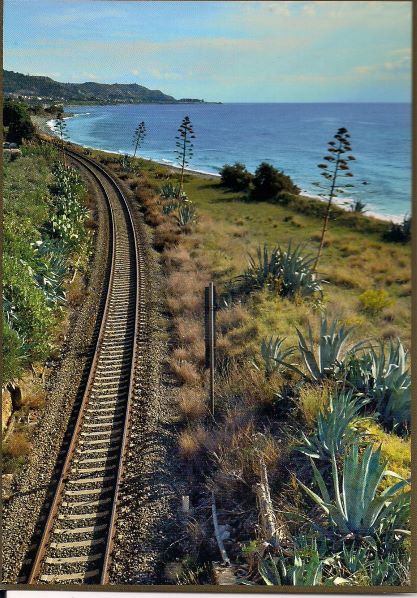
Postcard
Padre Salvatore Corrado drove me to Crucoli and Casabona, my grandparents’ birthplaces. He was my translator and guide, and I was able to enjoy the scenery without the worry of getting lost. Other than some of the more populated communities along the Ionian Sea, traffic was light.
The only time I found the traffic to be disconcerting was going through a roundabout when Daniele drove me to the train station. He said, “In Calabria the signs are only a suggestion.” Traffic was unusually heavy that day because many visitors were there for the Festa della Madonna di Capo Colonna that weekend.
I saw no stop lights. Traffic flowed well in the
roundabouts and on the streets. I wonder how much energy we could save in the
United States if there were roundabouts instead of traffic lights. I think a lot of the rage in traffic comes
when drivers stop often for two or three minutes at a time. I think they’d feel
less impatient if they were always in motion, even if they were moving slower.
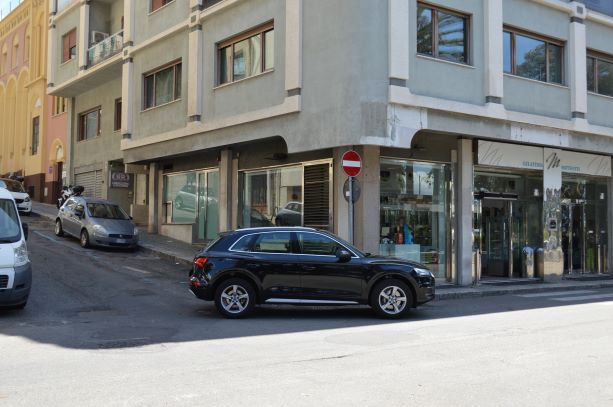
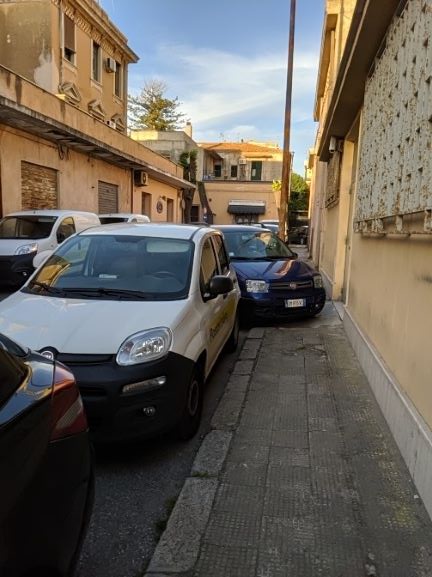
Parking in Calabria is interesting. I saw a lot of double parked cars and wondered how the person curbside got out. Perhaps there are rules for this that I am unaware of. There are no parking meters and it seems if you can’t find a parking place, make one.
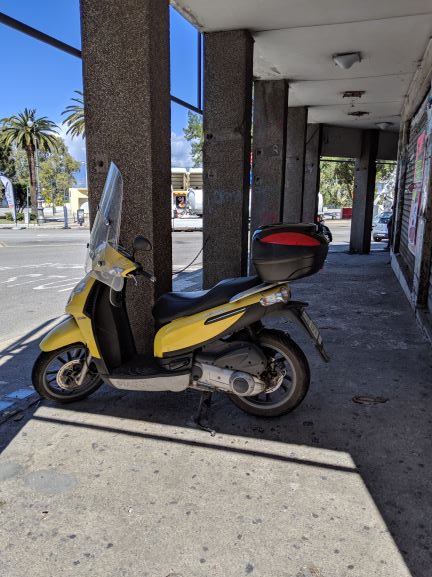
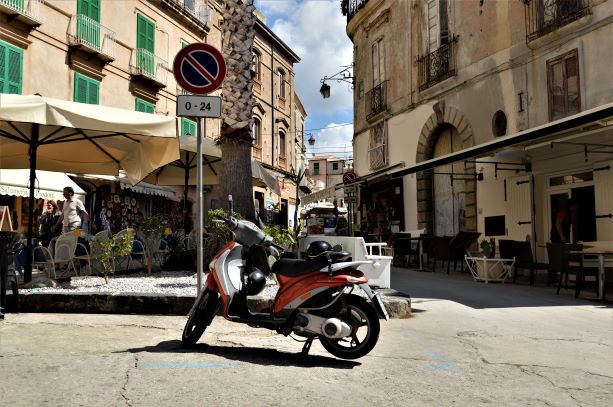
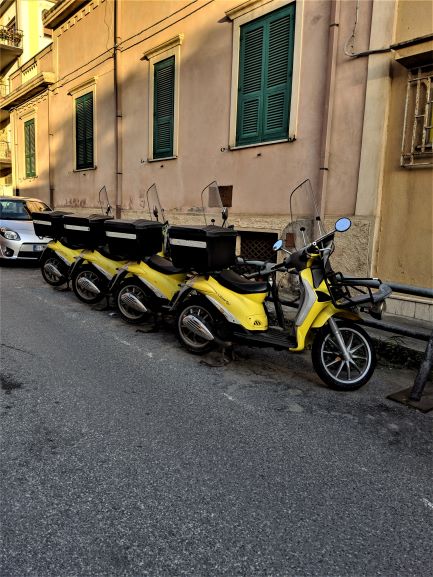
It wouldn’t be Italy without motorcycles. Even the
Postal service uses them.
RECOMMENDATIONS
When I was researching this trip to Calabria I found a lot of useful information on mybellavita.com. Cherrye Moore writes a newsletter about the food, festivals, and cities of Calabria. If you are interested in visiting Calabria and prefer a tour rather than traveling alone, she offers heritage group tours.
If Crotone is on your list of places to visit, I
highly recommend La Corte del Geco B&B, run by Daniele Tricoli. It is
centrally located near the historic center and is walking distance to the
seafront.
Because of its location at the center of the Mediterranean Sea, Calabria was settled and/or invaded by many cultures throughout history. The Greeks arrived between eight and seven hundred BC, and for five hundred years they inhabited Sicily and Calabria. Together, they were called Magna Grecia. It was the birthplace of great athletes, poets, lawmakers, and philosophers. The influence of ancient Greece is still seen today, and there are some communities in Calabria and Sicily that speak Greek.
Crotone was a renowned center of philosophy, science and medicine. Alcmeon, philosopher and medical theorist, and Pythagoras, mathematician and philosopher, both established schools there. Alcmeon elevated medicine to a science, and Pythagoras’ school offered free education to all, including women. Pythagoras is considered the father of vegetarianism.
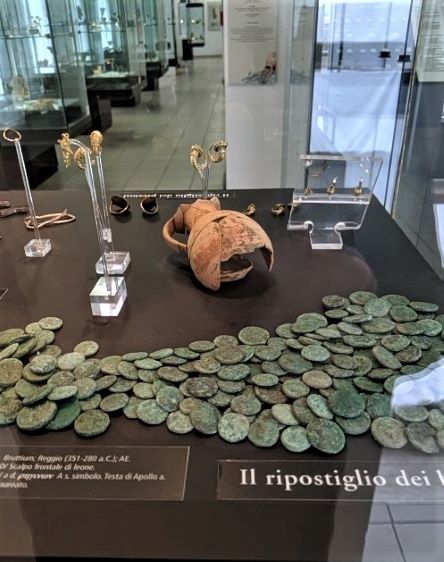
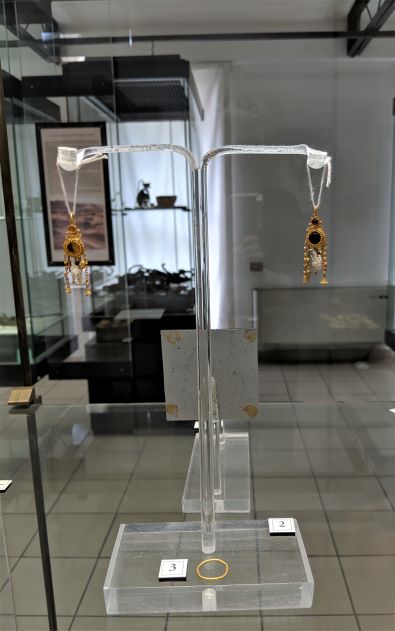
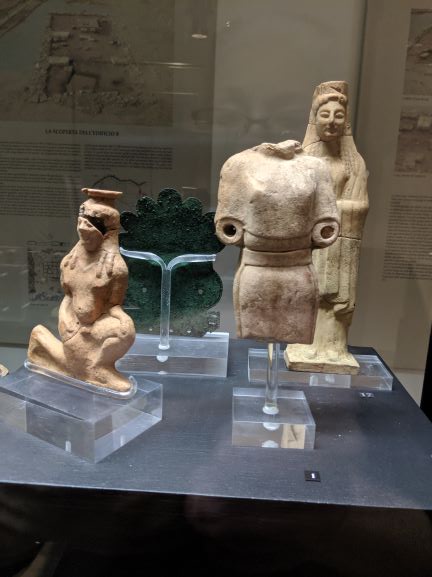
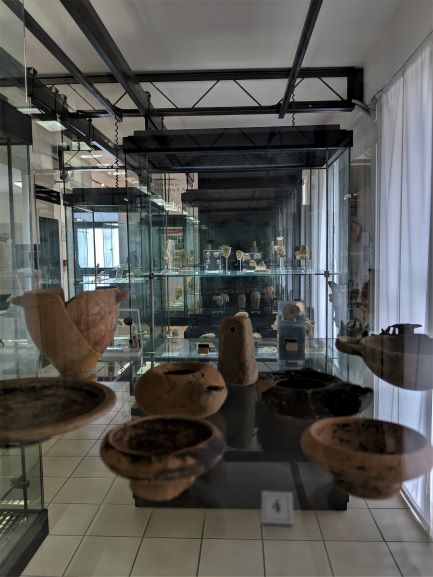
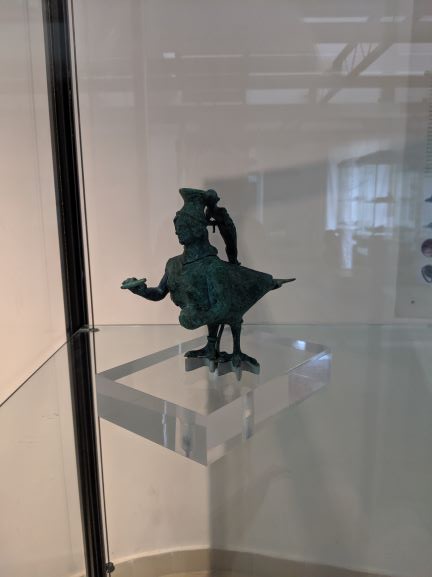
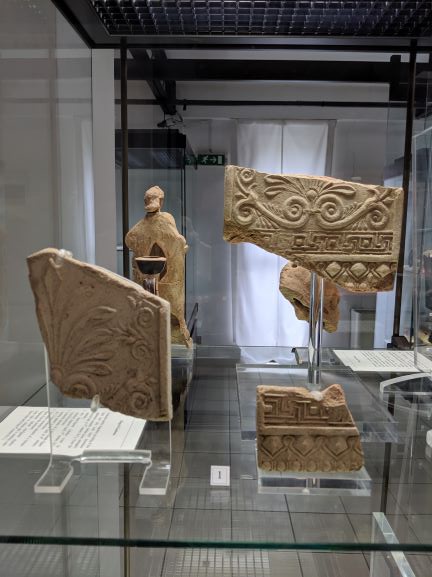
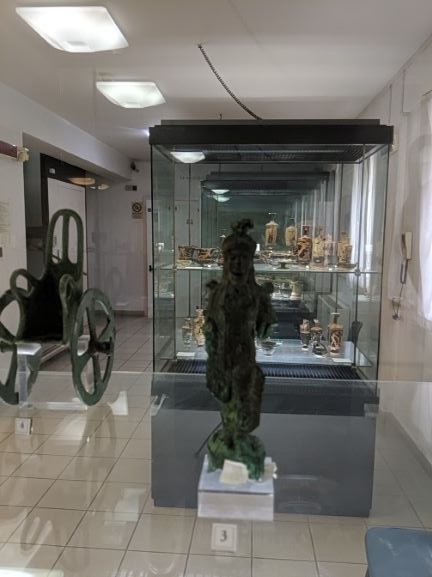
During my stay in Crotone I visited the Museo Archeologico. It houses artifacts from the Temple of Hera Lacinia located on the Capo Colonna promontory. The temple was abandoned in the fourth century when the Roman Empire declared Christianity the state religion. It was plundered throughout the centuries. The remains were destroyed by earthquake in 1638, and only one Doric style column survives. Excavation of the site began in 1910 and is ongoing.
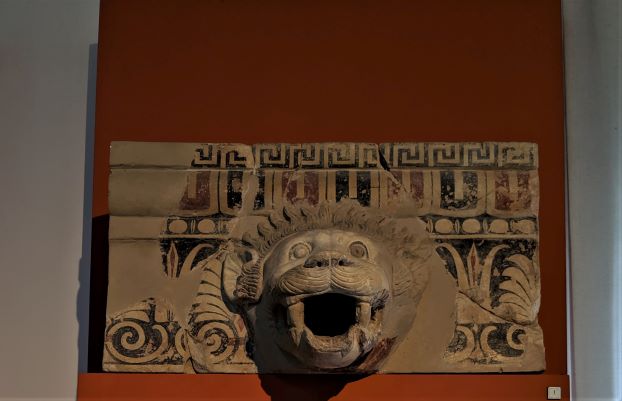
As I toured the museum I was moved by the artistry of
the objects displayed there. Pieces of sculpted or painted friezes that decorated
the cornices of the temple and outlying buildings are not only beautiful, they
are utilitarian. The lion’s head served as a rain spout.
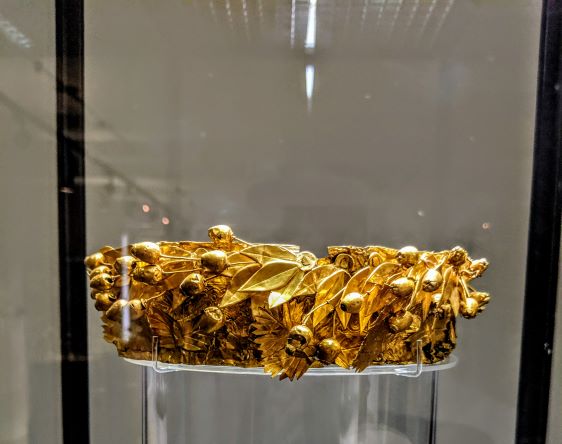
The goddess Hera was the protector of women and all aspects of female life, as well as animals and sea travel. This gold crown is among the votive gifts found in the temple.
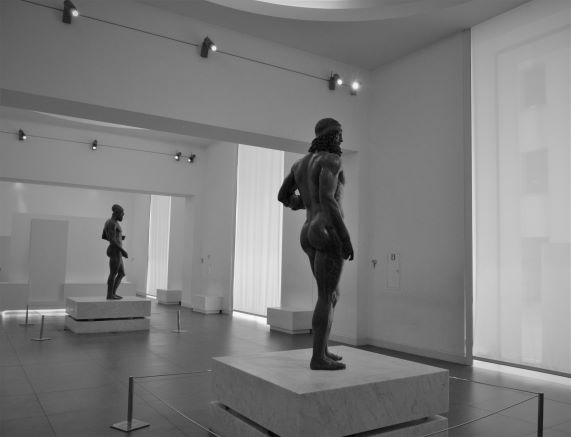
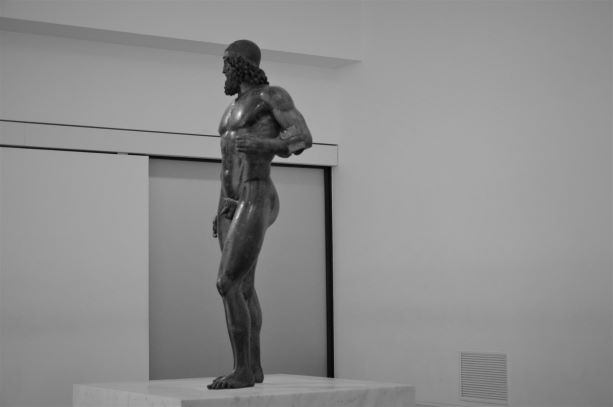
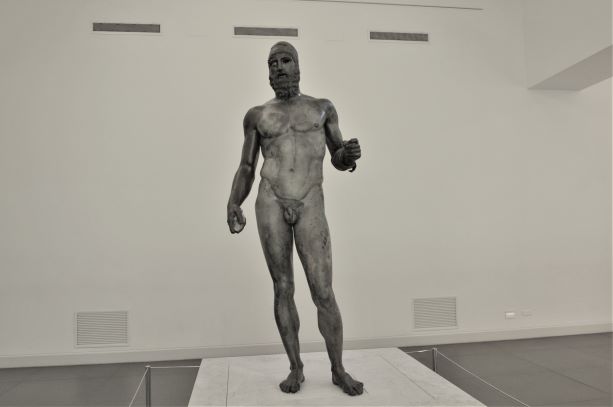
The Museo Nazionale della Magna Grecia in Reggio Calabria has discoveries from excavations of ancient Calabrian city states, and features the Riace bronzes. They were found in the Ionian Sea near the town of Riace in 1972 by a diver, about six hundred fifty feet from shore and twenty-five feet deep. Statue A is a young warrior and Statue B is a mature warrior. There is no accounting in ancient literature to identify the athletes or heroes. It is believed that they once carried shields and spears, and Warrior A may have worn a wreath and Warrior B a helmet, but those items have not been found. The sculptures were made in a transitional period from archaic to classical Greek style. As I read about them a statement regarding their “impossible anatomy” struck me. I don’t think it is impossible at all that athletes and warriors, and perhaps even the average citizen, had physiques like that. They had tools, but no machines to do the work for them. Everything took physical labor, and their diets consisted of unrefined foods, simply prepared.
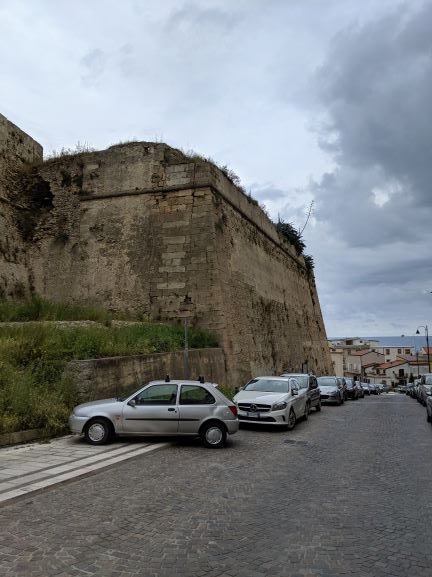
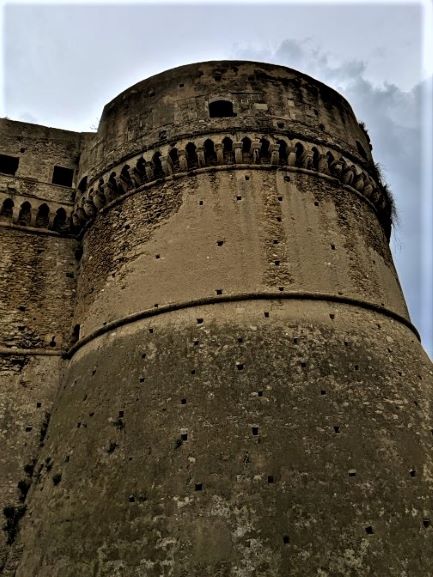
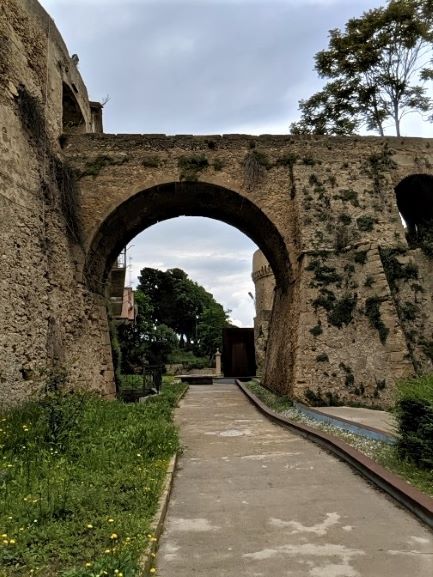
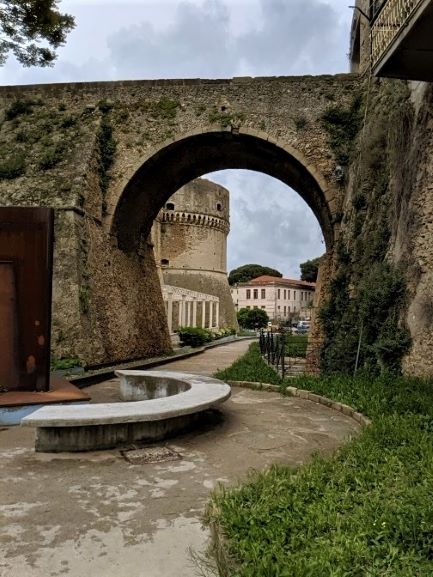
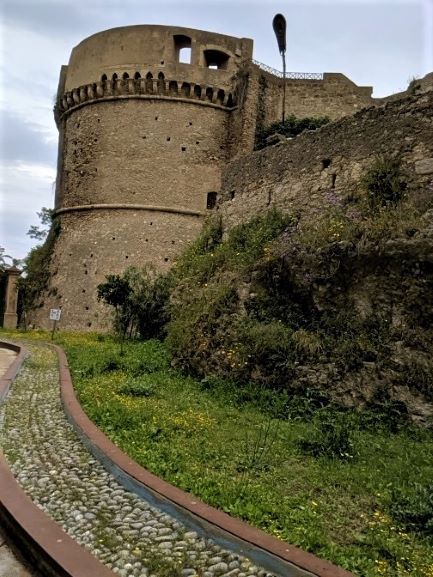
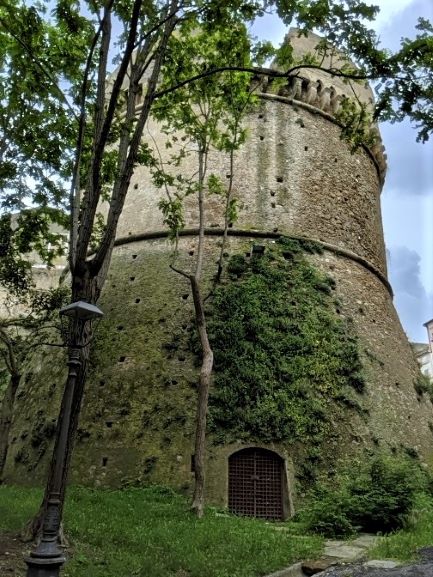
In the ninth century a fortress was built on an ancient Greek acropolis in Crotone as a defense from Saracen invasions and has gone through many modifications and expansions throughout the centuries. The Swabians built a castle over it in the twelfth century. It was modified in the fourteenth century by the Aragonese to handle new weaponry. In the fifteenth century it was re-built by Emperor Charles V and bears his name, Castello Carlo V. Designed by Italian architect, Gian Giacomo dell’Acay, it took over one hundred years to build.
Before the Greeks arrived, there were the indigenous people of Calabria. Traces of Homo erectus in coastal areas date back to 700,000 B.C. A figure of a bull on a cliff, “Bos Primigenius,” was carved in the Cave of Romito during the Stone Age, about 12,000 years ago. The earliest villages were settled about 3,500 B.C., and a tribe called Oenotri (vine cultivators) settled there around 1,500 B.C. They were called Italoi after their King, Italus. The Greeks arrived between the eighth and seventh century B.C. After the Greeks, came the Romans, and then the Saracens. Hannibal had a sojourn in Crotone before returning to Carthage. Alaric the Visogoth sacked Rome and met his death in Cosenza. The Normans, the Swabians, the Spanish, and the French all took turns ruling in Calabria. Each left their imprint from architecture, art, ideologies and scientific ideas that furthered mankind. Some brought plants with them—grapes, olives, wheat, citrus, pistachios, eggplant, and more– that are part of Calabria’s fabulous gastronomy. Some left only their DNA.
A few years ago my sister, Sandy, did a DNA test. I
will assume that as sisters our DNA’s are similar. It shows that we are 78%
Italo/Greek, the other 22% reflects a mixture of all the civilizations that settled
or invaded Calabria. People have migrated around the world since there were
human beings, intermingling with each other. In these times of Us versus Them,
I think it is good to remember that all of us are related in some degree to a
great many people of other cultures and ethnicities.
As much as I wanted to see Calabria, the heart of my
trip was to visit the birthplaces of my grandparents. I wished to see where
they lived, and perhaps get a glimpse of what their lives had been like.
Daniele Tricoli, my host at La Corte del Geco, made arrangements for Father
Salvatore Corrado to drive me and act as translator. Our first trip was to
Crucoli, the birthplace my mother’s father, Armando Ruggiero
Crucoli is about a forty minute drive from Crotone
through a countryside dotted with vineyards, olive groves, and small flocks of
sheep or cows. There is a stretch along the Ionian Sea, and then a gentle rise
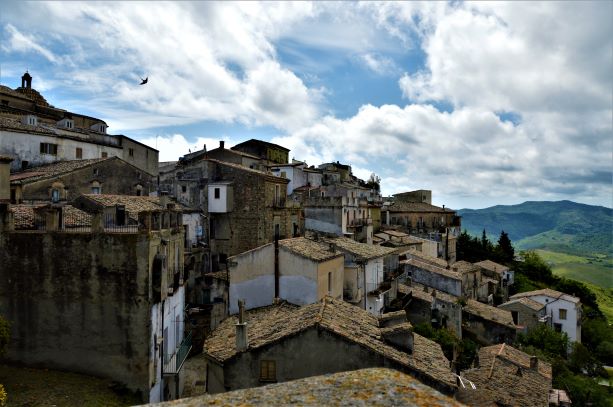
inland that gradually becomes steeper as it approaches the hilltop village.
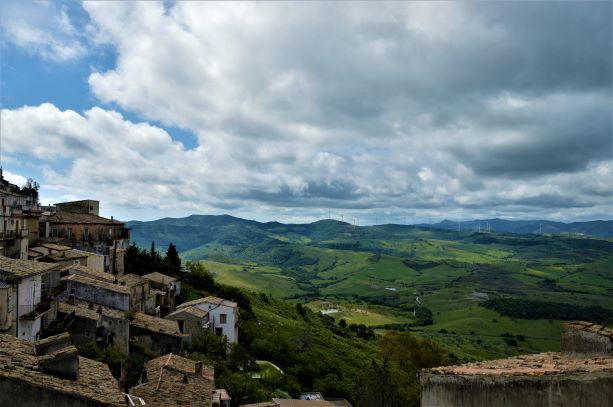
When I got out of the car the view took my breath away. Why would anyone want
to leave such beauty? Of course it’s a rhetorical question; poverty was the
motivation to leave. You can’t eat beauty.
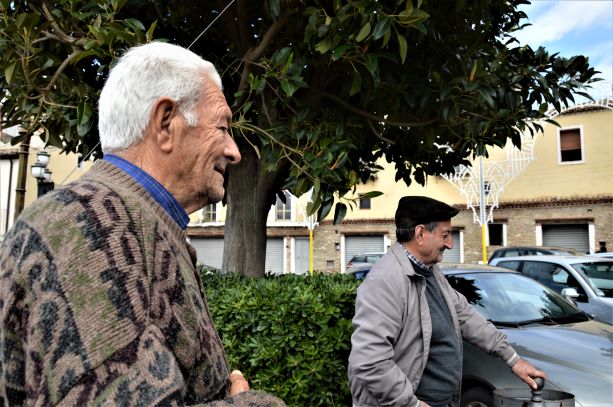
Two gentlemen stood in the village square smoking
cigarettes. Father Salvatore explained to them that my grandfather had been
born there. In their conversation they said that Crucoli was once a village of
forty thousand people; now only four hundred families live there. Of my family,
there were no Ruggieros left, and only one family of Pallettas. The only business
was a bar. There was no city hall and the church was not open, so there was no
opportunity to check records to see where my grandfather had lived. He left
there over one hundred years ago and these gentlemen weren’t able to answer
questions I had about those times.
Father Salvatore and I walked around the village.
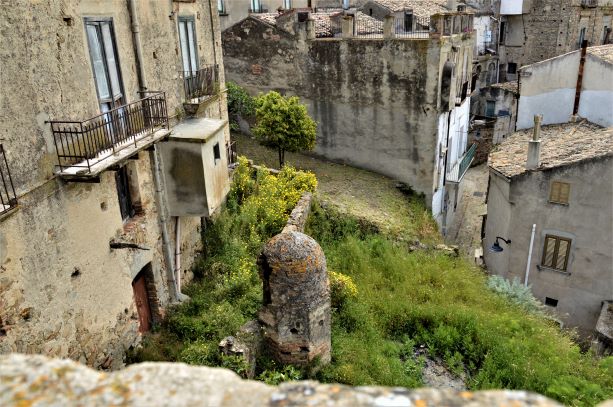
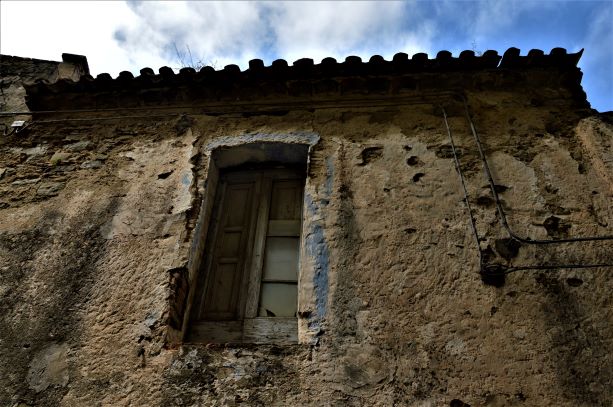
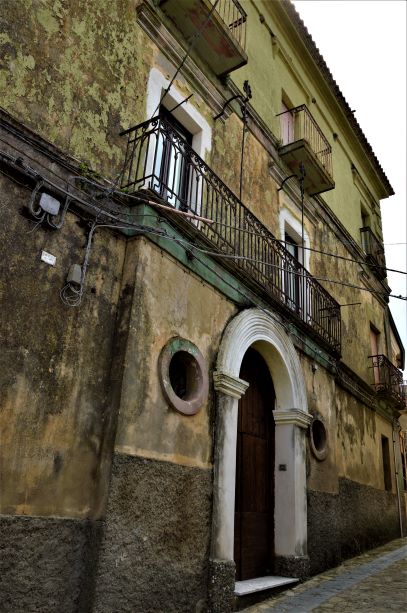
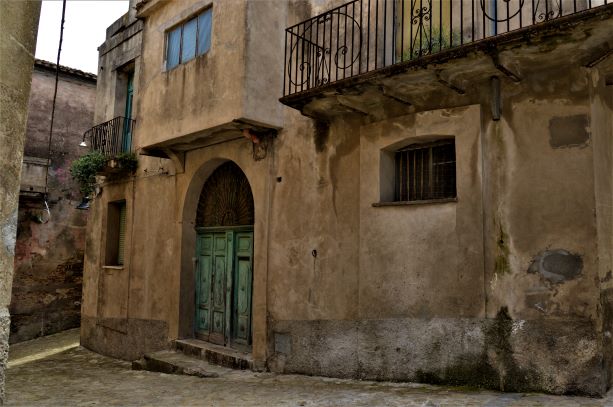
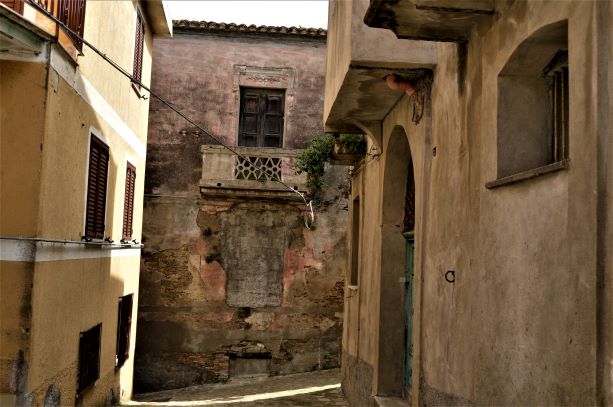
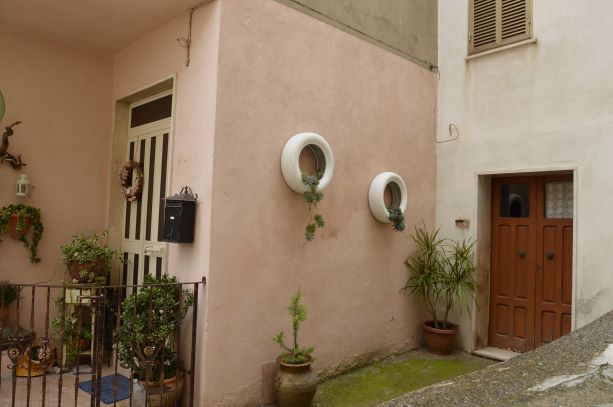
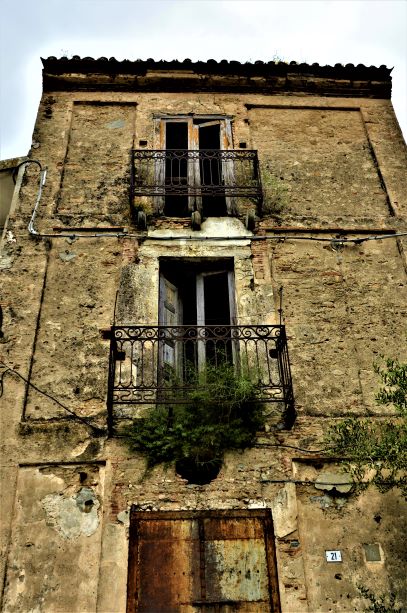
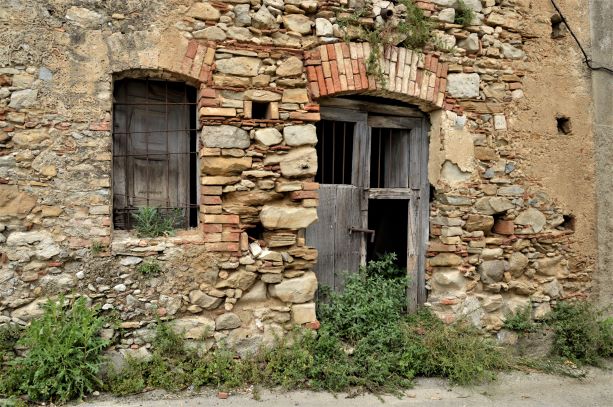
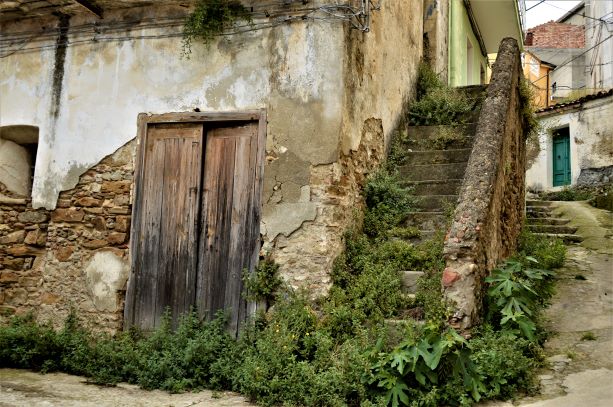
Many of the homes were in disrepair, but I was struck by the aesthetics of the
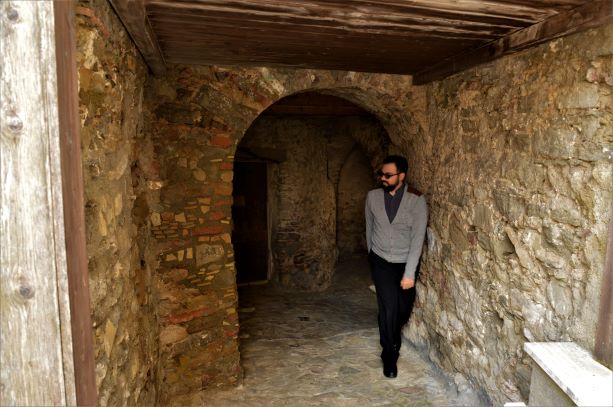
architecture and the stone and iron work. The narrow cobble stone streets led
to even narrower alleys. Below the church steep steps wound underground to the other
side of the village. It made a circle which led us back to the village square.
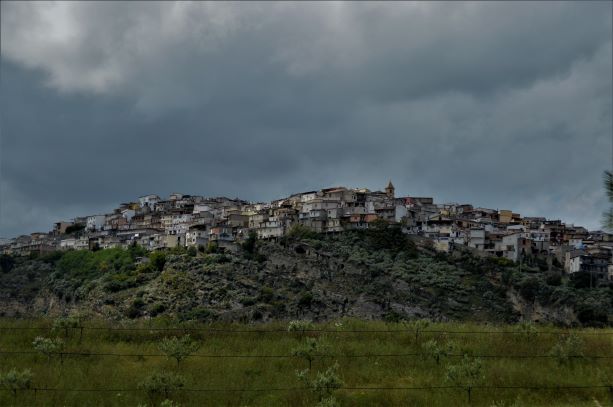
Casabona is the birthplace of my father’s parents, Alessandro Tallarico and Francesca Sirianni, for whom I was named.
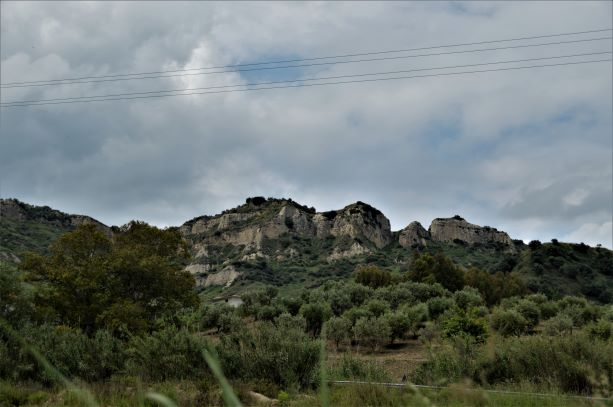
As Father Salvatore drove through olive groves and vineyards, Casabona seemed to float on a ridge of tufa thrusting up above the valley. We were there during riposo, the hours businesses are closed, and the town was quiet. I saw shops of every sort, from salumaria, to clothing stores. We parked in the town square and walked around the old section. Some homes were remodeled and looked modern, many are abandoned and in disrepair. As we walked the narrow streets, sounds of life emanated from homes; the whine of a vacuum cleaner from one, voices on a TV program from another
My grandmother didn’t receive a formal education,
and was proud that she’d taught herself how to read and write. When she was in
her seventies, she wrote her autobiography. Her story remained tucked in my
memory. Throughout the years when I thought of my grandmother, little anecdotes
floated up into my awareness, and I wondered about missing details. It lead to
a yearning several years ago to see where she lived and perhaps find the answers
to those questions.
Grandma Frannie had a happy childhood in Casabona,
fully involved in community and church matters, from pruning the vineyards, to
carrying the lantern when the priest brought communion to the sick and dying. She
wrote that she was a tomboy. The thought of my grandmother as a tomboy
surprised me and captured my imagination. One day she took a rope, tied it to
an olive branch and swung on it, out over the tufa cliffs. When her mother saw
her, she took her home, but it was her older sister that got into trouble for
not watching her.
I’d hoped to find the grove and the tree from which she’d swung with such abandon, but Casabona is a sprawling village and our time there was short. We walked only a small area along the lip of the cliff and all of the olive groves were below us, but I was happy to walk through my grandmother’s birthplace, and perhaps on the same paths that she had once trod.
Any questions I had went unanswered. There is only the nagging regret I’ve had for so long, that I hadn’t asked the people I loved, who were such a strong influence in my life, to tell me their stories, and not just the outlines, but to fill in the details with vivid color.
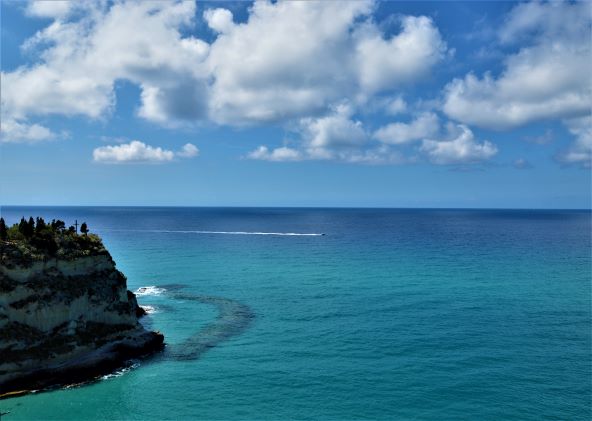
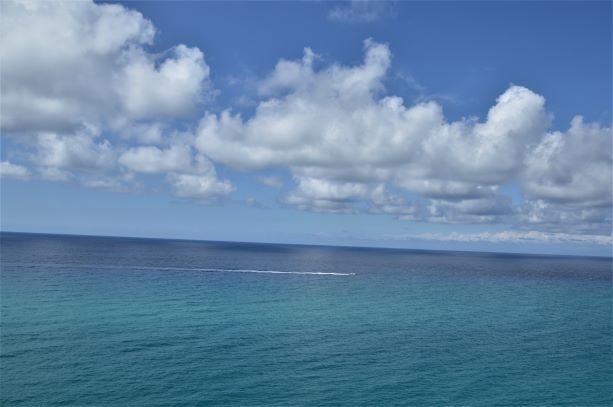
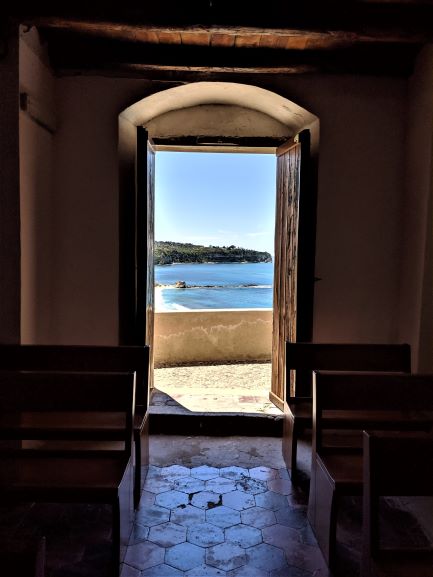
What is Tropea like? It is the color of the sea,
from turquoise at the shore to deep violet as it meets the horizon. It is the
cheep, chirp, and tweet of birdsong, of church bells that toll for vespers, and
Gregorian chants emanating from Il Santuario di Santa Maria dell’Isola. It is
the heady fragrance of jasmine on the sea breeze. It is the sweetness of
blackberry gelato beside tart bergamotto on an ice cream cone, the earthiness
of slices of cipolla rossa and juicy tomatoes in a crisp salad. It is the
warmth of the people of Tropea whose smiles and helpfulness touched me.
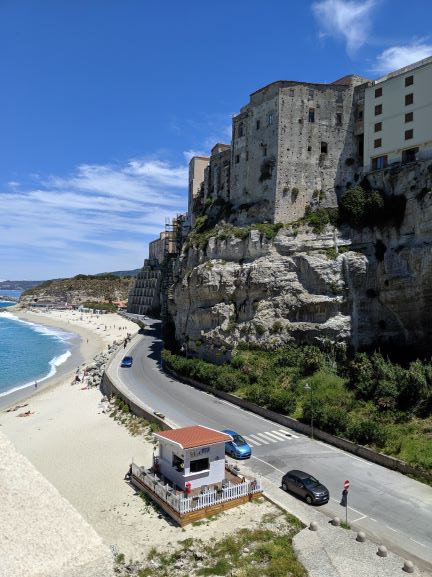
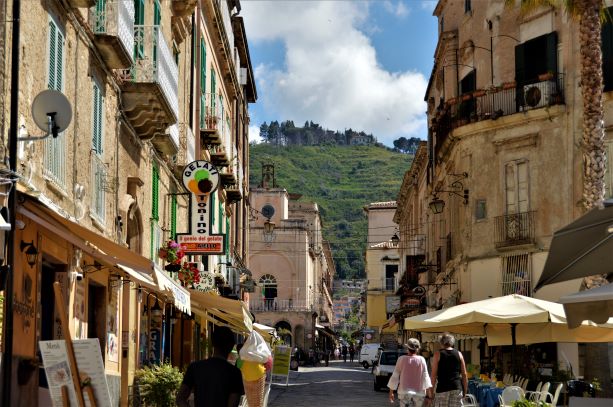
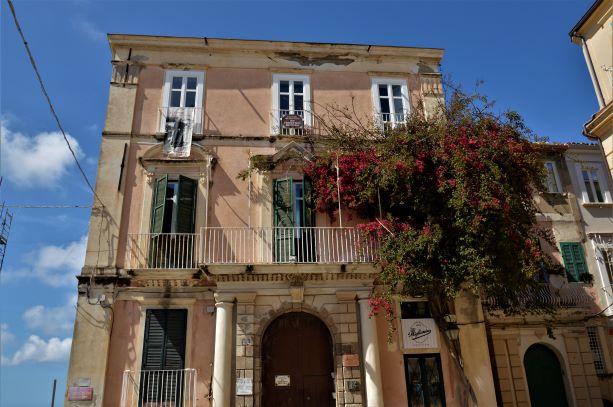
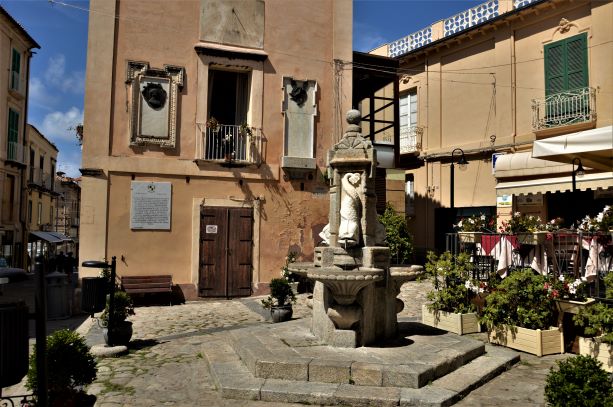
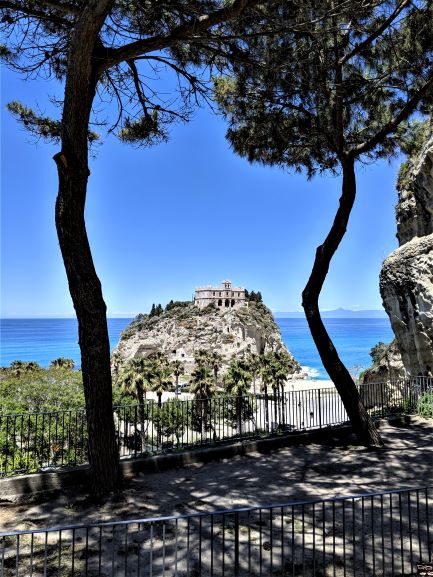
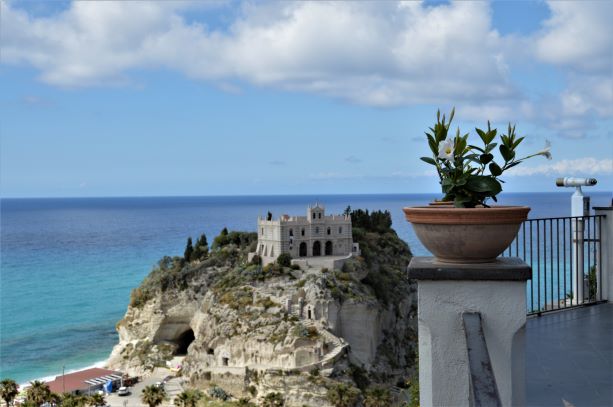
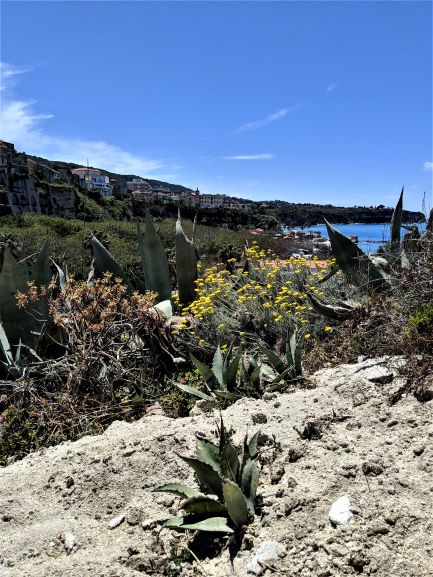
Perched on a hilltop, Tropea overlooks La Costa degli Dei, the Coast of Gods, on the Tyrrhenian Sea. Below is a beautiful white sand beach that is favored by sunbathers. Cobble stone streets wind around piazzas with outdoor seating for restaurants or bars to sit and have a glass of wine or a gelato. There are jasmine plants everywhere, but I smelled them before I saw them. The old town is geared to tourists with gift shops everywhere. Most of them carried local or Calabrian made or grown products: ceramics, amaro, anisette, wine, olive oil, herbs, pasta.
When the train stops in Tropea one can hear the
sound of suitcase wheels rolling along the cobbled streets as the next group of
visitors make the walk from the train station to their B&B’s. When I
arrived there I became lost walking through a maze of alleys that led onto
secret piazzas. It was two o’clock, the time of day people shut their
businesses for a three hour rest with their families. I asked a gentleman who
was closing his jewelry shop for directions to B&B Georgia. Tomasso said,
“I will take you.” He insisted on pulling the suitcase for me and recommended
good places to eat. He stopped at one of the numerous nespole (loquat) trees
and picked a stem of the fruits. He rubbed one between his palms to show me how
the clean and eat it, and gave the rest to me to enjoy. The B&B was around
the next corner. I appreciated Tommaso going out of his way to help me and
wanted to go back to his store to thank him again. As I walked around the town
the next two days, I never found the street where his shop was.
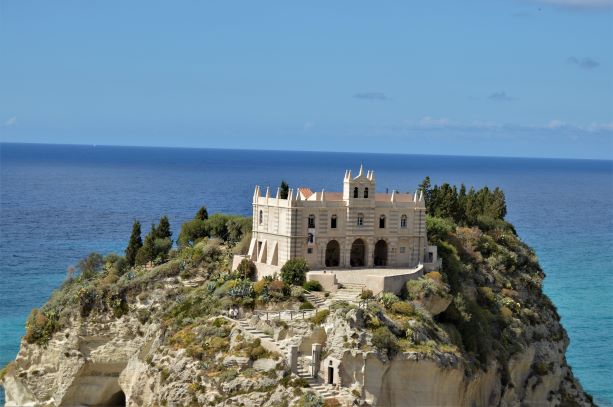
I was determined to visit Il Santuario di Santa
Maria dell’Isola. It is a long walk down a series of zigzag steps from the top
of the town to the beach. From there banks of ramps and steps ascend to the top
of the great rock upon which the church it built. The sound of female voices
singing Gregorian chants drew me up into the church. I was surprised by how small
the interior of the sanctuary is, and enjoyed a half hour of peace in that
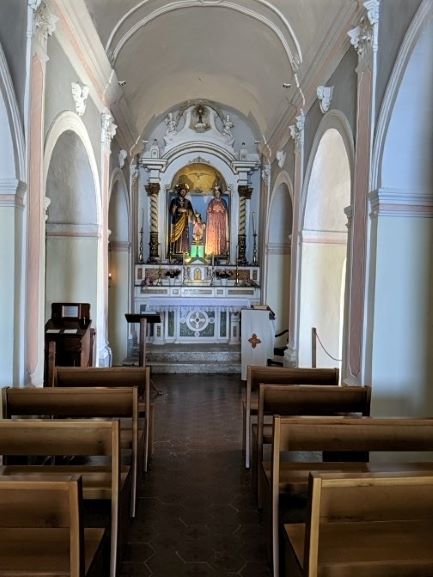
sacred place.
I was hot and tired after the walk down and decided
to rest and have something to eat before attempting the climb up to the town. I
sought a shady table at the little beachside restaurant at the foot of the
sanctuary. My brother Nick went to school in Naples for two years. I remembered
him telling me that the tuna in Italy is the best he’s ever eaten, and so I
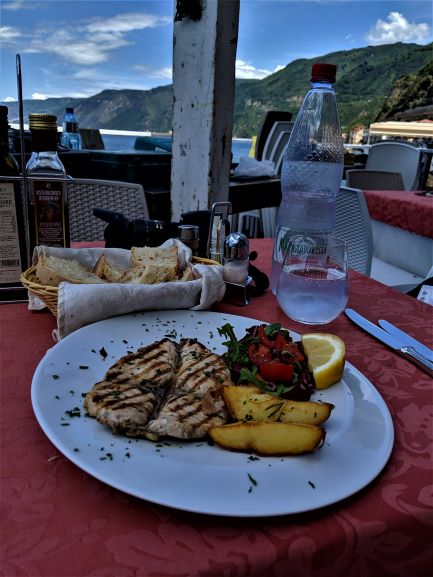
ordered a salad with tuna. It came on a bed of crisp lettuce with thick slices
of the famous red onion grown in Tropea, cipolla rossa, tomatoes, and
mozzarella. It cost five euros and was one of the best meals I had on my trip.
The best pizza I ate was also in Tropea. The crust was airy and crisp, and the
sauce was flavorful.
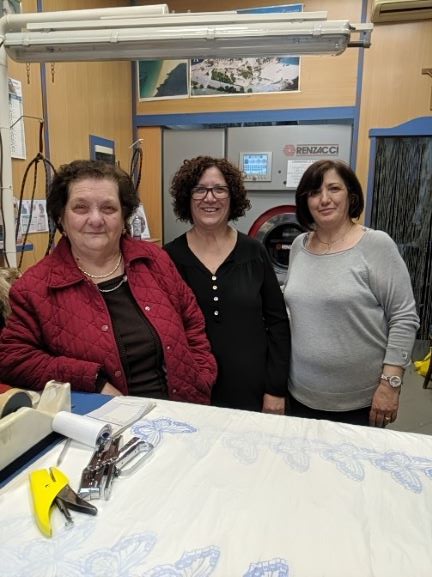
I was so proud to have limited myself to one carry on suitcase and a backpack, but after ten days of rotating the same three pair of pants and five tops I wanted fresh clothes. I asked Michele, the owner of B&B Giorgia, where I could find a Laundromat. It was nearby and run by three delightful women. They washed, dried, ironed, and returned my clothes to me neatly folded and wrapped in paper. Anna is the matriarch of the family. She was all smiles and love. Vera and Michela do the washing and ironing. They work hard and are happy people. I was sorry that I didn’t take photos of the other people who were so kind to me; Tomasso who helped me find the B&B, and Maria who served breakfast at the B&B and cleaned the rooms. She stopped me as I walked through a piazza and gave me a big hug.
Tropea was the last stop on my stay in Calabria. Two days were not enough time to spend there, nor were the twelve days I travelled through Calabria. I guess I’ll just have to go back.
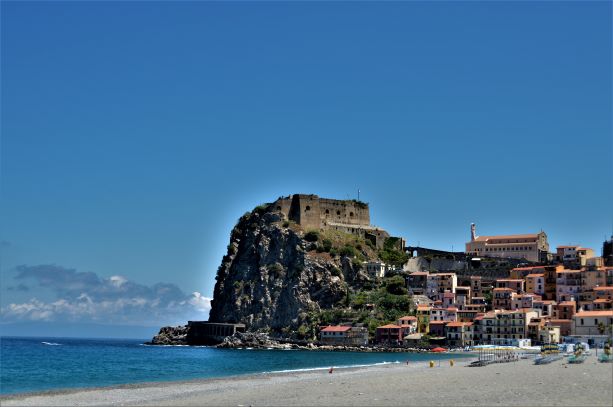
When I was doing research for my trip to Calabria, photos of Scilla and Chianalea kept popping up and I was captivated by their beauty. I mentioned this to my fellow passenger, Michael, during the train ride to Crotone. He encouraged me to visit. I had each day of my trip planned, but on my last day in Reggio Calabria I took the train to Scilla on the spur of the moment. It was a good decision.
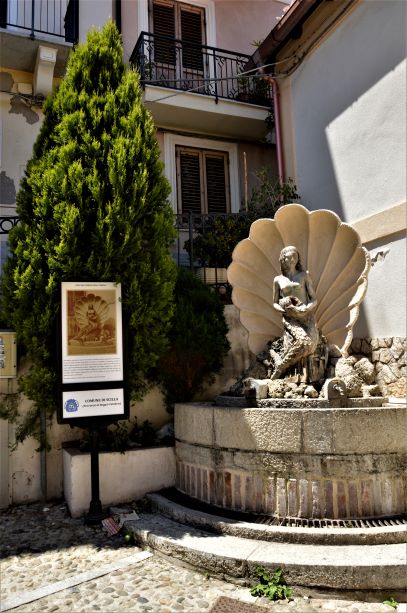
In Greek mythology a fisherman named Glaucos became enamored with Scylla, a beautiful sea nymph. He asked the witch, Circe, for a potion to make Scylla love him. Circe fell in love with Glaucos, but he cared only for Scylla, and so she made a potion that changed Scylla into a monster with six heads and twelve feet, her waist surrounded with the heads of baying dogs. Angry and tormented, Scylla made her lair on a rock across from the whirlpool of Charybdis. In ancient times it was a treacherous passage through the Strait of Messina for oarsmen rowing open triremes. If the monster Scylla didn’t eat the crew, they’d drown in the whirling eddies of Charybdis. The sayings “between a rock and a hard place” and “between the devil and the deep blue sea” derive from this challenging adventure.
Nowadays Scilla
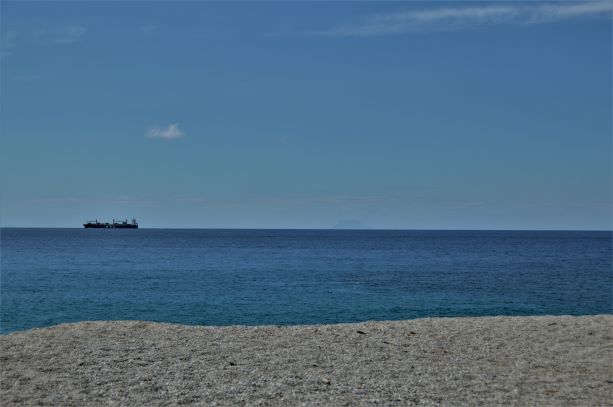
is a favorite place for sun worshippers. It has a white sand beach with a stony
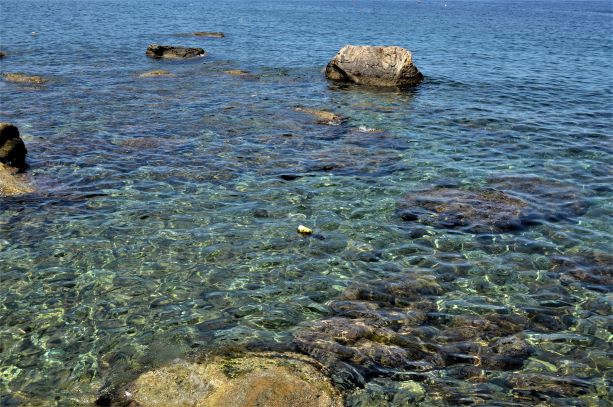
shore. I walked the length of the beach. Life settles for me when I walk on a beach.
Thoughts become still and I’m calmed by the lapping of the sea on the shore,
the warmth of the sun on my skin, the cooling sea breeze, and the beauty
created by nature and man that fills my eyes.
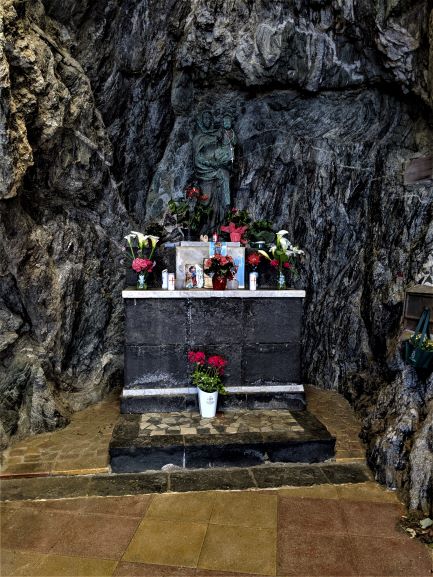
I walked
through the tunnel that runs across the great stone formation that once was
Scylla’s lair. Now there is a Grotto for the Blessed Mother Mary carved in the
stone wall. I came out in Chianalea.
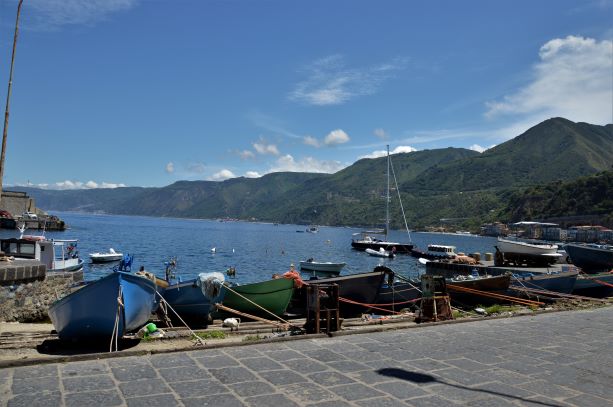
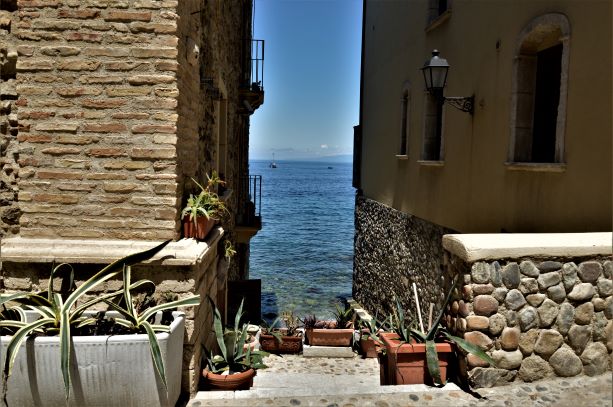
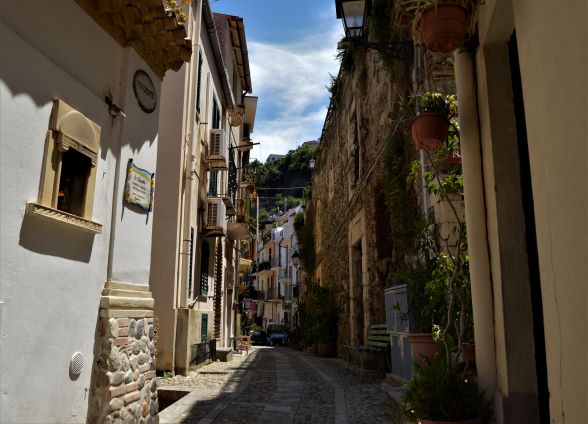
Chianalea is a fishing community. The bay is filled with traditional fishing boats, but I saw several large trawlers coming in from sea. The local economy is from fishing and tourism. Chianalea is a picturesque borgo with little restaurants perched on the Tyrrhenian Sea. After a tasty lunch on the deck of Il Pirata I took the long walk back through Cheanalea and along Scilla’s lungomare to the train station. I enjoyed the ride back to Reggio Calabria in the lively company of three Argentinian women and an elderly couple from Reggio.















 The Write Mind of a Lefthander