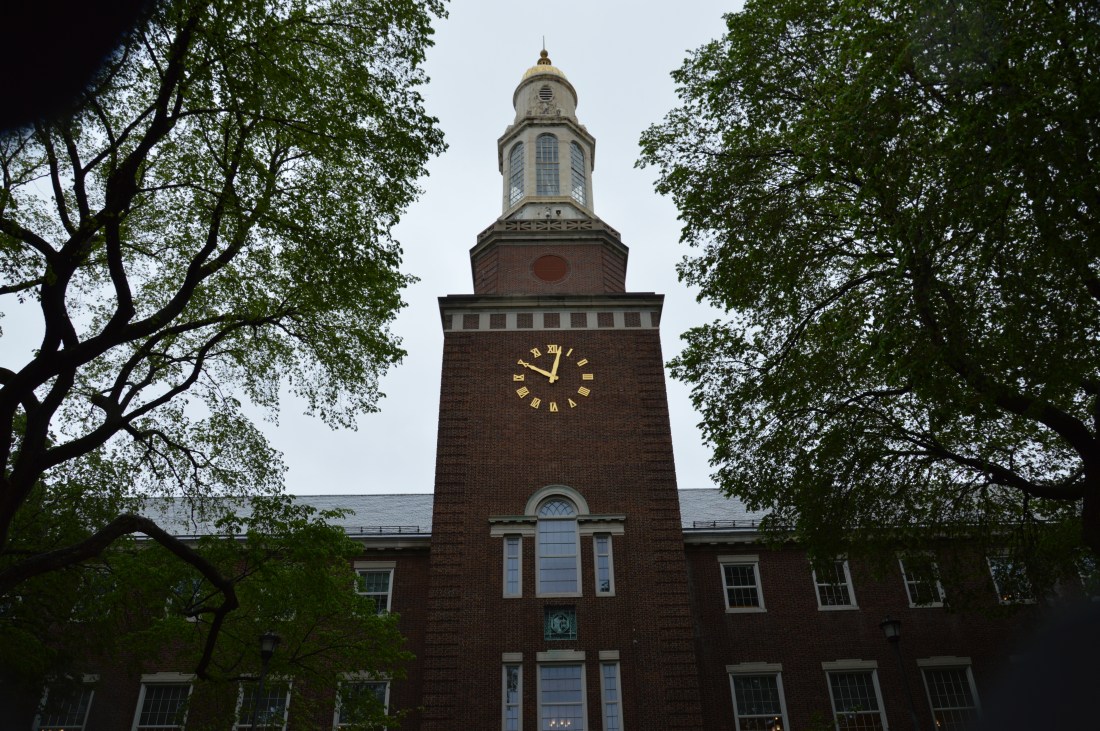
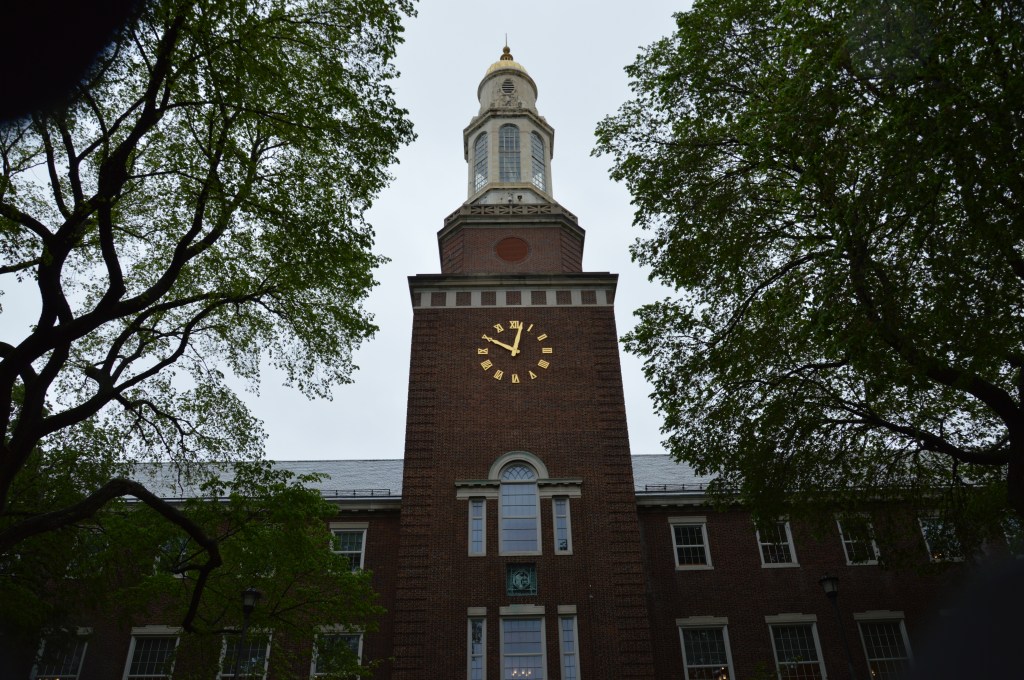
There was a cold drizzle as I walked on to the campus of Brooklyn College, more than half a century since those paths were part of my daily routine. The sturdy Georgian style brick buildings of the central quadrangle looked the same, only the cupola of the bell tower showed the passing of years. It saddened me to see the paint faded and chipped. Once the outer perimeters of the campus were open green parks. Now newer, plain, structures for the performing arts and other curricula made the campus feel closed in.
The campus is bordered by a bustling business area of Flatbush. Many of the places I’d go with friends for lunch or to have philosophical discussions over a shared sliced of Nesselrode pie are gone, replaced by McDonald’s and Burger King.
My time at Brooklyn College was a period of tremendous growth for me. There were new people, new ideas, and the yearning of a young girl to find herself and her place in the world. There were dances, house parties, and evenings at Jazz clubs. My heart was broken for the first time, and I was awakened politically.
I was fortunate to have some wonderful professors. There were two women professors whose names I can’t remember, but their love of the subjects they taught made a lasting impression. One, a history teacher, seemed transported to the era as she spoke of the political jealousies and vanities behind the Hundred Years War. The other taught calculus. She wore glasses with thick lenses and stood very close to the chalk board to write. It seemed as if she worshipped the numbers as she worked out the equations and explained them to us. I never understood a word she said, perhaps because I was so fascinated with her love of math.
Dr. Anna Babey-Brooke taught literature. The first day of class she walked into the room dressed in a full length mink coat that she shrugged from her shoulders and draped over her chair. She unfurled a silk scarf from around her neck and dropped it on the desk. From her purse she pulled out a lengthy cigarette holder, inserted a cigarette, and lit it. After a long drag and exhalation she said, “Good afternoon class. This is Modern Literature, welcome.”
Dr. Babey-Brooke was a plain woman. She wore no makeup except for bright red lipstick, but her eyes were bright and her presence filled the room. During her lectures she spoke of smoking marijuana and taking LSD in Mexico City, and about life and death. One of the books we read was Sons and Lovers by D.H. Lawrence. After a discussion of the significant deaths in the book she said, “When someone in our lives dies, is it for them we cry, or for ourselves in our loss?” The bell that marked the end of class rang; she picked up her full length mink coat, and walked out of the room. I have never forgotten that moment or her words.
Dr. Morey Appel was my early childhood Education teacher. He was the only one I could talk to about deeply personal matters. I was going to college to become a teacher because my father thought it was the most appropriate career for a good Italian Catholic girl, but I had different yearnings. And there was the question of love. Dr. Appel listened and gave me The Art of Loving by Erich Fromm, and a reading list on Humanistic Psychology by Carl Rogers and Abraham Maslow to help me understand those things.
Dr. Appel and I corresponded for years after I left college. He was always supportive and insightful, and helped me navigate the turbulent waters of young adulthood. His letters are tied with a blue ribbon in my keepsake box.
The visit to Brooklyn College was brief because I had to go to JFK for my flight to Italy, but in those moments I felt a deep gratitude for the years I spent there, for the people I knew and loved, classmates as well as professors, and for all I learned. I may not have gotten a degree, but I got an education.
 The Write Mind of a Lefthander