Afterthoughts

A year ago today I set out on a journey to visit my grandparents’ birthplaces in Calabria, Italy. I’d daydreamed about going for years, and when I zoomed in on their birth towns via Google Earth, I knew I had to turn the dream into a reality.
Crucoli

I carefully researched what I wanted to see. During my visit I did everything I wanted to do, and left myself open to unplanned moments. I felt as if I were in a gelato store with a wide variety of choices, given a little spoonful of something new and exhilarating, but there is so much history, culture, and natural wonders in Calabria that a little taste wasn’t enough. I wanted more.

I’d intended to return this year and stay three months to wander and savor as much as I could. And then Covid19 came along and changed how we are living and will live for the foreseeable future. We don’t know when we will be able to travel again, and when we do, how the way we travel will change.

For now, I must content myself with memories that are like the moon on a still sea; a reflection of a bountiful land of olive groves and vineyards, ancient villages perched on sheer cliffs above fields of red poppies growing wild in the rolling terrain.
Casabona

It is difficult to say what impressed me the most, what I enjoyed the most, what I miss the most because every experience was rich and full. It may sound strange, but what I am left with is regrets.

I regret the times I didn’t carry my camera with me. After a while it felt heavy and cumbersome. Sometimes, even though I had my camera with me, it was easier to use the phone’s camera. I missed capturing interesting moments because I fiddled too long with settings and the moment was gone. There were times I was so drawn in by what I was seeing that I didn’t think of using the camera, but those pictures are fixed indelibly in my mind.

In spring the roadsides of Calabria are adorned with red poppies and wild flowers. Red poppies are said to be the gift of the goddess Demeter, the Bringer of Seasons, expressing her joy at being reunited with her daughter, Persephone, returning from her life in the underworld.

The poppies dominated the landscape between vineyards and olive groves as we drove along country lanes on the way to Casabona, the birthplace of my paternal grandparents. The red of the poppies was enhanced by dainty yellow marguerites that grew beside them. They took my breath away. Most likely, they are in bloom now. I close my eyes and I am in a meadow surrounded by them; their red blossoms feel like silk to my touch.
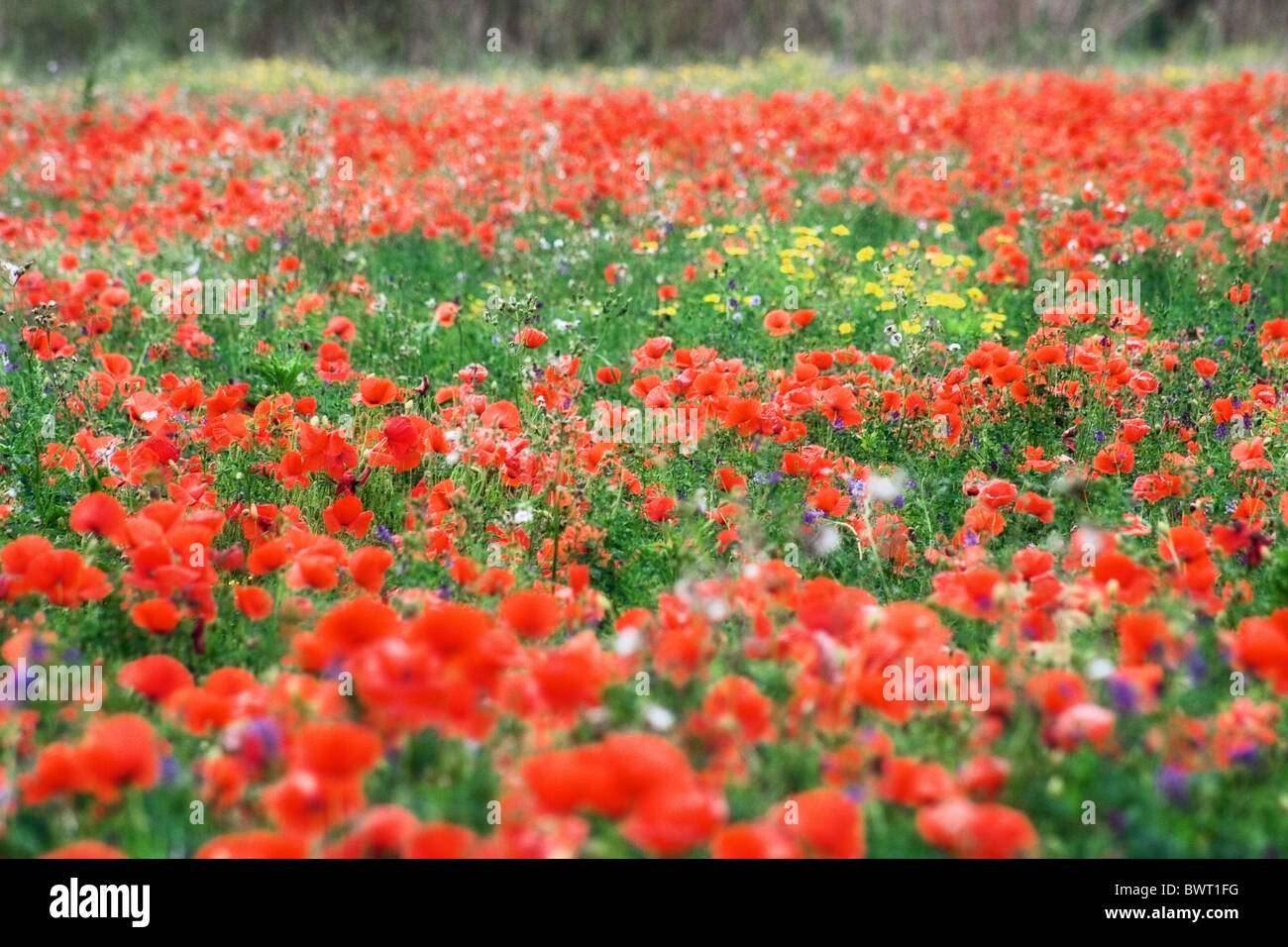
Field of red poppies in Calabria

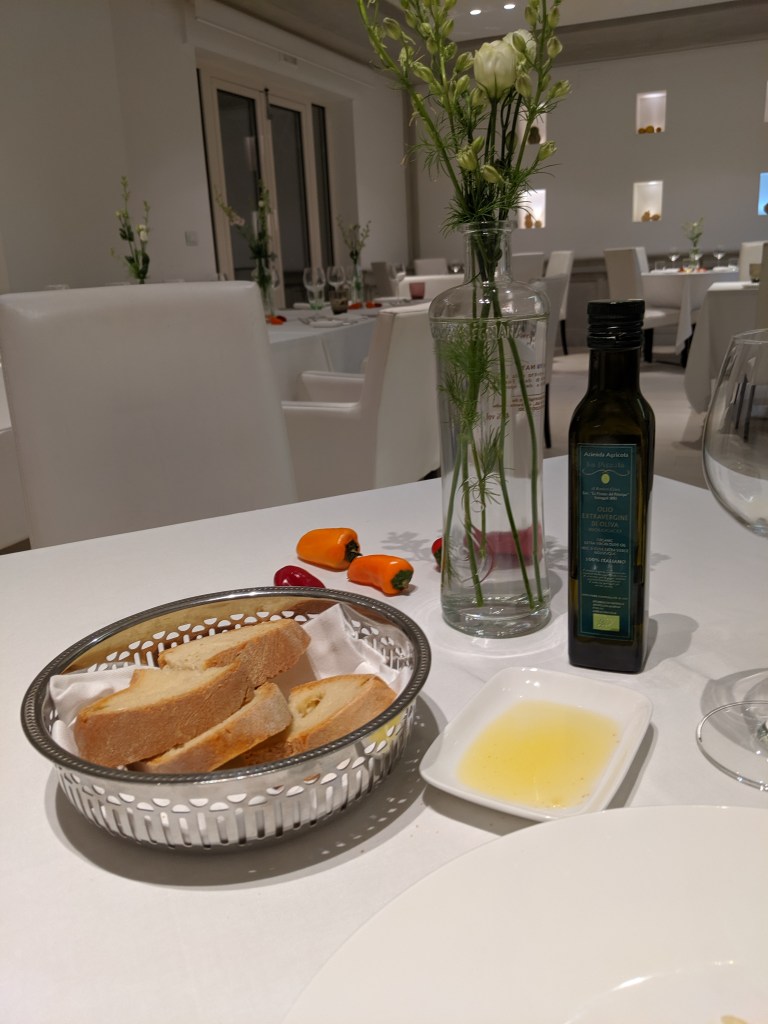
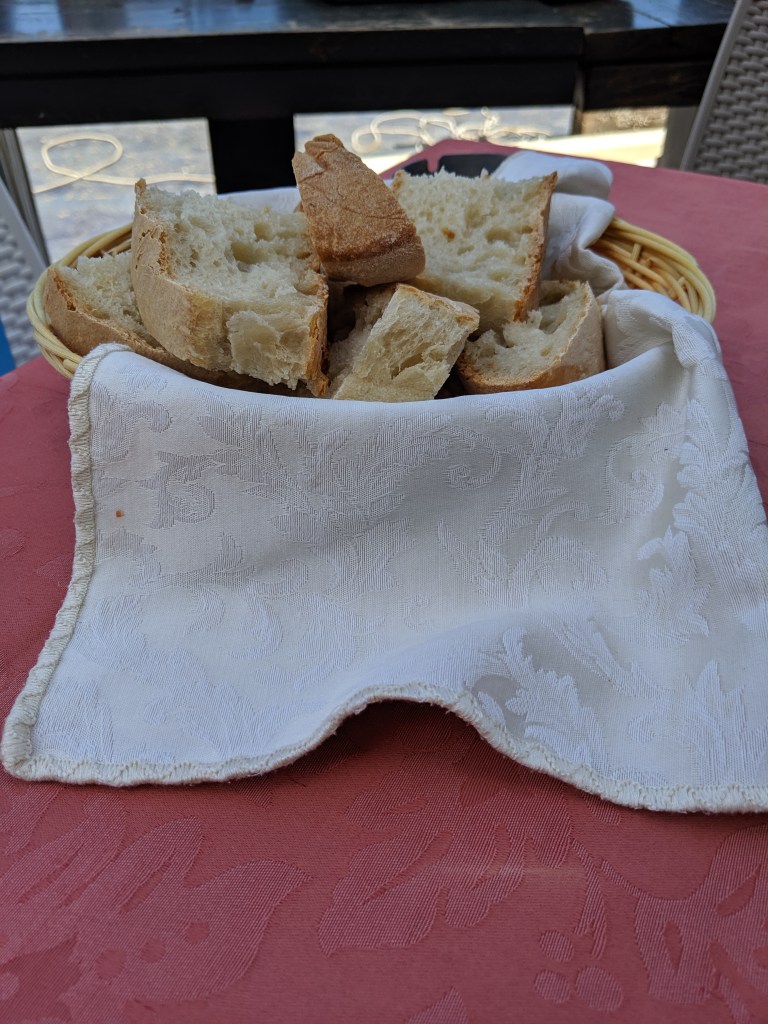
Many of the meals I ate were remembered tastes from my childhood. I ate whatever I wanted, but limited bread to one slice if it was part of the meal, with an occasional second slice. Now I regret not eating more of the delicious bread that was set before me. La Figlia di Annibale served a delightful yellow bread. The waiter said it was made with “grano d’oro.” Every morning my host at La Corte del Geco, Daniele Tricoli, served a different kind of bread fresh from the bakery. At Com na Vota the bread was dense and chewy, served with sardella, a paste made of sardines and peppers.
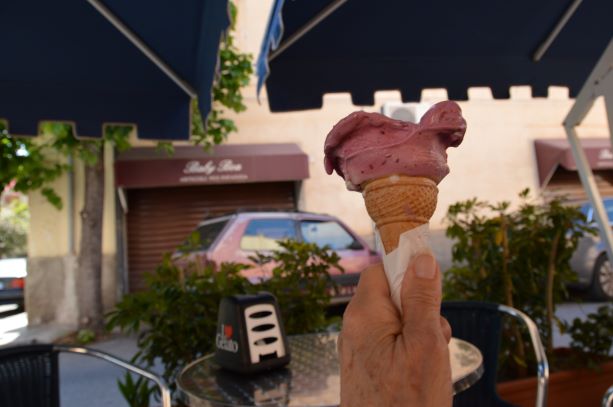
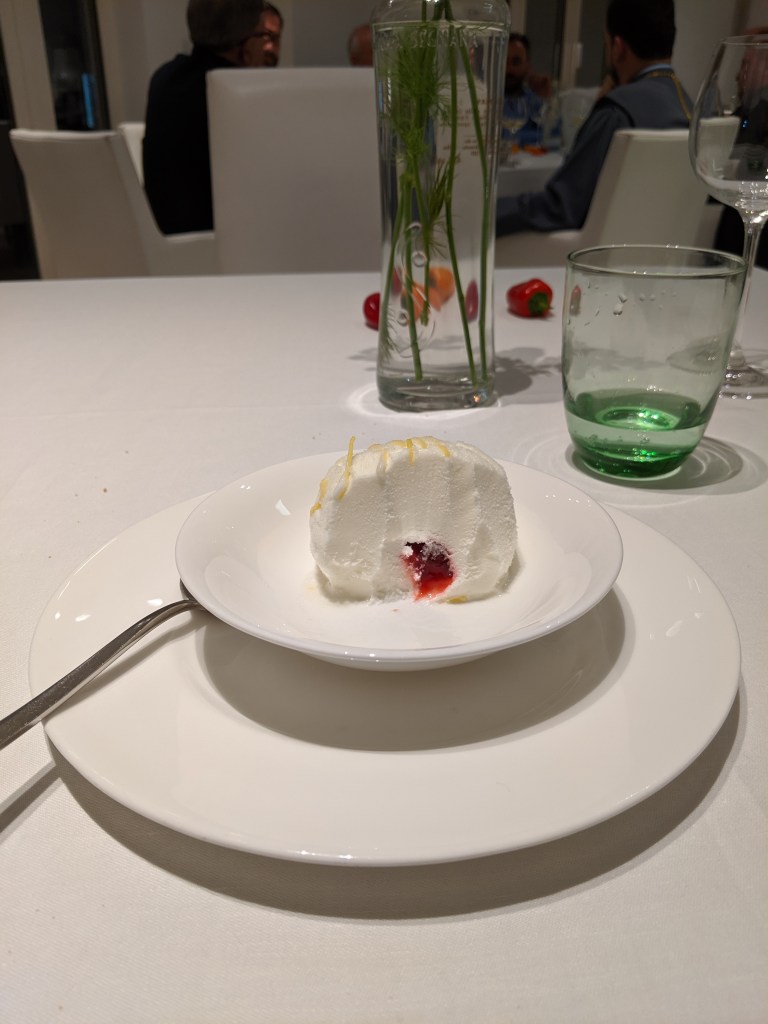
And gelato, I wish I’d eaten more gelato.
My greatest regret is the Missed Connection when I got off the train in Catanzaro Lido. But life isn’t lived in regret. I am grateful for the memories I’ve collected, and for now I will enjoy the beauty of my garden while I wait with the rest of the world for healing and new ways to live.
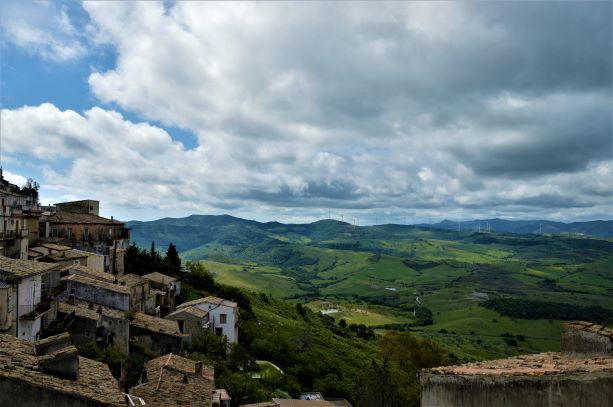
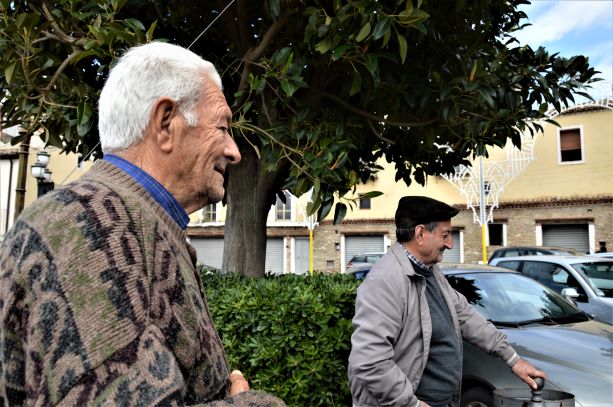
Crucoli e Casabona

As much as I wanted to see Calabria, the heart of my trip was to visit the birthplaces of my grandparents. I wished to see where they lived, and perhaps get a glimpse of what their lives had been like. Daniele Tricoli, my host at La Corte del Geco, made arrangements for Father Salvatore Corrado to drive me and act as translator. Our first trip was to Crucoli, the birthplace my mother’s father, Armando Ruggiero

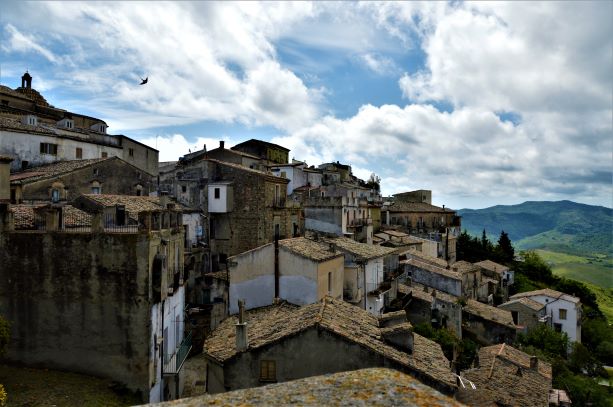
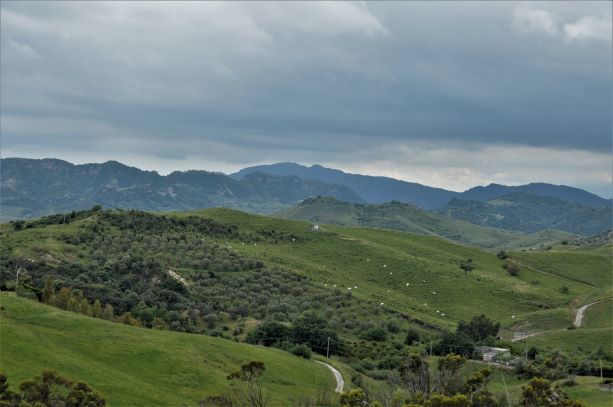
Crucoli is about a forty minute drive from Crotone through a countryside dotted with vineyards, olive groves, and small flocks of sheep or cows. There is a stretch along the Ionian Sea, and then a gentle rise inland that gradually becomes steeper as it approaches the hilltop village. When I got out of the car the view took my breath away. Why would anyone want to leave such beauty? Of course it’s a rhetorical question; poverty was the motivation to leave. You can’t eat beauty.

Two gentlemen stood in the village square smoking cigarettes. Father Salvatore explained to them that my grandfather had been born there. In their conversation they said that Crucoli was once a village of forty thousand people; now only four hundred families live there. Of my family, there were no Ruggieros left, and only one family of Pallettas. The only business was a bar. There was no city hall and the church was not open, so there was no opportunity to check records to see where my grandfather had lived. He left there over one hundred years ago and these gentlemen weren’t able to answer questions I had about those times.

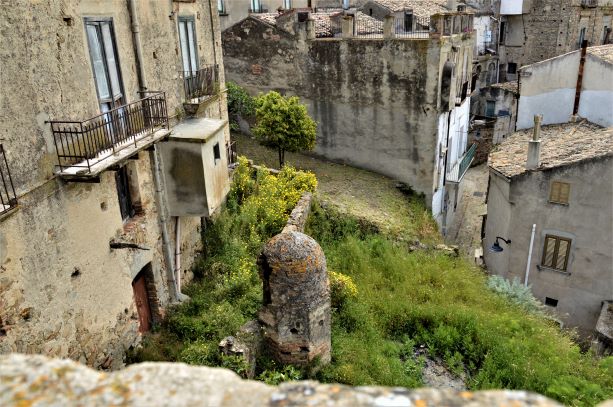
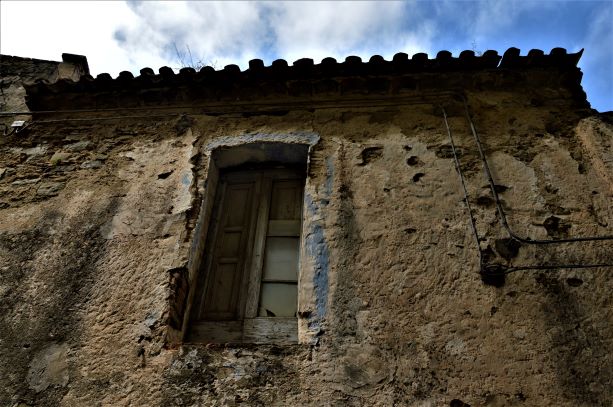
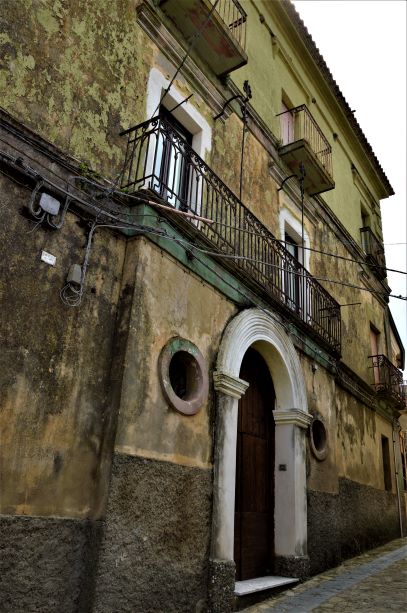
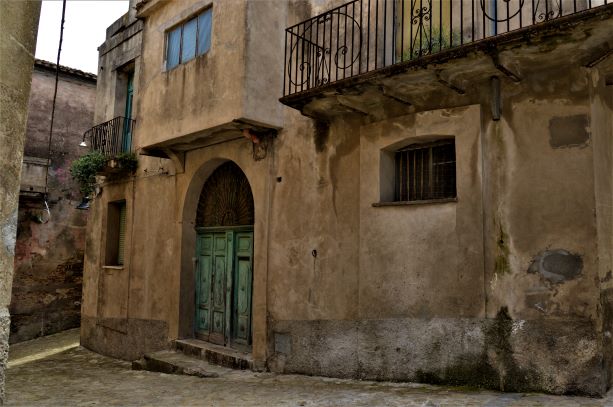
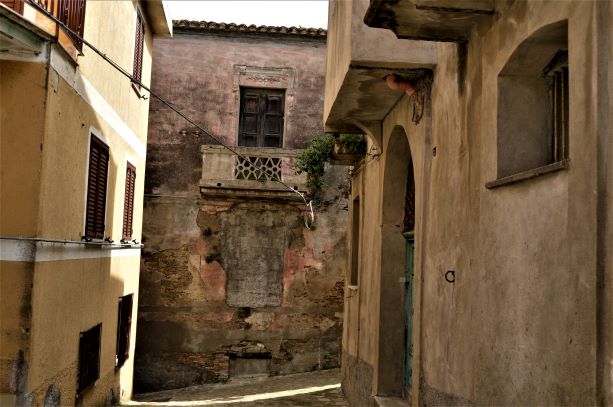
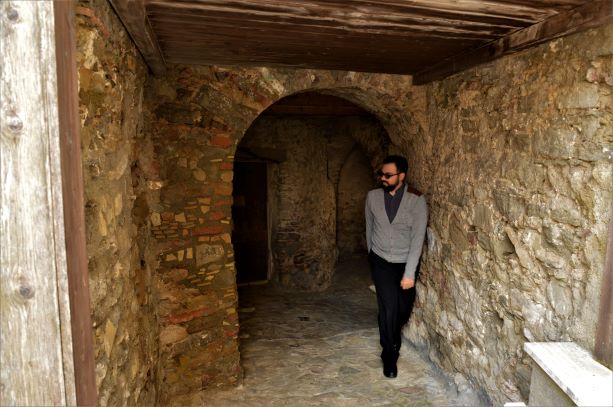
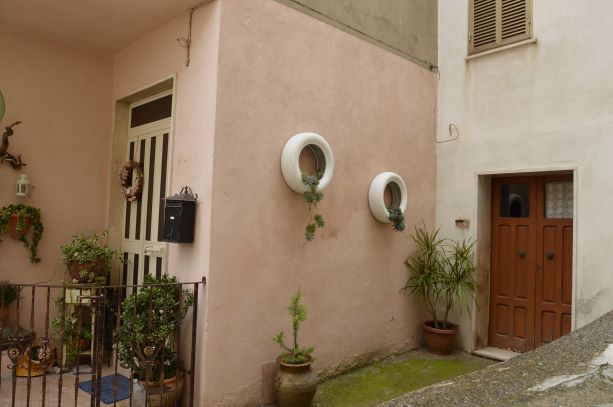
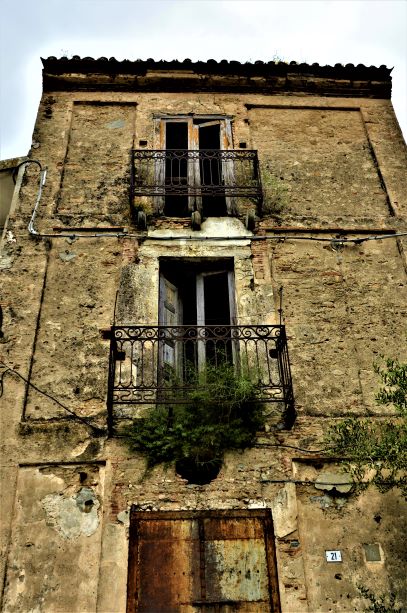
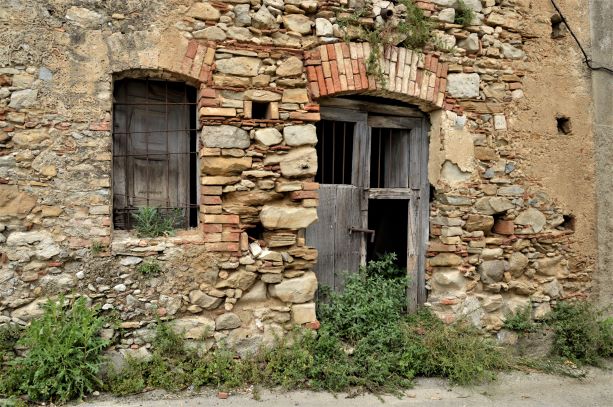
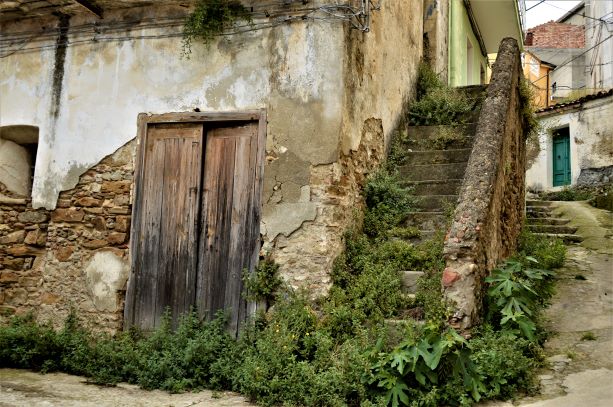
Father Salvatore and I walked around the village. Many of the homes were in disrepair, but I was struck by the aesthetics of the architecture and the stone and iron work. The narrow cobble stone streets led to even narrower alleys. Below the church steep steps wound underground to the other side of the village. It made a circle which led us back to the village square.

Casabona is the birthplace of my father’s parents, Alessandro Tallarico and Francesca Sirianni, for whom I was named.

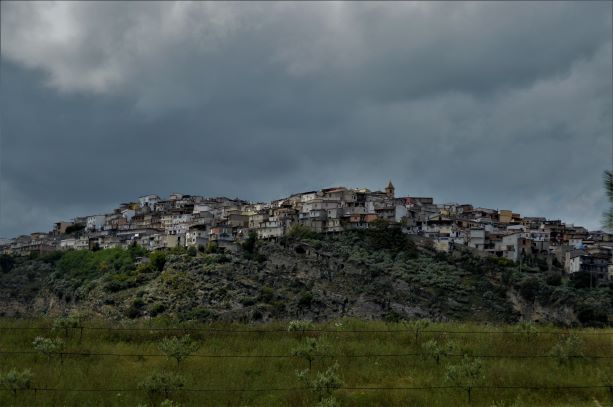
As Father Salvatore drove through olive groves and vineyards, Casabona seemed to float on a ridge of tufa thrusting up above the valley. We were there during riposo, the hours businesses are closed, and the town was quiet. I saw shops of every sort, from salumaria, to clothing stores. We parked in the town square and walked around the old section. Some homes were remodeled and looked modern, many are abandoned and in disrepair. As we walked the narrow streets, sounds of life emanated from homes; the whine of a vacuum cleaner from one, voices on a TV program from another

My grandmother didn’t receive a formal education, and was proud that she’d taught herself how to read and write. When she was in her seventies, she wrote her autobiography. Her story remained tucked in my memory. Throughout the years when I thought of my grandmother, little anecdotes floated up into my awareness, and I wondered about missing details. It lead to a yearning several years ago to see where she lived and perhaps find the answers to those questions.

Grandma Frannie had a happy childhood in Casabona, fully involved in community and church matters, from pruning the vineyards, to carrying the lantern when the priest brought communion to the sick and dying. She wrote that she was a tomboy. The thought of my grandmother as a tomboy surprised me and captured my imagination. One day she took a rope, tied it to an olive branch and swung on it, out over the tufa cliffs. When her mother saw her, she took her home, but it was her older sister that got into trouble for not watching her.

 I’d hoped to find the grove and the tree from which she’d swung with such abandon, but Casabona is a sprawling village and our time there was short. We walked only a small area along the lip of the cliff and all of the olive groves were below us, but I was happy to walk through my grandmother’s birthplace, and perhaps on the same paths that she had once trod.

Any questions I had went unanswered. There is only the nagging regret I’ve had for so long, that I hadn’t asked the people I loved, who were such a strong influence in my life, to tell me their stories, and not just the outlines, but to fill in the details with vivid color.