Dwight David Eisenhower ~ October 14, 1890 – March 28, 1969
“I come from the heart of America”
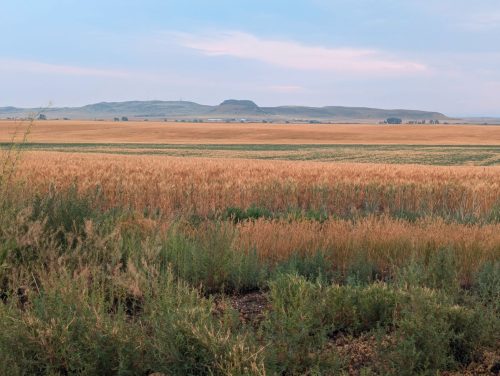
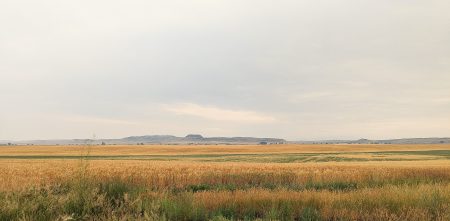
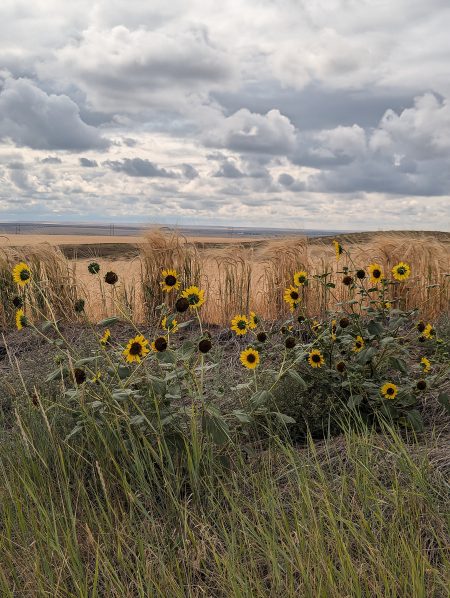
Kansas and its prairies are located in the heart of America, with Abilene about one hundred miles from the geographic center of the forty-eight contiguous states. It’s fitting that it’s called “The Heartland of America.”
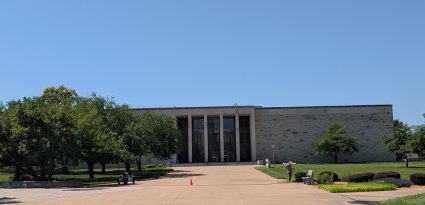
Driving cross country on I-70 during the summer, I stopped in Abilene, KS to visit the Eisenhower Presidential Library and Museum. I was curious but had no expectations, and so I was awed by the setting and what I learned.
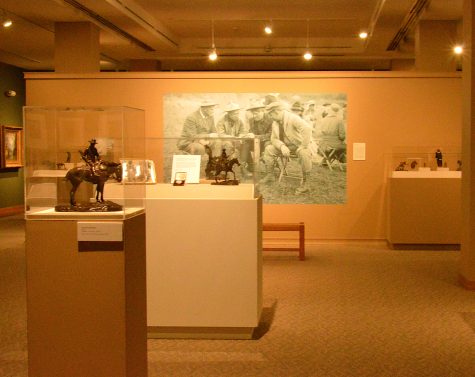
Situated on a twenty-two acre campus are the Visitor Center, Place of Meditation, Eisenhower’s boyhood home, the Presidential Library, and the Museum. I spent four hours there but could easily have spent an entire day.
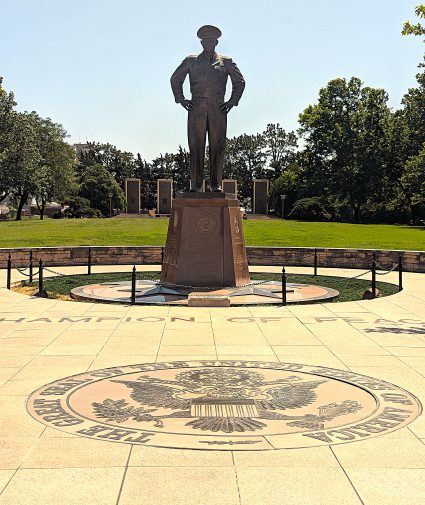
The Place of Meditation is the Burial Site of President Eisenhower, his wife, Mamie, and their first born son, Doud, who died at three years old of Scarlet Fever.
It was Eisenhower’s hope that visitors would “reflect on the ideals of this great nation” in this solemn place.
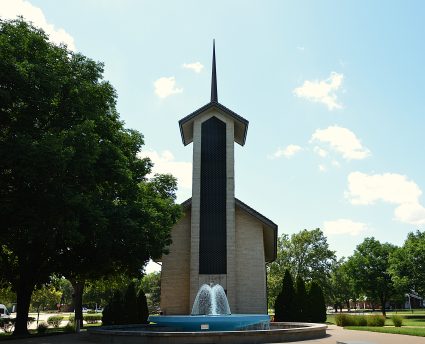
The Place of Meditation
“I’m just folks. I come from the people. Ordinary people.”
Eisenhower was born in Denison, TX, the third of seven sons of David Jacob Eisenhower and Ida Stover Eisenhower. The family moved to Abilene when Eisenhower, known familiarly as “Ike,” was two years old. His parents were deeply religious. His father explored Christian Mysticism and his mother was a member of International Bible Students which evolved into Jehovah’s Witnesses, but they encouraged their sons to find their own paths.
Eisenhower said that his mother was the greatest influence in the lives of his brothers and himself. She taught them self-discipline, and “to behave appropriately, not out of fear of punishment, but because it is the right thing to do.”
Ike entered West Point in 1911. His mother was a Pacifist who felt that warfare was “rather wicked” and was saddened by Ike’s choice of career but accepted his decision. He later wrote that when he entered West Point “…from here on it would be a nation I would be serving, not myself.”
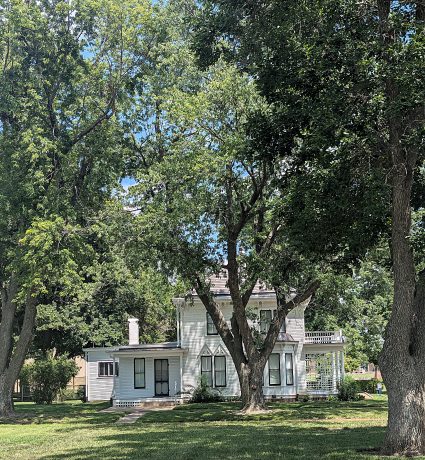
Eisenhower Boyhood Home
The Presidential Library
Except for the echoes of my footsteps, the marble and brass lobby is silent, as is appropriate for a library. It houses a theater that features films focused on various on parts of Eisenhower’s life that loop on fifteen minute intervals. The day I was there the film was about his boyhood home and life.
The library archives twenty six million pages on a broad spectrum of subjects that are available to the public. About eight hundred researchers a year visit the library, twenty-five percent of those visitors are from abroad. There is a collection of over five hundred transcripts of oral history, as well as transcripts from Columbia University’s oral history project. There is an extensive collection of photographic prints of Eisenhower’s life and times, as well as the still photograph collection documenting the Worl War II period. Personal diaries have been digitized.
The Presidential Library
MUSEUM
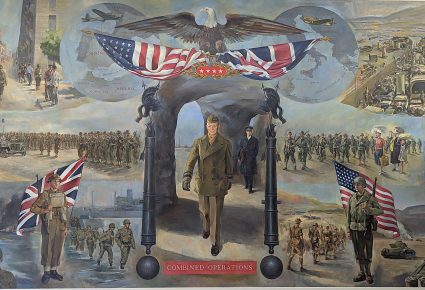
As you enter the museum, there are murals on the lobby walls of Eisenhower in his role as Supreme Allied Commander during World War II. The first room you enter explores his early years growing up in Abilene.
In June, 1915, Eisenhower graduated from West Point. He then served as a Second Lieutenant with the Infantry at Ft. Sam Houston, TX. It was there that he met Mamie Geneva Doud of Denver. They were married July, 1916. Their son, Doud Dwight was born September 24, 1917 and died of scarlet fever January 2, 1921. Their son John Sheldon Doud was born August 3, 1922.
During World War I, Eisenhower’s request to serve in Europe was denied. Instead, he was assigned to train tank crews. Sometimes disappointment has a purpose in the future. As is typical with military life, Eisenhower moved to various bases over the next four years and rose in rank to Lt. Colonel.
In 1919 he volunteered to be an observer for the War Department in a transcontinental Army convoy to assess vehicles and road conditions across the United States. The convoy averaged five miles per hour during the 3,251 mile journey from Washington D. C. to San Franciso. The convoy consisted of eighty military vehicles and two hundred eighty officers and enlisted personnel.
Mounted on Harley Davidsons, Army personnel ran ahead of the convoy to check out road conditions. It took sixty-two days for the convoy to reach San Francisco. There had been two hundred thirty accidents when vehicles broke down, got stuck in mud, sank in quicksand, and bridges collapsed under them. The official report concluded that existing roads in the U. S. were “absolutely incapable of meeting the present day traffic requirements.” This experience proved to be inestimable to Eisenhower in his military career and as President.
On July 20, 1920 Eisenhower was promoted to Major. He was assigned to Camp Meade to command a battalion of tanks in close collaboration with George S. Patton and other senior tank leaders.
In 1922 he was assigned to Panama Canal Zone as Executive Officer to General Fox Conner who found Eisenhower to be “one of the most capable, efficient and loyal officers I have ever met,” and recommended him for the Command and General Staff College at Fort Leavenworth, Kansas, where he graduated first in a class of 245 officers.
From 1933 through 1939, he served with General Douglas MacArthur. Eisenhower attended the Army Industrial College in 1933. It is now known as the Dwight D. Eisenhower School for National Security and Resource Strategy.
The last four years with MacArthur were in the Philippines as military advisor to the Philippine Government. The relationship with MacArthur was not easy. Eisenhower differed philosophically with him regarding the qualities an officer should demonstrate and develop in his soldiers. Historians believe that working with MacArthur prepared Eisenhower to be able to manage the strong personalities of Churchill, Marshall, Montgomery, and Patton during WWII.
When Pearl Harbor was attacked and World War declared in 1941, Eisenhower was assigned to General Staff, Washinton, DC and named Deputy Chief in Charge of Pacific Defenses. In February 1942 he was designated Chief of War Plans Division. In April, 1942 he was appointed Chief of Staff in charge of Operations Division for General George Marshall.
In May 1942 Eisenhower organized an operation to increase cooperation among American Allies. He was designated Commanding General, European Theater, London, England in June 1942 and named Commander-in-Chief, Allied Forces, North Africa, November, 1942.
He was promoted to four Star General in February, 1943. On August 30, 1943 he was appointed both Brigadier General and Major General.
In December 1943, Eisenhower was appointed Supreme Commander, Allied Expeditionary Forces. Throughout the war, Eisenhower made a point of visiting the troops, to build trust and morale.
On June 6, 1944 Eisenhower Commanded the Normandy invasion.
“Plans are worthless, but planning is everything.”
This photo of General Eisenhower was taken the night before the Invasion of Normandy on D-Day, June 6, 1944. You can see the pain on his face, aware of the gravity of his decision knowing that many people, civilians as well as military, would die.
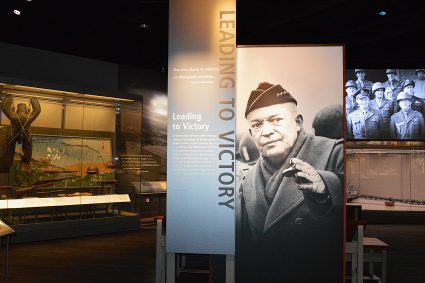
Eisenhower waspromoted to General of the Army (5 stars) on December 20, 1944. Shortly after Germany surrendered, he was appointed Military Governor, U.S. Occupied Zone, Frankfurt, Germany on May 8, 1945
He was designated Chief of Staff, U.S. Army on November 19, 1945 and his wartime rank of General of the Army was converted to permanent rank on April 11, 1946.
After WWII, he dedicated the rest of his life to preventing war.
“I hate war as only a soldier who has lived it can.”
Eisenhower became President of Columbia University, New York City in 1948. When he accepted the presidency of the university his main purpose was “to promote the American form of democracy” through education.
He questioned why no American university had taken on the “continuous study of the causes, conduct and consequences of war.” In 1951, Eisenhower created the Institute of War and Peace Studies, a research organization, to “study war as a tragic social phenomenon.” The Institute of War and Peace Studies became a pioneer in international security studies, that was followed by other institutes in the United States and Britain later in the decade. Eisenhower considered the institute to be his “unique contribution” to Columbia.
Eisenhower was also active within the Council on Foreign Relations, a study group he led concerning the political and military implications of The Marshall Plan. In 1950 he established The American Assembly which he envisioned as a “cultural center where business, professional, and governmental leaders could meet to discuss and reach conclusions concerning problems of a social and political nature.”
On April 4, 1949, the North Atlantic Treaty Organization (NATO) was created as a “shield against aggression” to counter Soviet expansion after World War II. Eisenhower took an extended leave from the university in 1950 to become the Supreme Commander of NATO and was given operational command of NATO forces in Europe. Eisenhower succeeded in attaining support for NATO in Congress. By the middle of 1951, with American and European support, NATO was a military power. He retired from active military service as an army general on June 3, 1952 and resumed his presidency of Columbia. In July, 1952 he resigned his military commission.
At the end of World War II, Eisenhower was approached to run for president but felt it was inappropriate for a military man to run for office. He considered himself apolitical and had never voted in his life. Both parties continued to prevail on him to run for president. He finally agreed to run on the Republican ticket in 1952 to oppose Republican Senator Robert Taft because he felt Taft’s endorsement of McCarthyism, opposition to NATO and the Marshall Plan would not further the interests of the United States.
“It is more than a nomination I accept today—it’s a dedication—a dedication to the shining promise of tomorrow.”
Eisenhower defeated Taft for the nomination, and to pacify the right-wing of the Republican Party, he needed to accept Richard Nixon as Vice President on the ticket. Eisenhower was appalled by a report that Nixon had received funds from a secret trust, even though Nixon spoke out against the charges. (The “Checkers” speech.) It created a rift between them, and Eisenhower reluctantly endorsed Nixon when he ran for president against John Kennedy.
Eisenhower won the presidential elections in 1952 and 1956 by landslides and was enormously popular during his presidency.
“Whatever America hopes to bring to pass in the world must first come to pass in the heart of America…For history does not long entrust the care of freedom to the weak or the timid…A people that values its privileges above its principles soon loses both.” Inaugural address 1953
During Eisenhower’s two terms as President of the United States he held more press conferences than any previous president. He valued them as a means of direct communication with the American people. He also:
- Ended the Korean War.
- Stabilized Soviet-American relations during the Cold War .
- Strengthened European alliances and withdrew support of European colonialism.
- Promoted Atoms for Peace, to convert the fear of nuclear energy into a shared resource for humanity, for development of nuclear energy and international atomic cooperation.
- Managed crises in Lebanon, Suez, Berlin, and Hungary.
- Established the U.S. Information Agency to foster understanding of U.S. policies and culture abroad with programs such as the Voice of America, Fulbright Scholarships, and overseas libraries.
- Helped create and signed the Southeast Asia Treaty (SEATO)
- Created the Small Business Administration.
- Created the Federal Council on Aging, to address issues of aging and needs of the elderly.
- Played a key role in making Alaska and Hawaii states.
- Implemented the Interstate Highway System and the St. Lawrence Seaway. His intent to create improved highways was influenced by his involvement in the Army’s Transcontinental Motor Convoy in 1919. The route he took on that convoy is now I-80.
- The vaccine developed by Dr. Jonas Salk is declared “safe, effective and potent” to combat the spread of poliomyelitis.
- Established The President’s Council on Youth Fitness.
- Signed the 1957 Civil Rights Act, the first civil rights legislation since the end of the Civil War and implemented racial integration in the Armed Services. He sent federal troops to enforce court-ordered integration of Little Rock Central High School.
- After Sputnik was launched in October 1957, he created NASA.
- Signed a landmark science education law, and improved relations with American scientists.
- An international cooperative scientific program called the “International Geophysical Year” was piloted from July 1957 to December 1958 to study the earth and its environment. More than seventy countries participated in the project. It led to the discovery of the Van Allen radiation belts, the theory of plate tectonics, exploration of outer space, construction of earth satellites, and increased research in the Arctic and Antarctic polar regions. IGY was sponsored by the International Council of Scientific Unions and involved 30,000 scientists. In a radio and television address on June 30, 1957, President Eisenhower said, “the most important result of the International Geophysical Year is that demonstration of the ability of peoples of all nations to work together harmoniously for the common good. I hope this can become common practice in other fields of human endeavor.”
- Signs the National Defense Education Act that provides loans for college students and funds to encourage young people to enter teaching careers.
- Continued all major New Deal programs, especially Social Security, and rolled them into a new agency, the Department of Health Education, and Welfare, extending benefits to an additional ten million workers, including farmers and farm workers, domestic workers, certain professionals, and state and local government workers.
“Should any party attempt to abolish social security and eliminate labor laws and farm programs, you would not hear of that party again in our political history. There is a tiny splinter group of course, that believes you can do these things…Their number is negligible and they are stupid.”
“All branches of this Government — and I venture to say both of our great parties — can support the general objective of the recommendations I make today, for that objective is the building of a stronger America. A nation whose every citizen has good reason for bold hope; where effort is rewarded and prosperity is shared; where freedom expands and peace is secure — that is what I mean by a stronger America.” State of the Union Address, 1954
During his presidency, Eisenhower described himself as a “progressive conservative.” He was determined to stop efforts by the right wing to take control of the Republican party. “I have just one purpose … and that is to build up a strong progressive Republican Party in this country. If the right wing wants a fight, they are going to get it … before I end up, either this Republican Party will reflect progressivism or I won’t be with them anymore.”
Eisenhower also warned against “fatal materialism,” a criticism of the consequences of capitalism by Jean Baudrillard, as the extreme form of materialism where the goal is to ruin the socio-cultural relationship by overpowering it with the endless consumption of “things.”
In his farewell address to the nation in January, 1961, Eisenhower said, “”We face a hostile ideology global in scope, atheistic in character, ruthless in purpose and insidious in method … we must guard against the acquisition of unwarranted influence, whether sought or unsought, by the military–industrial complex … Only an alert and knowledgeable citizenry can compel the proper meshing of the huge industrial and military machinery of defense with our peaceful methods and goals, so that security and liberty may prosper together.”
Eisenhower retired to his farm in Gettysburg, PA. In March, 1961 President Kennedy restored his rank of General of the Army through an Act of Congress. Eisenhower died of congestive heart failure on March 28, 1969 at Walter Reed Hospital and lay in repose at the Washington National Cathedral‘s Bethlehem Chapel for one day. He then lay in state in the Capitol Rotunda in the United States Capitol. A state funeral was conducted at the Washington National Cathedral on March 31. That evening, Eisenhower’s body was placed on a special funeral train for its journey from the capital to his hometown of Abilene, Kansas. He was buried in a government issue casket wearing his World War II uniform at the Place of Meditation, the chapel on the grounds of the Eisenhower Presidential Library and Museum.
During Eisenhower’s administration from 1953-1961 the marginal tax rate for income over $200,000 was ninety one percent. The federal corporate tax rate was tiered, with a top marginal rate of fifty-two percent.
Eisenhower invested that tax money in the country and its people. Social Security was expanded and the minimum wage was raised by one dollar/hour. He initiated the interstate highway system, a public works project funded by a gas tax that created employment and growth of communities. In response to the Soviet Union’s launch of Sputnik, Eisenhower promoted the study of science, foreign languages, humanities and social sciences in universities through the National Defense Education Act, as well as establishing the President’s Science Advisory Committee to fund research and infrastructure.
The middle class was growing by 1.1 million families a year. One third of the workforce was unionized. Economists referred to it as “the virtuous cycle of growth.” Well paid workers were able to buy houses, cars, etc., generating business expansion. As the middle class prospered, so did the economy.
I grew up during the Eisenhower administrations and benefitted from his policies that included receiving vaccines that protected me from debilitating diseases such as Polio, before college I received a liberal education that included physical education, instilling in me an interest in fitness for the rest of my life. I learned two foreign languages, as well as science courses, math, including algebra and geometry, and civics classes in which I learned American history, the Constitution and Bill of Rights, about the Separation of Power through the three branches of government, and the separation of Church and State. I learned to be interested in current events. And, oh, all the books I got to read and write book reports on, as well as write compositions on subjects such as “What I Did Last Summer,” and “What the Future Holds for Me,” subjects that not only made me examine my life and think about what I read, but also how to express my thoughts cogently. It’s called “critical thinking.”
My generation benefitted from these programs. Education was thought to be for the common good. College costs were low and public institutions were subsidized by state governments. Those who attended were not burdened with debt when they entered the workforce. Girls were encouraged to go to college, even if their choice of careers was limited to being a teacher, nurse, or secretary. My generation came of age in the 60s, well-educated and enabled to take the next step in humanity’s evolution. When the Vietnam War started, we stood up for peace, we stood up for civil rights and women’s rights, and for the environment, demanding clean air and water laws, and more. We also created great music and art.
He helped create the Southeast Asia Treaty Organization (SEATO) to prevent wars in Southeast Asia. In 1954 Vietnam split into N. Vietnam and S. Vietnam. As violence increased in Vietnam, Eisenhower sent nine hundred military “advisors” to aid S. Vietnam.
The Cuban Revolution began on January 1, 1959 when Fidel Castro overthrew the dictator, Fulgencio Batista. There was extended violence to overthrow Castro’s regime.
World events continue after a presidency ends and the situations in Cuba and Vietnam turned into the Bay of Pigs Invasion, the Cuban Missile Crisis, and the Vietnam War for President Kennedy to address.
A top aid to President Franklin Roosevelt called Eisenhower “the least partisan president since George Washigton.” He was an extraordinary human being and, in my opinion, the last great Republican president.
My visit to the Eisenhower Presidential Library and Musuem made a deep impression on me. As I did research to write this blog I learned new things about the times and the Eisenhower presidency, things such as “progressive conservatism” and “fatal materialism.” When I consider his many accomplishments and look at the current administration, I have a heavy heart.
In March, 2025, Columbia University caved to the demands of the current administration to suspend, expel, or revoke degrees for seventy students involved in pro-Palestinian protests, to stricter vetting for international students, to end DEI programs, and to appoint new faculty for the Institute for Isreal and Jewish studies in exchange for four hundred million dollars in federal funds. I can’t imagine Eisenhower agreeing to any of this.
The current administration tried to eliminate programs by Eisenhower that helped create understanding and cooperation between countries. They severely curtailed the operation of Voice of America. The Fulbright Scholarship Program was significantly cut. Grants were denied to an extensive number of already selected American professors and researchers, and a review of foreign recipients was initiated.
The current administration has threatened to withdraw from NATO. The Bipartisan NATO Support Act passed by the House in 2019 legally bars a president from withdrawing from NATO. However, the current president’s constant threats have negatively impacted relations with other NATO members.
While Eisenhower promoted science programs, the current administration has denigrated science and scientific research. They have cut funding and suppressed or misrepresented scientific information, particularly on climate change and health.
The current administration has cut billions of dollars in education programs and those that serve students with disabilities. Eisenhower believed that education was essential to the cause of freedom to prepare young people for “effective citizenship” by understanding the nations core values and emphasizing ethics and character. He believed that education is for the common good.
President Eisenhower was nominated for the Nobel Peace Prize in 1955 for his “Atoms for Peace” program, and in 1963 for “his many acts to prevent war and ensure World Peace.” Despite his striving for peace and understanding between the peoples of the world, he never won the Nobel Peace Prize. And he didn’t whine about it.
As I formatted this blog for publishing I learned that the current administration invaded Venezuela and kidnapped its president and his wife without the consent and approval of Congress. The president is now threatening other sovereign states with invasion. I believe a majority of Americans do not support this action and do not want war. I believe that the threatened countries do not want war. I believe we can have Peace on Earth and envision a modern day Eisenhower, not necessarily a military person but a well-educated person with a belief in the common good, coming forth to lead the United States of America back to living harmoniously with each other and the world.
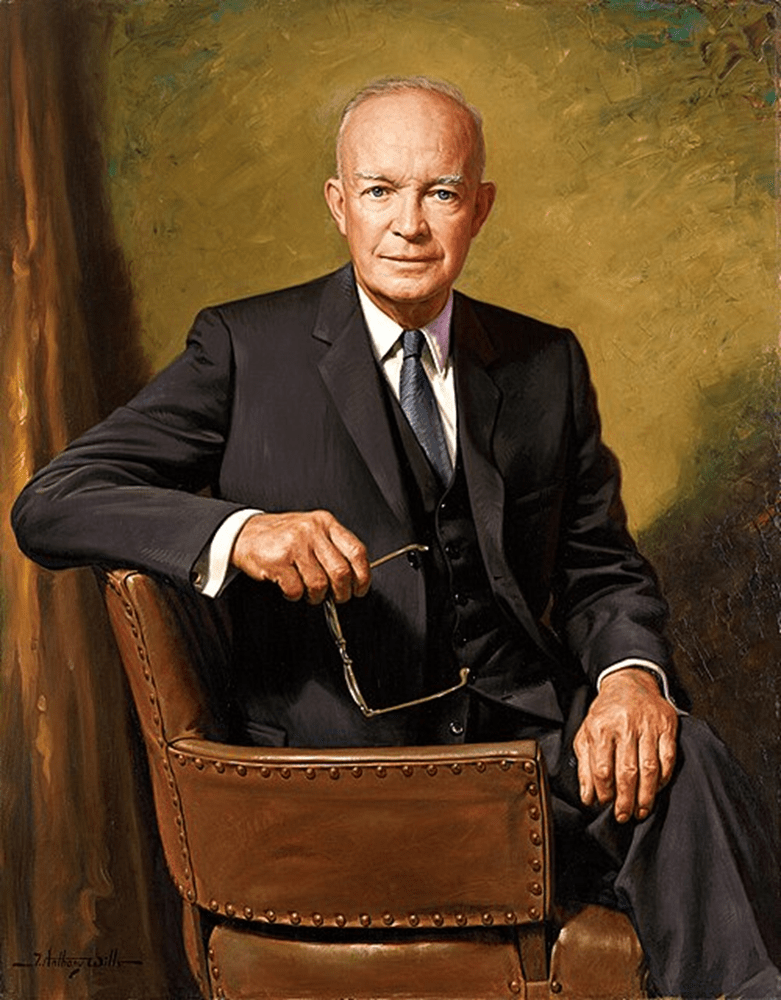
Dwight D. Eisenhower, Official Presidential Portrait – Public Domain







 The Write Mind of a Lefthander