
Because of its location at the center of the Mediterranean Sea, Calabria was settled and/or invaded by many cultures throughout history. The Greeks arrived between eight and seven hundred BC, and for five hundred years they inhabited Sicily and Calabria. Together, they were called Magna Grecia. It was the birthplace of great athletes, poets, lawmakers, and philosophers. The influence of ancient Greece is still seen today, and there are some communities in Calabria and Sicily that speak Greek.
Crotone was a renowned center of philosophy, science and medicine. Alcmeon, philosopher and medical theorist, and Pythagoras, mathematician and philosopher, both established schools there. Alcmeon elevated medicine to a science, and Pythagoras’ school offered free education to all, including women. Pythagoras is considered the father of vegetarianism.
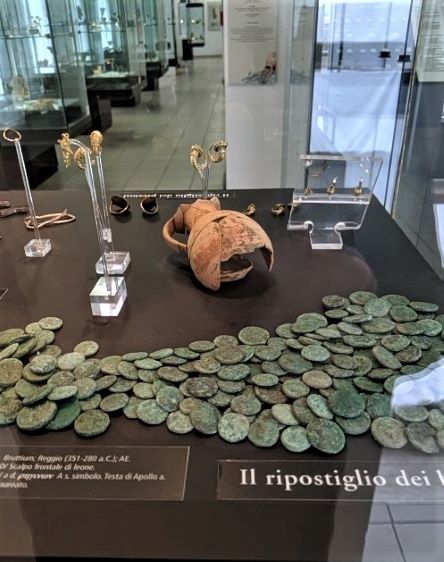
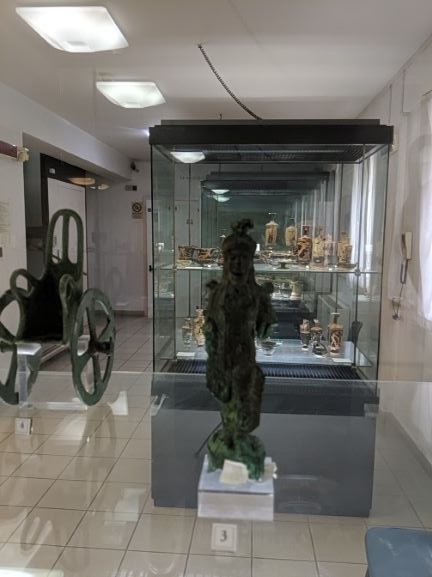
During my stay in Crotone I visited the Museo Archeologico. It houses artifacts from the Temple of Hera Lacinia located on the Capo Colonna promontory. The temple was abandoned in the fourth century when the Roman Empire declared Christianity the state religion. It was plundered throughout the centuries. The remains were destroyed by earthquake in 1638, and only one Doric style column survives. Excavation of the site began in 1910 and is ongoing.
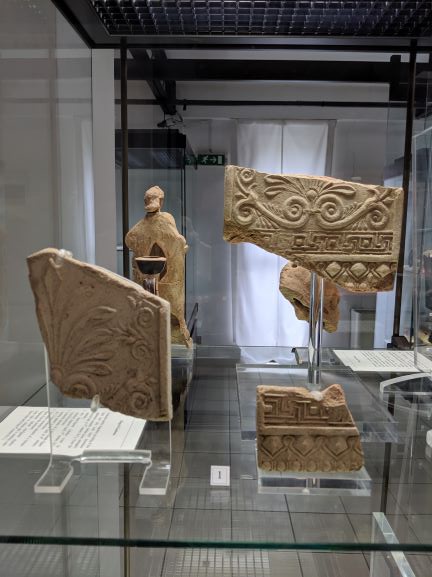
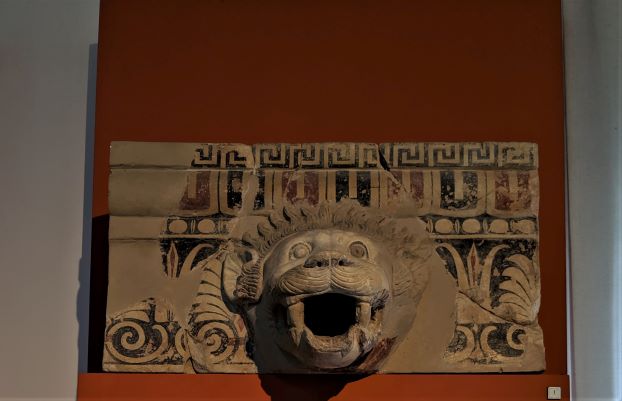
As I toured the museum I was moved by the artistry of the objects displayed there. Pieces of sculpted or painted friezes that decorated the cornices of the temple and outlying buildings are not only beautiful, they are utilitarian. The lion’s head served as a rain spout.
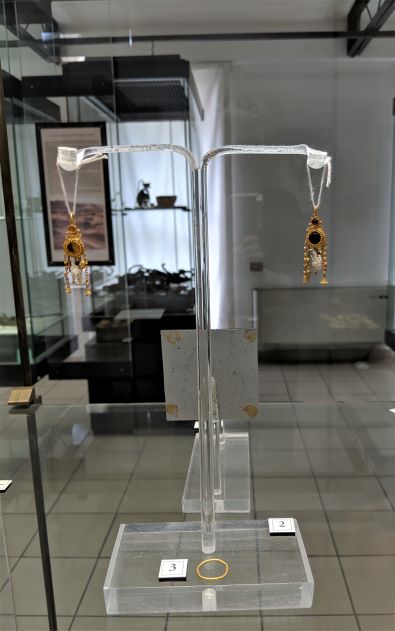
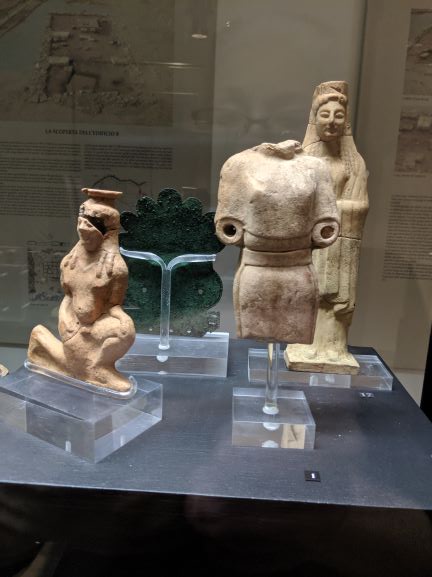
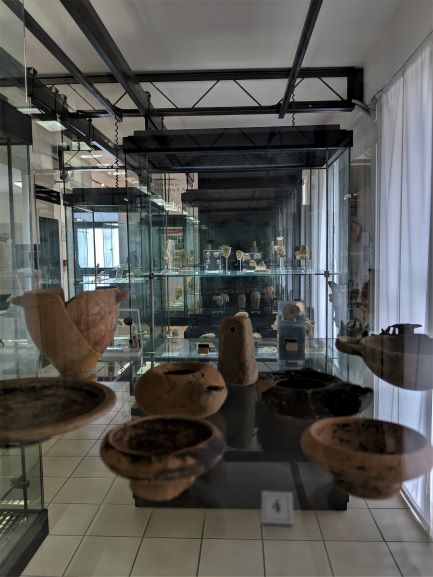
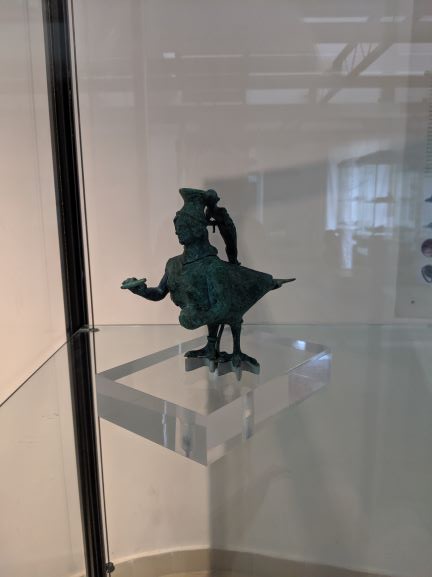
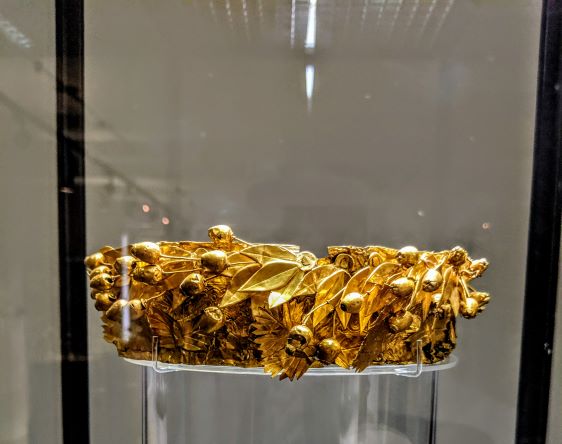
The goddess Hera was the protector of women and all aspects of female life, as well as animals and sea travel. This gold crown is among the votive gifts found in the temple.
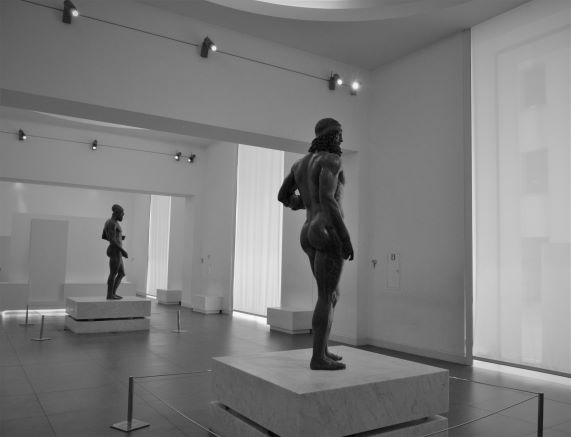
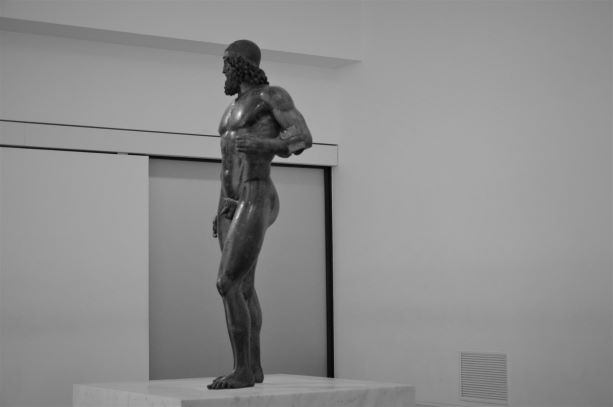
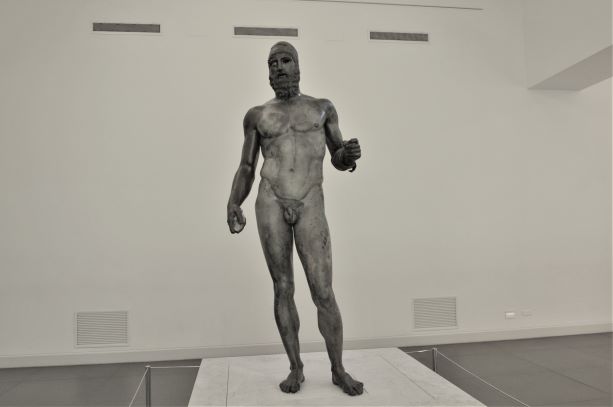
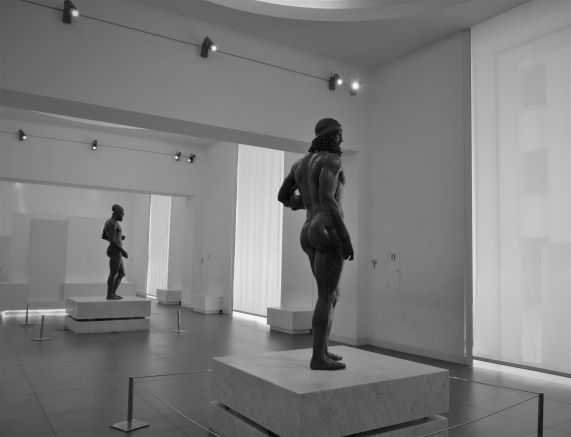
The Museo Nazionale della Magna Grecia in Reggio Calabria has discoveries from excavations of ancient Calabrian city states, and features the Riace bronzes. They were found in the Ionian Sea near the town of Riace in 1972 by a diver, about six hundred fifty feet from shore and twenty-five feet deep. Statue A is a young warrior and Statue B is a mature warrior. There is no accounting in ancient literature to identify the athletes or heroes. It is believed that they once carried shields and spears, and Warrior A may have worn a wreath and Warrior B a helmet, but those items have not been found. The sculptures were made in a transitional period from archaic to classical Greek style. As I read about them a statement regarding their “impossible anatomy” struck me. I don’t think it is impossible at all that athletes and warriors, and perhaps even the average citizen, had physiques like that. They had tools, but no machines to do the work for them. Everything took physical labor, and their diets consisted of unrefined foods, simply prepared.
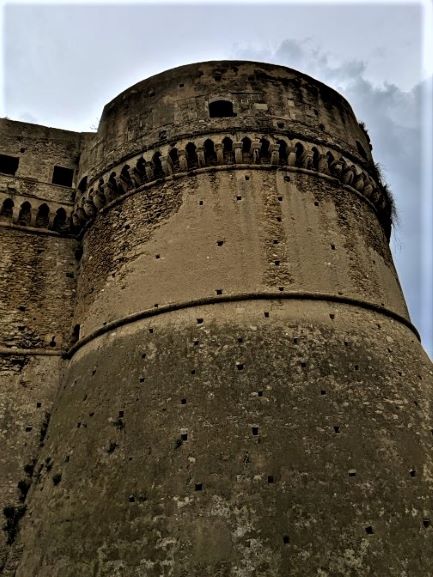
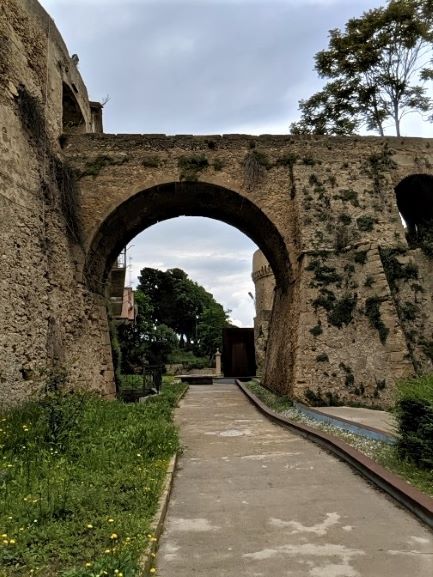
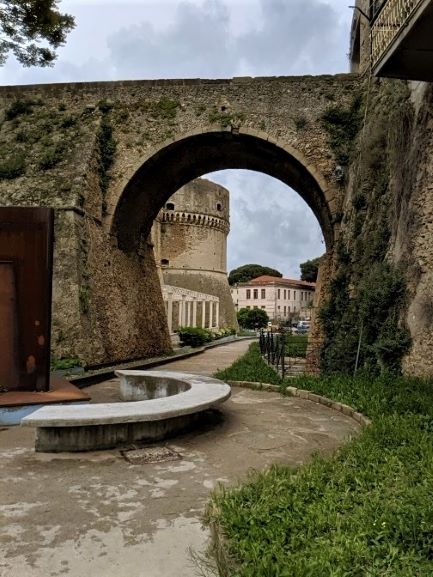
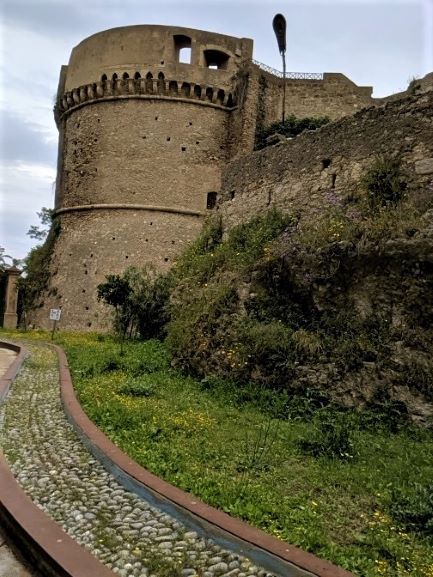
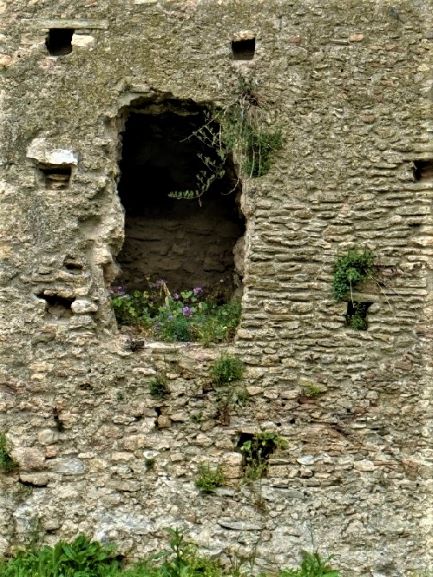
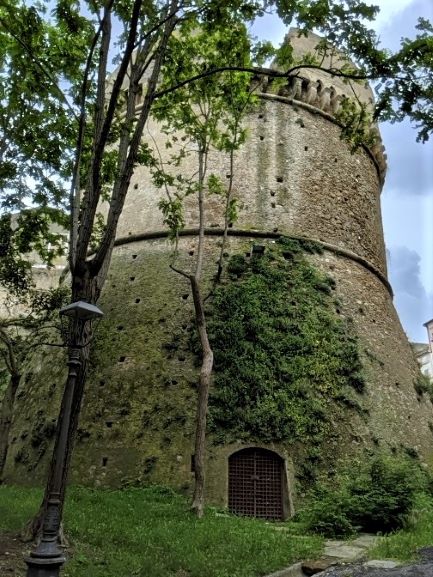
In the ninth century a fortress was built on an ancient Greek acropolis in Crotone as a defense from Saracen invasions and has gone through many modifications and expansions throughout the centuries. The Swabians built a castle over it in the twelfth century. It was modified in the fourteenth century by the Aragonese to handle new weaponry. In the fifteenth century it was re-built by Emperor Charles V and bears his name, Castello Carlo V. Designed by Italian architect, Gian Giacomo dell’Acay, it took over one hundred years to build.
Before the Greeks arrived, there were the indigenous people of Calabria. Traces of Homo erectus in coastal areas date back to 700,000 B.C. A figure of a bull on a cliff, “Bos Primigenius,” was carved in the Cave of Romito during the Stone Age, about 12,000 years ago. The earliest villages were settled about 3,500 B.C., and a tribe called Oenotri (vine cultivators) settled there around 1,500 B.C. They were called Italoi after their King, Italus. The Greeks arrived between the eighth and seventh century B.C. After the Greeks, came the Romans, and then the Saracens. Hannibal had a sojourn in Crotone before returning to Carthage. Alaric the Visogoth sacked Rome and met his death in Cosenza. The Normans, the Swabians, the Spanish, and the French all took turns ruling in Calabria. Each left their imprint from architecture, art, ideologies and scientific ideas that furthered mankind. Some brought plants with them—grapes, olives, wheat, citrus, pistachios, eggplant, and more– that are part of Calabria’s fabulous gastronomy. Some left only their DNA.
A few years ago my sister, Sandy, did a DNA test. I will assume that as sisters our DNA’s are similar. It shows that we are 78% Italo/Greek, the other 22% reflects a mixture of all the civilizations that settled or invaded Calabria. People have migrated around the world since there were human beings, intermingling with each other. In these times of Us versus Them, I think it is good to remember that all of us are related in some degree to a great many people of other cultures and ethnicities.


 The Write Mind of a Lefthander