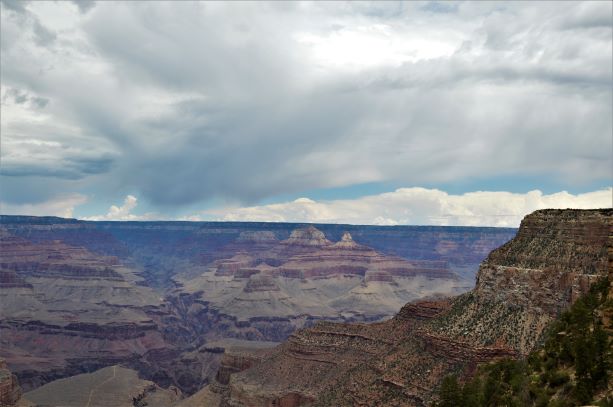
It was early evening when I arrived at Yavapai Lodge on Grand Canyon’s south rim. It was a long drive from Escalante and I was road weary. After I checked in, I had something to eat and returned to my room.
There’s a dark sky policy in the Grand Canyon, and I’d looked forward to sitting outside seeing all the stars in their glory, but clouds shrouded the sky. There are two threats to starry nights in Grand Canyon by sky glow from Las Vegas, Tuba City, Flagstaff, and Williams, and the push for development just outside the park.
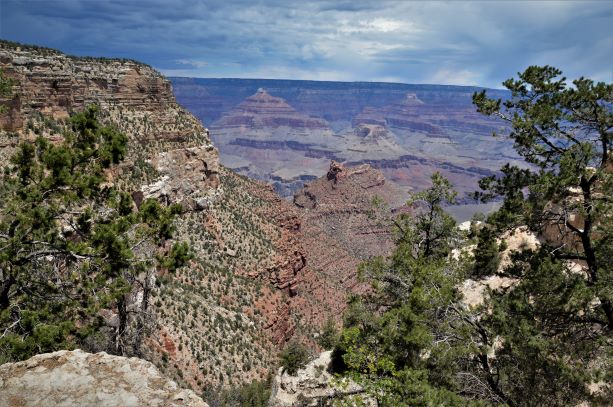
I made my way to the Bright Angel Trailhead, sunhat on, water bottle full, camera and other essentials in my backpack.
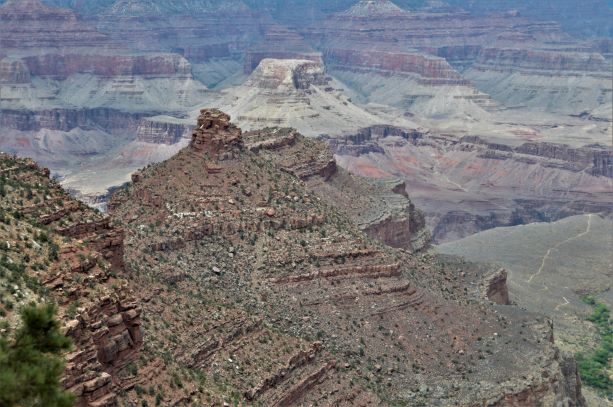
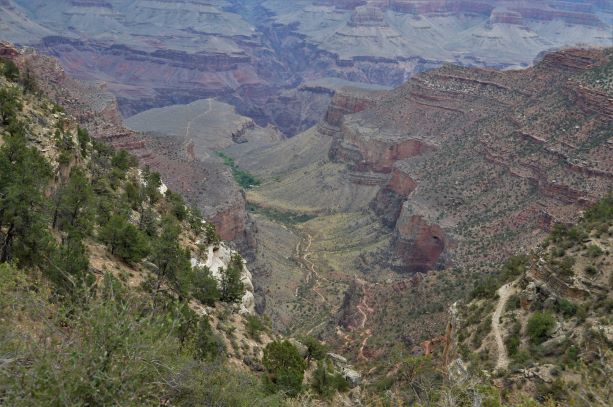
After admiring the beauty before me at the viewpoint, I started out on the trail. When I turned on to the first switchback and looked out, I had to back up to the canyon wall and hang on. I have acrophobia, fear of heights, but I’d never experienced such an extreme physical response; my heart was racing and my knees felt as if they would buckle under. I couldn’t move. I closed my eyes and focused on my breathing to pull myself together. In my mind, I knew the trail was safe. Many people were walking on it, many people have walked it before. Why was my body reacting this way? I opened my eyes and felt the same physical response. I turned towards the cliff wall. I only felt uneasy physically when I looked out, yet I was still in the same place. It made me wonder if acrophobia is a visual problem. If the eyes send messages to the brain whether one’s surroundings are safe, could there be something in the way the eyes report heights to the brain that causes a stress response?*
As I pondered this, a man walked by. The saying on his T-shirt read, “Because I said I would.” I decided to make this my mantra, and resumed the trek down the path. I found I was fine as long as I looked straight ahead rather than into the canyon. For some reason, looking through the camera viewfinder did not affect me the same way.
There were so many people walking the trail that it soon felt like a party. Most people smiled and waved. Sometimes there was a hello, once in a while a brief conversation. There were people from all over the world; a couple from France asked me to take their picture, and a family from China was astonished that I was traveling alone. I saw the same people taking breaks; sometimes they’d pass me, other times, I passed them. I also noticed that as I walked lower into the canyon, looking out didn’t trigger a physical response.
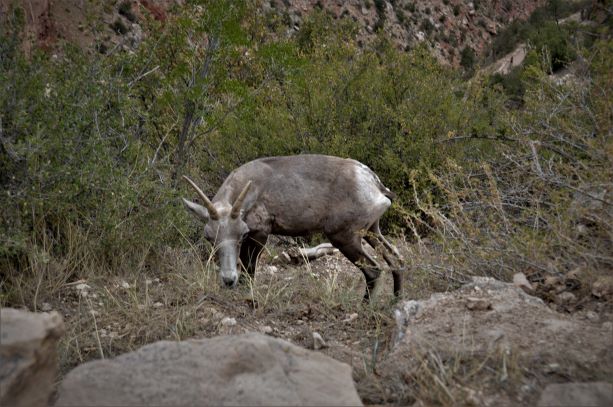
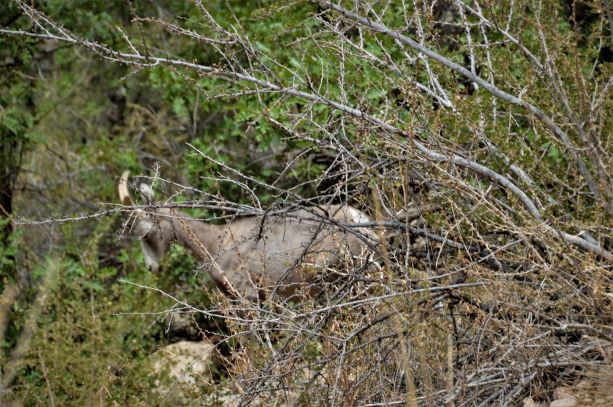
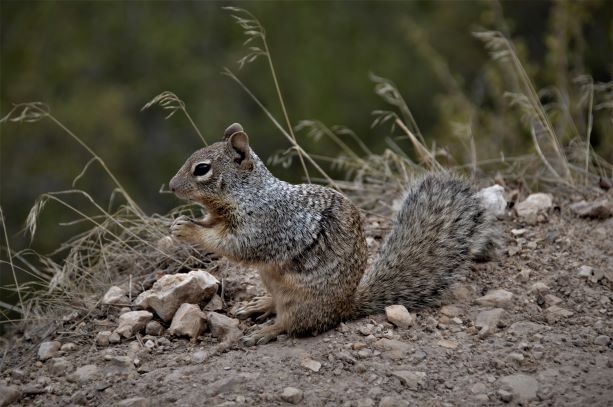
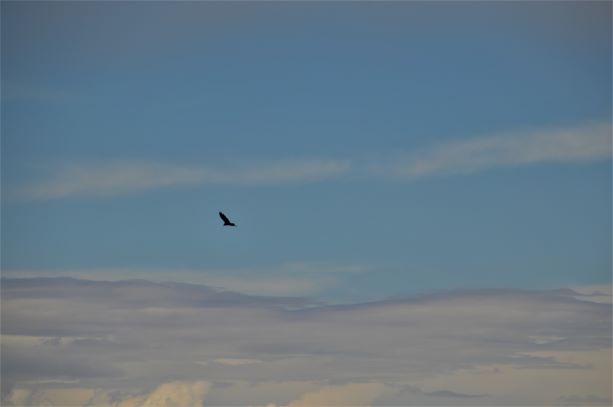
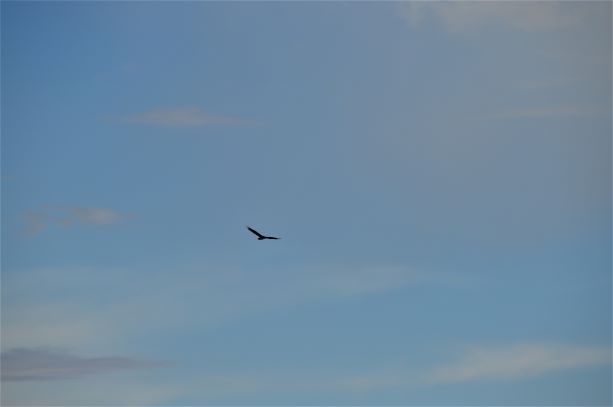
Along the way there were squirrels begging for handouts, and a condor gliding the thermals in the canyon. There was a desert bighorn ewe nibbling on grass, unbothered by passing hikers. The sheep are native to the U.S. deserts of the intermountain west and southwest. They are considered sensitive to extinction. They eat grasses, clover, and sedges in the summer. They also eat food wrappers, plastics, and other human discards, causing digestive problems that add to their vulnerability.
There was one shady rest stop where several groups of people lingered to get out of the sun for a few minutes. A couple passed us, coming from below, huffing and puffing. The woman said as she passed, “Remember that when you go down, you have to climb back up.”
It was at about the two miles on the trail; it gets steeper from here. I looked up the path and realized that it was steep enough. “Because I said I would” turned into “next time when I’m better prepared.” I turned around and headed up the path.
After a while, I came upon a smiling face. “I told my family I wanted to walk with you.” It was Prasad. I’d passed him and his family several times on the trail. As we walked he told me that he’d just graduated from the University of Illinois with a degree in accounting, and in the fall he planned to go back to earn his Master’s Degree. We talked about travel and family, and before I knew it, we were at the canyon rim, his parents and brother waiting with warm greetings. They are a lovely family and I am grateful that I had the opportunity to spend time with them.
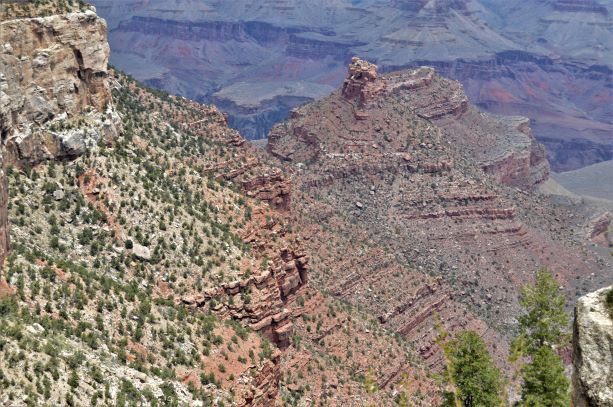
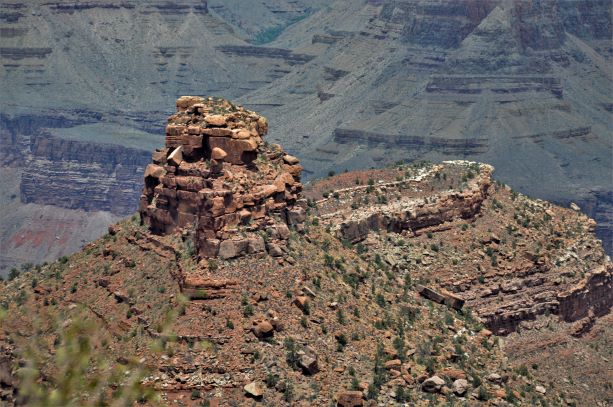
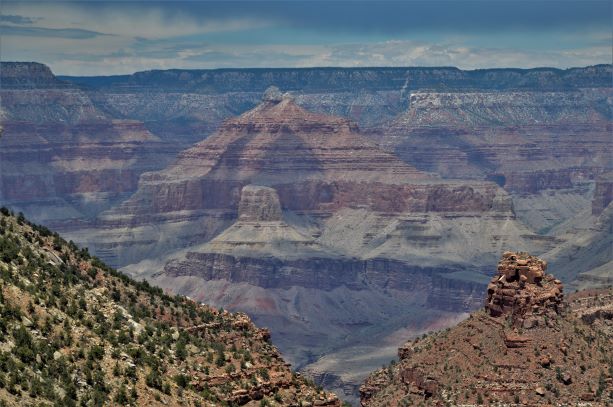
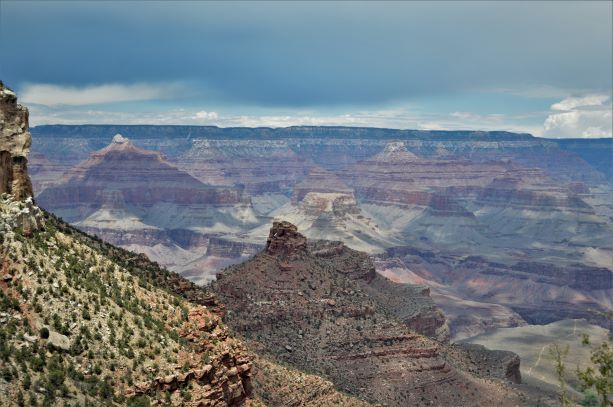


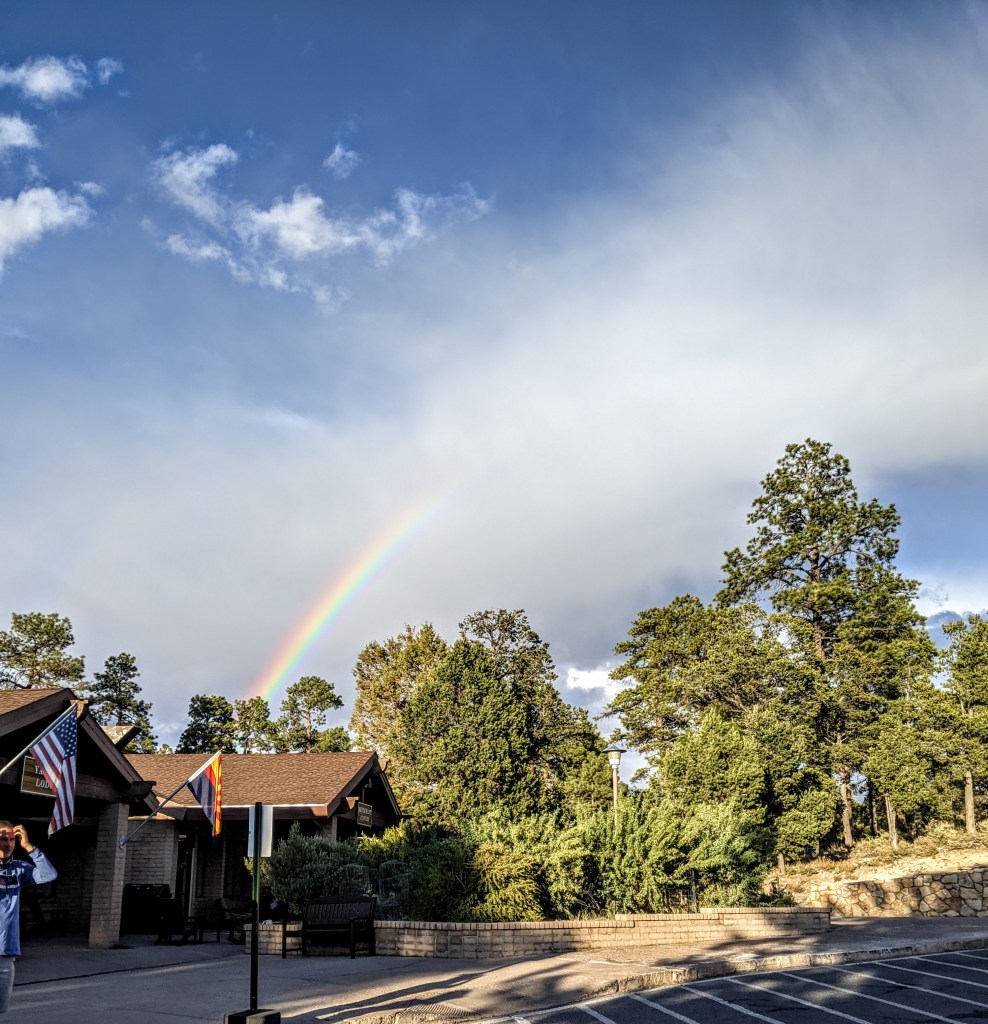
I went back to my room to shower, and then to the village for dinner. During dinner there was rolling thunder and a downpour. Afterwards, I walked to the post office across the way to mail post cards. On the way back a rainbow appeared.
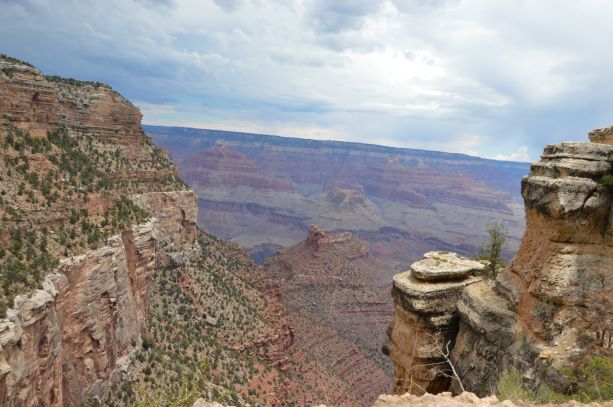
The Grand Canyon Park Rangers say that it’s more than a view. The canyon is over one mile deep, two hundred seventy-seven miles long and up to eighteen miles wide. Fewer than five percent of those who visit descend the canyon rim to see the wonders that are below.
Mother Nature had a human partner in creating some of the park’s beauty. Her name is Mary Elizabeth Jane Colter. She was an interior designer and later the chief architect for Fred Harvey Co. During her early years, her work had to be signed off by a man because women were not allowed to be architects. Her architecture was created to fit in with the natural beauty of the area, incorporating Native American design and Spanish Revival architecture. She created the Desert View Watchtower, Lookout Studio, Phantom Ranch, Hopi House, and Hermit’s Rest.
Her legacy lives in the lovingly preserved buildings, and in 1987 Hopi House, Hermit’s Rest, Desert View Watchtower, and Lookout Studio were added to the National Register of Historic Places and declared a National Historic Landmark. I spent only one day at Grand Canyon, but I was so inspired by it that I vowed to return to spend time on the canyon floor camping, exploring, enjoying the natural quiet, and the starry nights.
*Later in my journey I shared my thoughts with someone on whether the way the eyes send information to the brain is the cause of acrophobia. He asked if I’d researched it. I hadn’t, so I did. Thank you, Kelly, I learned a lot.
It seems acrophobia is a common phobia. Some of the symptoms are increased heartbeat, shaking or trembling. Height vertigo is a conflict between vision and parts of the inner ear and brain that process sensory information that controls balance and eye movements, and part of the sensory nervous system associated with body position and movement. It creates a spinning sensation even though the person is not spinning. While I had the symptoms of acrophobia, I believe my intuition was correct that the vision and brain receptors were the cause.
It concerns me that acrophobia is considered a mental disorder when it has physical causes. It is treated with cognitive therapy, and hypnotherapy. It is also treated with beta-blockers, sedatives, or an anti-biotic thought to affect certain receptors in the amygdala, the part of the brain associated with fear, but does not treat the phobia. For height vertigo there is vestibular physical therapy, an exercise based program to improve balance, and reduce problems related to dizziness.
As far as phobias are concerned, yes, there are things I fear, but I’ve never let them stop me from doing want I want to do. Because I said I would.

 The Write Mind of a Lefthander
Beautiful! And your photos are beautifuler. But don’t ever do that again people get killed.
LikeLike