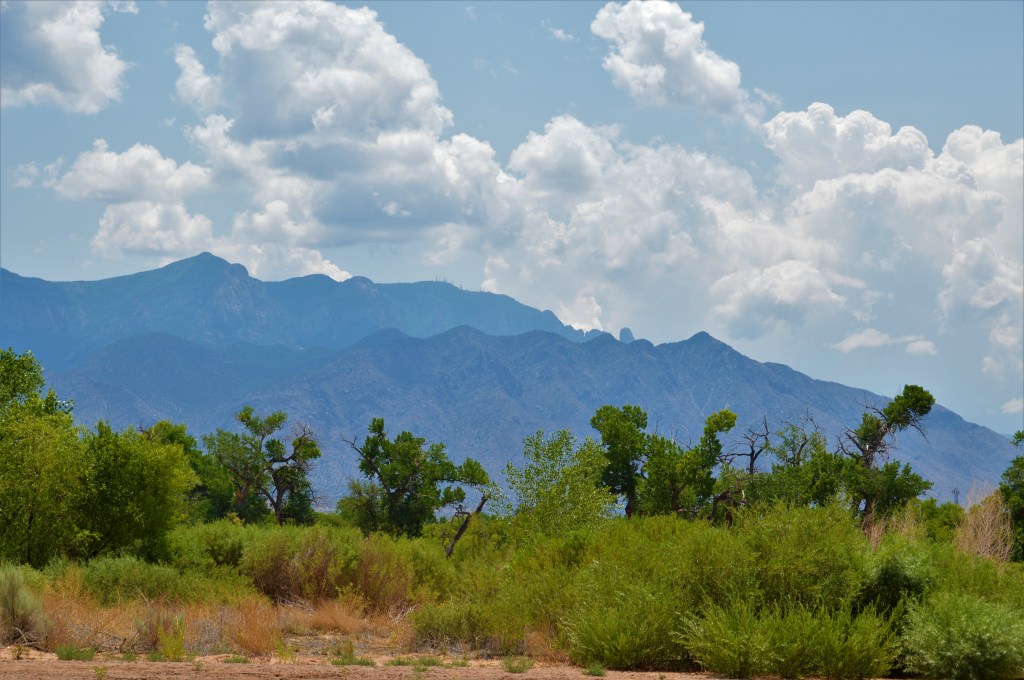
It was early in my career as a TWA Hostess when I visited Albuquerque for the first time. I was still on reserve when called to work a flight that started in Kansas City, flew to Los Angeles, Phoenix, and Albuquerque where we had a layover. Sunport was still a small, charming airport far from the center of town.
The captain rented a car and drove the crew to a restaurant for Mexican food that he said was good and authentic. It was twilight, and the Sandia Mountains glowed in the aftermath of sunset, jutting up to the sky in the wide open desert.
The restaurant was even more remote than the airport, set in the middle of a parking lot. It was full and noisy, the food as good as the captain said, with just the right piquancy to tickle the taste buds, but it was the sopapillas drizzled with honey that dazzled me. They reminded me of the Zeppole my grandmothers made.
It was dark when we left the restaurant and what I saw took my breath away. I’d never seen a night sky like this, so filled with stars. On the drive back to the motel, I sat with my face pressed to the car window to take in that celestial wonder.
Over the years I flew, I looked for schedules with a trip to Albuquerque in the rotation. My last flight as a TWA Hostess was to ABQ.
It was many years before I returned, to attend my son Paul’s graduation from the University of New Mexico. He made reservations at a motel for my stay. When I arrived there, I was astounded to see that it was the place I’d stayed for layovers. The room had the same green and gold shag carpet and orange accent paint. I was even more astonished to see the restaurant next door with the 1960s pendant lamps and atomic décor intact.
While this little corner of my memories remained the same, Albuquerque had grown, now a sprawling city filling the valley, and with that sprawl came well-lit streets that muted the starry sky.
I visited on occasion throughout the years when Paul lived and worked there. Now I was back for his wedding to Heather. In the meantime, I had a home base at Tonya’s lovely home to explore Albuquerque and its environs.
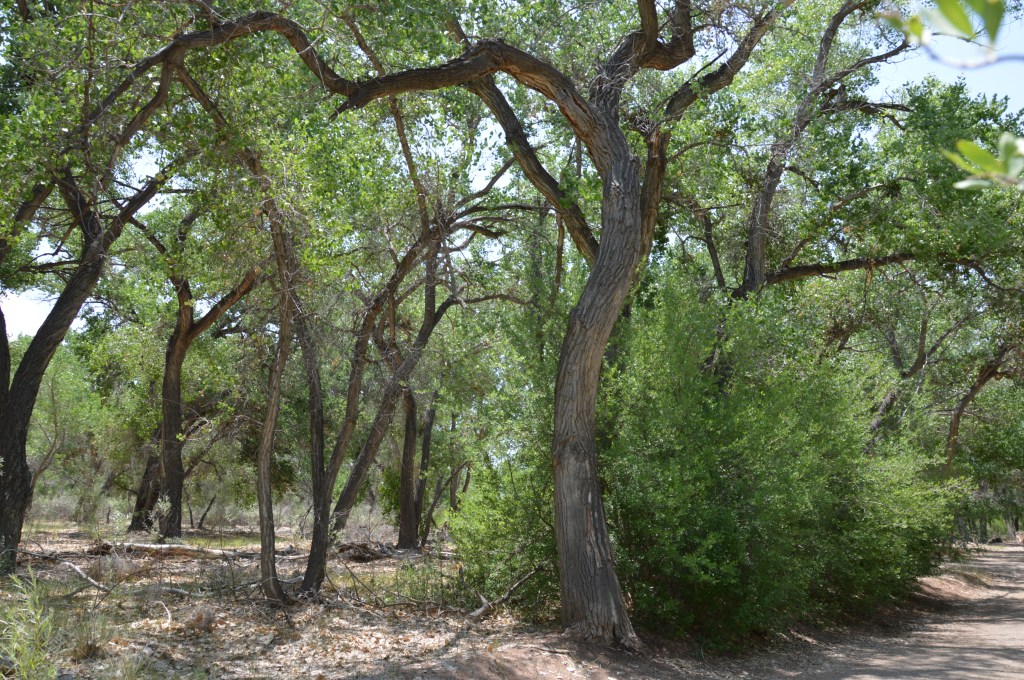
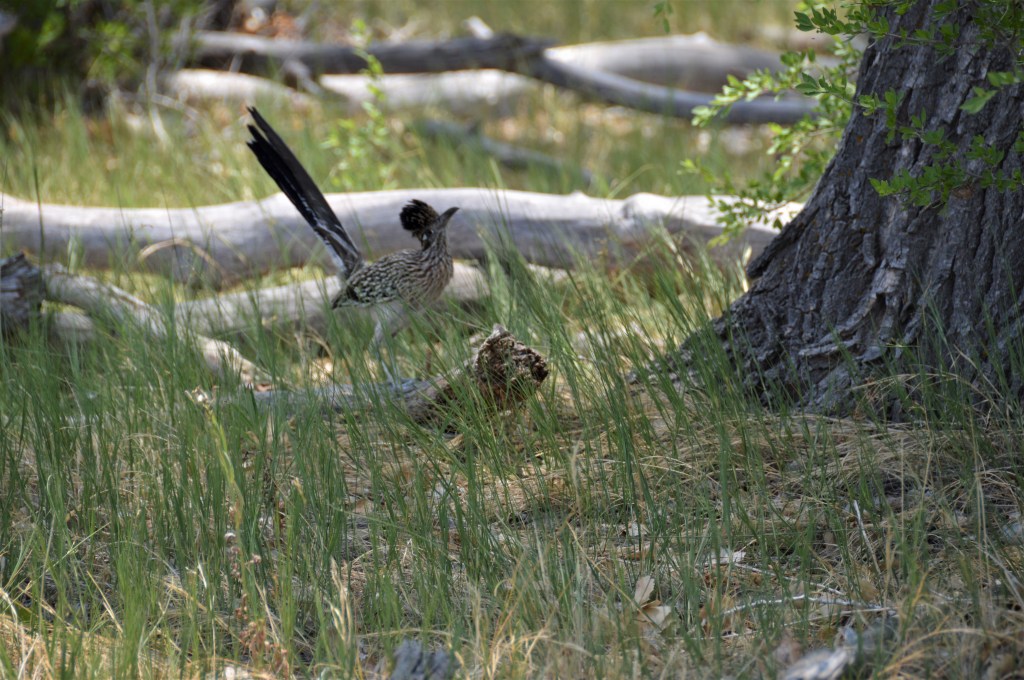
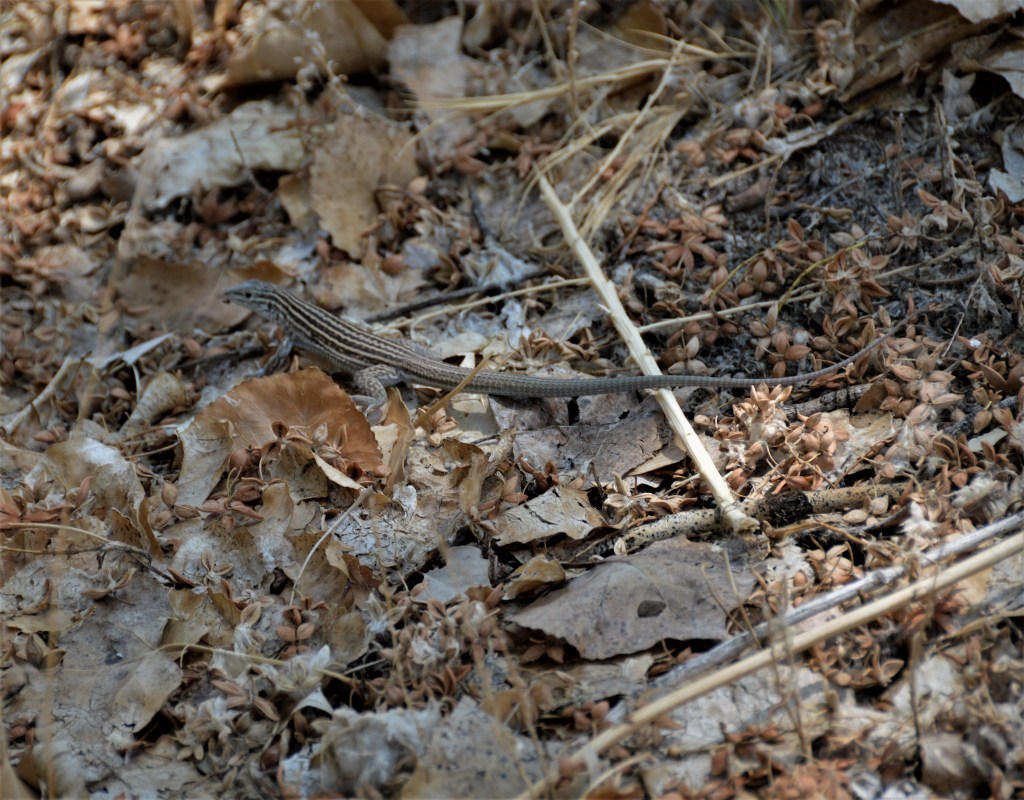
In the mornings, I’d go for long walks around the neighborhood or in the Bosque before the day heated up. In the evenings, I’d sit on the patio and watch Venus grown brighter in the twilight sky, before she followed the Sun below the horizon.
A pall of smoke from the fires on the west coast hid the stars, or cumulonimbus clouds filled the sky. Sometimes the clouds seemed to glow from within from lightning in the distance, followed by the rumble of thunder. It was monsoon season, and while the clouds teased rain, little fell. One night it rained hard for a few hours. When I went for a walk in the morning, there were no signs of the rain that had fallen during the night, not a puddle, not even a dew drop. Everything was as dry as the day before.
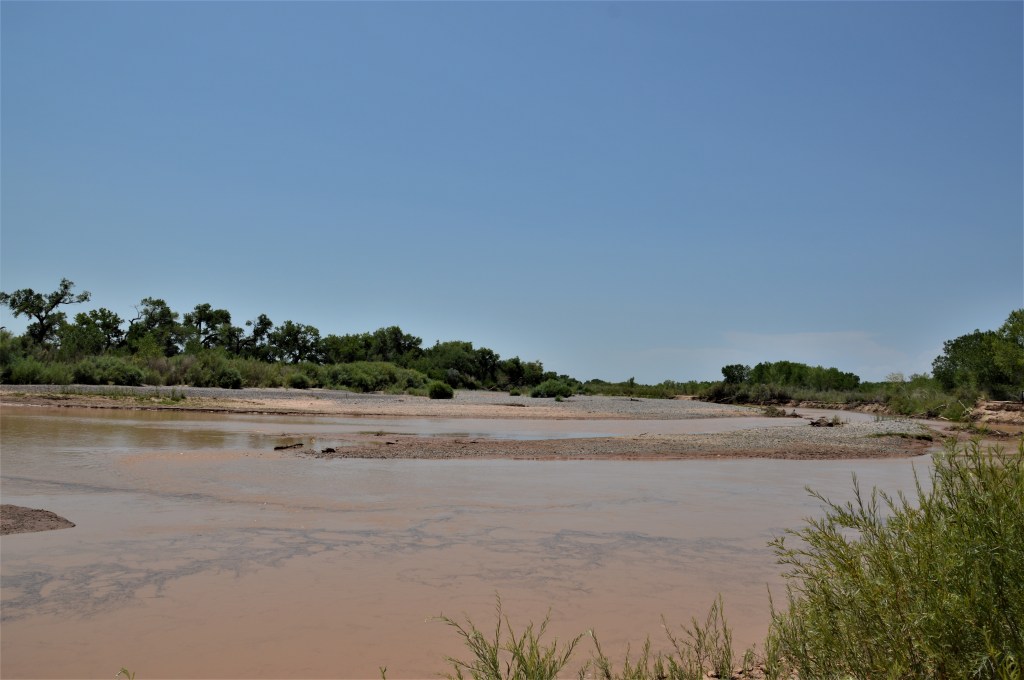
“Each of these rocks is alive, keeper of a message left by the ancestors…
There are spirits, guardians; there is medicine…” William Weahkee, Pueblo Elder
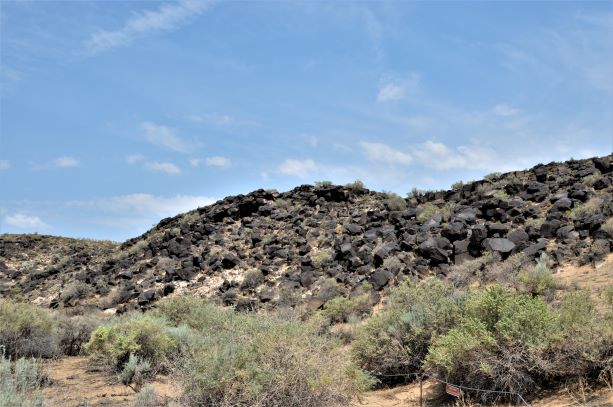
The Petroglyph National Monument is along a seventeen mile escarpment in the Rio Grande rift valley. One hundred fifty thousand years ago, six volcanic eruptions spread lava out to the east. The lava hardened and eroded, leaving a cap rock of basalt. Into this basalt the Puebloans carved images with stone hammers and chisels. Archeologists estimate that there are over twenty thousand petroglyph images. Most were carved between 1300 and 1650 by the Pueblo people. About five percent were carved by Spanish settlers, mostly sheepherders, of crosses and sheep brands.
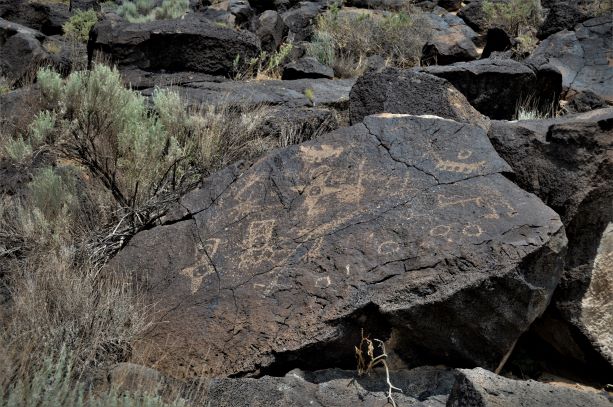
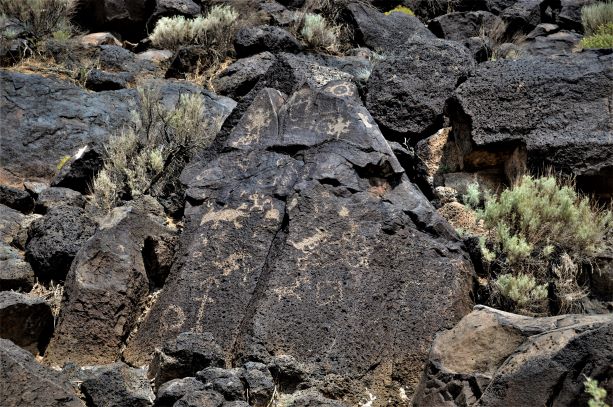
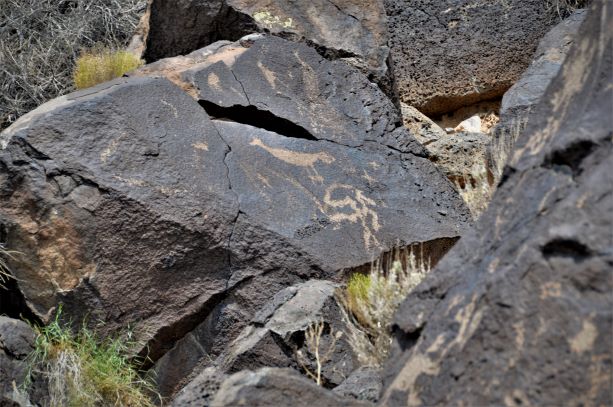
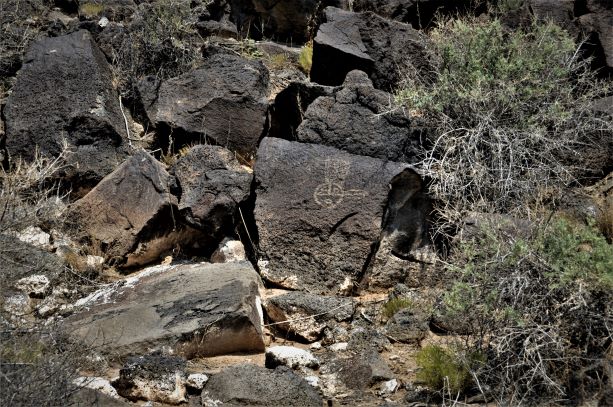
The meaning of the symbols is unknown. Today’s native people believe each image has deep meaning, some known, perhaps, only to the maker of the design. Some represent tribal or societal symbols; some are religious entities. The Puebloans believed that the escarpment was “the place that people speak about,” where their spirits go to leave this world and go to the next. Religious ceremonies are still conducted here by tribal people.
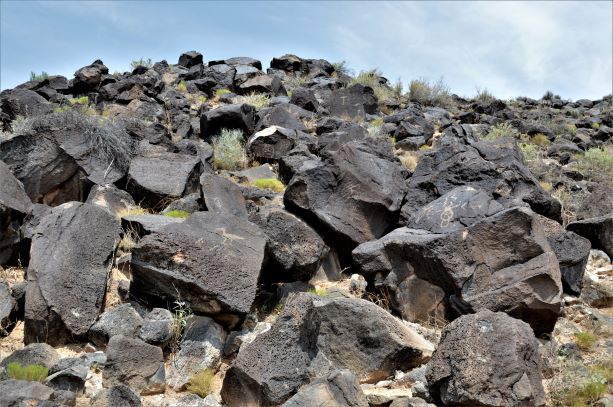
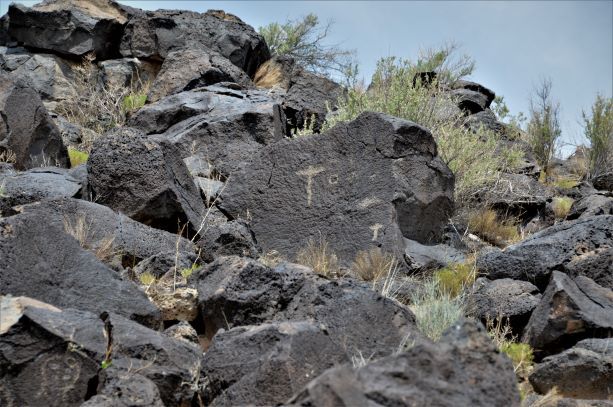
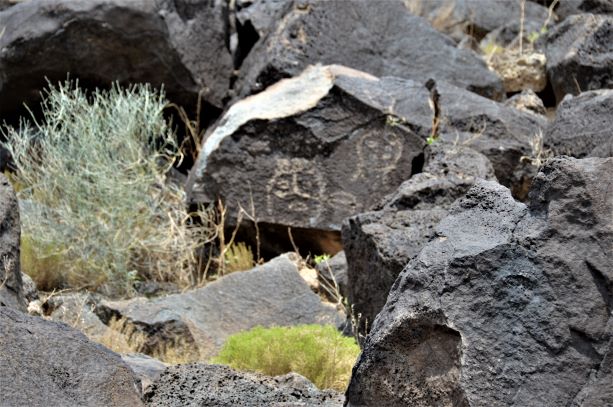
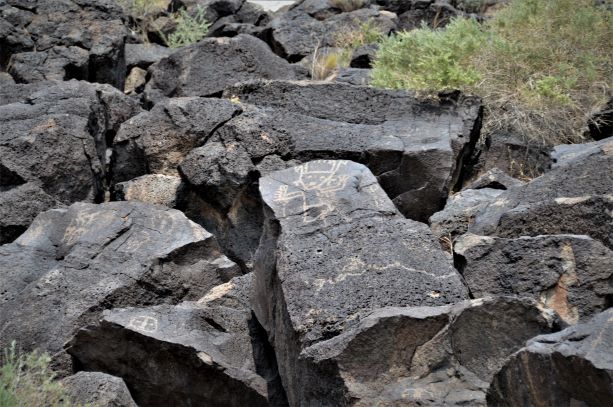
The hand images reminded me of the paleolithic cave paintings in Lascaux, France. They reach out from time before as if to say, “Hello, we were here.”
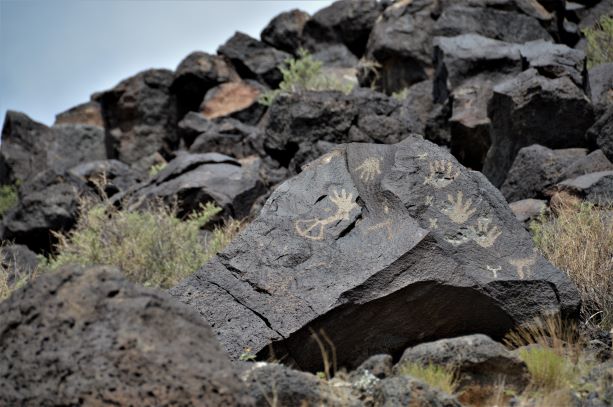
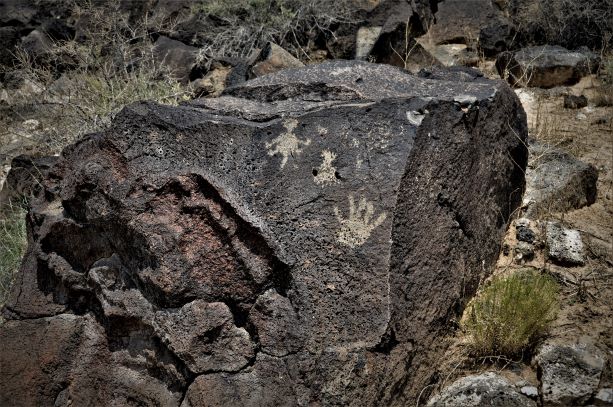
To walk here is to walk on sacred ground. The day I spent wandering the Petroglyphs, I felt as if I’d transcended the mundane and touched the holy. Connecting with these ancient symbols is to know that they were like us: they worked, they played, they lived, they loved.
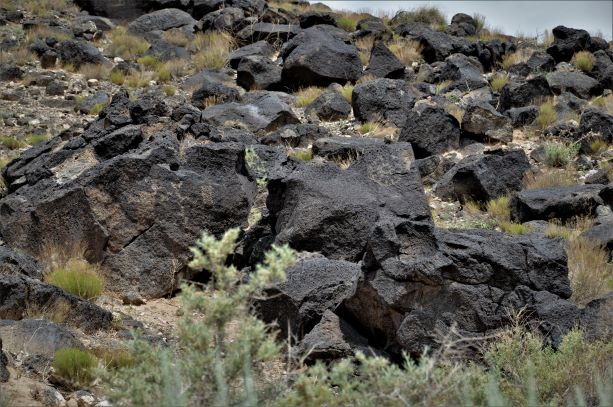
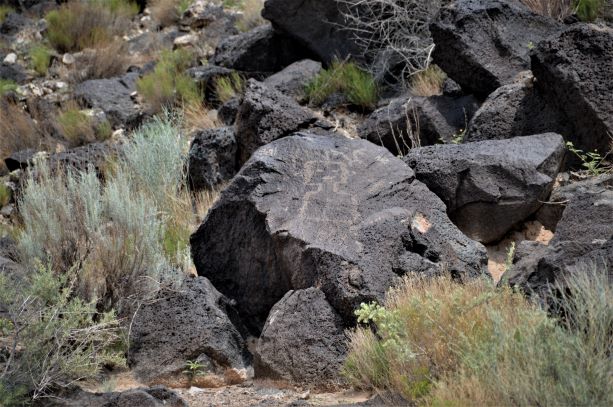
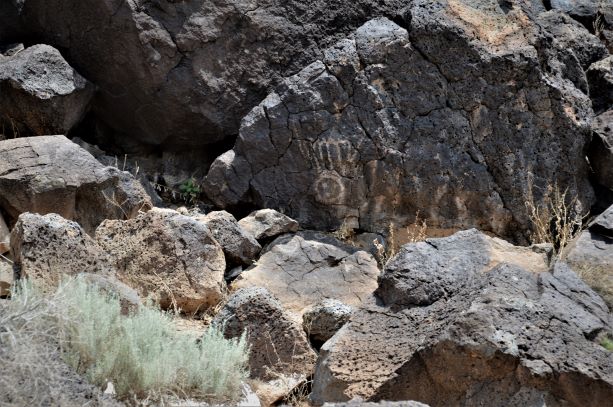
And in the midst of the desert, a Jimson flower, still beautiful though past her prime.
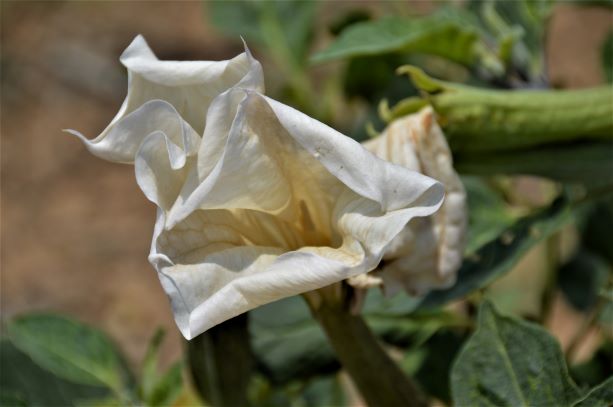
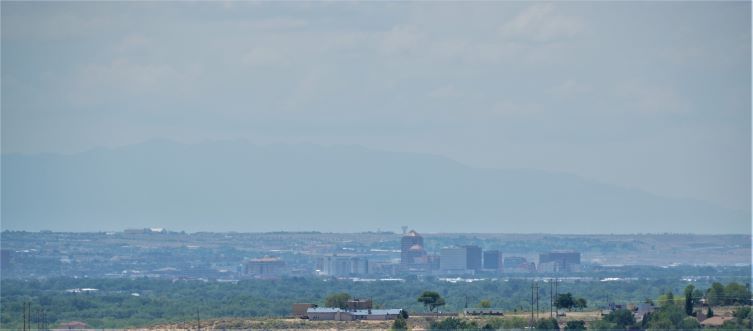
Looking at the modern from the ancient. A pall of smoke hangs over the southwest from the fires on the West Coast.
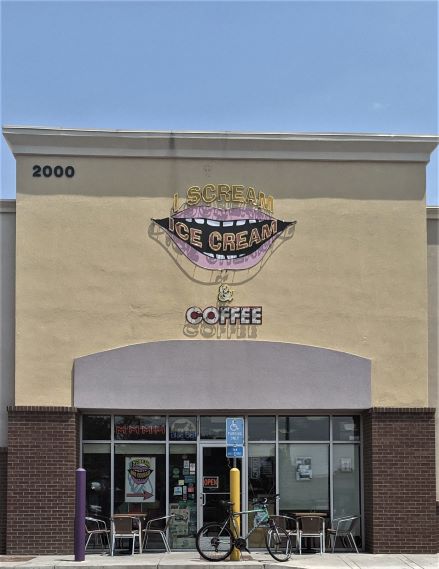
Ice cream sounds like a good idea on a hot afternoon. I Google the best ice cream in Albuquerque and decide to visit I Scream Ice Cream.
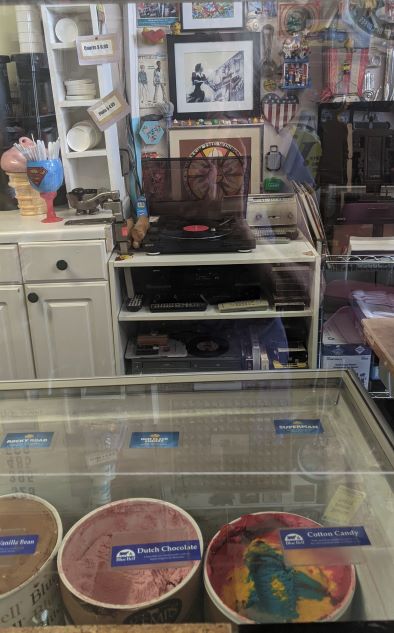
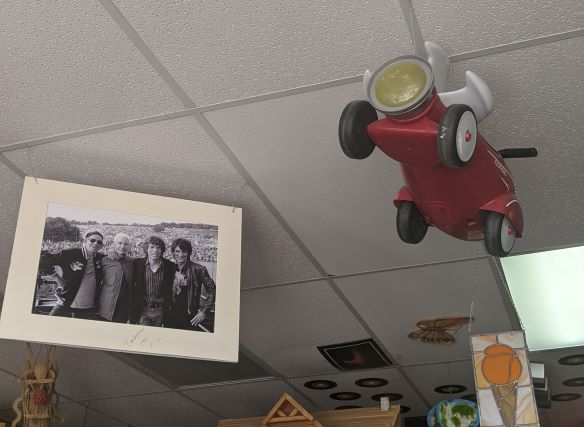
Beyond ice cream, it is an audio/visual museum of childhood, any childhood, and it transports me back to my own and teen years. The museum is enlivened by Bill, the owner, who is warm and kind and entertaining. He plays rock music from his vast vinyl collection. Today it’s 50s doo wop.
You can have three scoops of ice cream in a cup with one free topping. He let me sample several flavors before I made my mind up. Yes, I went wild and had three scoops, but I did forego the topping. How can you add to spumoni, black cherry, and chocolate raspberry?
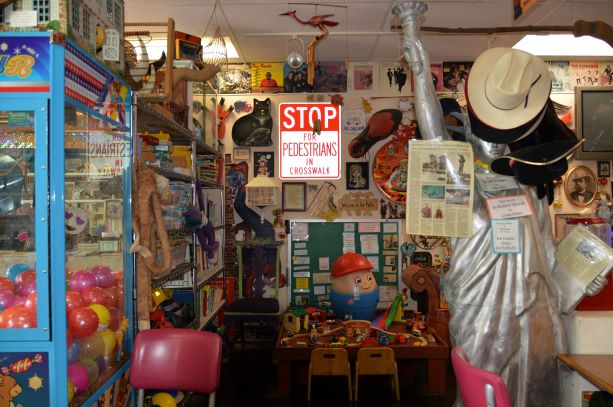
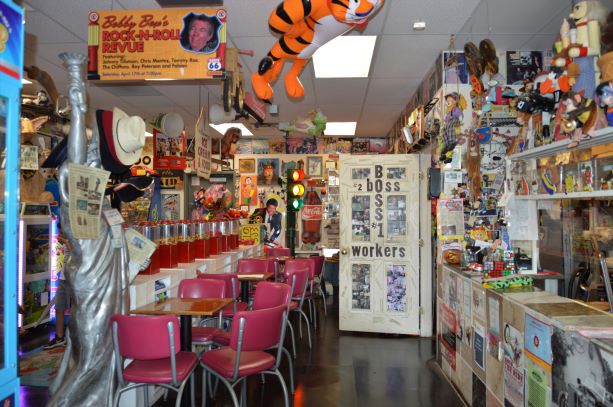
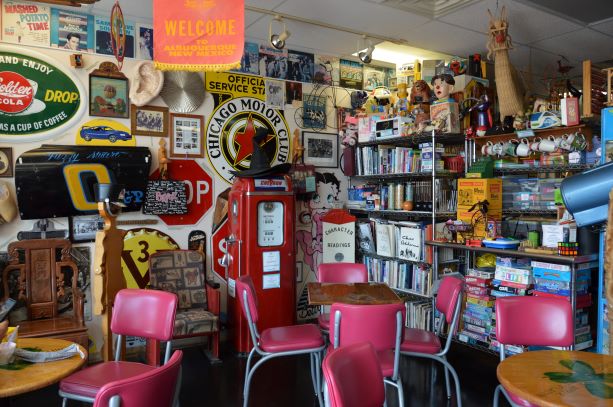
I Scream Ice Cream gets ten stars from me!

 The Write Mind of a Lefthander
Thanks for sharing your trip blogs. I have several friends that write about their trips. I haven’t been to many of the places written about. I always Like Rick Steves posts because I learn a lot about places mostly in Europe. I have been to Albuquerque though. The photos are nice. I liked the one with the greenery. AND 3 scoops is A LOT of ice cream!!
LikeLike
I like the birdies but not the snakey. The rocks are AMAZING. Bill’s place is delicious.
LikeLike